
 Worksheets
Second Semester Exam Review
Total questions: 200
Worksheet time: 3hrs 17mins

Which statement describes an interaction that helps maintain the dynamic equilibrium of this ecosystem?
The end result of ecological succession is usually a(n)
A.land biome.
B.aquatic biome.
C.unstable community.
D.climax community.
. Which of the following is an example of primary succession?
A.lichens growing on rocks following a volcanic eruption
B.grasses growing after a forest fire
C.oak trees replacing pine trees in a forest
D. non-native species introduced into a climax community
How is primary succession different from secondary succession?
Primary succession starts with soil.
Secondary succession start with bare rock.
Primary succession starts with bare rock, with lichens and moss.
Fire is an example of primary succession.


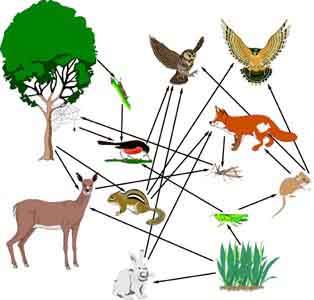
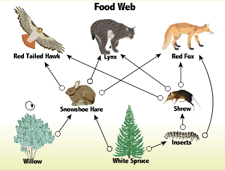


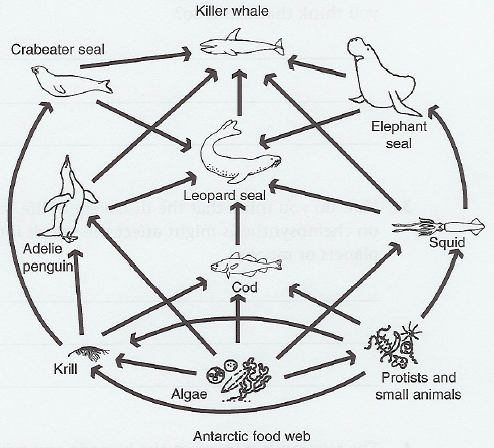


Which of these organisms would be considered a tertiary consumer?
Fox
Rabbit
deer
mouse

Which of these organisms would NOT be considered a secondary consumer?
Coyote
fox
squirrel
grasshopper


Which experiences the least change over time?
Pioneer Species
Primary Succession
Aquatic Succession
Climax Community
Which would result in primary succession?
volcano destroying habitat leaving only soil and ash
Tornado destroying a crop leaving very little soil
Glacier retreating exposing bare rock
limiting factors
What best describes the term succession?
rapid changes that create an ecosystem overnight
gradual changes over time to fully create or restore and ecosystem
forest with the tallest trees
the rate species produce offspring
. Which of the following is an example of primary succession?
A.lichens growing on rocks following a volcanic eruption
B.grasses growing after a forest fire
C.oak trees replacing pine trees in a forest
D. non-native species introduced into a climax community
How is primary succession different from secondary succession?
Primary succession starts with soil.
Secondary succession start with bare rock.
Primary succession starts with bare rock, with lichens and moss.
Fire is an example of primary succession.
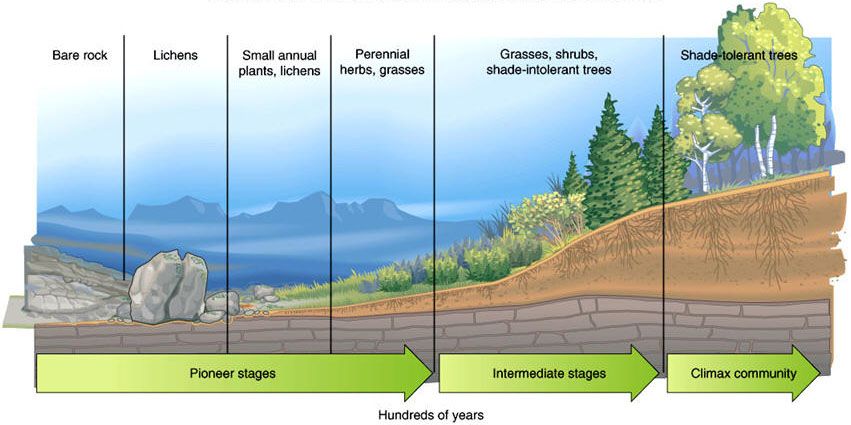
The picture shows what type of succession?
primary
secondary
tertiary
quadanary


Aphids are tiny insects that live on and eat the leaves of plants, removing vital nutrients from the plants.
Predation
Parasitism
Commensalism
Mutualism
*Hermit crabs find shells left by snails that have died and move in.
* Snails die and leave behind their shells.


Symbiosis means:
relationship
sharing
helping
harming

What converts nitrogen gas into a usable form for plants and animals?
bacteria
rain
fungi
car exhaust
The process in which nitrogen circulates and is recycled is called
The nitrogen cycle
The carbon cycle
The water cycle
The phosphorus cycle
Organisms that need nitrogen to survive.
only plants
only animals
only bacteria
all living things
How do animals get the nitrogen they need?
From the air they breathe
From the water they drink
From the food they eat
From the sun
Gas that makes up 78% of our atmosphere.
Oxygen
Nitrogen
Hydrogen
Carbon Dioxide

What is the process where plants use nitrates to grow?
Nitrogen Fixation
Ammonification
Assimilation
Nitrification

What is the process where bacteria turns Nitrogen gas from the atmospheres into usable compounds?
nitrogen composition
nitrogen fixation
ammonia
denitrification


What is the main reservoir of nitrogen?
Water bodies
Plants
Atmosphere
Soil

The arrows in the diagram below represent the
movement of materials. This movement of materials
indicated by the arrows is most directly involved in the
processes of -
respiration and replication
photosynthesis and excretion
digestion and recycling
circulation and coordination

Which of the following correctly lists the biological levels of
organization from A to E?
tissue, cell, organism, organism, organ system
organism, organ system, organ, tissue, cell
cell, tissue, organ, organ system, organism
cell, organ, tissue, organ system, organism
During the final stages of human gestation, receptors for the hormone oxytocin increase on the smooth muscle cells of the uterus. The release of oxytocin during labor stimulates the smooth muscle tissue in the wall of the uterus. The vigorous contraction of the uterine smooth muscle helps push the baby through the birth canal so that delivery can occur. This process involves the interaction of which organ systems?
Endocrine and muscular only
Endocrine and reproductive only
Endocrine, muscular, and reproductive
Endocrine, reproductive, and excretory

Health professionals sometimes recommend nutritional supplements that contain a variety of species of bacteria to promote good digestive health. The product label for one of these supplements is shown. Why does this type of bacteria-filled supplement benefit human health instead of causing illness?
Stomach acids and digestive enzymes kill the bacteria in this type of supplement, protecting the person against future infections by live organisms.
The human digestive system contains billions of beneficial bacteria that enhance digestion and nutrient absorption, synthesize vitamins, and help limit the growth of harmful bacteria
These species of bacteria remove all other species of microorganisms living in the human digestive system and ensure that no microorganisms survive to contaminate the body.
These bacteria are able to deactivate viruses that may inhabit the human digestive system and are used to protect against further viral infections.
Kidneys are part of the excretory system in a human body. They purify the impure blood and send it back to the rest of the body. Which system is mainly responsible for the transport of plasma to the kidneys?
Respiratory system
Circulatory system
Muscular system
Nervous system

Several structures work together to allow flowering plants to reproduce. The diagram shows a typical flower. Which table correctly identifies the function of each structure or group of structures in the reproduction of the plant?


Plants called sundews have rounded green leaves with many hair-like structures. The ends of these structures contain enzymes in a sticky liquid that looks like nectar or moisture, as shown in the picture. The hairs do not react to dust or nonliving material but will bend inward when insects get caught in the sticky liquid. Sundews digest trapped insects over a period of a few days. Based on this information, what functions do the specialized leaves of sundews perform?
Provide water to the plant and perform photosynthesis
Respond to stimuli and anchor the plant
Provide nutrients to the plant and respond to stimuli
Release pollen to insects and perform photosynthesis
What 2 systems: Absorb and deliver the digested nutrients to the cells
Digestive and muscular
Muscular and lymphatic
Digestive and circulatory
Nervous and skeletal
What 2 systems: Transports white blood cells throughout the body to fight disease
Excretory and nervous
Circulatory and immune
Respiratory and nervous
Digestive and immune
How do the circulatory system and immune system work together to respond to an injury?
Increased blood flow kills healthy cells which prevents infection at the site of the injury.
Increased blood flow removes infected cells from the body at the site of the injury.
Increased blood flow carries white blood cells to the site of the injury.
Increased blood flow allows for an increase in the exchange of O2 and CO2 at the site of the injury.

The picture shows bean-shaped glands called nodes. The clusters of cells in nodes include macrophages that break down viruses and other potentially harmful materials. Nodes also contain cells that produce protein particles capable of capturing harmful materials that flow in tissue fluid through the nodes. Different parts of the body are drained by nodes in different regions of the body.
Which body systems are directly responsible for regulating these nodes and protecting the body from harmful materials in tissue fluid?
Immune and lymphatic systems
Digestive and nervous system
Endocrine and digestive systems
Circulatory and nervous systems
When your body comes in contact with a sharp object, an impulse sent you your brain triggers a reflex that causes you to move away from the object. What body systems are interacting to cause this response?
Nervous, Respiratory,
Nervous, Muscular
Nervous, Skeletal
Nervous, Digestive
Olympic sprinters undergo increased heart and breathing rates while competing. Which of the following best describes the interactions among systems of a sprinter?
Respiratory system is working to obtain more oxygen, while the circulatory system works to transport the oxygen to the muscles.
The digestive system takes in more glucose, while the excretory system removes waste.
The endocrine system transports ATP to the nervous system
Excretory system removes waste from the digestive system to reduce weight so the sprinter can run faster
While working her shift, a nurse is sneezed on by a sick patient. Which system are the first line of defense to prevent the nurse from getting sick?
Immune and Integumentary
Digestive and Nervous
Endocrine and Immune
Immune and Muscular
Why is the maintenance of homeostasis important to multicellular organisms?
They must keep their internal environment within a narrow range of conditions.
They require the ability to adjust their internal environment to match their external environment
Their cells need to be able to respond rapidly to drastic changes in their external enviornment
Their internal environment must provide their cells with a wide range of conditions
The immune system fights diseases. The circulatory system pairs with the immune system because ___.
blood is made in the bones.
plasma carries nutrients.
red blood cells carry oxygen.
white blood cells fight infection.
Why are the lungs, the major organ of the respiratory system, also considered an excretory organ?
They get rid of carbon dioxide, a cellular waste
They get rid of oxygen, a cellular waste
They get rid of urea, a cellular waste
They get rid of salt, a cellular waste
How do the skeletal and circulatory systems relate to each other?
Bone marrow produces blood.
The heart is made of cardiac muscle tissue.
The heart is held in place in the chest by ligaments.
The blood brings carbon dioxide and glucose to the cells of the bones.
A man was walking through the desert and he became lost. The temperature outside rose to 110 degrees Fahrenheit and the man’s body temperature increased with it. His skin began to excrete sweat in an effort to cool his body back down. Which two body systems are working to help him maintain homeostasis?
Endocrine and Excretory
Excretory and Integumentary
Integumentary and Skeletal
Skeletal and Respiratory
The esophagus and intestines are made up of smooth muscles that move food through these organs using muscular contractions. Which two systems are working together here?
Muscular and Digestive
Reproductive and Endocrine
Muscular and Excretory
Digestive and Immune
How does the circulatory system depend on the respiratory system in order to function?
The respiratory system removes bacteria from the circulatory system.
The respiratory system produces circulatory system cells.
The respiratory system delivers oxygen to the circulatory system.
The respiratory system provides protection to the circulatory system.
How do the circulatory and excretory systems work together?
The circulatory system brings nutrients and oxygen so our cells can produce energy.
The circulatory system brings blood to the kidneys to filter and remove waste.
The circulatory system bring white blood cells around the body to fight infection and disease.
The circulatory system helps the excretory system digest food.
Which two systems work together to remove wastes?
digestive and excretory
respiratory and skeletal
skeletal and circulatory
digestive and respiratory
Which two systems work together to break down and transport molecules?
muscular and respiratory
circulatory and skeletal
digestive and circulatory
endocrine and digestive
This part of the plant uses the sunlight to produce food for the plant
Flower
Cone
Leaf
Seed
Which of the following adaptations best explains how pine trees are able to prevent water loss or damage from freezing temperatures?
Pine trees have thick bark
Pine cones produce seeds.
Pine tree roots go deep underground.
Pine needles are thin and have a wax coating.
Identify the plant tissue that transports water and dissolved nutrients
Xylem
Parenchyma
Phloem
Sclerenchyma
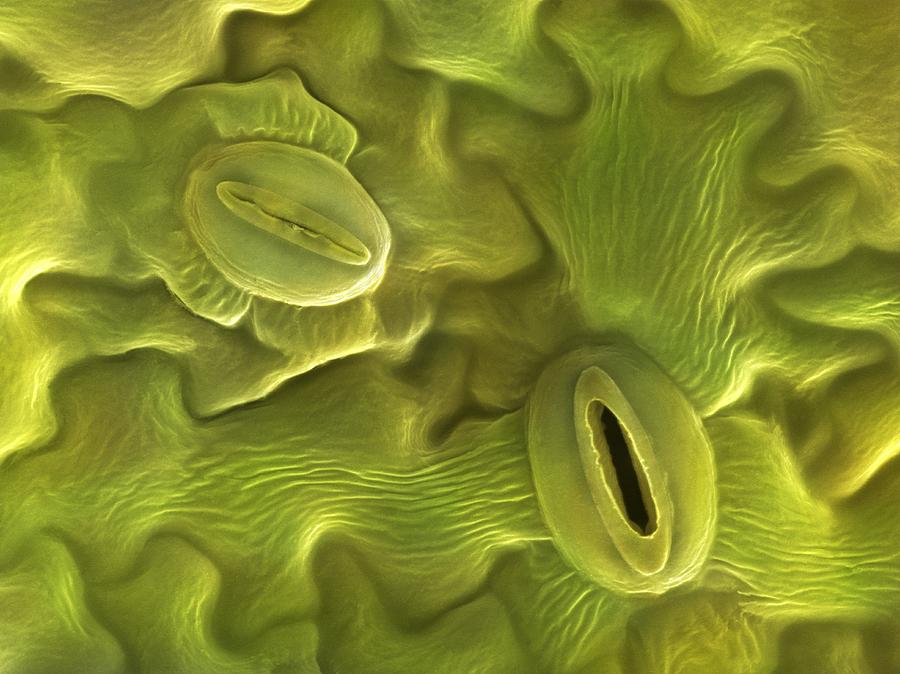
What is used to regulate gas intake and output within a plant?
Stoma
Vascular Bundle
Node
Cell Wall
The thick waxy covering of a leaf that helps prevent water loss is known as the--
Flower
Cuticle
Mitochondria
Chloroplast
Where does gas exchange occur within the plant?
Flower
Leaf
Stem
Roots


Structures represented in the illustration below are found in the lower epidermis of a plant leaf. The illustration at right shows the response to a certain environmental condition. The response represented in the illustration would most likely be caused by --
a reduced supply of oxygen
long periods of rainfall
high concentrations of glucose
little available water
Cytokinins are a class of plant hormones that help regulate growth by promoting cell division. Cytokinins are produced mainly in meristematic tissue, where most plant growth occurs. Which system carries cytokinins produced in the roots to the rest of the plant?
vascular system
dermal system
reproductive system
none of these
Auxins are plant hormones that help regulate growth. Sunlight stimulates auxins on the shaded side of the stem causing the plant to grow faster on that side. This pushes the stem towards sunlight. This response is known as:
geotropism
transpiration
phototropism
thigmotropism
Since a growing seed cannot carry out photosynthesis, it is packaged with nutrients. Which two plant systems must interact to create nutrient-rich seeds?
Root system and dermal tissue system
Reproductive system and transport system
Excretory system and digestive system
Immune system and vascular tissue system
Plants have hormones just like humans do. Plant hormones are created in the plant's stem, buds, and root tips. These hormones are carried and distributed throughout the plant by the plant's ____________________ system. Which of the following correctly completes the sentence?
vascular
reproductive
dermal
root
Pollen grains are produced by ?
the anther
the stigma
the flowers
the leaves

When the plant responds to touch
Phototropism
Thigmotropism
Gravitropism
Hydrotropism

A plant growing in response to the sunlight.
Gravitropism
Phototropism
Thigmotropism
Hydrotropism
Common baboons live on the savanna in breeding groups called troops. While females tend to stay with the troop, younger or less dominant males may leave to join a neighboring troop. Which of these is a likely outcome of movement by young males?
Gene flow occurs between populations.
Allele frequencies suddenly change.
Relative genotypic frequencies reach a constant state.
Intermediate phenotypes increase in the species.

Organisms are classified today using the Linnaean system, and the following table shows the taxonomic classification of two marine organisms living along the Pacific Coast.
Taxonomic classification is important to marine biologists because it provides a way to —
prove that marine evolution occurs
discover and name every marine organism on Earth
designate Latin as the universal language of marine biology
identify marine organisms and find evolutionary relationships between them

Cetaceans are whales and their relatives. The diagram shows some fossils of cetaceans.
Which statement provides the best evidence that Ambulocetus natans is an ancestor of Basilosaurus isis?
Homologous structures occur in each fossil.
Similar nitrogenous bases are found in the DNA of each fossil.
The fossils were found in different locations.
The youngest fossil is larger than the older fossils.

Scientists can determine relatedness among organisms by comparing partial amino acid sequences. The table shows four partial amino acid sequences from four organisms.
What organism is the LEAST related to the other three organisms?
Organism 1
Organism 2
Organism 3
Organism 4

The image shows part of the humerus bone in different genera of primates.
The primates lived in similar environments.
The primates shared a common ancestor.
The primates interbreed with similar organisms in a population.
The primates had diets that consisted of similar types of foods.
Two species of frogs grew up in an island. However, both species cannot interbreed even though they look similar. The reason for this is
Natural selection provided each with adaptive traits
No gene flow between the two species occurred.
Genetic drift killed off their ancestors
Mutations occurred only in one species
An organism is most closely related to another if they share the same
Kingdom
Phylum
Order
Genus
Natural selection can result in a new species if there is-
Unlimited resources
genetic variation
Static environment
Unlimited energy
DNA sequences are usually used to compare two species. This technique is beneficial because it allows to determine
The size of both species
The color patterns of both species
How closely related the two species are to each other
The methods of proteins synthesis each species uses.

Two populations of mice living in the same forest are separated by a large water-filled ditch. After a rainstorm, flooding brings several mice from one population to the other population. When the mice from the first population reproduce with members of the second population, which of the following will likely occur?
All of the offspring will die as a result of reproductive mutations.
The offspring will be forced to leave the second population.
The offspring will be genetically identical to their parent from the first population.
The offspring in the second population will have greater genetic variety.
I am an autotroph
I am multicellular
What am I?
I am eukaryotic
I reproduce sexually
I am multicellular
What kingdom do I belong to?
I am prokaryotic
I am found in extreme ecosystems
What kingdom do I belong to?
Who am I?
The more genetic variation a population has,
the more likely it is for some individuals to
evolve
migrate
survive
mutate
Mutations are important because they bring about
death of the organism in which they develop
genetic variation needed for a population to evolve
benefits for the individual, not for the population
changes in genotype, but not phenotype
have the ability to interbreed.
The diversity of species seen on the Galapagos Islands is mostly due to
In evolution, what does the word fitness mean?
the ability to workout and exercise without getting fatigued or tired
the ability of an individual species to survive and reproduce
the ability of a species to develop and grow a special characteristic or trait over generations
When nature "selects" a variation, that means that the trait:
causes the population to shrink
helps prey escape predators
gets passed long from generation to generation
has brought out a new species

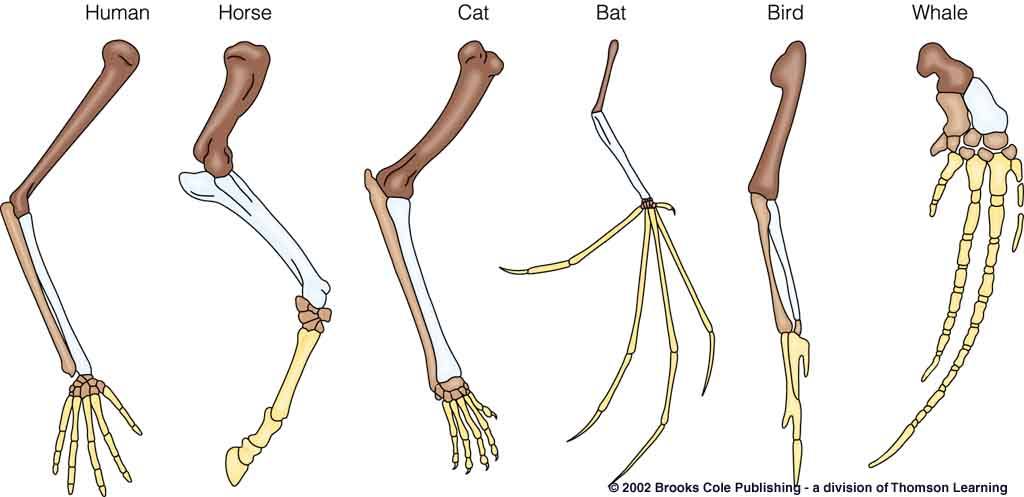
What type of evidence is shown in the image above?
Fossils
Vestigial structures
Homologous Structures
DNA

is when genes (peoples) come into or leave a population
Genetic Drift
Founder Effect
Gene Flow
Bottleneck

Forming of a new species by evolution from pre-existing species.
Speciation
Extinction
Gradualism
Punctuated equilibrium
Bursts of change followed by periods of stability.
Punctuated equilibrium
Gradualism
Extinction
Speciation
The emergence of new rivers or streams is a type of ____________ isolation.
Temporal
Mechanical
Behavioral
Geographic
Canis lupus, the scientific name for a wolf, is in which genus?
Canis
lupus
Animalia
Mammalia

An organism identified with binomial nomenclature includes which two taxa?
class and order
family and genus
genus and species
kingdom and phylum
Which taxonomic category is higher than the others?
Class
Genus
Family
Phylum
(Kingdoms) This kingdom is the largest, organisms are multicellular, heterotrophs, most can move, aquatic or terrestrial, warm or cold blooded.
Protista
Animalia
Plantae
Fungi
(Kingdoms) Which kingdom contains organisms that are mostly multicellular, have cell walls, and can be decomposers or heterotrophs?
Fungi
Plantae
Animalia
Protista


Which organism is most closely related to Quercus rubrum?
Acer rubrum
Quercus macrophylla
Gray Wolf: Canis lupus
Aardwolf: Proteles cristatus
Coyote: Canis latrans

Which trait do only humans have, according to the cladogram?
jaws
mammary glands & hair
terrestrial during all life stages
bipedal & opposable thumbs

