wayground logo

Free Printable Worksheets

Font size

S
M
L
XL
Worksheets

EB Mid-Year Assessment Review 2020

Total questions: 196

Worksheet time: 4hrs 45mins
Name
Class
Date
1.
In order for something to be considered a living organism, it must display _____ of the eight characteristics of living things.
a)
all
b)
some
c)
one
d)
more than half
2.
Which of the following is NOT a characteristic shared by all living organisms?
a)
Ability to move
b)
Ability to grow and develop
c)
Made up of one or more cells
d)
Responds to stimuli
3.
The _____________ is the basic unit of life.
a)
cell
b)
atom
c)
molecule
d)
compound
4.
Which of the following molecules is responsible for carrying and transmitting genetic information
a)
DNA
b)
Lipids
c)
Proteins
d)
Carbohydrates
5.
Which of the following correctly describes ASEXUAL reproduction?
a)
One parent, genetically identical offspring
b)
One parent, genetically different offspring
c)
Two parents, genetically identical offspring
d)
Two parents, genetically different offspring
6.
A plant growing towards sunlight would be an example of which characteristic of life? Select the best answer.
a)
Response to a stimuli
b)
Capable of reproduction
c)
Made up of cells
d)
Growth and development
7.
Energy is required for all life processes. How do AUTOTROPHIC organisms obtain energy?
a)
They make their own food through the process of photosynthesis.
b)
They consume other organisms for energy.
c)
They break down dead and decaying materials.
d)
They absorb energy through osmosis.
8.
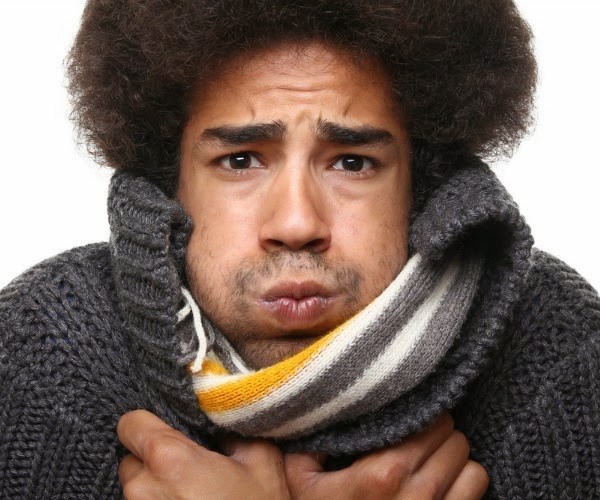
The image seen here is of a person shivering due to cold temperature. This is an example of an organism maintaining ________________ in action!
a)
Homeostasis
b)
Adaptations
c)
Evolution
d)
Development
9.
Define BIOLOGY.
a)
The study of life and living organisms.
b)
The study of animals.
c)
They study of matter.
d)
The study of earth and its atmosphere.
10.

All organisms have?

a)

a nucleus

b)

cells

c)

eyes

d)

a brain

11.

Only animals respond to their environment.

a)

true

b)

false

12.
Over three years, Tim's height has increased from 5'4" to 5'11".
a)
All living things contain cells
b)
All living things maintain homeostasis
c)
All living things use energy
d)
All living things grow
13.

A insect like a water strider can skate along the top of a pond because:

a)

covalent bonds result in water cohesion

b)

hydrogen bonds result in water cohesion (surface tension)

c)

low surface tension of water

14.
What word describes when water is attracted to other substances?
a)
cohesion
b)
adhesion
c)
capillary action
d)
surface tension
15.
Attractions between the negative Oxygen atom of one water molecule and the positive Hydrogen atom of another water molecule are called
a)
Covalent bonds
b)
Ionic bonds
c)
Polar bonds
d)
Hydrogen bonds
16.
Why does ice float?
a)
As water freezes, it expands and its density decreases.
b)
As water freezes, it takes up more hydrogen from the atmosphere, causing it to have a greater buoyancy.
c)
As water freezes, air becomes trapped between the hydrogen bonds of water molecules.
d)
As water freezes, it takes up more oxygen from the atmosphere, causing it to have a greater buoyancy.
17.

As you add drops of water to the surface of a coin, each drop sticks to the other water droplet because of ________________, and sticks to the penny because of ______________.

a)

adhesion, cohesion

b)

cohesion, adhesion

c)

capillary action, specific heat

d)

specific heat, capillary action

18.
Which end of the water molecule has a slightly positive charge?
a)
the oxygen end
b)
the hydrogen end
c)
both ends are slightly positive
d)
neither end is positive
19.
Which of the following is LEAST likely to dissolve in water?
a)
nonpolar fats and oils
b)
polar sugar molecules
c)
salt made of a positive sodium ion and a negative chloride ion
d)
all of the substances will dissolve easily in water
20.
Large bodies of water, such as lakes and oceans, do not quickly fluctuate in temperature. What is the reason for this phenomenon?
a)
Water is an acid.
b)
Water is a versatile solvent.
c)
Water has a high heat capacity.
d)
 Water acts as a buffer.
21.
If a substance has a pH of 10 it is considered
a)
Acidic
b)
Basic
c)
Neutral
22.
Acids produce _________ ions when they break down or dissocciate. 
a)
Hydroxide (OH-)
b)
Water
c)
Chlorine (Cl-)
d)
Hydrogen (H+)
23.
Bases release ____________ ions when they break down or dissociate. 
a)
Hydrogen (H+)
b)
Hydroxide (OH-)
c)
Chlorine (Cl-)
d)
no
24.
A(n) ______ is a substance with a pH less than 7
a)
Acid
b)
Alkaline
c)
Base
d)
Buffer
25.
A(n) ______ is a substance with a pH less than 7
a)
Acid
b)
Alkaline
c)
Base
d)
Buffer
26.
A(n) _______ is a substance with a pH greater than 7.
a)
Base
b)
Acid
c)
Buffer
d)
Water
27.
A solution with a pH of 3.6 would be...
a)
Acid
b)
Base
c)
Neutral
d)
Acid and Base
28.
A solution with a pH of 7.0 would be...
a)
Acid
b)
Base
c)
Neutral
d)
Acid and Base
29.
A solution with a pH of 7.0 would be...
a)
Acid
b)
Base
c)
Neutral
d)
Acid and Base
30.
Which of the following decreases the activation energy necessary to initiate the chemical change within the body?
a)
nucleotides
b)
enzymes
c)
amino acids
d)
fatty acids
31.
What are the building blocks of proteins?
a)
amino acid
b)
fatty acid
c)
nucleotide
d)
lipid
32.
What are the single sugars that are the building blocks of carbohydrates?
a)
monosaccharides
b)
disaccharides
c)
polysaccharides
d)
amino acid
33.
Why are lipids insoluble in water?  
a)
lipids are polar
b)
lipids are non-polar
c)
lipids have a negative charge
d)
lipids are building blocks of protiens
34.
Which of the four major biological macromolecules can be easily identified by the nitrogen base and phosphate found in its structure?
a)
carbohydrate
b)
lipid
c)
protein
d)
nucleic acid
35.
Fats, oils and cholesterol are all types of what?
a)
cell membranes
b)
hormones
hormones
c)
lipids
d)
fatty acids
36.
RNA and DNA are which type of macromolecules?
a)
carbohydrate
b)
lipid
c)
nucleic acid
d)
protein
37.
A sugar, a phosphate group, and a nitrogen base form the building blocks of which organic compound?
a)
carbohydrates
b)
lipids
c)
nucleic acids
d)
proteins
38.
The human body maintains a temperature of around 98.6 degrees at all times. Enzymes are involved in almost every chemical reaction in the body. Which of the following describes the connection between these two statements? 
a)
Enzymes function best at a specific temperature.
b)
The body needs to be warm to prevent hypothermia.
c)
The body is kept relatively warm to prevent too much enzyme action. 
d)
There is no connection between the two statements. 
39.
 In living organisms, lipids function mainly as:
a)
Sources of stored energy and transmitters of genetic information
b)
Sources of stored energy and components of cellular membranes
c)
Transmitters of genetic information and catalysts of chemical reactions
d)
Catalysts of chemical reactions and components of cellular membranes
40.
Proteins are made of monomers called ___________
a)
Nucleotides
b)
Monosaccharides
c)
Amino Acids
d)
Glycerol and fatty acids
41.
Provides long term energy and insulation,
a)
lipids
b)
carbohydrates
c)
nucleic acids
d)
proteins
42.
Which macromolecule is made of simple and complex sugars?
a)
lipids
b)
proteins
c)
carbohydrates
d)
nucleic acids
43.
A monomer is ...
a)
a single atom
b)
a building block for polymers
c)
a single element
d)
is an inorganic molecule
44.
What is the function of a nucleic acid?
a)
store energy
b)
build muscle
c)
provide energy
d)
store genetic information
45.
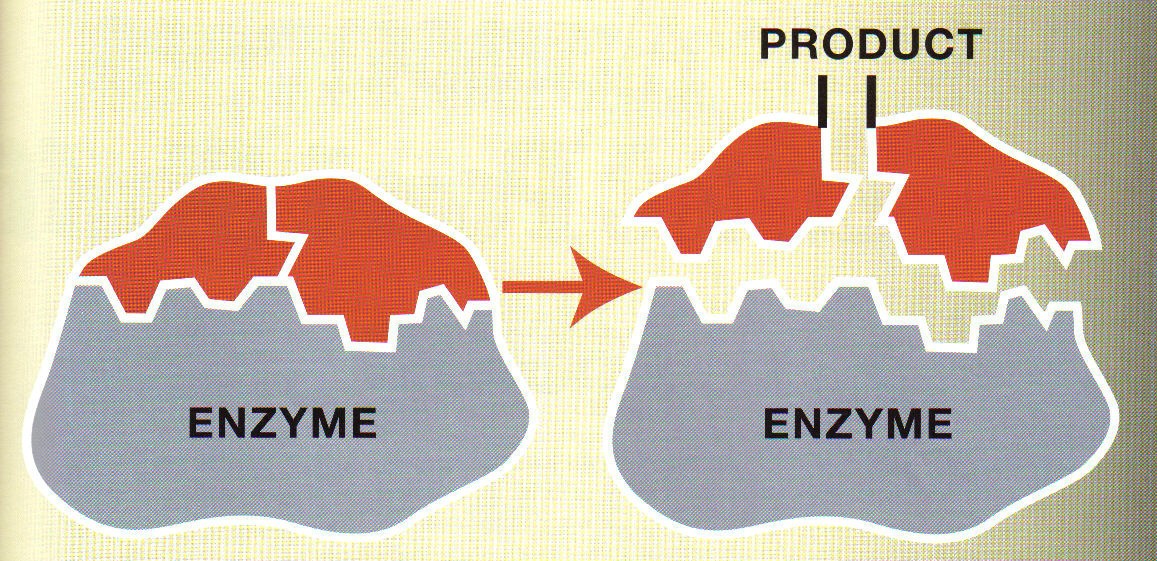
This is the area on an enzyme that the substrate attaches.
a)
active site
b)
product
c)
catalytic region
d)
reactant site
46.
The "lock and key hypothesis" attempts to explain the mechanism of?
a)
Vacuole formation
b)
Pinocytosis
c)
Sharing of electrons
d)
Enzyme are specific to a substrate
47.
Which line represents an enzyme-catalyzed reaction? 
a)
Line 1
b)
Line 2
48.
Which line represents an enzyme-catalyzed reaction? 
a)
Line 1
b)
Line 2
49.
contains C, H, O, N, and S
a)
carbs
b)
lipids
c)
proteins
d)
nucleic acids
50.
functions include regulation, transport, structure, defense
a)
carbs
b)
lipids
c)
proteins
d)
nucleic acid
51.
major component of cell membranes
a)
carbs
b)
lipids
c)
proteins
d)
nucleic acids
52.
An enzyme speeds up a chemical reaction in the cell but can only be used once.  True or False? 
a)
true
b)
false
53.
Enzymes speed up reaction rates by changing...
a)
Activation Energy
b)
pH
c)
Hydrogen Bonds
d)
Kinetic Energy
54.
There are some similarities between prokaryotic and eukaryotic cells. Which of the following structures is found in both prokaryotic and eukaryotic cells?
a)
lysosome
b)
mitochondrion
c)
nucleus
d)
ribosome
55.
Which cell structure is correctly paired with its primary function? 
a)
ribosome-protein synthesis
b)
mitochondrion-movement
c)
vacuole-cell division
d)
nucelus-storage of nutrients
56.
Look at the cell membrane model below: What is the name of the macromolecule that makes up the majority of the cell membrane?
a)
nucleotide
b)
lipid
c)
carbohydrate
d)
protein
57.
This scientist studied cork cells but not given credit for contributing to the cell theory.
a)
Rudolf Virchow
b)
Matthias Schleiden
c)
Robert Hooke
d)
Anton Van Leeuwenhoek
58.
Which of the following is NOT one of the parts of the cell theory?
a)
Cells are the smallest unit of life in living things.
b)
Very few cells reproduce.
c)
Cells come from other cells through cell division.
d)
All living things are made of cells.
59.
Prokaryotic cells lack _____________.
a)
Genetic Material
b)
A Nucleus
c)
The Cytoplasm
d)
A Cell Membrane
60.
Which organelle is used for breaking down materials/digestion?
a)
Lysosome
b)
Mitochondria
c)
Rough ER
d)
Chloroplast
61.
Which organelle is used to make proteins?
a)
Vacuole
b)
Ribosome
c)
Golgi
d)
Mitochondria
62.
The movement of particles from high concentration to low concentration is
a)
Active Transport
b)
Endocytosis
c)
Exocytosis
d)
Diffusion
63.
Water moves ________ a cell in a hypotonic solution.
a)
In To
b)
Out Of
c)
In and Out
d)
Everywhere
64.
Water moves ________ a cell in a hypertonic solution.
a)
In To
b)
Out Of
c)
In and Out
d)
Everywhere
65.
Which organelles are involved in energy conversion?
a)
Mitochondria and chloroplasts
b)
Mitochondria and ribosomes
c)
Smooth and rough endoplasmic reticulum
d)
Golgi apparatus and chloroplasts
66.
Which organelle is NOT in animal cells?
a)
Golgi Apparatus
b)
Cell Wall
c)
Nucleus
d)
Plasma Membrane
67.
The cell membrane's function is to...
a)
Produce proteins
b)
Hold the genetic information
c)
Regulate what comes in and out of the cell
d)
Produce lipids
68.
Which organelle is only found in a plant cell? 
a)
nucleus
b)
chloroplast
c)
mitochondria
d)
cell membrane
69.
Which of the following is directly involved in the transportation of materials inside/within the cell?
a)
Endoplasmic Reticulum
b)
Vacuole
c)
Lysosome
d)
Mitochondria
70.
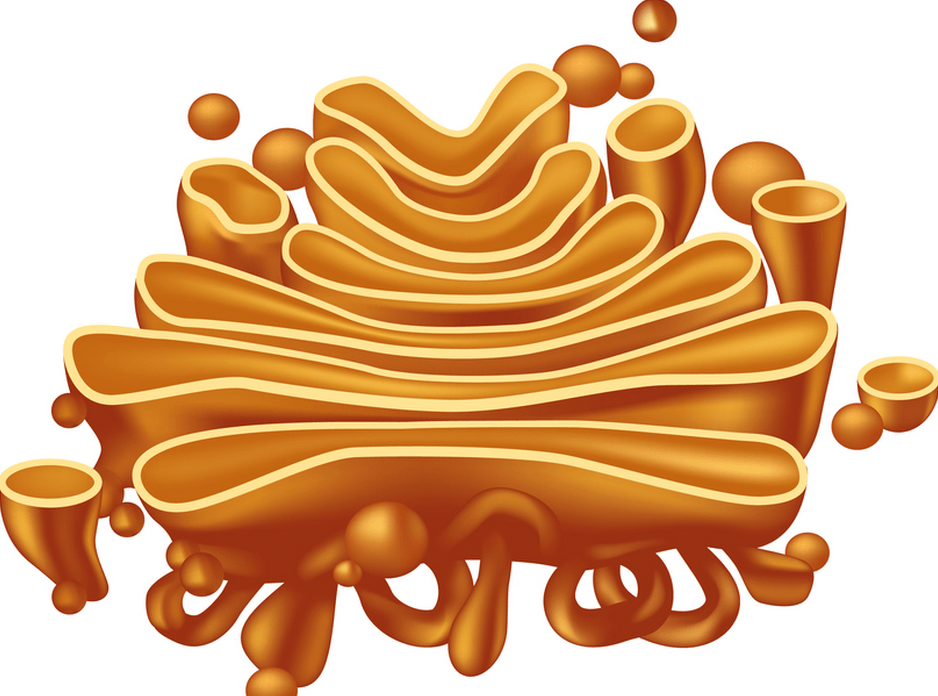
I am a protein packaging and shipping machine! Who am I?
a)
vacuole
b)
ribosome
c)
mitochondrion
d)
golgi apparatus
71.
Which part of the cell is often called "the brain of the cell"?
a)
nuclear membrane
b)
endoplasmic reticulum
c)
nucleus
d)
mitochondria
72.
The site of photosynthesis
a)
ribosome
b)
mitochondria
c)
chloroplast
d)
nucleus
73.
What organelle is called the "powerhouse" of a cell?

a)
Endoplasmic Reticulum
b)
Nucleus
c)
Mitochondria
d)
Nucleolus
74.
Cells with a nucleus and membrane-bound organelles are called ____________________.
a)
prokaryotes
b)
eukaryotes
c)
bacteria
d)
protists
75.
Cells need to bring in molecules to carry out cellular processes. Often, this requires moving the molecules across the cell membrane against the concentration gradient. How do these molecules get into the cell?
a)
passive transport by diffusion
b)
active transport using ATP 
c)
passive transport by osmosis
d)
 osmosis
76.
A person with swollen gums rinses his mouth with warm salt water, and the swelling decreases. Which of the following has occurred?
a)
The swollen gums have absorbed the saltwater solution.
b)
The saltwater solution lowers the temperature of the water in the gums.
c)
The salt in the solution has moved against the concentration gradient.
d)
The water in the gums has moved out due to the high concentration of salt in the solution. 
77.
The cell membrane of the red blood cell will allow water, oxygen, and carbon dioxide to pass through. Because other substances are blocked from entering, this membrane is called
a)
perforated
b)
semi-permeable
c)
non-conducive
d)
permeable
78.
 Look at the diagram of a cross-section of a cell membrane below. The cell membrane controls movement of materials into and out of the cell. The following particles are moving from high concentration to low concentration and are using a carrier protein. How would you describe this type of movement across the membrane? 
a)
simple osmosis
b)
active transport
c)
simple diffusion
d)
facilitated diffusion
79.
Look at the cross section of a cell membrane of a eukaryotic cell. H+ ions are being pumped from a low concentration to a high concentration. How do you describe this type of transport across the cell membrane?
a)
active transport
b)
passive transport
c)
facilitated diffusion
d)
co-transport
80.
 In pure water, a red blood cell from an animal will swell and burst, but a leaf cell from a plant will not. Which structure in the leaf cell is responsible for this difference?
a)
cell membrane
b)
cell wall
c)
 mitochondrion
d)
nucleus
81.
The diffusion of water across a selectively permeable membrane is called 
a)
active transport
b)
facilitated diffusion
c)
osmosis
d)
phagocytosis
82.
During diffusion molecules tend to move 
a)
   up the concentration gradient
b)
 from an area of lower concentration to an area of higher concentration
c)
 in a direction that doesn’t depend on concentration
d)
 down the concentration gradient
83.

Which is true about active transport?

a)

requires energy

b)

does not require energy

c)

moves substances down the concentration gradient

d)

moves material from high to low concentration

84.
What does it mean that a cell membrane is semipermeable?
a)
It allows all substances inside.
b)
It allows some substances inside.
c)
It allows no substances inside.
85.
The movement of molecules against a concentration gradient
a)
simple diffusion
b)
facilitated diffusion
c)
active transport
d)
osmosis
86.
Which term means "water-loving"?
a)
Cohesion
b)
Nonpolar
c)
Hydrophilic
d)
Hydrophobic
87.
This picture represents which type of cellular transport?
a)
passive transport
b)
endocytosis
c)
exocytosis
d)
osmosis
88.
A cell in an isotonic solution will
a)
swell
b)
shrink
c)
stay the same size
d)
impossible to tell
89.
Which term means "water-fearing"?
a)
Adhesion
b)
Polar
c)
Hydrophilic
d)
Hydrophobic
90.
Most plants appear green because chlorophyll
a)
absorbs green light.
b)
absorbs violet light.
c)
reflects green light.
d)
does not absorb violet light.
91.
A student is collecting the gas given off from a plant in bright sunlight at a temperature of 27°C. The gas being collected is probably ________.
a)
oxygen
b)
carbon dioxide
c)
ATP
d)
glucose
92.
If carbon dioxide is completely removed from a plant’s environment, what would you expect to happen to the plant’s production of high-energy sugars (rate of photosynthesis)?
a)
Sugar production will likely increase.
b)
Sugars will not be produced.
c)
The rate of sugar production will decrease .
d)
Fewer sugars will be produced at first, but then the plant will recover.
93.
The raw materials or reactants of photosynthesis are
a)
sugar and water.
b)
sugar and oxygen.
c)
carbon dioxide and water.
d)
carbon dioxide and oxygen.
94.
Which statement about photosynthesis is correct?
a)
Plants get the energy they need for photosynthesis from water.
b)
Plants get the energy they need for photosynthesis from soil.
c)
Plants get the energy they need for photosynthesis from sunlight.
d)
Plants do not require energy to perform photosynthesis.
95.
What are the products of photosynthesis?
a)
Carbon dioxide and water
b)
Carbon dioxide and oxygen
c)
Glucose and oxygen
d)
Glucose and water
96.
Which of the following is the correct equation for PHOTOSYNTHESIS?
a)
6CO2 + 6H2O --> 6O+ C6H12O6
b)
6CO+ C6H12O6 + 6H2O --> O
c)
6O2 + 6H2O --> 6CO+ C6H12O6
d)
C6H12O6 + 6O2 ---> 6H2O + 6CO2 
97.
Which gas is removed from the atmosphere during photosynthesis?
a)
hydrogen
b)
oxygen
c)
nitrogen
d)
carbon dioxide
98.
Where do the light-dependent reactions occur? 
a)
thylakoid membrane
b)
stroma
c)
mesophyll
d)
mitochondria
99.
Where does the Calvin Cycle occur?
a)
thylakoid
b)
stroma
c)
lumen
d)
mitochondria
100.
The fluid like substance found inside the chloroplast is called
a)
Cytoplasm
b)
Stroma
c)
Thykloids
d)
Cell Wall
101.

What is the function of NADPH and ATP?

a)

They absorb light

b)

They power the light-dependent reactions

c)

They are light-reflecting pigments

d)

They carry electrons and are short term energy carriers

102.
What is the main purpose of the light dependent reactions?
a)
To provide the energy for the calvin cycle
b)
To capture energy and make sugar
c)
To reflect green light
d)
To make sugars
103.
What is the name of the 1st step of cellular respiration?
a)
Glycolysis
b)
Kreb's Cycle
c)
ETC
d)
Anaerobic respiration
104.
Where does glycolysis take place?
a)
Cytoplasm
b)
Stroma
c)
Thylakoid
d)
Mitochondria
105.
Where does aerobic respiration take place?
a)
Cytoplasm
b)
Mitochondria
c)
Stroma
d)
Thylakoid
106.
What are the two reactants of cellular respiration?
a)
C6H12O6 & 6CO2
b)
6 CO2 & 6H2O
c)
C6H12O& 6O2
d)
6CO2 & 6O2
107.
Glucose is broken down during which process?
a)
Calvin cycle
b)
Glycolysis
c)
Krebs Cycle
d)
Photosynthesis 
108.

Along with 2ATP, what is produced during glycolysis?

a)

6CO2

b)

6O2

c)

C6H12O6

d)

2 pyruvate & 2 NADH

109.
What are the two produces of aerobic respiration?
a)
Glucose & oxygen
b)
Carbon dioxide & water
c)
Lactic acid
d)
Carbon monoxide 
110.
The overall goal of cellular respiration is to make:
a)
Glucose
b)
ATP
c)
Oxygen
d)
Water
111.
Which is a product of Kreb's Cycle?
a)
Carbon dioxide
b)
Glucose
c)
Pyruvate
d)
Water
112.
What is the name of the process that helps make beer and wine?
a)
Fermentation
b)
Alcoholic fermentation
c)
Lactic acid fermentation
d)
Glycolysis
113.
Which type of fermentation occurs in muscles?
a)
Alcoholic 
b)
Lactic acid
114.
How does the amount of energy resulting from fermentation compare with that of aerobic respiration? 
a)
Aerobic respiration results in less energy.
b)
Each process results in equal amounts of energy.
c)
Aerobic respiration results in more energy.
d)
Each process results in variable amounts of energy. 
115.
Which of the following is the correct equation for aerobic cellular respiration?
a)
6CO2 + 6H2O     --->   C6H12O6 + 6O+ ATP
b)
6O2 + C6H12O6  ---> 6H2O + 6CO+ ATP
c)
C6H12O+ 6H2O ---> 6CO2 + 6O+ ATP
d)
6O2 + 6H2O ---> C6H12O6 + 6CO+ ATP
116.
During fermentation, yeast produces CO2 and
a)
lactic acid
b)
alcohol
c)
hydrogen 
d)
water
117.
The process of cellular respiration 
a)
is performed only by organisms that are incapable of photosynthesis
b)
is performed by autotrophs and heterotrophs
c)
occurs before plants are able to carry out photosynthesis
d)
occurs only in animals
118.
Aerobic cellular respiration occurs in this order....
Glycolysis-->????-->ETC
a)
Krebs cycle
b)
Calvin cycle
c)
Light reactions
d)
Digestion
119.
Which of the following comes out of glycolysis?
a)
FADH2
b)
NADH
c)
H2O
d)
CO2
120.
Which stage of cellular respiration produces the most NADH and FADH2?
a)
Glycolysis
b)
Pre-krebs
c)
Krebs cycle
d)
Electron Transport Chain
121.
Glucose is a product of which process?
a)
Photosynthesis
b)
Cellular respiration
122.
The goal of fermentation after glycolysis is to regenerate which of the following?
a)
FAD
b)
NAD
c)
Oxygen
d)
Carbon dioxide
123.

In the ETC, H+ ions must pass through this enzyme so it can make ATP.

a)

Rubisco

b)

Lactase

c)

NADase

d)

ATP synthase

124.
What acts as the final electron acceptor to keep the ETS moving, producing water?
a)
CO2
b)
O2
c)
H2O
d)
ATP
125.
Plants need carbon dioxide from their environment to produce glucose during which stage of photosynthesis? 
a)
The light-dependent stage
b)
The light-independent stage (The Calvin Cycle)
c)
The electron transport chain
d)
ATP formation
126.
The light independent reactions of photosynthesis happen where?
a)
stroma of chloroplast
b)
mitochondrial matrix
c)
stem
d)
thylakoid membrane
127.
Does the Calvin Cycle require light?
a)
yes
b)
no
c)
depends on the amount of carbon dioxide
128.
Which product is produced by the splitting of water during the light-dependent reactions of photosynthesis?
a)
NADPH
b)
oxygen
c)
glucose
d)
carbon dioxide
129.

Select all stages of interphase?

a)

G1

b)

S

c)

G2

d)

Mitosis

130.

In which stage of the cell cycle does the cell grow in size?

a)

G1

b)

S

c)

G2

d)

Mitosis

131.

In which stage of the cell cycle does the cell duplicate its DNA?

a)

G1

b)

S

c)

G2

d)

Mitosis

132.

In which stage of the cell cycle does the cell duplicate its DNA?

a)

G1

b)

S

c)

G2

d)

Mitosis

133.

In which stage of the cell cycle does the cell split into two?

a)

Mitosis

b)

G1

c)

Cytokinesis

d)

S

134.

In which stage of the cell cycle does nuclear splitting take place?

a)

G2

b)

S

c)

Mitosis

d)

Cytokinesis

135.

_____ is the uncontrolled growth of cells, often resulting in a tumor or mass of abnormal cells

a)

Cancer

b)

Apoptosis

c)

Radiation

136.
The division of the nucleus is known as:
a)
Synthesis
b)
Mitosis
c)
G1
d)
G2
137.
The individual strands on duplicated chromosomes are called_____________
a)
Centromeres
b)
daughters
c)
Chromatids
d)
Karyotypes
138.
The ___________ holds the replicated sister chromatids together.
a)
centriole
b)
chromosomes
c)
centromere
d)
cycles
139.
The cell spends most of it's life in ________________.
a)
mitosis
b)
cytokinesis
c)
Interphase
d)
None of the above
140.
When a plant cell goes through cell division,  _____________.
a)
the 2 new nuclei are separated by the cell membrane pinching off.
b)
4 new cells are formed
c)
a cell plate forms, dividing the 2 new nuclei
d)
None of the above
141.
When an animal cell goes through cytokinesis,__________
a)
a cell plate forms dividing the 2 new nuclei.
b)
the cell membrane pinches off the 2 new cells.
c)
4 new cells are formed.
d)
None of the above
142.
A human cell has 46 chromosomes before mitotic division.  How many chromosomes will the daughter cells after mitosis.
a)
12
b)
23
c)
46
d)
92
143.
Name the phase:
a)
Anaphase
b)
Telophase
c)
Metaphase
d)
Prophase
144.
Name the phase:
a)
Prophase
b)
Metaphase
c)
Anaphase
d)
Telophase
145.
Name the phase:
a)
Prophase
b)
Metaphase
c)
Anaphase
d)
Telophase
146.
Name the phase:
a)
Prophase
b)
Metaphase
c)
Anaphase
d)
Telophase
147.
The stages of mitosis in order
a)
Metaphase, Anaphase, Prophase, Telophase
b)
Prophase, Anaphase, Metaphase, Telophase
c)
Prophase, Metaphase, Anaphase, Telophase
d)
Anaphase, Prophase, Telophase, Metaphase
148.
What is facilitated diffusion?
a)
Transport that uses proteins to help move molecules across the membrane. 
b)
Movements of substances through a membrane. 
c)
When molecules spread from High to Low concentration on their own. 
d)
When pressure pushes something through a membrane. 
149.

Which of the following is correct about the Golgi apparatus?

a)

Digests waste materials

b)

Protection and Support

c)

Modifies and packages molecules

d)

cellular movement

150.

What is the function of the structures shown on these two cells?

a)

reproduction

b)

grasping food

c)

movement

d)

attachment to a surface or another cell.

151.

The 3 parts of the Cell Theory are...?

a)

All living things are composed of cells

Cells are the basic units of structure and function in living things

All cells are produced from other cells

b)

All living things are composed of cells

Cells are the basic units of dance and vibes in living things

All cells are destroyed from other aliens

c)

All living things are composed of Jell-O

Cells are the basic units of structure and function in living things

All cells are produced from factories in Canada

d)

All living things are composed of cells

Cells do karate and practice eating whole pies in their free time

All cells are produced from other cells

152.

I am often referred to as the "packaging system" within a cell. I "package" proteins and ship them to the Golgi Body. I am a...

a)

Cytoplasm

b)

Endoplasmic Reticulum

c)

Baconidis

d)

Golgi Body

153.

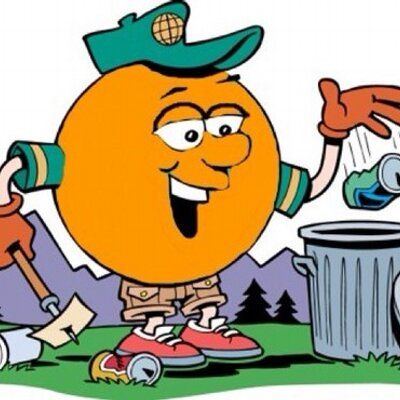
I am the "waste removal expert" within a cell, removing unwanted material. Like a garbage man, I am a...

a)

Waste Management

b)

Nucleus

c)

Ribosome

d)

Lysosomes

154.

The diffusion of particles through the cell membrane from high to low concentration is called ....

a)

exocytosis

b)

active transport

c)

passive transport

d)

osmosis

155.
Cell membrane surrounds a particle and encloses it (for large particles)
a)
Endocytosis
b)
Exocytosis
c)
Permeable
d)
In high concentration
156.
A cell with a 5% salt solution is placed into a beaker with a 10% salt solution.  This solution is considered to be _____ to the cell.
a)
Isotonic
b)
Hypertonic
c)
Hypotonic
d)
None of the Above
157.
A cell with a 5% salt solution is placed into a beaker with a 10% salt solution.  What will happen to the cell?
a)
It will shrink
b)
It will swell
c)
No change
d)
Cytolysis
158.
A cell with a 5% salt solution is placed into a beaker with a 10% salt solution.  What will happen to the cell?
a)
It will shrink
b)
It will swell
c)
No change
d)
Cytolysis
159.
A cell with a 10% salt solution is placed into a beaker with a 40% salt solution.  How will water move?
a)
It will leave the cell
b)
It will enter the cell
c)
It will move in and out equally
d)
There will be no movement
160.

Who is credited with using the term "cells" for the first time?

a)

van Leeuwenhoek

b)

Hooke

c)

Darwin

d)

Galileo

161.

If you wanted to observe an unicellular organism called a paramecium actually moving, which type of microscope should you use

a)

Scanning Electron Microscope

b)

Transmission Electron Microscope

c)

Compound Light Microscope

d)

None of the above. I would not need a microscope

162.

Which type of microscope creates a 3-D image?

a)

Scanning Electron Microscope

b)

Transmission Electron Microscope

c)

Compound Light Microscope

d)

There is no microscope that can make a 3-D image

163.

Which type of endocytosis brings in liquids?

a)

Phagocytosis

b)

Pinocytosis

c)

Receptor-mediated endocytosis

d)

Digestion

164.
Genotype refers to the ...
a)
physical expression of the genes
b)
the possible combination of alleles in a gene
c)
whether an allele is dominant or recessive
d)
how an organism will appear
165.
An offspring will receive how many alleles from each parent to determine a specific trait?
a)
one
b)
two
c)
three
d)
five
166.
Which of the following is a phenotype?
a)
BB
b)
Bb
c)
bb
d)
Blue eyes
167.
What is a phenotype
a)
The genetic make up (code)
b)
The physical trait
168.
the passing of genetic traits from parent to offspring.
a)
heredity
b)
trait
c)
gene
d)
allele
169.
having two of the same genes for the trait (sometimes called purebred).
a)
homozygous
b)
hetrozygous
c)
protein
d)
chromosome
170.
having two different genes for a trait (sometimes called hybrid).
a)
protein
b)
homozygous
c)
heterozygous
d)
genotype
171.
Two brown eyed parents (Bb) have a baby. What is the chance the baby is blue eyed?
a)
0 %
b)
25%
c)
50%
d)
75%
172.
One form of a gene is called_______________
a)
a DNA
b)
a Phenotype
c)
a trait
d)
an allele
173.
Which of the following genotypes is a purebred?
a)
Bb
b)
Gg
c)
bb
d)
Dd
174.
W=white hair
w= non-white hair
If you cross a horse with WW and a horse with ww what fraction of the offspring would be expected to have white hair?
a)
none
b)
3/4
c)
1/2
d)
all
175.
Pea plants can have green or yellow seeds. In a pea plant that is heterozygous for seed color, the allele for yellow seeds masks the effects of the allele of green seeds. Which of the following terms best describes the allele for yellow seeds?
a)
codominant
b)
recessive
c)
dominant
d)
sex-linked
176.
In mussels, the allele for brown coloring (B) is dominant, and the allele for blue coloring(b) is recessive. For which parental genotypes are 100% of the offspring expected to be blue?
a)
BbxBb
b)
bbxbb
c)
BBxbb
d)
BBxBB
177.
Two heterozygous (Tt)tall pea plants are crossed. Which describes their offspring?
a)
50% tall and 50% short
b)
75%tall and 25% short
c)
100%short
178.
What is the relationship between DNA and chromosomes?
a)
Chromosomes are made of DNA
b)
DNA is made of chromosomes
c)
DNA and chromosomes are the same thing.
d)
All of the above are correct
179.
Put in order smallest to largest:
a)
Chromosome - DNA - Gene
b)
Gene - DNA - Chromosome 
c)
DNA - Gene  Chromosome
d)
Chromosome - Gene  - DNA
180.
A homozygous dominant dog with brown fur is crossed with a heterozygous dog with brown fur. What are the percentages of the possible genotypes?
a)
100% BB
b)
75% BB and 25%Bb
c)
50 % BB and 50% Bb
d)
50% Bb and 50% bb
181.
The man who studied genetics and came up with genetics is
a)
Watson
b)
Crick
c)
Mendel
d)
Darwin
182.
Which sequence of complementary DNA bases would pair with this partial strand
ATG TGA CAG?
a)
ATG TGA CAG
b)
TAC ACT GTC
c)
GTA AGT GAC
d)
CAT TCA CTG
183.
Which of the following best describes a DNA molecule?
a)
double helix
b)
contains ribose
c)
made of amino acids
d)
contains uracil
184.
Which of the following monomers are repeatedly joined together to form a strand of DNA?
a)
amino acids
b)
nucleotides
c)
fatty acids
d)
polysaccharides
185.
In a molecule of double-stranded DNA, the amount of adenine present is always equal to the amount of _________.
a)
cytosine
b)
guanine
c)
thymine
d)
uracil
186.
Which 2 molecules form the sides (backbone) of the DNA ladder?
a)
deoxyribose sugar and adenine
b)
deoxyribose sugar and a hydrogen bond
c)
deoxyribose sugar and the nucleus
d)
deoxyribose sugar and phosphate
187.
The two strands of nitrogenous bases in DNA are joined by which type of bond?
a)
polar bonds
b)
ionic bonds
c)
covalent bonds
d)
hydrogen bonds
188.

A process in which DNA has the unique ability to make an exact copy of itself.

a)

Replication

b)

Translation

c)

Transcription

d)

Protein Synthesis

189.
What are the three components of a nucleotide?
a)
sugar, hydrogen, nitrogen base
b)
sugar, oxygen, nitrogen base
c)
sugar, phosphate, nitrogen base
d)
sugar, phosphate, protein
190.
Who was given credit for determining the shape of DNA? 
a)
Avery
b)
Watson and Darwin
c)
Watson and Crick
d)
Franklin and Crick
191.

What are the four nitrogen bases found in DNA?

a)

adenine, thymine, guanine, cytosine

b)

adenine, lysine, prolene, guanine

c)

arganine, cytosine, lysine, purine

d)

lysine, cytosine, lucine, guanine

192.
The sugar in DNA is ?
a)
sucrose
b)
glucose
c)
deoxyribose
d)
fructose
193.
When DNA makes a copy of itself, the new strands are identical or different?
a)
identical
b)
different
194.
The enzyme that unwinds the DNA to prepare for replication
a)
helicase
b)
replicase
c)
polymerase
d)
synthase
195.
In what phase of the cell cycle does DNA replication take place?
a)
G1
b)
S
c)
G2
d)
M
196.

Which enzyme is responsible for adding nucleotides during DNA replication?

a)

Topoisomerase

b)

DNA Polymerase

c)

Ligase

d)

Primase