
 Worksheets
7th Final Exam Review 2nd
Total questions: 80
Worksheet time: 7hrs 40mins
These Rocks are formed from intense Heat and Pressure
Metamorphic
Igneous
Sedimentary

This rock was another type of rock that was heated and compressed over time. What type of rock is this?
Sedimentary
Igneous
Metamorphic

The process when rocks break into smaller pieces due to exposure to natural elements is called
erosion
weathering
sediments

What does letter G represent?
Heat and pressure
Cooling
Deposition, Compaction, Cementation
Weathering and erosion

Which of the following orders the rock layers accurately from oldest to youngest?
1, 2, 3, 4, 5
5, 4, 3, 2, 1
2, 3, 4, 5, 1
1, 2, 3, 5, 4

Which of these rock layers is the youngest?

How does absolute age( radioactive dating) differ from relative age?

Identify this type of plate movement
Divergent Boundary
Convergent Boundary
Transform Boundary
None

(a) currents are the cause of tectonic plate movement

Which layer is iin the liquid state?
Outer Core
Inner Core
Natural selection can be described as
An inherited characteristic that increases chances of survival
The process where organisms with traits well-suited to their environment survive and reproduce at a greater rate
A growing population causes a scarcity of resources
Differences in the DNA sequence
A trait that makes a species better suited to survive in its environment is called a(n) _________.
variation
adaptation
natural selection
isolation
Define radioactive dating.
The determination of a fossil's age by looking at the amount of radioactive elements in the rock.
The millions of fossils that scientists have collected.
Similar structures that related species have inherited from a common ancestor.
The gradual change in a species over time.

Darwin found the following finches on the Galapagos islands. What best describes why they have different beaks?
Genetic variation has made it possible for birds to feed on different forms of food due to their beak shape.
Genetic variation has made it possible for larger eyes on the birds to see.
Genetic variation has made it possible for the birds to camouflage themselves on the island.
Genetic has made it possible for the birds to feed at different times of the day due to competition.
What is the cell process called that produces identical cells (asexual reproduction)?
Mitosis
Meiosis
Photosynthesis
Cellular Respiration
Which results in offspring that are genetically unique and display a combination of traits from each parent?
Sexual (meiosis)
Asexual (mitosis)
Neither
Both
Which type of reproduction results in offspring that are identical to the parent?
Sexual (meiosis)
Asexual (mitosis)
Neither
Both
What is the cell process called that produces sex cells?
Mitosis
Meiosis
Photosynthesis
Cellular Respiration
Which of the following is true about DNA?
It's found in the nucleus
It is organized into chromosomes
It holds all the genetic information
All of these are true
What is it called when 2 sex cells combine through fertilization and create an offspring?
mating
sexual reproduction
asexual reproduction
mitosis
Due to the fact that plants can make their own food using photosynthesis, what are plants considered in food chains?
omnivores
consumbers
producers
carnivores
In a food chain, what breaks down dead material and helps turn it into nutrients in the soil?
producers
decomposers
animals
water
Which choice below shows the correct order of a food chain?
sun -> rabbit -> tomato plant -. decomposer -> hawk
tomato plant -> decomposer -> sun -> rabbit -> hawk
sun -> tomato plant -> rabbit -> hawk -> decomposer

A producer gets energy from the (a)

What do the arrows represent in the food chain?
Primary Consumers
Transfer of Energy
Predators
Sunlight

This image best depicts which of the following wave behaviors?
Reflection
Refraction
Diffraction
Resonance

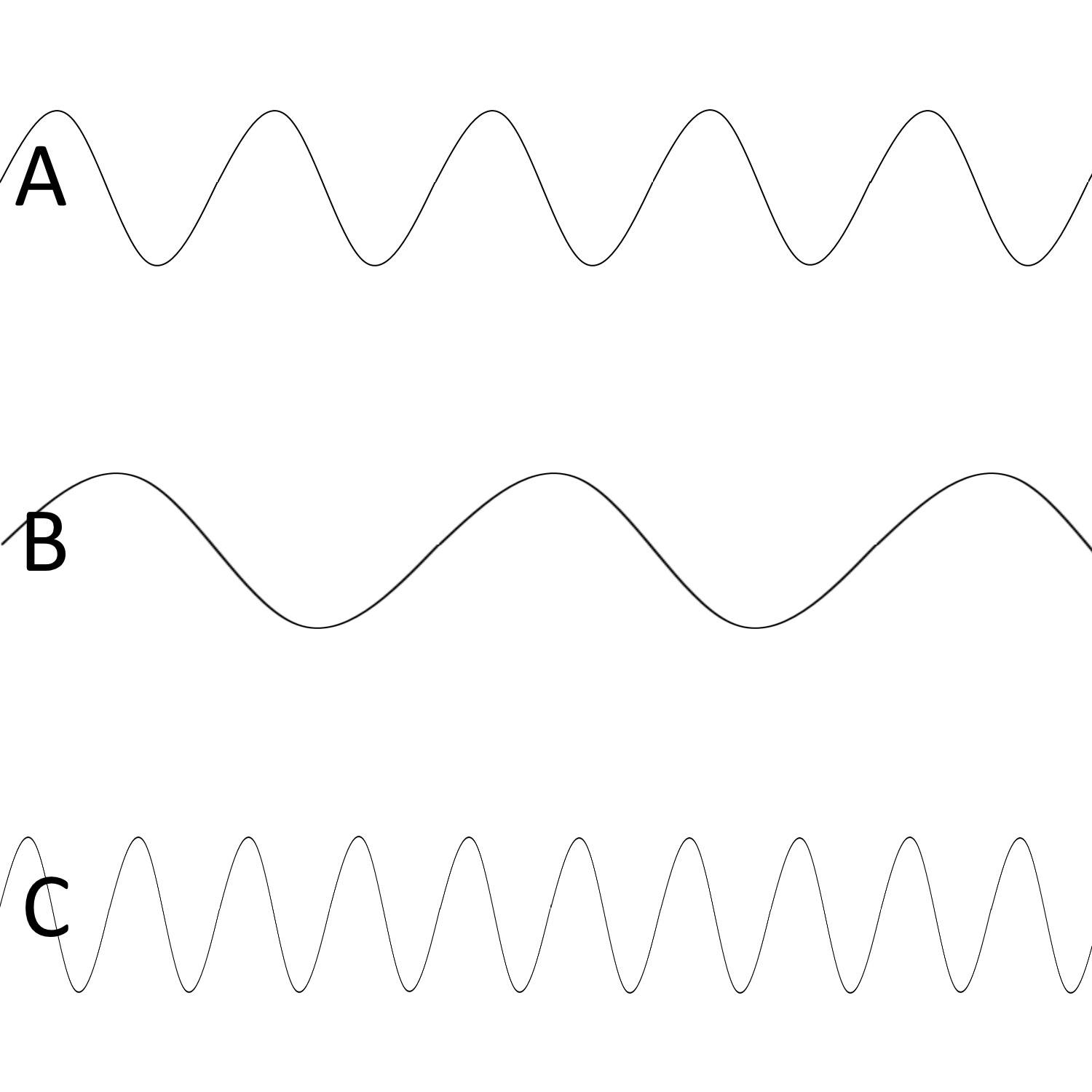
What kind of waves need a medium to travel through?
electromagnetic waves (light)
mechanical waves
(sound)
surface waves
(water)
particle waves
(radiation)
What kind of waves do NOT need a medium to travel through?
electromagnetic waves (light)
mechanical waves
(sound)
surface waves
(water)
particle waves
(radiation)
As the wavelength of a wave decreases, the waves frequency
increases
decreases
remains the same
wavelength is not related to frequency
According to the Law of Conservation of Energy, energy cannot be ______ or _______
destroyed, determined
created, nuclear
destroyed, remade
created,destroyed
Gravitational potential energy depends on the______ and ______ of the object.
force, energy
speed, height
mass, speed
height, mass

A change from a liquid to a solid is called
melting
condensation
evaporation
sublimation
freezing

A change from gas to liquid is called....
melting
freezing
sublimation
condensation

KINETIC ENERGY IS THE ENERGY OF MOVEMENT
TRUE
FALSE

As heat energy is added to liquid, the water molecules (particles) have enough energy to
break up, spread apart, and turn into gas
bond and turn into solid
bond and break up
neither
What is the transfer of heat through waves and is the only way that heat can transfer through empty space?
conduction
convection
radiation
electrical
Thermal energy moves from _________ objects or molecules to ________ objects or molecules.
hotter; colder
colder; hotter
larger; smaller
none of the above
What is the transfer of heat by the movement of particles in the form of a current and happens in liquids and gases?
conduction
convection
radiation
chemical
What is the transfer of heat from one object to another by direct contact from particle to particle and only happens in solids?
conduction
convection
radiation
potential
Which of the following correctly lists the levels of biological organization from LEAST complex to MOST complex?
cell, tissue, organ, organ system, organism
cell organism organ system organ tissue
organ system organism organ tissue cell
organism organ system organ tissue cell

Groups of different tissues working together to perform a particular function are called . . .
compound tissues
macromolecules
organ systems
organs

Groups of similar cells that work together to carry out a specific task or function are called . . .
cell systems
nucleic acids
organs
tissues
Which is NOT a part of the cell theory
All organisms are composed of one or more cells.
The cell is the basic unit of structure and organization in organisms.
All cells come from preexisting cells.
The invention of the microscope allowed scientist to investigate plant and animal cells.
The basic unit that makes up all living things is called ____.
cells
unicellular
organelle
organism
How many cells are bacteria made of?
one
two
three
none

Which body system controls the body to maintain homeostasis?
excretory
nervous
circulatory
skeletal
The balanced maintenance of an organism’s internal environment is called:
compensating
homeostasis
balancing
routine
A correct balance of oxygen and carbon dioxide must be maintained in the human body to survive. Which system is responsible taking in oxygen and releasing carbon dioxide to the external environment to maintain this internal balance?
the respiratory system
the circulatory system
the digestive system
the nervous system
Which body system works together to provide cells with oxygen?
respiratory
digestive
endocrine
circulatory
lymphatic
Which systems of the human body function together to move and control body parts?
lymphatic
muscular
skeletal
digestive
excretory
Which system contains the organs; esophagus, stomach, small intestine?
endocrine
integumentary
lymphatic
digestive
Which layer of the Atmosphere contains most of the air we breathe?
Stratosphere
Atmosphere
Troposphere
Exosphere


What sphere is shown below?
atmosphere
cryosphere
biosphere
hydrosphere
A soccer ball is on the ground. It is not moving. Are the forces acting on the ball balanced or unbalanced?
The forces acting on the ball are balanced.
The forces acting on the ball are unbalanced.
A ball rolling down a hill and stopping at the bottom is an example of:
Balanced forces
Unbalanced forces

Which of the following is an example of an unbalanced force?


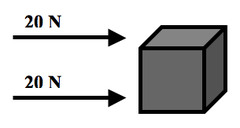
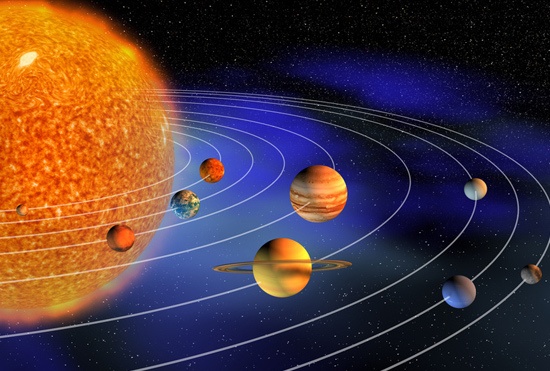
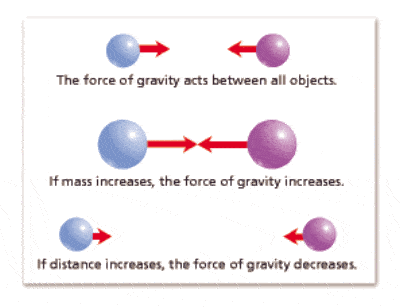
Why do all of the planets orbit the sun rather than Earth?
the sun has more mass
the sun is a star
the Earth is heavier
the sun is in the middle of the milky way

An environmental group contacts Nancy to get her experimental procedures so that they can check her results.
Replication
Repetition
Dr. Allen has been reading about another scientist’s research in a physics journal. She plans to do these experiments herself and see if she gets the same result.
Repetition
Replication
A scientist does THEIR OWN experiment over 3 times to check their results.
Repetition
Replication
Alyssa has taught her pet rat to run a maze. She thinks that the rat will go faster if she puts its favorite treat at the end. She has the rat run the maze ten times with the favorite treat and ten times with a regular food pellet. She uses a stopwatch to measure how long it takes for the rat to get to the reward.
Repetition
Replication
Tamar is talking about evolution with a friend. The friend says, “It’s just a theory, so I don’t believe it. When they prove it and it becomes the law of evolution, then maybe I’ll change my mind.” Which of these possible replies best describes scientific principles or the work of scientists?
Scientific theories do not become scientific laws; they are explanations for natural phenomena based on evidence.
Science always finds the right answer; the answers that scientists and researchers discover never change.
He should be wary of science because it is based on research and evidence, not bias and opinion.
Scientists take each other at their word regarding experimental results, and the public should, too

