
 Worksheets
ESB Water Unit Pre / Post
Total questions: 91
Worksheet time: 46mins
Name
Class
Date
1.
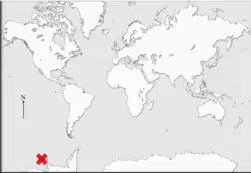
What ocean is this? ___________________.
4 lines
2.
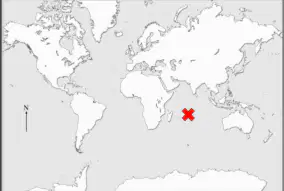
What ocean is this?___________________.
4 lines
3.
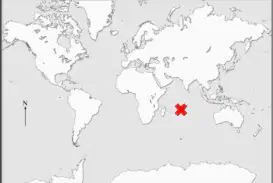
What ocean is this?___________________.
4 lines
4.
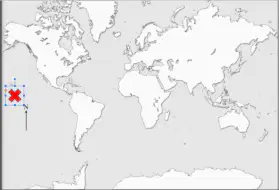
What ocean is this?___________________.
4 lines
5.
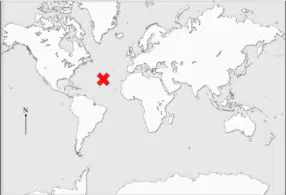
What ocean is this?___________________.
4 lines
6.
What is the study of the Earth's oceans called?
4 lines
7.
What percent of the world's water is salty ocean water?
4 lines
8.
What percent of the world is covered in oceans?
4 lines
9.
What are two tools that oceanographers use to study the ocean?
4 lines
10.
The moisture and heat in the ocean drives the ________________.
4 lines
11.
What is about 3.5% of seawater? _______________
4 lines
12.
Name a gas that is found in seawater. ________________________
4 lines
13.
Where in the ocean are temperatures warmest? ________________
4 lines
14.
Where in the ocean are temperatures coldest? __________________
4 lines
15.
At what temperature does seawater freeze?____________
4 lines
16.
How does salt get in the ocean? _______________
4 lines
17.
Explain why the oceans don't get saltier and saltier? _____________
4 lines
18.
Which is denser (Circle one) Freshwater Saltwater
4 lines
19.
Which color can reach deeper in the ocean? (Circle one) Blue Red
4 lines
20.
What is the name for the rhythmic movement of ocean water?
4 lines
21.
The highest part of a wave is called the ________________.
4 lines
22.
The lowest part of a wave is called the _________________.
4 lines
23.
Collapsing waves are called ___________________.
4 lines
24.
The periodic rise and fall of sea levels is called _________________.
4 lines
25.
When the sun makes the tide higher, it's called a ___________ tide.
4 lines
26.
When the sun makes the tide lower, it's called a ____________ tide.
4 lines
27.
Currents at the top 100-200m of ocean water are called ___________ currents.
4 lines
28.
Circular current systems that are caused when ocean currents are deflected by continents are called _______________.
4 lines
29.
When ocean water moves slowly upward vertically, it's called a _________________.
4 lines
30.
________________ currents are caused by differences in temperature and salinity.
4 lines
31.
Wide sandy areas where sediment is deposited on shore are called ____________.
4 lines
32.
The process by which waves bend as they reach shallow waters is called _______________
4 lines
33.
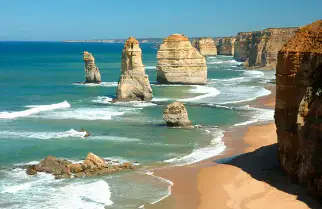
What are these features called?_______________
4 lines
34.
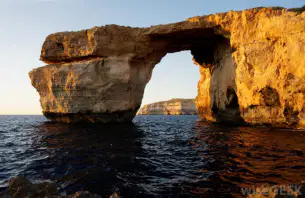
What are these features called? ________________.
4 lines
35.
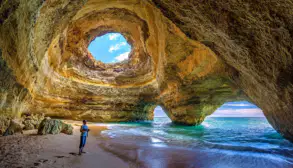
What are these features called? _______________
4 lines
36.
This is the name for sandbar that forms on most beaches_______________
4 lines
37.
This is formed as water from incoming breakers spills over the longshore bar. _______________
4 lines
38.
This is a dangerous stream of water that moves out to sea through a gap in the longshore bar_______________
4 lines
39.
This is a term for long strips of sand and sediment that are seperated from the mainland_______________
4 lines
40.
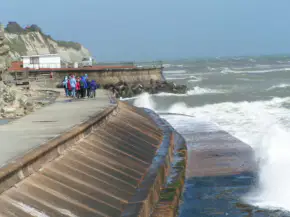
What's the name for this man-made coastal feature? _______________
4 lines
41.
The area where the edges of continents meet oceans is called the continental ____________.
4 lines
42.
The shallowest part of the continental margin is called the continental ____________.
4 lines
43.
Area past the continental shelf where the sea-floor drops away quickly to a depth of several kilometers is the continental _______________.
4 lines
44.
The area where you'll find a gently sloping accumulation of deposits at the base of the continental slope is called the continental ___________.
4 lines
45.
Beyond the continental margin are ocean _______________ which represent about 60% of the Earth's surface.
4 lines
46.
The flattest parts of the ocean floor are called ____________ plains.
4 lines
47.
The deepest parts of the ocean basins are the deep-sea ____________. (MORE ON BACK)
4 lines
48.
The most prominent features of the ocean basins are the mid-ocean ___________, which average 1500m high.
4 lines
49.
A hole in the sea-floor through which fluid headed by lava erupts is called a hydrothermal _______________________.
4 lines
50.
There are three types of marine ______________, terrigenous, biogenous, and hydrogenous.
4 lines
51.
A _____ percentage of Earth's water is in rivers and lakes.
4 lines
52.
Water that doesn't sink into the ground when it rains is called ______________.
4 lines
53.
Streams and rivers that have a lot of curves are called _____________ streams.
4 lines
54.
Streams with many islands of sand and deposits are called ______________ streams.
4 lines
55.
Each stream and river empties into a specific area called the ___________ basin.
4 lines
56.
An elevated area of land that separates one basin from another is called a _____________.
4 lines
57.
An area that separates drainage basins for an entire continent is called a _____________ divide.
4 lines
58.
Sediment that is carried by a stream is called stream _______.
4 lines
59.
When the land a stream is located on rises slowly, it can cause the water to cut a _______________ in the surface. (MORE ON BACK)
4 lines
60.
As a stream empties into a body of water such as a lake, gulf, or bay, the remaining sediment is deposited, forming a ________.
4 lines
61.
When a fast-moving mountain stream flows onto a flat plain or valley, a fan-shaped deposit of sediment, called an ______________ fan often forms.
4 lines
62.
The volume of water flowing through a stream in a given amount of time is called stream ____________.
4 lines
63.
When the river channel cannot hold the increased volume of water discharge, water flows onto the stream's _______________.
4 lines
64.
One way to control a flood is to build artificial __________, which are mounds of soil placed on the sides of a stream channel.
4 lines
65.
The Great Lakes were formed in part by _________________.
4 lines
66.
Lakes can form along ___________, which are surfaces along which rocks break and move.
4 lines
67.
Lakes can form in the _______________ of a volcano.
4 lines
68.
Human-made lakes often form behind _________.
4 lines
69.
Many types of _________________ can be found in lakes.
4 lines
70.
Over time, deposited ________________ change the depth of lakes.
4 lines
71.
An increase in nutrients and organisms that is a normal part of a lake's life is called ______________.
4 lines
72.
The mixing of warm and cold lake water is called _______________.
4 lines
73.
_________________is water under the surface of the Earth.
4 lines
74.
The volume of pore space divided by the volume of a rock or soil sample is its __________.
4 lines
75.
The ability of rock and soil to transmit water and other fluids is called ______________.
4 lines
76.
An _______________ is a layer of permeable rock through which water flows freely.
4 lines
77.
Aquifers and surface water occur in _______________, which are large regions drained by a particular river system.
4 lines
78.
The upper part of an aquifer is called the zone of _____________.
4 lines
79.
Below the zone from question 6 is the zone of _______________, where the pores of an aquifer are full of water.
4 lines
80.
The top surface of the zone of saturation is the _______________.
4 lines
81.
Where the water table meets Earth's surface, water seeps out to form a ________.
4 lines
82.
Some communities get water from wells without using pumps. These wells, called __________ wells, are drilled into pressurized aquifers.
4 lines
83.
A ___________ is a hot fountain that erupts periodically, shooting water and steam into the air.
4 lines
84.
A _________________ source of pollution is a water pollution source that happens in a specific area, such as a spot where chemicals are being directly dumped in the water.
4 lines
85.
A __________________ source of water pollution is water pollution over a larger area, such as roadways, agricultural areas, and industrial sites.
4 lines
86.
Most of the materials that people throw away end up in __________.
4 lines
87.
A ___________________consist of a septic tank and an absorption area.
4 lines
88.
In 1980, Congress established a program called __________ to eliminate the worst hazardous-waste sites in the United States.
4 lines
89.
________________ is a process that uses living organisms to remove pollutants.
4 lines
90.
When water no longer fills the pores in an aquifer, the land above the aquifer sinks. This is called _____________.
4 lines
91.
When salt water tends to flow slowly into the lower levels of a coastal aquifer this is called _______________________.
4 lines
100 %

