
 Worksheets
review evolution
Total questions: 69
Worksheet time: 3hrs 6mins
A phenotype that improves an organism’s chance of survival in their environment is considered a(n) ____________.
natural selection
adaption
speciation

Many different groups of organisms have wings, even though they do not share a recent common ancestor. This is because they evolved in environments with similar selective pressures. Wings are an example of a(n) ______________ structure.
vestigial
analogous
homologous
Which best describes the phrase survival of the fittest?
strongest in a population are most successful
fastest in a population are most successful
those that can survive and reproduce are most successful
those that can live the longest are most successful
Match the following pictures with the words they represent

Analogous Structure

Homologous Structure

Artificial selection

Natural selection

Organism

Population

Community

ecosystem

biosphere


Charles Darwin observed that finches of different species on the Galápagos Islands have many similar physical characteristics, this supports the hypothesis that these finches
are twins
acquired traits through use and disuse.
all eat the same type of food.
descended from a common ancestor.
What is speciation?
when a population reaches a balance and change is no longer occuring
when populations move away from each other
when species begin to pass on acquired traits and change their behavior
when two species can no longer interbreed
In a population of ladybugs, black bugs are more successful in escaping predators. Overtime, this gene becomes more popular in the population and the ladybug population loses its red color. This is an example of?
Natural Selection
Mutation
Genetic Drift
Gene Flow
There was a forest fire that wiped out birch trees randomly and left a few dispersed throughout the forest. The surviving trees evolve overtime changing the gene pool. This is an example of?
genetic drift
gene flow
bottleneck effect
founders effect
genetic flow
The bottleneck effect and founder effect are results of
gene flow
genetic drift
natural selection
non-random mating
mutations

Gigantopithecus were very large primates that lived 500,000 years ago. Since none of these mammals are still today, they are said to be....
Extinct
Threatened
Endangered
Declining

The pelvic bone of whales is not needed for movement within the water. This is an example of a(n) ______________ structure.
vestigial
analogous
homologous

Genes that are beneficial to the species will....
evolve a new species
will not be passed down to its' offspring
become more common over time
cause the extinction of a species
Occurs when two populations of organisms form a specialized relationship and thus change in response to each other
Convergent Evolution
Punctuated equilibrium
Coevolution
Speciation
Which set of Islands had a strong influence on Darwins ideas?
Hawaii
Galapagos
Samoa
Florida Keys
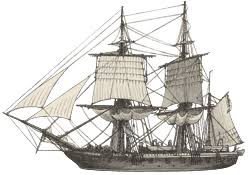
What was the name of Darwin's boat?
Indefatiguable
Bugle
Sloop John B
Beagle
The large-scale events of speciation are called...
macroevolution
simplification
adaptation
microevolution

Which best describes punctuated equilibrium?
Speciation occurs due to natural selection
Speciation occurs due to isolation
Speciation occurs slowly in geologic time, followed by long periods with very fast evolutionary change.
Speciation occurs suddenly and rapidly in geologic time, followed by long periods with little evolutionary change.

According to this image, which two domains of life are most related?
Bacteria & Archaea
Archaea & Eukarya
Eukarya & Bacteria

Which group of animals on this tree are most closely related to birds?
Saurischian dinosaurs
Ornithischian dinosaurs
Crocodiles
None of these are related to birds

What number is the common ancestor of C and D
1
2
3
4

Phylogeny is usually represented by a tree diagram called a _________ - _____
Genetic Line
Phylogenetic Tree
Photographic Queue
Future Babies

What is the common ancestor of Letters A, B, C, D, E?
1
2
3
4
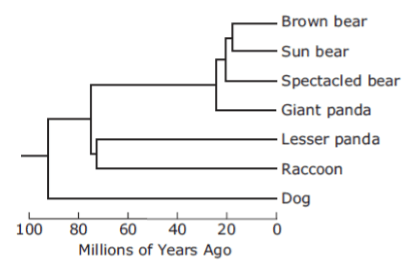
Who is the closest relative to the brown bear?
Giant panda
Dog
Lesser panda
Sun bear
On a phylogenetic tree, what do the branch lengths represent?
The age of the organisms
amount of genetic change since divergence
amount of genetic change since convergence
The age of divergence
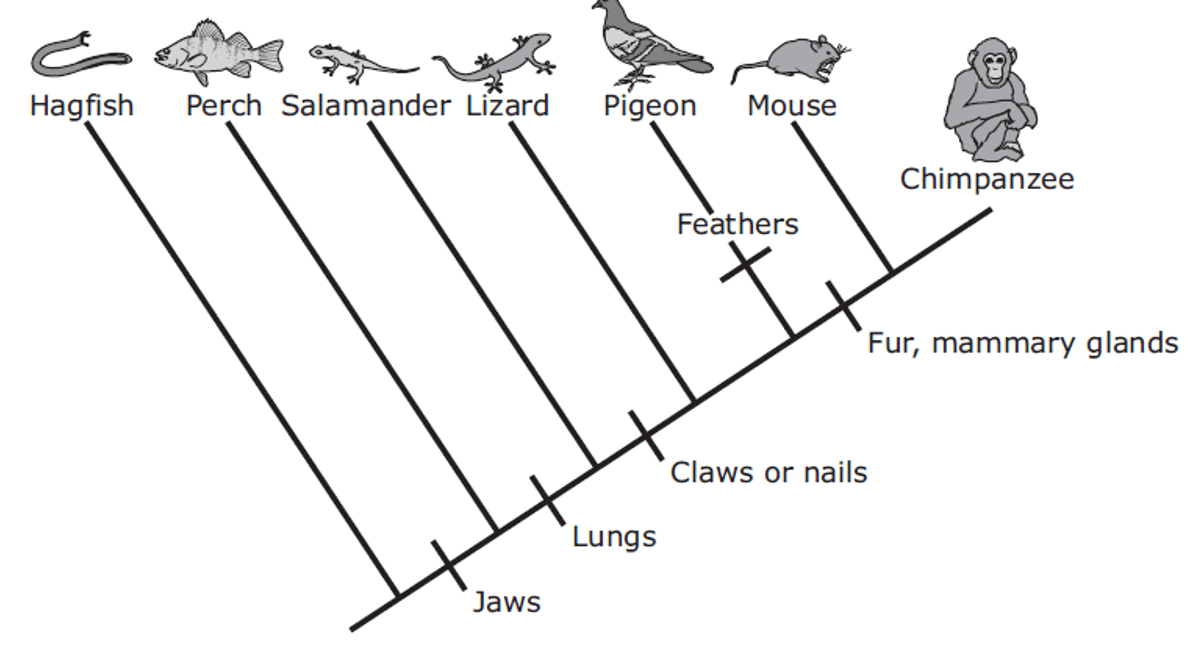
All the animals to the right of the salamander would have the common characteristic of...
Fur
Claws or nails
Lungs
Jaws

The cladogram shown is a model used by scientists to represent the order in which they hypothesize organisms descended from a common ancestor based on the appearance of derived characteristics.
Which of the following traits do the salamander and the lizard share?
Jaws only
Jaws and Lungs
Claws or nails
Jaws, Lungs, and Claws or nails
Match the following
Descent with modification
A change in gene frequency over time.
Adaptation
A feature that allows an organisms to better survive in its environment
Variation
Differences in the physical traits of organisms
Overproduction of Offspring
Lots of offspring and limited resources causes competition for those resources.
Match the following definitions with the appropriate mechanism of evolution
Random change in the frequency of alleles in a population over time.
Small population / Genetic Drift
Selection of traits that aren't necessarily good for survival fitness, but without them you can't reproduce.
Non-random mating
Any change in a DNA sequence
Mutation
Movement of genes in/out of a population
Gene flow/ movement
Organisms more fit for their environment will survive and reproduce more offspring
Natural selection

In this diagram, which insect has the favorable trait, or is well adapted to in its environment?
light insect
dark insect
green insect
purple insect

What type of evidence is shown with the diagram above?
Molecular
Anatomical
Embryological
Fossil
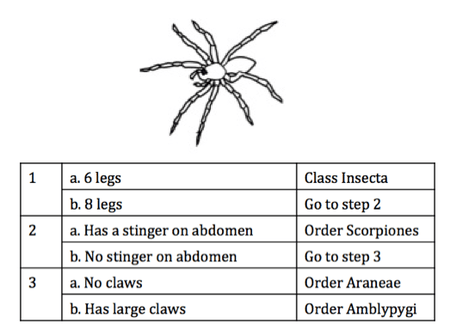
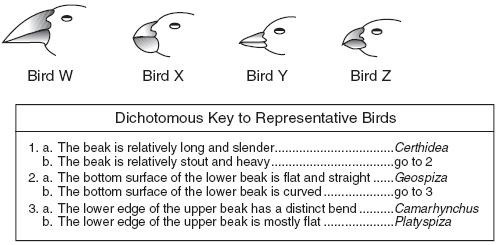

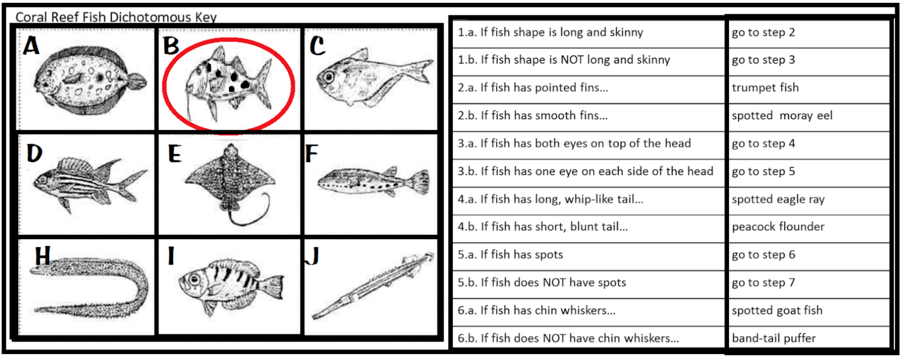

Butterflies usually are identified by the colors and patterns on their wings. Butterflies have four wings: The two wings near the butterfly’s head are “forewings” while the wings near the butterfly’s tail are “hindwings.” You can use the following dichotomous key to identify four common butterfly species in North America.
Based on the key, what species of butterfly is shown below?
Papilio glaucus
Papilio polyxenes
Danaus plexippus
Colias philodice

Based on the same dichotomous key, what is the butterfly shown below?
Papilio glaucus
Papilio polyxenes
Danaus plexippus
Colias philodice
What do we call a change in a species over time?
Adaptation
Evolution
Extinction
Environmental influences
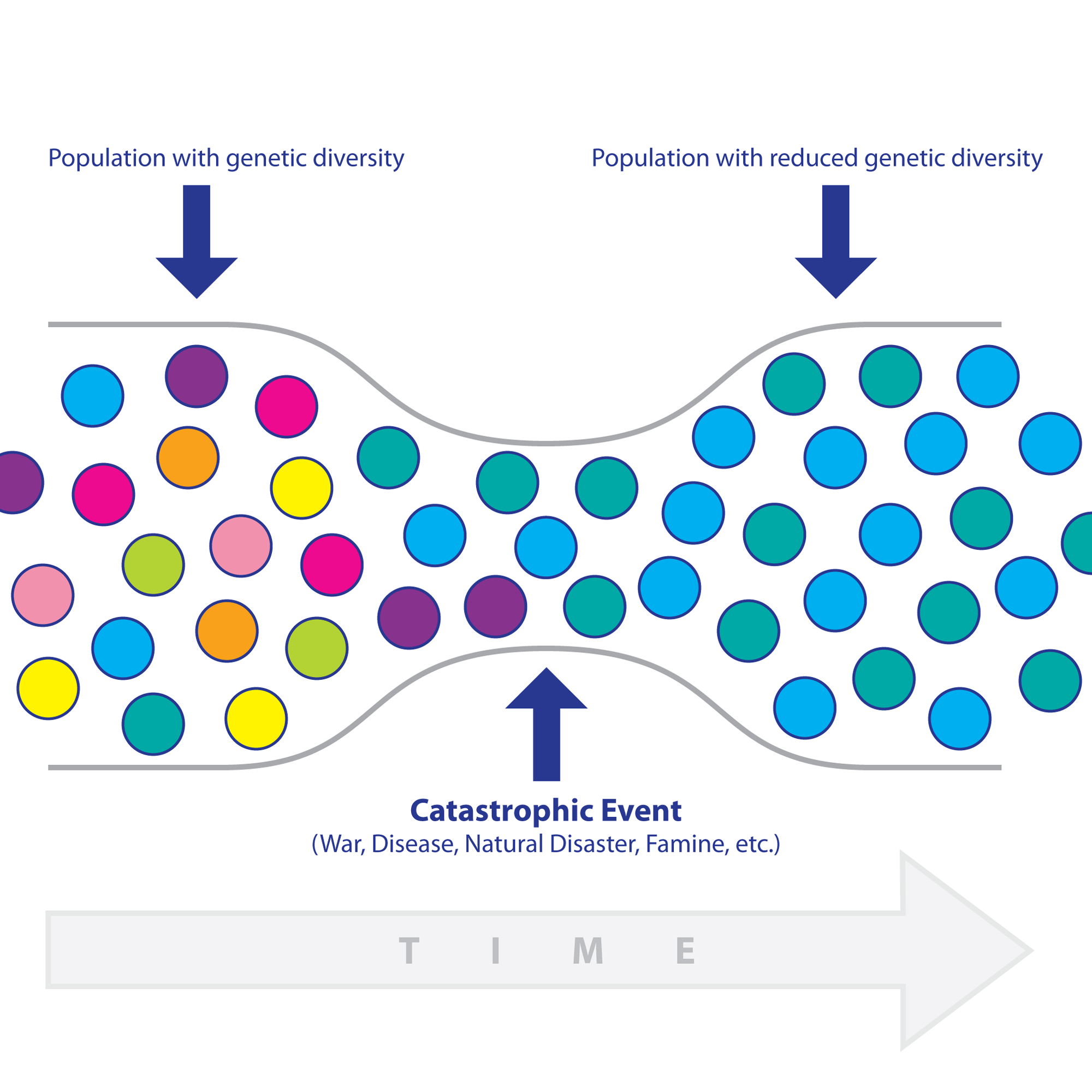
A drastic reduction in the size of a population that can change allele frequencies is called
the bottleneck effect
the founder effect
the gene flow effect
the Thanos effect
The Amish have a higher frequency of polydactyly (extra fingers) in their community than the general population. This is due to the allele for extra fingers being present in the group that started the Amish community.
The difference in allele frequency is due to genetic flow.
The difference in allele frequency is due to the founder effect.
The difference in allele frequency is due to a bottleneck.
The difference in allele frequency is due to speciation.
Reindeer from a rancher in Alaska escape from their pen during an enormous snow storm. After their escape, they mate with wild caribou that are migrating across the land. The offspring of these have traits for short legs and have tame behavior.
Gene Flow
Genetic Drift
Non-Random Mating
Natural Selection
During a hurricane, a population of beetles almost gets completely wiped out. The only beetles that survived were lucky that they were in their nest at the time of the hurricane and had enough food to survive.
Natural selection
Genetic Drift
Gene Flow
Non-Random Mating

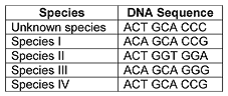
What type of evidence is shown in the image above?
Fossils
Vestigial structures
Homologous Structures
DNA
The large-scale events of speciation are called...
macroevolution
simplification
adaptation
microevolution
Which of the following is required for a population to diverge into two separate species?
The two populations must have evolved different physical appearances.
The two populations must have mutated at least 10 times.
The two populations must have become reproductively isolated.
The two populations must have evolved analogous structures.


The three species pictured do not share a common ancestor, yet have evolved to have a similar anatomy and life style. This is an example of ?
Homologous Structures
Divergent Evolution
Vestigial Organs
Convergent Evolution

The three species pictured share a common ancestor and have adapted so that each lives in a different environment. This is an example of
Law of Superposition
Evolutionary Arms Race
Divergent Evolution
Convergent Evolution
Which best describes punctuated equilibrium?
Speciation occurs due to natural selection
Speciation occurs due to isolation
Speciation occurs slowly in geologic time, followed by long periods with very fast evolutionary change.
Speciation occurs suddenly and rapidly in geologic time, followed by long periods with little evolutionary change.

The idea that evolution happens with the accumulation of gradual changes in the population over time.
gradualism
Movement of individuals into, out of, or between populations that can change the numbers and types of alleles
mutation
migration
punctuated equilibrium
genetic drift

