wayground logo

Free Printable Worksheets

Font size

S
M
L
XL
Worksheets

Biology Semester 2 Part 1 review

Total questions: 40

Worksheet time: 21mins

Name
Class
Date
1.

Where can bacteria be found?

a)
At the bottom of the ocean
b)
In outer space
c)

Everwhere

d)
Only in laboratories
2.

Are more bacteria helpful or harmful?

a)
Only helpful
b)
Mostly harmful
c)
Neither helpful nor harmful
d)

Mostly Helpful

3.

What is fertilization?

a)
Fertilization is the fusion of a sperm cell with an egg cell.
b)
Fertilization is the breakdown of food in the digestive system.
c)
Fertilization is the process of photosynthesis in plants.
d)
Fertilization is the formation of a blood clot in the body.
4.

What is the branch of biology that involves the study of how different traits are passed from one generation to another?

a)
Genetics
b)
Botany
c)
Zoology
d)
Biology
5.

The alleles for a recessive trait are usually represented by what type letter?

a)
uppercase letters
b)
lowercase letters
c)
symbols
d)
numbers
6.

Heterozygous individuals have what type of genes?

a)
No alleles
b)
Two different alleles
c)
Three different alleles
d)
Two identical alleles
7.

In heterozygous individuals which trait is expressed?

a)
Intermediate trait
b)
Co-dominant trait
c)
Dominant trait
d)
Recessive trait
8.

In codominance two traits are expressed at the same time

a)

True

b)

False

9.

What are the 3 parts of a nucleotide?

a)
Phosphate group, sugar molecule, protein
b)
Base pair, sugar molecule, nitrogenous base
c)
Phosphate group, lipid, nitrogenous base
d)
Phosphate group, sugar molecule, nitrogenous base
10.

What is DNA replication?

a)
DNA replication is the process of converting RNA into DNA.
b)
DNA replication is the process by which a double-stranded DNA molecule is copied to produce two identical DNA molecules.
c)
DNA replication is the process of creating proteins from DNA molecules.
d)
DNA replication is the process of cell division.
11.

What does DNA polymerase do?

a)
DNA polymerase breaks down DNA strands
b)
DNA polymerase adds nucleotides to the existing DNA template strand during DNA replication.
c)
DNA polymerase synthesizes RNA molecules
d)
DNA polymerase repairs damaged proteins
12.

Which is a difference between DNA and RNA?
a)
Adenine vs. Guanine bases
b)
Deoxyribose vs. Ribose sugar
c)
Phosphodiester bond vs. Hydrogen bond
13.

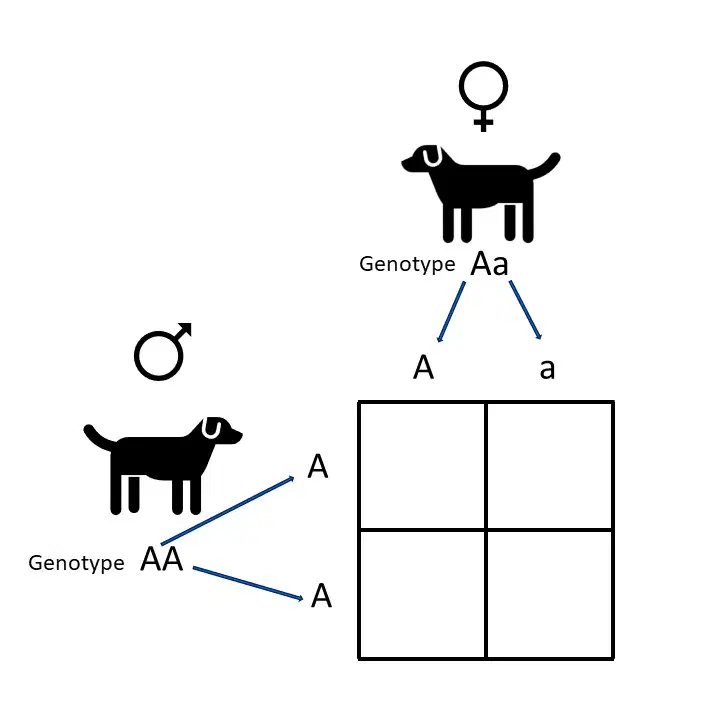
What are the percentages of the offspring for the following punnett square?

a)

75 AA 25%aa

b)

50% Aa 50% AA

c)

25% AA

50% Aa

25% aa

d)

100% AA

14.

Root mean for zoo

a)

Plant

b)

Animal

c)

Water

d)

Non Stick

15.

What is a gene?

a)
A gene is a sequence of DNA that contains the instructions for building a specific protein or RNA molecule.
b)
A gene is a type of cell
c)
A gene is a type of protein
d)
A gene is a type of virus
16.

What is this a picture of?

a)

DNA replication

b)

Protein Synthesis

c)

Cellular Respiration

d)

Mitosis

17.

How do bacteria differ from the 4 other kingdoms (plant, animals, fungi, protists)?

a)
Bacteria are prokaryotic, while plants, animals, fungi, and protists are eukaryotic.
b)
Bacteria obtain energy through photosynthesis, while the other kingdoms obtain energy through ingestion.
c)
Bacteria reproduce sexually, while the other kingdoms reproduce asexually.
d)
Bacteria are multicellular, while the other kingdoms are unicellular.
18.

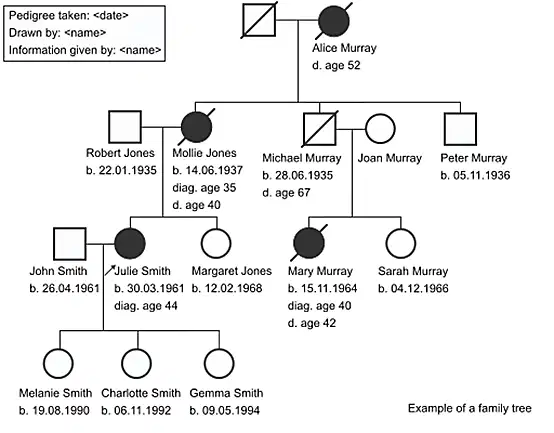
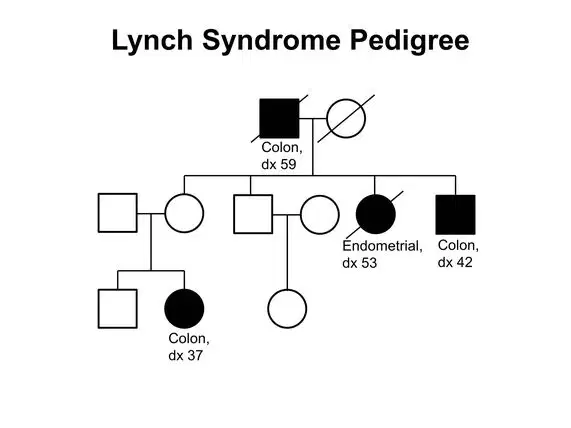
How many males are in this pedigree?

a)

1

b)

2

c)

5

d)

4

19.

This trait primarily effects who?

a)

Males

b)

Females

c)

Everyone

20.

Is this trait dominant or recessive?

a)
Dominant
b)
Incomplete
c)

Recessive

d)
Hidden
21.

How are II2 and III2 related?

a)

Mother & Son

b)

Father & Daughter

c)

Grandfather & Grand Daughter

d)

Mother & Daughter

22.

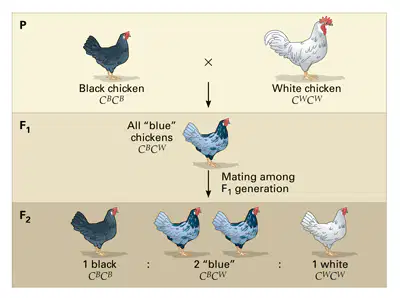
Is this trait codominance or incomplete dominance?

a)
Codominance
b)
Complete dominance
c)
Polygenic inheritance
d)
Incomplete dominance
23.

The producers start with 2500KJ of energy. How much energy is available at the top predators?

a)

25KJ

b)

2.5KJ

c)

.25KJ

d)

25,000 KJ

24.

What separates the plant kingdom from the animal kingdom?

a)

Cell walls

b)
Presence of a nucleus
c)

Photosynthesis

d)
Color of cells
25.

Give an example of a 4 organism food chain based on this picture?

a)
Grass -> Grasshopper -> Frog -> Snake
b)
Algae -> Fish -> Bear -> Wolf
c)
Tree -> Squirrel -> Owl -> Coyote
d)
Grass -> Grasshopper -> Bird -> Fox
26.

Name a primary producer

a)

grass

b)

deer

c)

fox

d)

hawk

27.

Identify a carnivore

a)
Giraffe
b)
Zebra
c)
Lion
d)
Elephant
28.

Which parent determines the biological sex of the baby?

a)
Mother
b)
Father
c)
Sibling
d)
Grandparent
29.

What are the cellular levels of organization?

a)
Cells, tissues, organs, organ systems, organisms
b)
Organs, cells, tissues, organisms
c)
Tissues, cells, organs, organisms
d)
Cells, tissues, organisms, organ systems
30.

The passing of traits from parent to child is called _________

a)
heredity
b)
inheritance
c)
genetics
d)
transference
31.

If deforestation occurs, where will carbon build up in the environment?

a)
In the atmosphere
b)
In the plants
c)
In the oceans
d)
In the soil
32.

Hemophilia is a recessive sex linked trait that primarily effects males. Why do males tend to inherit sex linked traits more?

a)
Males have only one X chromosome, so if they inherit a recessive allele for a sex-linked trait on that chromosome, they will exhibit the trait.
b)
Males have two X chromosomes, so they are more likely to inherit sex-linked traits
c)
Females have only one X chromosome, so they are less likely to inherit sex-linked traits
d)
Males have a higher mutation rate in their DNA, leading to more sex-linked traits
33.

What are the 3 parts to the cell theory?

a)
All living organisms are composed of two or more cells
b)
All living organisms are composed of one or more cells, the cell is the basic unit of structure and organization in organisms, and cells arise from pre-existing cells.
c)
Cells are not the basic unit of structure and organization in organisms
d)
Cells arise from non-living matter
34.

What are homologous chromosomes?

a)
Homologous chromosomes are chromosomes that are not related
b)
Homologous chromosomes are chromosomes that have different genes at the same loci
c)
Homologous chromosomes are chromosomes that are only inherited from one parent
d)

Homologous chromosomes are pairs of chromosomes that are the same size

35.

What does hydrophobic mean?

a)
Attracting water molecules
b)
Having an affinity for water
c)
Being neutral towards water
d)
Having a tendency to repel or fail to mix with water.
36.

Who is the father of genetics?

a)
Isaac Newton
b)
Albert Einstein
c)
Marie Curie
d)
Gregor Mendel
37.

What is a phenotype?

a)
The genetic makeup of an individual
b)
The process of natural selection
c)

The set of observable characteristics of an individual

d)
The study of fossils
38.

What does it mean for an organism to have 2 of the same gene?

a)
The organism is diploid for that gene.
b)
The organism is homozygous for that gene.
c)
The organism is haploid for that gene.
d)
The organism is heterozygous for that gene.
39.

Give an example of a heterozygous genotype?

a)
Bb
b)
AB
c)
bb
d)
BB
40.

Root meaning for Thermo

a)
cold
b)
light
c)

temperature

d)
sound