
 Worksheets
Quarter 4 Exam Practice Questions
Total questions: 103
Worksheet time: 8hrs 7mins
Take out your Unit 9B Packet before starting!
What unit is used to measure energy in the International System of Units (SI)?
Newton
Joule
Watt
Ampere
"Mechanical energy" refers to the total of all ____ within the system.
Kinetic Energy and Thermal Energy
Potential Energy and Chemical Energy
Kinetic Energy and Potential Energy
Thermal Energy and Chemical Energy

When you rub your hands together on a cold day, you use friction to convert
Mechanical energy into thermal energy
Thermal energy into nuclear energy
Nuclear energy into electrical energy.
Electrical energy into radiant energy
What happens to mechanical energy when friction is involved?
It increases
It stays the same
It decreases because it turns into thermal energy
If a cannonball fired straight upward from a cannon has 5292 joules of potential energy at its maximum height, how much kinetic energy did the cannonball have when it was first fired? Assume there is no friction of any kind for this problem.
0 J
2646 J
5292 J
10,584 J
If a ball is thrown straight up to a height of 2 meters and its potential energy at the top of its path is 400 joules, what was the ball’s speed when it left the person’s hand? Assume there is no friction of any kind for this problem.
3.2 m/s
6.3 m/s
20 m/s
39 m/s
A steel ball with a mass of 1.5 kilograms is thrown straight up with a speed of 12.0 m/s. How high will it travel? Assume there is no friction of any kind for this problem.
7.3 m
72 m
110 m
15 m
A 60-kg astronaut jumps 0.75 meters straight up at a speed of 4.40 m/s. What is the gravitational field strength of the planet they jumped from? Assume there is no friction of any kind for this problem.
9.7 N/kg
13 N/kg
390 N/kg
770 N/kg
When a pendulum swings, at what point is the kinetic energy of the object on the end of the pendulum the greatest?
at the highest point of its path to the left
at the highest point of its path to the right
at the lowest point in the middle of its path
halfway up each side of its path
As a ball is thrown into the air, as the ball gets higher, its potential energy:
stays the same.
increases.
decreases.
is zero.
A roller coaster car travels from the top of one hill down to a valley and back up to the top of another hill. Which of the following is NOT one of the energy transformations?
gravitational potential energy to thermal energy
gravitational potential energy to kinetic energy
kinetic energy to thermal energy
thermal energy to chemical energy
When gasoline is used as fuel in a car engine, several energy transformations take place. Three of the following statements are true about these transformations, but which statement is false?
When gasoline is burned, its energy is destroyed.
The energy from gasoline can be transformed into light.
As the energy in the form of gasoline decreases, the energy of another form increases.
Once the energy in the gasoline is released, it can never be destroyed.
Friction within a system often causes useful forms of energy to transform into less useful forms. Which type of energy is often produced by friction?
potential energy
sound energy
magnetic energy
electrical energy
For a pendulum system WITHOUT friction, the total mechanical energy will ___ and the total thermal energy will ___.
stay the same; increase
decrease; stay the same
stay the same; stay the same
decrease; increase
For a pendulum system WITH friction, the total mechanical energy will ____ and the total thermal energy will ____.
increase; increase
stay the same; decrease
stay the same; stay the same
decrease; increase
Which type of light bulb transforms electrical energy into thermal energy at a wasteful rate?
LEDs
incandescent bulbs
CFL bulbs
fluorescent bulbs
Take out your Unit 10 packets before continuing!
Which of the following items would be the best electrical insulator?
a. a metal frying pan
b. an aluminum can
c. a Styrofoam packing peanut
d. a silver spoon
Which of the following materials would be the best electrical conductor?
a. Plastic
b. Metal
c. Gas
d. Wood
Which of the following elements is a semiconductor?
a. Silver
b. Oxygen
c. Carbon
d. Copper
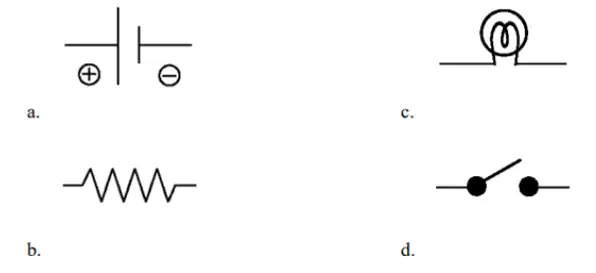
Which of the following is the symbol used to represent a battery in a circuit diagram?
Symbol a
Symbol b
Symbol c
Symbol d
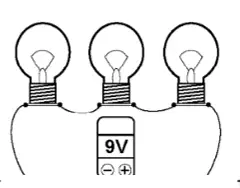
What type of circuit is shown?
Linear
Complex
Series
Parallel
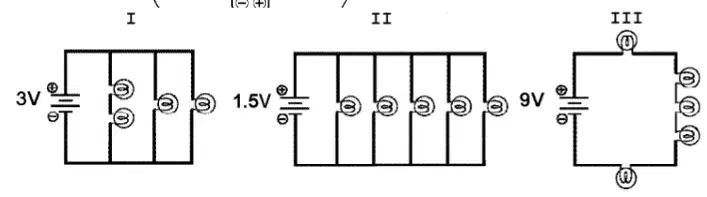
Which of the circuits below is a series circuit?
I only
II only
III only
I and II
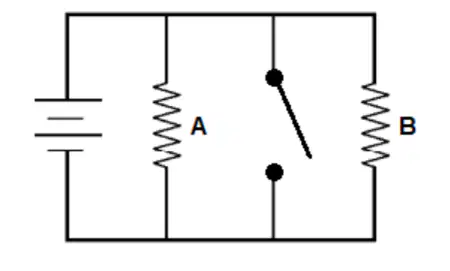
Which light bulb(s) will light in the circuit below?
A only
B only
A and B
neither
For the circuits we built in class, what was the source of the electrical potential energy?
the chemical reaction occurring in the batteries
the resistors that were added to the circuits
the light energy given off by the lamps
the flow of electrons through the wires
Where do free and mobile electrons collect within a battery?
in the cathode chemical
in the anode chemical
on the brass pin
on the outer casing
When does a battery stop working?
When the chemical reaction in the battery is complete.
When the chemical reaction in the battery begins.
When the chemical reaction in the battery is halfway complete.
When the chemical reaction in the battery reverses.
What direction do electrons flow when a battery is connected to a circuit?
from positive terminal to positive terminal
from negative terminal to negative terminal
from positive terminal to negative terminal
from negative terminal to positive terminal
Which part of a circuit does the voltage describe?
the wires
the devices
the power source
the switch
One volt is equivalent to ____ per 1 coulomb of electric charge.
1 joule
1 newton
1 ohm
1 watt
What happens to the total circuit voltage if the number of devices (such as lamps) is increased?
The total circuit voltage increases slightly.
The total circuit voltage decreases slightly.
The total circuit voltage stays the same.
The total circuit voltage decreases to zero.

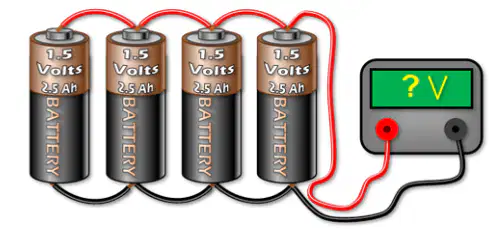
The batteries below are wired in series, what is the total circuit voltage?
1.5 V
3.0 V
4.5 V
6.0 V
The batteries below are wired in parallel, what is the total circuit voltage?
1.5 V
3.0 V
4.5 V
6.0 V
When measuring voltage, where should you touch the multimeter probes on the circuit?
red on the positive side; black on the negative side
red on the negative side; black on the positive side
red and black on the positive side
red and black on the negative side
What value will the multimeter read if you touch both probes to the same terminal of a battery?
approximately the voltage of the battery
approximately double the voltage of the battery
approximately half the voltage of the battery
approximately zero voltage
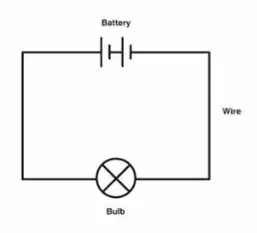
What would be a reasonable total circuit voltage measurement for the following circuit if it uses 1.5-volt batteries?
1.55 V
1.46 V
2.89 V
3.18 V
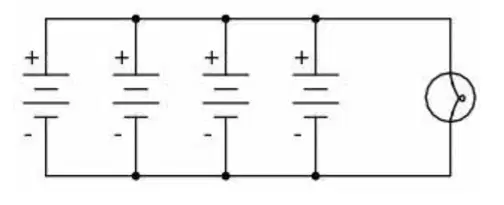
What would be a reasonable total circuit voltage measurement for the following circuit if it uses 1.5-volt batteries?
1.55 V
1.46 V
2.89 V
3.18 V
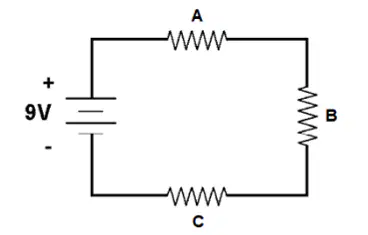
A, B, and C represent identical resistors. The voltage drop across resistor A is __.
-9 V
-6 V
-3 V
0 V
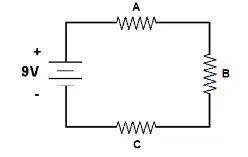
If A, B, and C above are identical lamps, how does their brightness compare?
A is brightest and C is dimmest.
C is brightest and A is dimmest.
They are all equally dim.
A is on, but B and C are off.
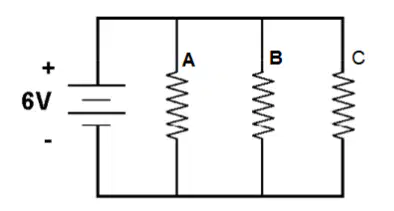
A, B, and C represent identical resistors. The voltage drop across resistor A is
-6 V
-3 V
-2 V
0 V
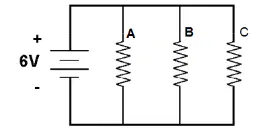
If A, B, and C above are identical lamps, how does their brightness compare?
A is brightest and C is dimmest.
C is brightest and A is dimmest.
They are all equally bright.
A is on, but B and C are off.
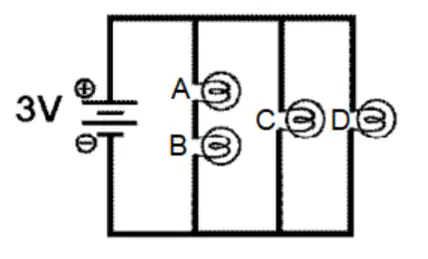
If A, B, C, and D are identical lamps, how do their brightnesses compare?
They are all equally bright.
A and B are brighter than C and D.
C and D are brighter than A and B.
A, C, and D are brighter than B.
Which of the following is commonly used to make resistors?
Conductors
Semiconductors
Insulators
Wires
What is the term for a circuit or circuit branch that contains no resistors?
long circuit
soft circuit
short circuit
light circuit
Which statement is true when using a multimeter to test resistance?
The resistor must be connected to a battery
The resistor should be at room temperature
The red lead should be touching the positive end of the resistor
The red lead should be touching the negative end of the resistor
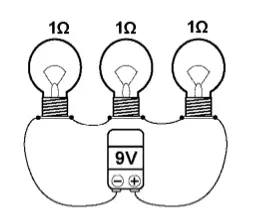
What is the total circuit resistance for the circuit?
9 Ω
6 Ω
3 Ω
0 Ω
Electrical current is often compared to
the number of water molecules in a hose
the rate of flow of water molecules in a hose
the diameter of a water hose
the bucket collecting water at the end of a hose
Which of the following is NOT a unit of measurement for current?
coulombs per second
amperes
amps
coulombs
What happens to the current in a circuit with fixed voltage if you increase the resistance of the circuit?
The current increases
The current decreases
The current stays the same
The current drops to zero
A student connects six 3.0-ohm lamps in series to a 9.0-volt battery. What is the total circuit current?
0.5 amperes
2.0 amperes
4.5 amperes
1.8 amperes
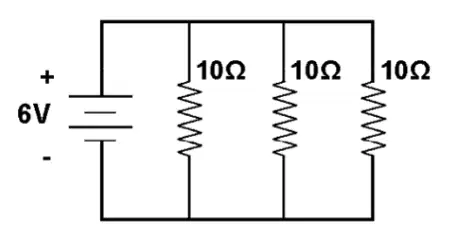
What is the total circuit current for the circuit below?
0.6 amperes
0.2 amperes
1.8 amperes
5 amperes
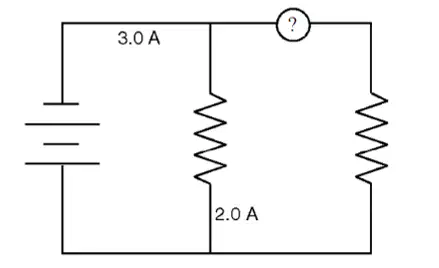
Two of the three current measurements are shown on the circuit below. What is the missing current measurement?
1.0 amperes
2.0 amperes
3.0 amperes
5.0 amperes
What happens to the total current in a parallel circuit if an extra branch with resistors is added?
a. The total current will increase
b. The total current will decrease
c. The total current will stay the same
d. It will become a short circuit
What happens to the total current in a parallel circuit if an extra branch with no resistors is added?
The total current will increase slightly.
The total current will decrease.
The total current will stay the same.
It will become a short circuit.

Take out your Unit 11 packets before continuing!
How many wavelengths are shown?
1
1.5
2
2.5
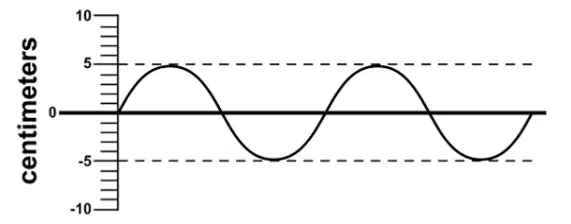
What is the amplitude of the wave?
-5 cm
0 cm
5 cm
10 cm
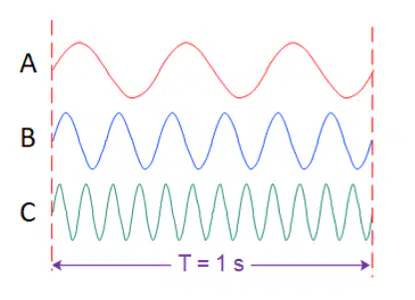
What is the frequency of wave B?
3 Hz
6 Hz
12 Hz
24 Hz
As the frequency of a sound wave increases, the
pitch of the sound decreases.
pitch of the sound increases.
intensity of the sound decreases.
intensity of the sound increases.
The loudness of a sound is related to the sound wave’s
frequency.
amplitude.
speed.
frequency and amplitude.
Which of the following do sound and light waves have in common?
They both travel at the same speed.
They can both travel through vacuums.
They can both travel through media.
They both involve the oscillation of atoms.
The color of a light source is related to its
speed.
crest.
amplitude.
frequency.
The electromagnetic waves with the most energy are:
microwaves
gamma rays
radio waves
visible light waves
Red visible light has the ________ of all visible light.
lowest frequency and longest wavelengths
highest frequency and shortest wavelengths
lowest frequency and shortest wavelengths
highest frequency and longest wavelengths
Due to the Doppler effect, the pitch of the siren of a fire truck driving away from you will:
increase
decrease
decrease, then increase
remain the same
Due to the Doppler effect, if a distant galaxy were moving away from Earth, the galaxy would appear ______ normal starlight.
slightly more red than
slightly more blue than
about the same white/yellow color as
slightly more green than
Which of the following properties does a Doppler shift NOT affect from the perspective of the observer?
frequency
wavelength
energy
amplitude
Which of the following statements best describes the effects of the superpositioning of waves?
It occurs temporarily before the waves meet.
It occurs temporarily when/while the waves meet.
It occurs temporarily after the waves meet.
It occurs when waves meet and permanently affects the waves.
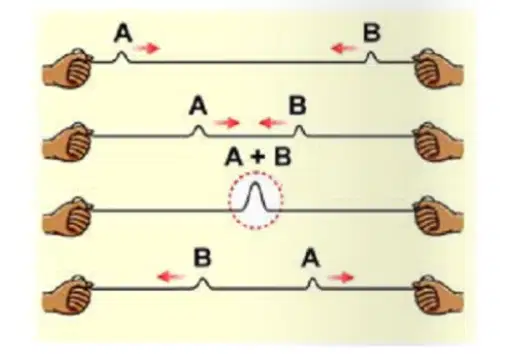
What is being shown in the image?
constructive interference
destructive interference
both constructive and destructive interference
neither constructive nor destructive interference
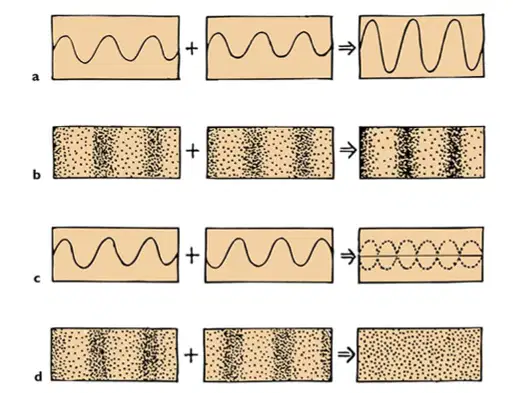
Which of the following pictures best illustrates how a sound could suddenly become more intense?
A
B
C
D
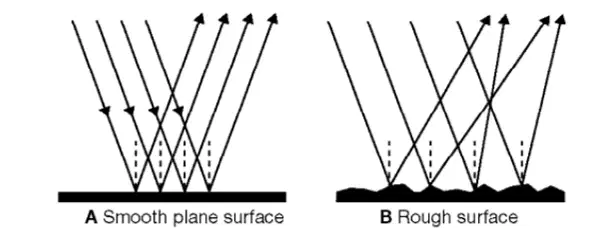
Which type of reflection is shown in Diagram B?
specular
diffuse
diffracted
rough
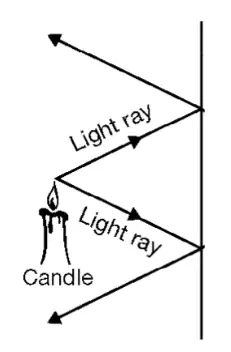
Which wave behavior is shown?
reflection
refraction
diffraction
transmission
Which of the following is an example of diffracted sound?
An echo
A mirror image
Hearing voices through a doorway
Seeing rainbows through diffraction glasses
Which of the following best describes the difference between reflection and diffraction?
Reflection amplifies waves, whereas diffraction absorbs waves.
Reflection absorbs waves, whereas diffraction amplifies waves.
Reflection bends waves, whereas diffraction bounces waves.
Reflection bounces waves, whereas diffraction bends waves.
Which of the following is the most opaque?
Air
Water
Paper
Wood
Which of the following materials is the most transparent?
Clear glass
Stained glass
Frosted glass
Tinted glass
Why do many plants appear green?
Plants absorb red and blue light and reflect green light
Plants absorb green light and reflect red and blue light
Plants absorb green light and reflect blue and yellow light
Plants absorb red light and reflect yellow and blue light
When radiant energy is absorbed by matter, into which form of energy does it transform?
Light energy
Chemical energy
Mechanical energy
Thermal energy
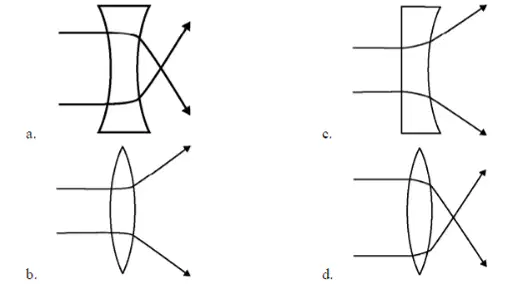
Which diagram correctly illustrates light rays as they pass through a convex lens?
Diagram a
Diagram b
Diagram c
Diagram d
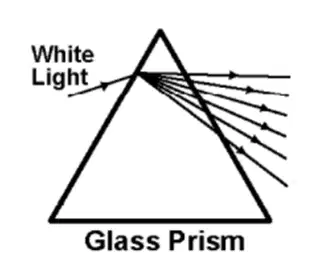
The diagram to the right shows an example of
Reflection
Absorption
Diffraction
Refraction
Refraction is the _____ of a wave as it ______.
bending; enters a new medium
bending; goes through a narrow opening
bouncing; goes around a corner
diminishing; loses energy
Which wavelength(s) of visible light bend(s) the most when they are refracted?
Red and orange
Yellow and green
Blue and indigo
Violet
Take out your Unit 12 packets before continuing!
Which reaction converts mass into energy in the Sun?
An exothermic chemical reaction
An endothermic chemical reaction
A nuclear fusion reaction
A nuclear fission reaction
Which element is used up during the reaction occurring in the Sun?
Hydrogen (H)
Helium (He)
Lithium (Li)
Carbon (C)
Where is energy generated in the Sun?
the core
the radiative zone
the convection zone
the photosphere
Once the energy is generated in the core of the Sun, how long does it take that energy to reach Earth?
about 8 minutes
about a month
about 1 year
about 100,000 years
Which statement best describes the age of each telescope?
James Webb and Hubble are both only a few years old.
James Webb is only a few years old, whereas Hubble is over 30 years old.
James Webb is over 30 years old, whereas Hubble is only a few years old.
James Webb and Hubble are both over 30 years old.
Which statement best describes the specialty of each telescope?
James Webb and Hubble both collect radiation from the full EMR spectrum.
James Webb specializes in infrared light, whereas Hubble specializes in ultraviolet light.
James Webb specializes in ultraviolet light, whereas Hubble specializes in infrared light.
James Webb and Hubble both specialize in collecting visible light only.
Which statement best describes the location of each telescope?
James Webb and Hubble are both in Earth's orbit about 570 kilometers away
James Webb and Hubble are in the Sun's orbit about 1.5 million kilometers from Earth
James Webb is in Earth's orbit about 570 kilometers away, whereas Hubble is in the Sun's orbit about 1.5 million kilometers away
James Webb is in the Sun's orbit about 1.5 million kilometers from Earth, whereas Hubble is in Earth's orbit about 570 kilometers away
An emission spectrum is used to identify:
which star light is coming from.
how old a star is.
how far away a star is from Earth.
which elements a star contains.
The Sun is made up of:
mostly hydrogen, some helium, and very small amounts of other elements.
mostly helium, some hydrogen, and very small amounts of other elements.
mostly other elements, but a significant amount of hydrogen and some helium.
mostly other elements, but a significant amount of helium and some hydrogen.
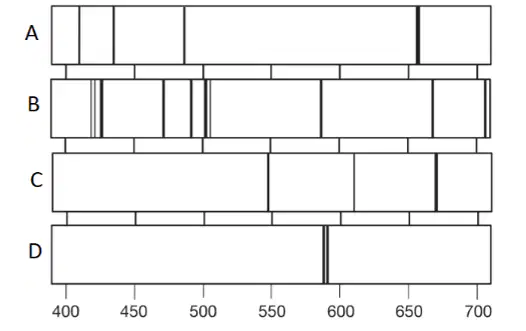
Are any of these the same elements?
They are all the same element.
A and B are the same element.
B and D are the same element.
They are all different elements.
The coolest temperature stars (approximately -200 degrees Celsius) tend to appear _____ in color.
red
yellow
blue
white
Three stars are equally luminous, but one is 1 light year from Earth, the second is 2 light years from Earth, and the third is 3 light years from Earth. Which star will appear brightest to an Earthling?
The star that is 1 light year away.
The star that is 2 light years away.
The star that is 3 light years away.
They will all be equally bright to an Earthling.

According to the H-R diagram, how would the category of stars known as “white dwarfs” be best described?
hot but dim
hot and bright
cool and dim
cool but bright
According to the H-R diagram, which category of stars can have the greatest range in luminosity?
white dwarfs
main sequence stars
red giants
supergiants
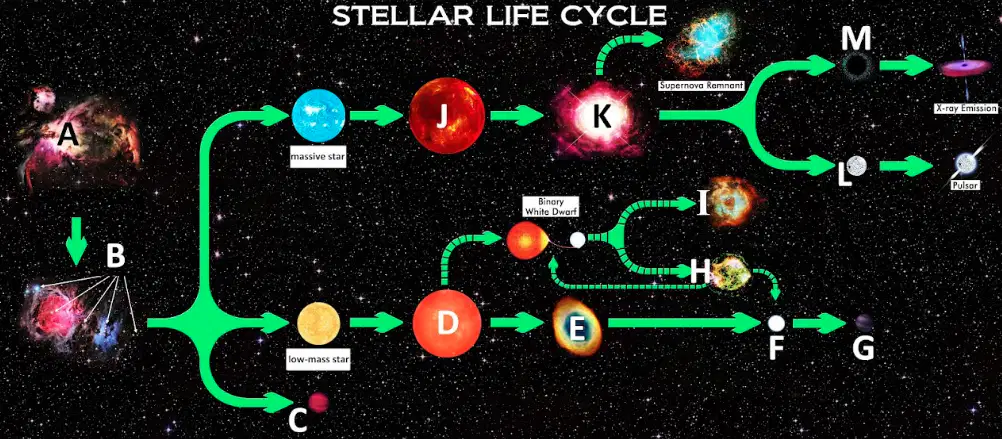
Which letter represents a nova event?
K
I
H
E
Which of the following is NOT evidence supporting the Big Bang model?
the presence of CMBR in the universe today
the abundance of hydrogen in the universe today
the abundance of helium in the universe today
the abundance of people in the universe today
Hubble’s law states that galaxies that are farther away from Earth have ___ redshift, so they are moving ____ away from Earth than other galaxies.
greater; faster
greater; slower
lesser; faster
lesser; slower
Immediately after the big bang, the portion of the universe that we see today was closest to a ____ in diameter (across) and could be held in your hand.
meter
kilometer (1000 meters)
centimeter (a hundredth of a meter)
After the “big bang” the universe quickly
expanded and cooled.
expanded and warmed.
compressed and cooled.
compressed and warmed.
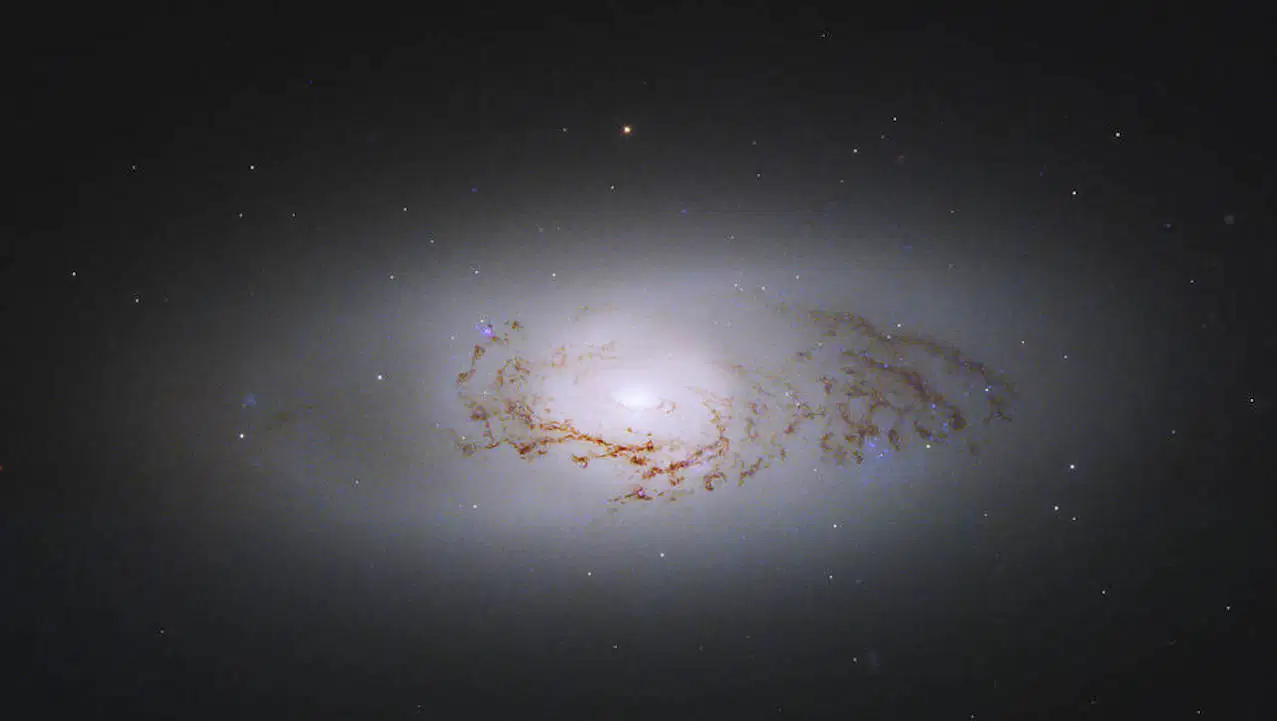
What is the most likely classification for the galaxy shown?
irregular
regular spiral
barred spiral
elliptical
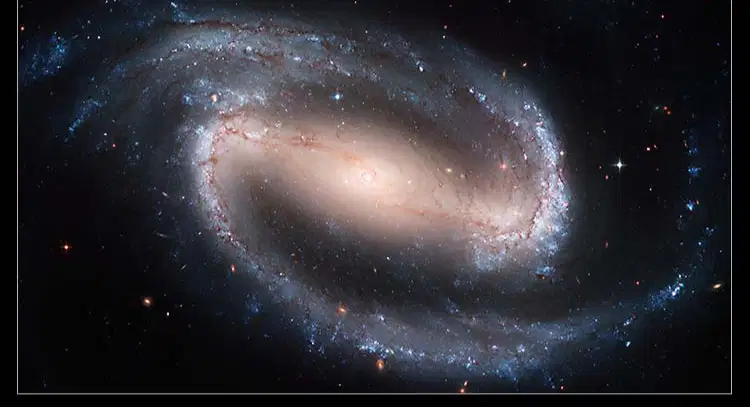
What is the most likely classification for the galaxy shown?
lenticular
regular spiral
barred spiral
elliptical
The Milky Way is categorized as which type of galaxy?
lenticular
regular spiral
barred spiral
elliptical
Where is the Sun located in the Milky Way?
at the center
in the halo
on an arm
the Sun is not in the Milky Way

