
 Worksheets
AP Chemistry Unit 2: IYKYK
Total questions: 57
Worksheet time: 58mins
Unit 2: A single bond is composed of
1 sigma bond
1 pi bond
1 sigma and 1 pi bond
no sigma or pi bonds
Unit 2: A triple bond is composed of
1 sigma bond
1 pi bond
2 pi bonds
1 sigma and 2 pi bonds
Unit 2: Lattice energy is the energy to break an ionic bond in a compound. Lattice energy increases as the ion’s charge increases. Lattice energy decreases as the radii of the ions increase.
True
False
Unit 2: SiO2 (quartz) and diamonds are ____________________, and they have very high boiling/melting points.
covalent network solids
ionic solids
molecular solids
interstitial alloys
Unit 2: ______________ alloys are made when a smaller atom fits into the gaps between larger atoms of a metallic crystal.
Interstitial
Substituitonal
Unit 2: What type of alloy is made when the radii of the atoms are similar in size?
interstitial
substitutional

Unit 2: In this molecule, Carbon has a formal charge of ____ and Nitrogen has a formal charge of _____.
0, 0
1, 0
0, -1
-1, 0

Unit 2: What type of alloy is this?
Interstitial
Substitutional
Unit 2: What is the total # of covalent bonds carbon can form when drawing a Lewis structure?
12
6
4
8
Unit 2: What is the bond angle in BF3?
90
120
109.5
180
Unit 2: What is the bond angle in H2O?
120
90
180
104.5
Unit 2: Are asymmetrical molecules polar or nonpolar?
Polar
non-polar
neither
Unit 2: What is the bond angle in NH3
120
107.3
180
90
Unit 2: What is the hybridization of carbon in CH4?
sp3
sp
sp2
Unit 2: What is the hybridization for carbon in CO2
sp3
sp
sp2

Unit 2: Count the number of sigma and pi bonds in this molecule:
13 sigma, 1 pi
14 sigma, 2 pi
1 sigma, 14 pi
2 sigma, 13 pi
Unit 2: What is the hybridization for an oxygen in CO2
sp3
sp
sp2

Unit 2: Choose the correct shape for this molecule:
Unit 2: What is the total # of covalent bonds carbon has to make when drawing a Lewis structure?
12
6
4
8

Unit 2: What is the the shape of this molecule according to VSPER theory?
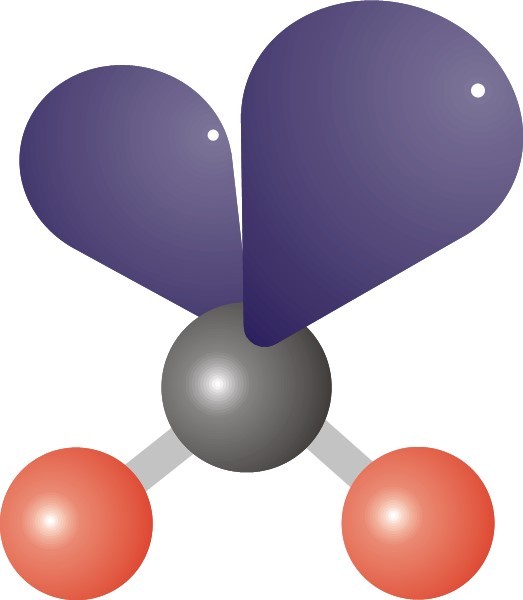
Unit 2: What compound could this be?
CO2
NH3
H2S
CH4
Unit 2: Draw the Lewis Dot structure for PCl5 and determine the predicted molecular geometry
octahedral
trigonal pyramidal
seesaw
trigonal bipyramidal
Unit 2: Choose the correct shape for this molecule:
Unit 2: Choose the correct shape for this molecule:

Unit 2: How many sigma and pi bonds does this have?
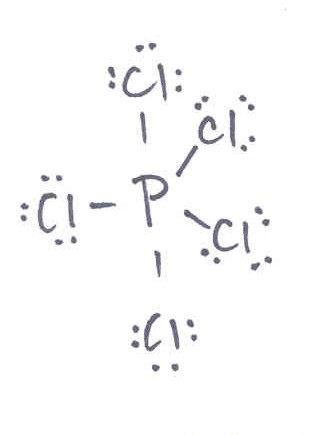
Unit 2: How many sigma and pi bonds does this have?

Unit 2: Carbon atom undergo
Unit 2: What is the total # of covalent bonds carbon has to make when drawing a Lewis structure?
12
6
4
8
Unit 2: What is the bond angle in BF3?
90
120
109.5
180
Unit 2: What is the bond angle in H2O?
120
90
180
109.5
Unit 2: Are asymmetrical molecules polar or nonpolar?
Polar
non-polar
neither
Unit 2: What is the bond angle in NH3
120
109.5
180
90
Unit 2: What is an example of a covalent network solid?
Salt
Diamond
Sugar
Water
Unit 2: What is the hybrid orbital used in CH4?
sp3
sp
sp2
Unit 2: What is the hybrid orbital used in CO2
sp3
sp
sp2
Unit 2: Count the number of sigma and pi bonds in this molecule:
13 sigma, 1 pi
14 sigma, 2 pi
1 sigma, 14 pi
2 sigma, 13 pi
Unit 2: Why are asymmetrical molecules polar?
Their dipoles do not cancel
Their dipoles cancel
Unit 2: What is the bond angle in SO2
120
90
180
109.5

When two identical atoms, such as two oxygen atoms, bond, the resulting bond is (a)
Click on the bond that shares the most electrons in this structure.
Label the type of bonds seen in the structure to the right
Double Bond
Triple Bond
Single bond
Quadruple Bond

Electronegativity difference is large enough to cause unequal sharing of electrons but not large enough to cause a transfer of electrons from one atom to another.
C
Compounds held together with these bonds are malleable with high thermal and electrical conductivity due to freely moving electrons
A
Bonded atoms share electrons without a dipole moment
D
Electronegativity difference between atoms is large enough to transfer electrons
B
Match the following
One shared pair of electrons
Single Bond
Two shared pairs of electrons
Double Bond
Three shared pairs of electrons
Triple Bond
Match the types of elements with the correct bond formation.
metal - nonmetal
ionic bond
metal - metal
metallic bond
nonmetal - nonmetal
covalent bond
Match the term and its diagram

Ionic bond

Covalent bond

Hydrogen bond
(a) compounds are usually the strongest.
Match the following pictures to the types of bonds

metallic bond

hydrogen bond

ionic bond

covalent bond

polar bond
A sea of electrons forms a (a)
Match the following with their correct chemical bond type
NaCl
Ionic
H2O
Covalent
Co
Metallic


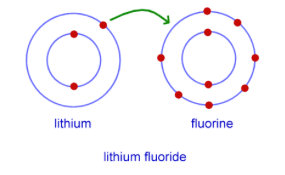

The image above shows:
covalent bonding
ionic bonding
metallic bonding

Which best describes the bonding in the cyanide ion (CN-)?
3 (sigma) bonds
2 (sigma) bonds and I (pi) bond
1 (sigma) bond and 2 (pi) bonds
3 (pi) bonds

Use your knowledge and electronegativity sheet to predict what the following compound is classified as.
nonpolar covalent
polar covalent
ionic
metallic


What is the name for the electrostatic force of attraction between the particles shown in the image?
covalent bond
dative covalent bond
metallic bond
ionic bond

