
 Worksheets
science 2202 amazing test
Total questions: 42
Worksheet time: 24mins
WHAT IS AN ELEMENT?
AN ELEMENT IS A ELEMENTAL SUBSTANCE THAT CANNOT BE BROKEN DOWN INTO OTHER SUBSTANCES BY CHEMICAL REACTIONS ( MADE OF ONE KIND OF ATOM)
AN ELEMENT IS A CHEMICAL SUBSTANCE THAT CANNOT BE BROKEN DOWN INTO OTHER SUBSTANCES BY CHEMICAL REACTIONS ( MADE OF ONE KIND OF ATOM)
AN ELEMENT IS A CHEMICAL SUBSTANCE THAT CAN BE BROKEN DOWN INTO OTHER SUBSTANCES BY CHEMICAL REACTIONS ( MADE OF ONE KIND OF ATOM)
AN ELEMENT IS A CHEMICAL SUBSTANCE THAT CANNOT BE BROKEN DOWN INTO OTHER SUBSTANCES BY CHEMICAL REACTIONS ( MADE OF MANY KINDS OF ATOMS)
WHAT IS THE CONSERVATION OF MASS?
THE MASS OF ALL SUBSTANCES PRESENT BEFORE A CHEMICAL CHANGE EQUALS THE MASS OF THE SUBSTANCES AFTER THE PHYSICAL CHANGE
THE MASS OF ALL SUBSTANCES PRESENT BEFORE A CHEMICAL CHANGE EQUALS THE MASS OF THE SUBSTANCES AFTER THE CHEMICAL CHANGE
THE MASS OF ALL SUBSTANCES PRESENT AFTER A CHEMICAL CHANGE EQUALS THE MASS OF THE SUBSTANCES AFTER THE CHEMICAL CHANGE
THE MASS OF ALL SUBSTANCES PRESENT BEFORE A CHEMICAL CHANGE DOES NOT EQUAL THE MASS OF THE SUBSTANCES AFTER THE CHEMICAL CHANGE
DIFFERENT TECHNIQUES CAN BE USED TO
SEPERATE SUBSTANCES. MORE THAN ONE ANSWER!
MAGNATISM
CENTRIFUGATION
FILTERATION
DISTILLATION
CHROMATOGRAPHY
WHAT IS A HETEROGENEOUS MIXTURE?
A HETEROGENEOUS A MIXTURE IN WHICH THE COMPOSITION IS ONLY UNIFORM THROUGHOUT THE FORM
A HETEROGENEOUS A MIXTURE IN WHICH THE COMPOSITION IS NOT UNIFORM THROUGHOUT THE FORM
A HETEROGENEOUS A MIXTURE IN WHICH THE COMPOSITION IS UNIFORM THROUGHOUT THE MIXTURE
A HETEROGENEOUS A MIXTURE IN WHICH THE COMPOSITION IS NOT UNIFORM THROUGHOUT THE MIXTURE
MATTER THAT IS EITHER AN ELEMENT OR A COMPOUND WITH A FIXED CHEMICAL COMPOSITION
TRUE
FALSE
A HOMOGENEOUS MIXTURE IS A MIXTURE IN WHICH THE COMPOSITION IS UNIFORM THROUGHOUT THE MIXTURE
TRUE
FALSE
ELEMENTS AND COMPOUNDS CAN NOT BE REDUCED TO MORE BASIC COMPONENTS BY PHYSICAL MEANS
FALSE
TRUE
PHYSICAL PROPERTIES CAN BE USED TO SEPARATE MIXTURES
FALSE
TRUE
MIXTURES ALWAYS CONTAIN THE SAME AMOUNTS OF SUBSTANCES THAT MAKE THEM UP
FALSE
TRUE
THE IDENTITY REMAINS THE SAME
IRON
MUD
PHYSICAL CHANGES CAN SOMETIMES BE REVERSED
TRUE
FALSE
WHEN A SUBSTANCE GOES THROUGH A CHEMICAL CHANGE IT MAY CHANGE THE PHYSICAL AND CHEMICAL PROPERTIES OF THE SUBSTANCE
TRUE
FALSE
changes might involve energy changes, but the kind of substance—the identity of the element or compound—does not change.
FALSE
TRUE
CHEMICAL CHANGES USUALLY CAN NOT BE REVERSED
FALSE
TRUE
THE CARBON IN A PENCIL POINT CONTAINS.........?
ONLY CARBON ATOMS
CARBON AND ELEMENTAL ATOMS
CARBON AND NITROGEN ATOMS
CARBON AND CARBOHYDRATED ATOMS
HOW DO WE KNOW A REACTION IS TAKING PLACE ?
heat, cooling, or the formation of bubbles or solids in a liquid, changing colors, new odor
heat, melting, or the formation of bubbles or solids in a liquid, changing colors, new odor
heat, cooling, or the formation of rocks or solids in a liquid, changing colors, new odor
heat, cooling, or the formation of bubbles or solids in a gas, changing colors, new odor
WHAT ARE COMPOUNDS?
COMPOUNDS ARE MATERIAL MADE OF TWO OR MORE DIFFERENT ELEMENTS COMBINED WITH A CHEMICAL BOND
COMPOUNDS ARE MATERIAL MADE OF ONE ELEMENT COMBINED WITH A CHEMICAL BOND
COMPOUNDS ARE MATERIAL MADE OF TWO OR MORE DIFFERENT ELEMENTS COMBINED WITH A ELEMENTAL BOND
COMPOUNDS ARE MATERIAL MADE OF ONLY TWO DIFFERENT ELEMENTS COMBINED WITH A CHEMICAL BOND
WHAT IS AN CHEMICAL CHANGE?
A CHANGE OF MANY SUBSTANCES IN A MATERIAL TO A DIFFERENT SUBSTANCE IS A CHEMICAL CHANGE
A CHANGE OF ONE SUBSTANCE IN A MATERIAL TO A DIFFERENT SUBSTANCE IS A PHYSICAL CHANGE
A CHANGE OF ONE SUBSTANCE IN A MATERIAL TO A SAME SUBSTANCE IS A CHEMICAL CHANGE
A CHANGE OF ONE SUBSTANCE IN A MATERIAL TO A DIFFERENT SUBSTANCE IS A CHEMICAL CHANGE
WHAT ARE COMPOUNDS?
chromatography is a complimentary technique for the separation of a mixture into its components
chromatography is a laboratory technique for the mixture of a mixture into its components
chromatography is a laboratory technique for the separation of a mixture into its components
chromatography is a laboratory technique for the separation of a mixture into its elements
WHAT IS DISTILLATION?
Distillation is the process of separating solids or liquids from a solution mixture by using their difference in Boiling points
Distillation is the process of separation only solids from a solution mixture by using their difference in Boiling points
Distillation is the process of separating solids or liquids from a dense mixture by using their difference in Boiling points
Distillation is the process of separating solids or liquids from a solution mixture by using their difference in melting points
WHAT IS CENTRIFUGATION?
Centrifugation is a method of separating molecules having the same densities by spinning them in solution around an axis (in a centrifuge rotor) at high speed
Centrifugation is a method of separating molecules having different densities by spinning them in solution around an axis (in a centrifuge rotor) at high speed
Centrifugation is a method of separating molecules having different densities by keeping them in solution around an axis (in a centrifuge rotor) at high speed
Centrifugation is a method of separating molecules having different densities by spinning them in solution around an axis (in a centrifuge rotor) at low speed
WHAT IS RECRYSTALLIZATION?
Recrystallization is a technique used to purify solid compounds by dissolving them usually in cold solvent followed by cooling.
Recrystallization is a technique used to purify solid compounds by mixing them usually in hot solvent followed by cooling.
Recrystallization is a technique used to purify liquid compounds by dissolving them usually in hot solvent followed by cooling.
Recrystallization is a technique used to purify solid compounds by dissolving them usually in hot solvent followed by cooling.
WHAT ARE MIXTURES?
A MIXTURE IS A COMBINATION UP OF ONE SUBSTANCE WITHOUT THEM REACTING
A MIXTURE IS A COMBINATION UP OF TWO OR MORE SUBSTANCES WITH THEM REACTING
A MIXTURE IS A COMBINATION UP OF TWO OR MORE SUBSTANCES WITHOUT THEM REACTING
A MIXTURE IS A COMBINATION UP OF ONLY THREE SUBSTANCES WITHOUT THEM REACTING
THE RATIO OF THE DIFFERENT ATOMS IS ALWAYS THE SAME FOR THAT COMPOUND
TRUE
FALSE
WHAT IS WATERS RATIO?
WATERS RATIO IS F2O
WATERS RATIO IS H6O
WATERS RATIO IS H2O
WATERS RATIO IS H3O
Two or more atoms Combined with a chemical bond
MOLECULE
COMPOUND
MATTER
IS GOLD A MOLECULE - ELEMENT - COMPOUND
ELEMENT
AU
COMPOUND
AU
MOLECULE
AU
IS SALT A MOLECULE - ELEMENT - COMPOUND
ELEMENT
NACL
COMPOUND
NACL
MOLECULE
NACL
IS COPPER A MOLECULE - ELEMENT - COMPOUND
ELEMENT
CU
COMPOUND
CU
MOLECULE
CU
A characteristic of a material that can be observed without changing the identity of the substances that make up the material is a _______.
CHEMICAL PROPERTY
PHYSICAL PROPERTY
What is the law of conservation of mass?
The law of conservation of mass states that, during a chemical reaction, the total mass of the products must not be equal to the total mass of the reactants
The law of conservation of mass states that, during a chemical reaction, the total mass of the products must be equal to the total mass of the reactants
IS BAKING SODA A MOLECULE - ELEMENT - COMPOUND
ELEMENT
NAHCO3
COMPOUND
NAHCO3
MOLECULE
NAHCO3
IS PROPANE A MOLECULE - ELEMENT - COMPOUND
ELEMENT
C3H8
COMPOUND
C3H8
MOLECULE
C3H8
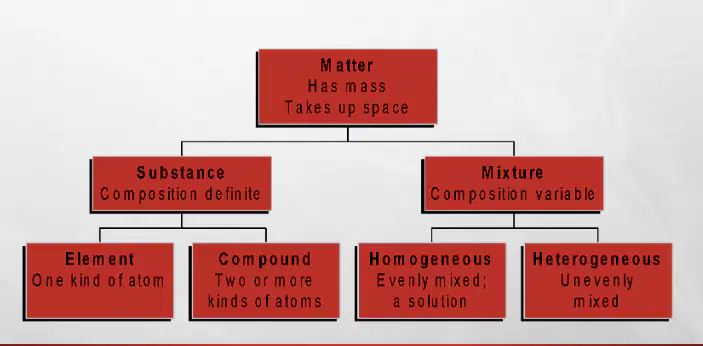
TRUE OR FALSE
TRUE
FALSE
WHAT IS A COLLOID?
A COLLOID IS A HOMOGENEOUS MIXTURE CONTAINING VERY TINY INSOLUBLE PARTICLES THAT NEVER SETTLE OUT. EXAMPLE : MILK AND JELLO
A COLLOID IS A HETEROGENEOUS MIXTURE CONTAINING LARGE INSOLUBLE PARTICLES THAT NEVER SETTLE OUT. EXAMPLE : MILK AND JELLO
A COLLOID IS A HETEROGENEOUS MIXTURE CONTAINING VERY TINY INSOLUBLE PARTICLES THAT ALWAYS SETTLE OUT. EXAMPLE : MILK AND JELLO
A COLLOID IS A HETEROGENEOUS MIXTURE CONTAINING VERY TINY INSOLUBLE PARTICLES THAT NEVER SETTLE OUT. EXAMPLE : MILK AND JELLO
A SUSPENSION IS A HETEROGENEOUS MIXTURE CONTAINING A LIQUID IN WHICH SMALL VISIBLE INSOLUBLE PARTICLES THAT SETTLE. EXAMPLE: MUDDY WATER
FALSE
TRUE
HOW DO YOU REALIZE ITS A COLLOID?
This scattering of light by colloidal particles is called the
Thyroid effect.
Tyndall effect.
Mandella effect.
cross effect.
Pond water is a
colloid
suspension
none
What is a physical property?
A PHYSICAL PROPERTY IS A CHARACTERISTIC OF A MATERIAL THAT YOU CANNOT OBSERVE WITH OUT CHANGING THE SUBSTANCES THAT MAKE UP THE MATERIAL
A PHYSICAL PROPERTY IS A CHARACTERISTIC OF A MATERIAL THAT YOU CAN OBSERVE WITH OUT CHANGING THE SUBSTANCES THAT MAKE UP THE MATERIAL
A PHYSICAL PROPERTY IS A CHARACTERISTIC OF A MATERIAL THAT YOU CAN OBSERVE WITH CHANGING THE SUBSTANCES THAT MAKE UP THE MATERIAL
A PHYSICAL PROPERTY IS A CHARACTERISTIC OF AN ATOM THAT YOU CAN OBSERVE WITH OUT CHANGING THE SUBSTANCES THAT MAKE UP THE MATERIAL
EXAMPLES OF PHYSICAL PROPERTIES INCLUDE:
COLOR, SHAPE, SIZE, DENSITY, MELTING POINT
COLOR, SHAPE, SIZE, AREA, MELTING POINT, AND BOILING POINT
COLOR, SHAPE, SIZE, DENSITY, MELTING POINT, AND BOILING POINT
COLOR, SHAPE, DENSITY, MELTING POINT, AND BOILING POINT
Which of the following is a chemical property?
A. boiling point
B. density
C. flammability
D. melting point
A
B
C
D

