
Font size
 Worksheets
Glo Tally Marks (Space)
Total questions: 90
Worksheet time: 1hrs 19mins
The sun APPEARS to move across the sky, during the day. Which of the following causes shadows to change length throughout the day?
earth's rotation
earth's revolution
sun's revolution
earth's orbit
Many cultures have different methods to determine the time of day. Which of the following is an ancient tool invented to determine the time of day?
watch
clock
sundial
compass
What direction does the sun appear to move across the sky?
west to east
north to south
east to west
south to north
Where does the sun rise?
west
east
north
south
Earth rotates on its axis once approximately every-
month
24 hours
year
12 hours
Earth's rotation causes the day and night cycle. It also causes-
the sun appear to move
the sun remain in orbit
the sun orbit earth
all of the above
A student looks outside and observes the sun in the western sky. Which of the following times could it be?
sunrise
sunset
noon
midnight
which statement correctly describes the sun's apparent movement across the sky?
as earth spins on its axis, it makes the sun appear to move across the sky?
as the sun spins around earth, it moves across the sky
earth rotates 24 hrs, making the sun appear move across the sky.
the sun rotates around the earth every 12 hours, making the sun appear to move across the sky
Earth revolves around the sun, but it also makes one complete rotation. How long does it take Earth to make one complete rotation on its axis?
365 days
1 month
1 day
1 week
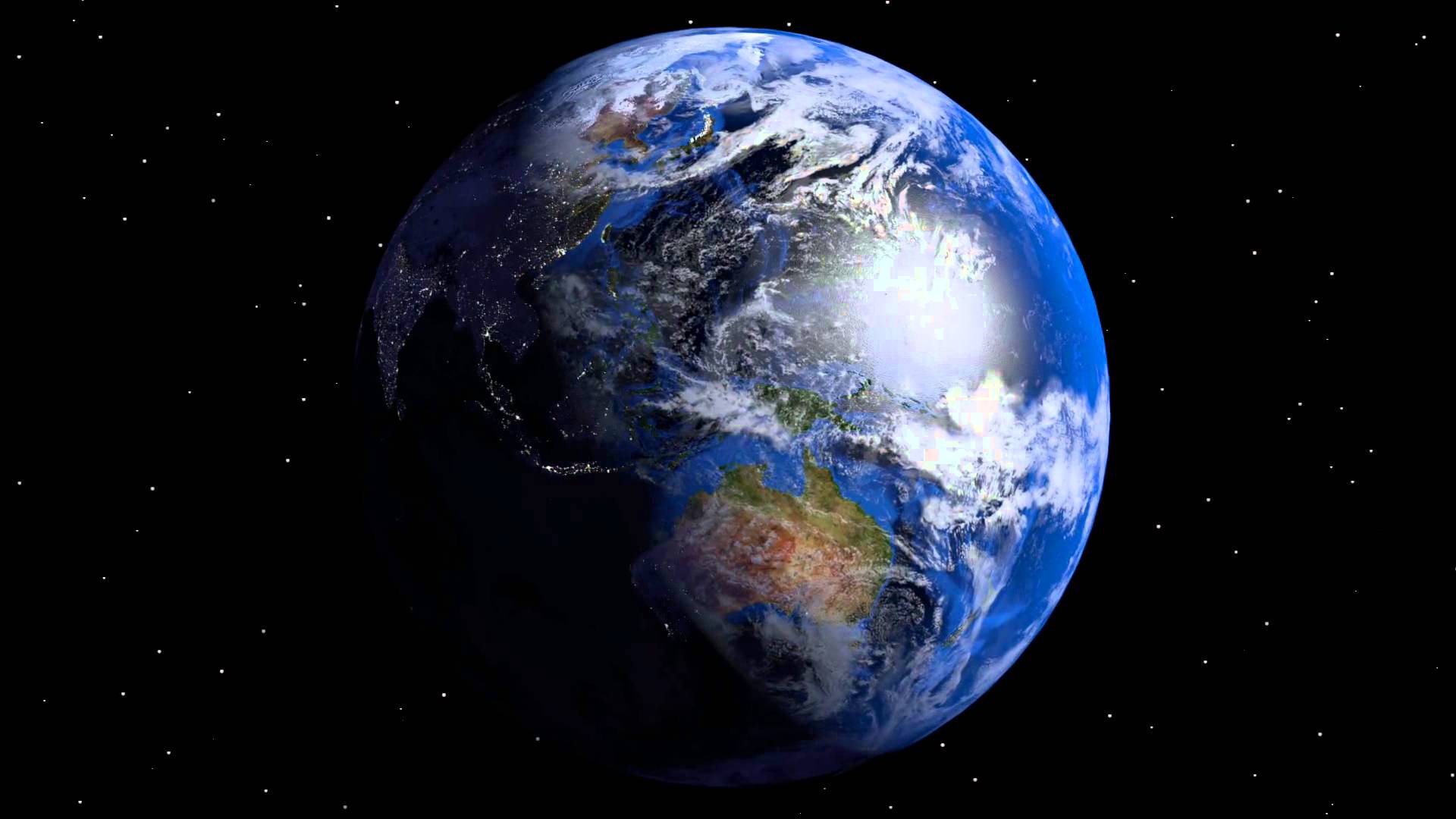
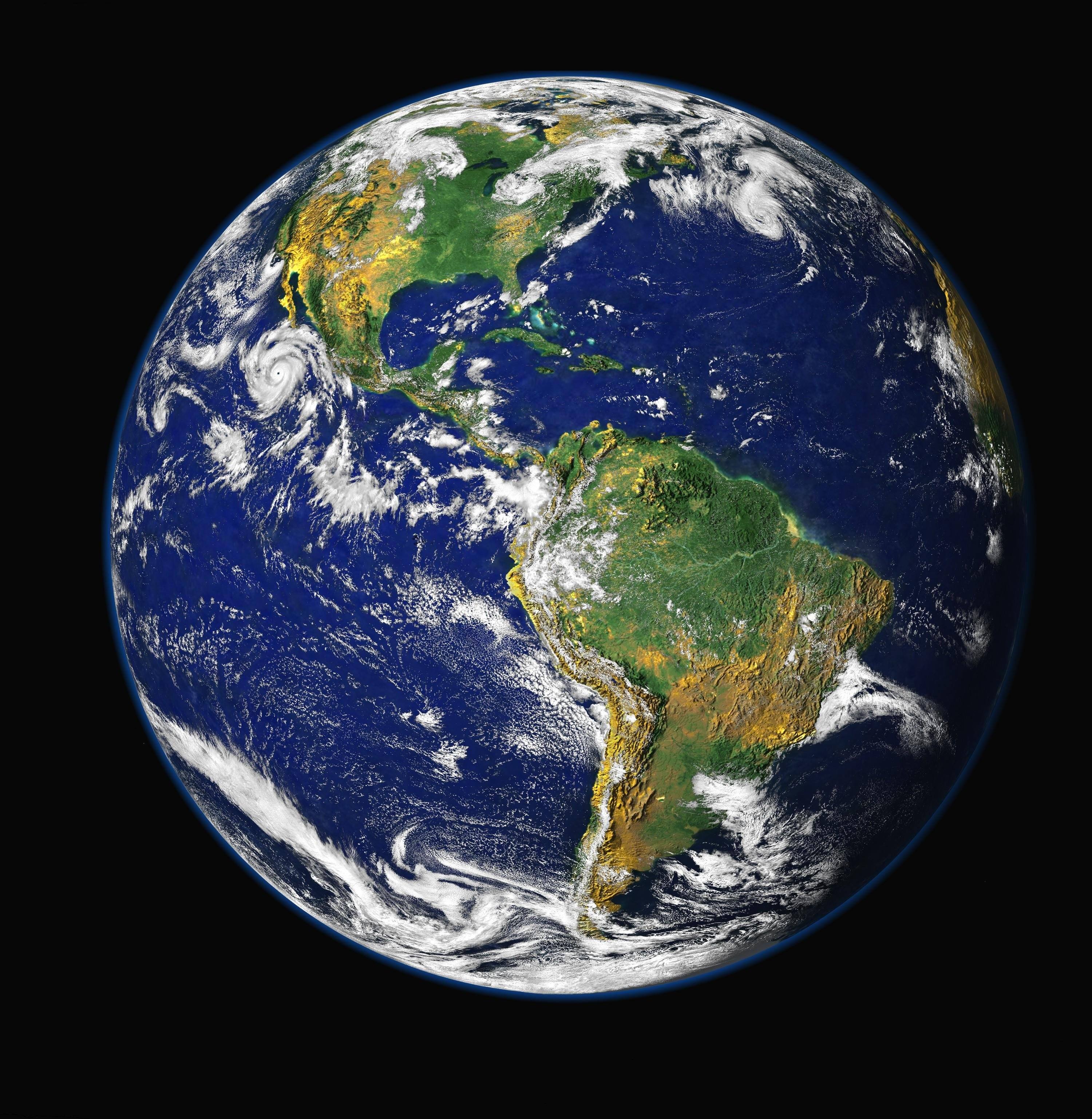
A person standing in Texas notices the sun is rising. At the same moment, a person in Japan sees that the sun has just set. Which statement correctly describes how it can be sunrise and sunset at the same moment?
The sun's rotation around Earth enables part of Earth to have sunlight while the other part is in darkness.
The sun has moved from one location to the other during the course of a day.
Earth's rotation on its axis enables part of the Earth to have sunlight while the other part is in darkness.
Earth has circles around the sun during the course of a day.

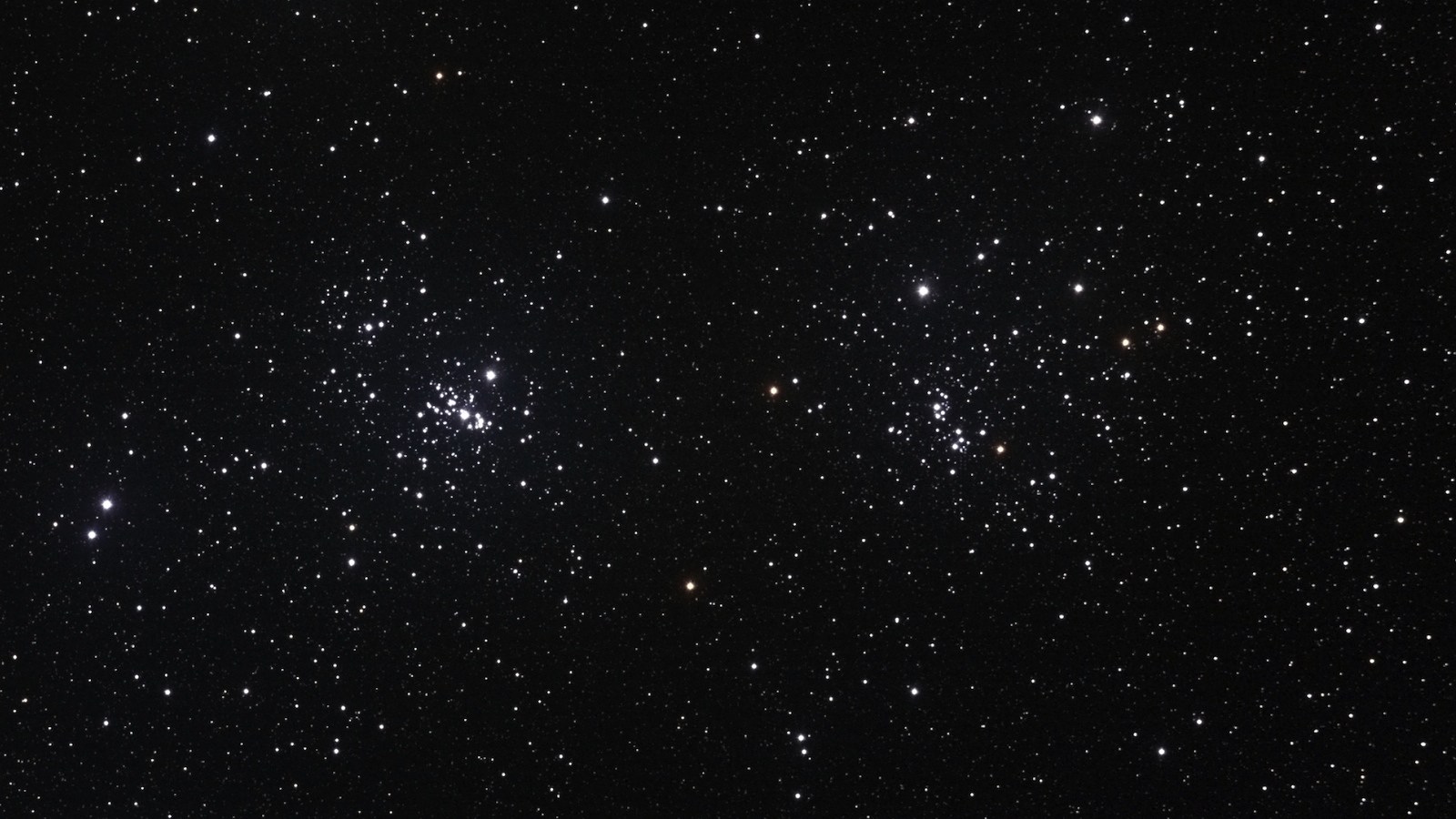


The Sun is the biggest star in the sky.

Constellations are stars that appear to be in a pattern.
Jerome notices that two stars appear to have the same brightness. He knows that one of the stars is much farther away than the other. What could he conclude about the two stars?
A) Both stars must have the exact same actual brightness.
B) The one that is farther away must be brighter.
C) The one that is closer must be brighter.
D) Both stars must five off the exact same amount of energy.
When you look through a telescope, what seems to be increased?
shape
color
distance
size
There are ____________ stars in the sky
hundreds
thousands
billions
Sirius is a "dog star" and the brightest star in the night sky. Why do we see our sun as the biggest and not Sirius even though Sirius is brighter?
Because the sun blocks our view of Sirius
The sun is the closest star to Earth
Sirius is not brighter than the sun
The sun is bigger

The home of the entire solar system is found in the _____________ galaxy
Cosmos
Sombrero
Anendo
Milky Way
Characteristics used to classify stars include
distance, size, and color
size, distance, and brightness
color, brightness, and distance
size, brightness, and temperature
Gravity _____
PULLS on objects
PUSHES on objects
is only on EARTH
Which of the following has gravity?
The sun
A Building
A Mountain
All of the Above

Why are we pulled to Earth's center and NOT the sun's?
The sun is very LARGE
The sun is very FAR AWAY
Earth has a STRONGER GRAVITY than the sun
Earth ORBITS around the sun

What would happen to Earth without the sun's gravity?
Earth would DRIFT INTO SPACE
Earth would ORBIT the sun
Earth would be SMALLER
Earth would get CLOSER TO OTHER PLANETS

The moon’s gravity is weaker than Earth’s because If you went to the moon, you would
SHRINK and become shorter
WEIGH LESS than you do on Earth
FLOAT OFF into space
Not be able to JUMP
Gravity is the force between two objects
True
False
Earth's gravity pulls everything toward:
North
South
East
The center of the earth
Gravitational force is smaller between
Larger objects
Smaller objects
When we talk about gravity, 'up' just means ___
towards the North Pole
away from the South Pole
away from the Earth
When we talk about gravity, 'down' just means ___
towards the North Pole
away from the South Pole
towards the Earth
"Gravity pulls things down", really means that gravity pulls things ___
towards the North Pole
towards the South Pole
towards the Earth
Gravity is the force of attraction ___
on a heavy object, due to a lighter one
between two objects of the same size
between any two objects made of matter
A push or pull acting on an object is called a ___
pusher
force
lever
Which type of objects are pulled toward Earth?
only light objects
only heavy objects
all objects
If you are holding an apple, a bowling ball, and a feather, then let go of them, ___
they're all going down
the feather will stay put
only the heavy objects fall
Sir Isaac determined that "what goes up ___"
is a helium balloon
isn't affected by gravity
stays up
must come down
A thrown ball will go up or sideways for a little bit ___
then keep going
then come back
then will fall to the ground
Near the surface of the Earth, gravity is the cause that produces the effect of ___
all unsupported objects falling down
supported objects falling down
all unsupported objects falling up
supported objects falling up
Factors that influence the strength of gravity between two objects are their mass and their _______ apart.
Newton
Distance
Gravity
Freefall
_______ is the measure of the force of gravity pulling on an object.
Weight
Mass
Objects with higher mass have _______.
weaker gravitational pull
stronger gravitational pull
no gravitational pull
ability to float in space
As the distance between two objects increases, ____.
the gravitational force between them increases
the gravitational force between them decreases
the gravitational force between them remains the same
the objects will collide
The spinning movement of a celestial body's axis is called __________.
revolution
rotation
seasons

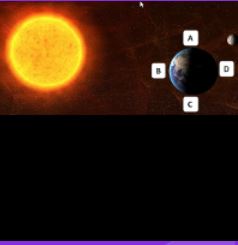
In the Northern Hemisphere, at position A, it would be _____.
Winter
Summer
Spring
Fall
In the Southern Hemisphere, at position A, it would be _____.
Winter
Summer
Spring
Fall
Why is gravity important to us?
It works across space and even keeps the Earth in its place in space.
It keeps us skinny
It allows us to float around
Which has more gravity, the sun, the moon, or Earth?
the sun
the moon
the earth
Which planet has the strongest gravity?
Venus
Mercury
Jupiter

What prevents us from floating up into space?
Oxygen
Gravity
The Sun
Space Shuttles

Gravity is only on Earth
True
False

Who's gravitational pull is our moon attached too?
The Sun
Mercury's
Earth's
The stars

What is the cause for the tides?
The Earth's revolution around the sun
The Earth floating aimlessly through space
The gravitational pull of the moon and sun
Mars
When the Earth spins on it's axis, on the surface of the earth, we experience __________ and _______________?
Star and Space
Eclipses and ellipses
Moon and Phases
Day and Night
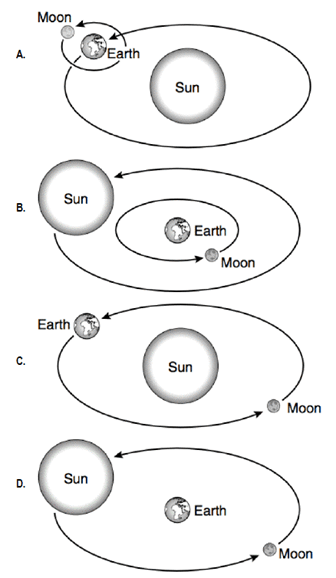
Which of these best shows how the Earth revolves around the sun as the moon revolves around the Earth?
Picture A
Picture B
Picture C
Picture D

