
 Worksheets
VCert Health and Fitness Part 1
Total questions: 20
Worksheet time: 10mins
Which bone is not part of the axial skeleton?
Cranium
Ribs
Femur
Vertebra
What is the function of short bones?
Movement
Support
Protection
Shape
Identify the irregular bone.
Carpals
Humerus
Tibia
Vertebrae
What type of bone is the femur?
Long
Short
Sesamoid
Irregular
Fixed and synovial are two types of joint. What is the third?
Pivot
Slightly Moveable
Rotation
Saddle

Correctly identify the postural defect.
Scoliosis
Kyphosis
Lordosis
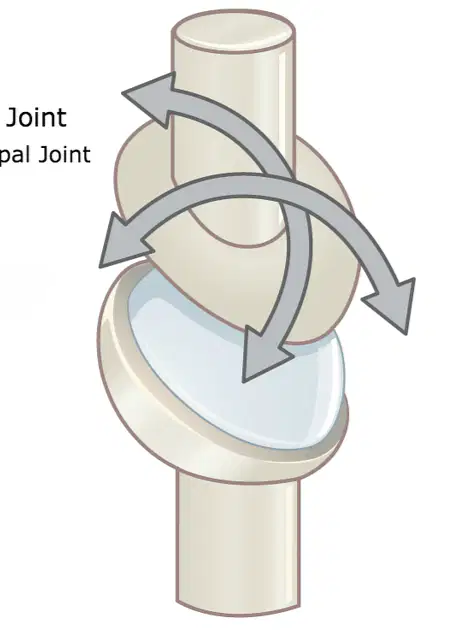
What type of joint is the wrist?
Hinge
Ball & socket
Pivot
Condyloid

State the joint action.
Rotation
Flexion
Extension
Adduction

What is articulating cartilage?
A protective covering at the end of bones.
Connective tissue that joins bone to bone.
A fluid that lubricates the joint and reduces friction.
Seals the the synovial joint.
Where is skeletal muscle found?
In the heart.
In blood vessels and organs.
Attached to the skeleton.
Cardiac muscle is involuntary. True or False
True
False
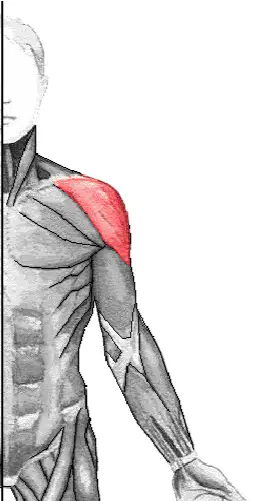
Correctly identify the muscle.
Pectoralis Major
Biceps
Triceps
Deltoid
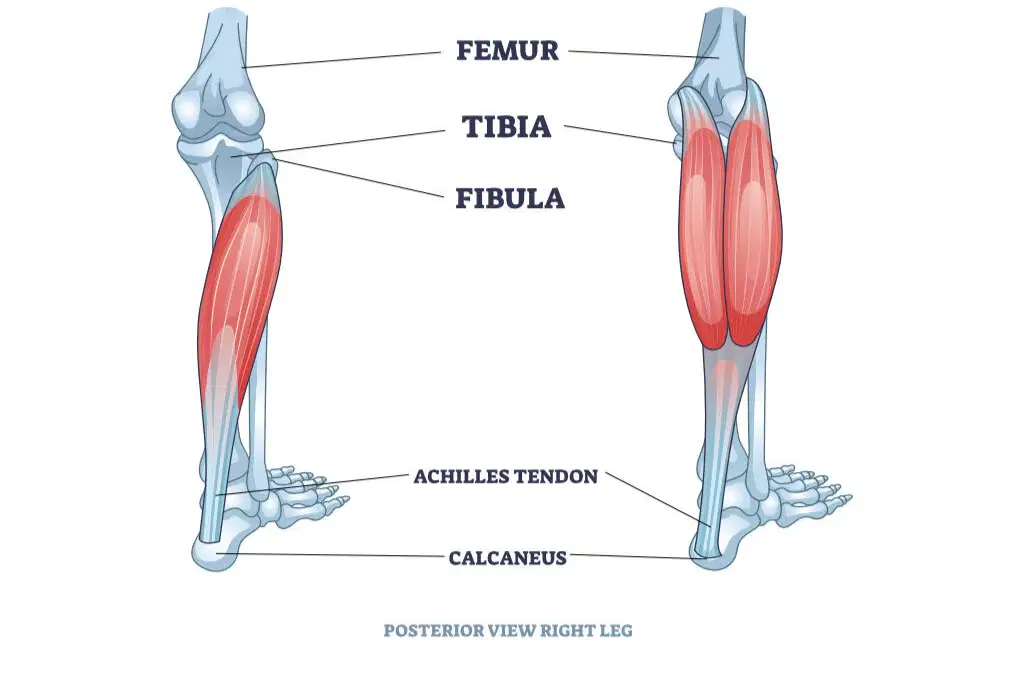
Correctly identify the muscle on the left.
Gluteus
Soleus
Quadriceps
Hamstrings

Correctly identify the joint action at the knee during the downward phase of a squat.
Flexion
Extension
Adduction
Abduction
Which muscle fibre type are rich in oxygen, resistant to fatigue and capable of producing repeated slow contractions.
Type 1
Type 2
Diffusion is the movement of gas from an area of high concentration to an area of low concentration. True or false
True
False
What is tidal volume.
The amount of air which enters the lungs during normal inhalation at rest.
The amount of air breathed out after taking in the deepest breath.
The amount of air left in the lungs after breathing out.
The maximum amount of air you can breath in.
What is the name of the smallest blood vessel.
Vein
Artery
Capillary

Which type of blood vessel has thick muscular, and elastic walls to withstand pressure.
Vein
Artery
Capillary
How do you calculate someone's maximum heart rate?
220 + age
220 - age
220 / age

