
 Worksheets
2026' Sem II Biology Review
Total questions: 81
Worksheet time: 1hrs 25mins
Which of the following is a characteristic of the Animal Kingdom?
They are autotrophic.
They have cell walls made of cellulose.
They are multicellular and heterotrophic.
They reproduce only asexually.
Which of the following is NOT a characteristic of the Plant Kingdom?
They are autotrophic.
They have prokaryotic cells.
They perform photosynthesis.
They have chlorophyll.
Which kingdom includes organisms that are primarily decomposers?
Animal Kingdom
Plant Kingdom
Fungi Kingdom
Monera Kingdom
Which of the following is true about the Bacteria Kingdom?
They are eukaryotic.
They have a well-defined nucleus.
They are unicellular and prokaryotic.
They are multicellular and autotrophic.
Which of the following is the correct order of classification of organisms from broadest to most specific?
Kingdom, Phylum, Class, Order, Family, Genus, Species
Kingdom, Class, Phylum, Order, Family, Genus, Species
Phylum, Kingdom, Class, Order, Family, Genus, Species
Kingdom, Order, Phylum, Class, Family, Genus, Species
These two kingdoms contain multicellular heterotrophs.
fungus and plant
plant and animal
fungus and plant
fungus and animals
What word describes a trait that helps an organism survive in its environment?
natural selection
mutation
camouflage
adaptation
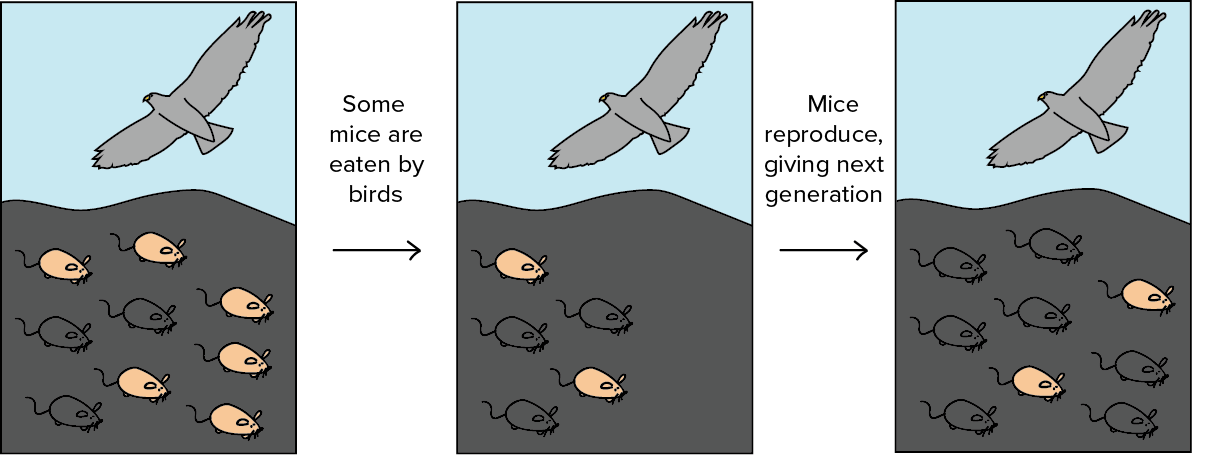
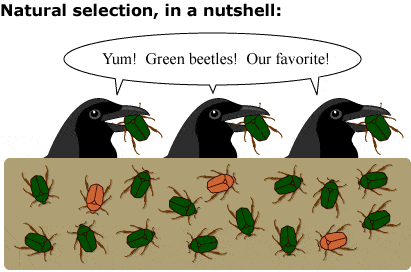

stabilizing
directional
disruptive
the answer is not here


Which scientific name is TYPED correctly
carcharhinus melanopterus
Carcharhinus Melanopterus
Carcharhinus melanopterus
Carcharhinus melanopterus
Which taxa are used in a scientific name?
Domain
Genus
Phylum
Species
Class

These limbs provide evidence of common ancestry because they ______
Have the same basic structure
perform the same function
are the same size
are parts of mammals

Which trait(s) do conifers have?
vascular tissue only
vascular tissue and seeds
vascular tissue, seeds and flowers
seeds only

Using the cladogram, which two organisms are more closely related Lizards and Newts OR Lamreys and Sharks
Newts and Lizards
Lampreys and Sharks
Butterfly wings and bird wings are
analogous structures
homologous structures
When a structure no longer serves a purpose it is considered
analogous
homologous
vestigial
How many half-lives would it take for only 25% of the radioactive atoms in a rock sample to remain?
1 half-life
2 half-lives
3 half-lives


If the original mass of a radioactive isotope was 24 grams, how many grams would remain after 3 half-lives?
Macaws (a large, tropical bird) have strong beaks that can bit through thick shells. They are messy eaters, often opening nuts and droping them on the ground, leaving them behind. Other animals eat the dropped food. What type of relationship is this?
commensalism
parasitism
mutualism
competition
In (a) , one species harms another species to benefit themselves. For example, a flea bites a dog to get (b) . This leaves the (c) with itchy bite marks.


Which are abiotic factors in this environments?
Water
Deer
Grass
Dirt

Energy in food webs is lost as ________at each movement up or in a food chain.
vapor
carbon
heat
oxygen

At the base of the food chain lie the ________.
secondary consumers
tertiary consumers
primary consumers
primary producers
The organisms that eat the primary consumers are:
secondary consumers
tertiary consumers
primary consumers
primary producers

How many trophic levels are in this image?
4
5
3
2

Do arrows in a food web go to the organism that is getting eaten or to what is eating it? The arrow goes to:
the organism that is getting eaten
what is eating it
Compared to other omnivores and carnivores, a herbivore will have a more significant percentage by the length of which organ?
small intestine
large intestine
stomach
cecum
What is the key role (function) of carbohydrates?
energy storage
immunity, muscles, structure for tissues, cell metabolism
instant energy for cells and body functions
genetic information (heredity)
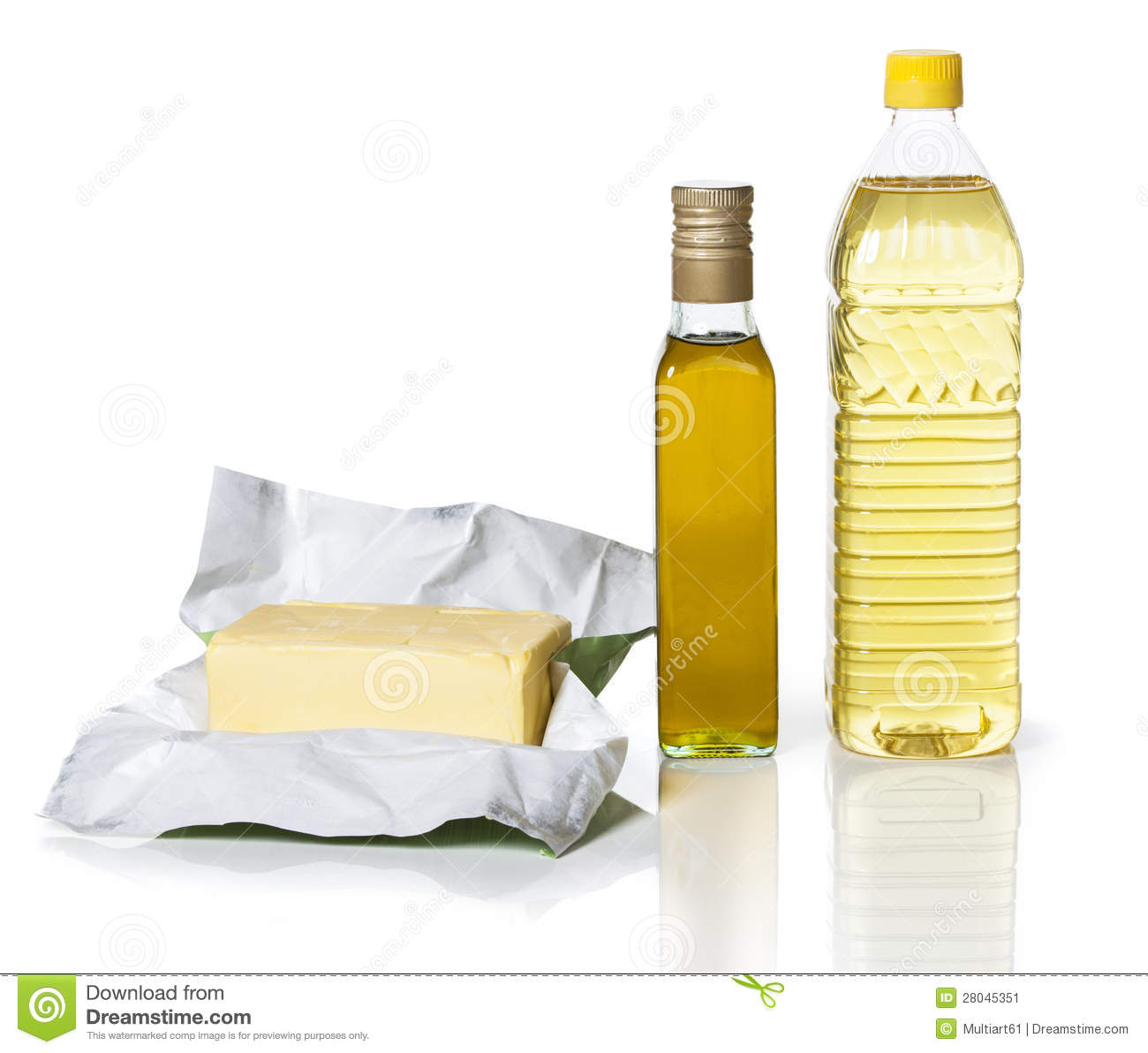
Which of the following elements are found in all macromolecules?


Matter can not be created nor destroyed: it can only be
Destroyed a little bit
Invisible
Transformed, changed
None of the above

Enzymes are
Lipids
Protein
Carbohydrates
Nucleic Acids
Enzymes are responsible for-
Speeding up reactions
Giving the body energy
Slowing down reactions
If the frequency of dominant phenotype is 0.36, what is the frequency of the dominant allele?
0.2
0.48
0.6
0.8
What does p stand for?
dominant allele
recessive allele
homozygous dominant
homozygous recessive
heterozygous
Which of the following is the equation that you would use for Hardy-Weinberg?
p + 2q = 1
2p + 2q = 1
2p + q = 1
p + q = 1

Which statement about photosynthesis is correct?
Plants get the energy they need for photosynthesis from water.
Plants get the energy they need for photosynthesis from soil.
Plants get the energy they need for photosynthesis from sunlight.
Plants do not require energy to perform photosynthesis.
Which of the following is the correct equation for PHOTOSYNTHESIS?
6CO2 + 6H2O → 6O2 + C6H12O6
6CO2 + C6H12O6 + 6H2O → O2
6O2 +6H2O → 6CO2 +C6H12O6
C6H12O6 + 6O2 → 6H2O + 6CO2
Select all that are outputs of Cellular Respiration.
Water
Carbon Dioxide
Oxygen
ATP (Cellular Energy)
Glucose (Sugar/food)

Anaerobic means without ________?
Nitrogen
Carbon Dioxide
Oxygen
Phosphorus
What's the name of the acid that's produced in your muscles after an intense workout?
lactic acid
pyruvic acid
hydrochloric acid
none of the options
In the absence of oxygen, cells will do this process after performing Glycolysis to release energy
Photosynthesis
Electron Transport Chain
Kreb Cycle
Fermentation

If there is a fire in a forest, there will be more _ in the environment?
nitrogen
oxygen
carbon dioxide


What type of distribution pattern is evenly spaced apart from one another?
Uniform
Clumped
Random
Uneven

This is the most commonly seen distribution pattern. Example: wolves. This is usually because there are resources found in particular areas and the organisms need more space to survive.
Random
Uniform
Clumped
Ueven
Biodiversity, aka biological diversity, usually refers to
the same species in a general location
the number of different species in a given area
the number of animal species in a given area
the number of plant species in a given area
The excessive use of species that have economic value is known as
pollution
habitat destruction
over - exploitation
climate change
What is an invasive species?
An organism that is new to an environment that has positive effects on the environment.
An organism that is native to an environment that has negative effects on the environment.
An organism that is new to an environment that has negative effects on the environment.
An organism that is native to an environment that has positive effects on the environment.
What is the original cause of eutrophication?
Too many predators
Too many herbivores
Excess fertilizer
Too much oxygen
How does habitat fragmentation reduce genetic diversity in species?
Habitat fragmentation makes nonnative species introduction possible.
Habitat fragmentation opens migration routes.
Habitat fragmentation isolates a large population into smaller groups.
Habitat fragementation encourages open gene flow.
the increased concentration of toxic substances in organisms at a high trophic level in the food chain
endemic
natural resources
Biological magnification
bioremediation
What is a keystone species?
A species that is the most abundant in an ecosystem
A species that has a crucial role in the way an ecosystem functions
A species that is the largest in an ecosystem
A species that is the smallest in an ecosystem
What happens to water when it is dissolved with carbon dioxide?
it becomes more acidic
it becomes more basic
it becomes healthier to drink
it turns into coal
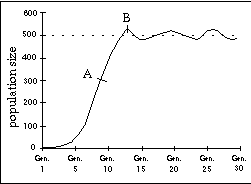
What is the carrying capacity of the graph?
around 500
more than 800
less than 300
around 700
A severe frost wipes out 50% of the coffee crop in Brazil.
Density-Dependent
Density-Independent
Fish on a coral reef stake out their territory and chase away any younger fish that try to live there.
Density-Dependent
Density-Independent

