wayground logo

Free Printable Worksheets

Font size

S
M
L
XL
Worksheets

S24 Final Exam Practice

Total questions: 78

Worksheet time: 1hrs 19mins
Name
Class
Date
1.
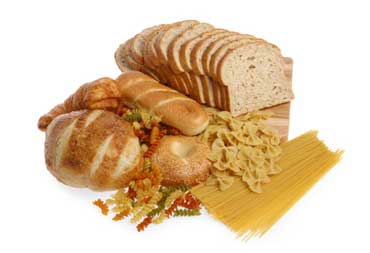
Which biomolecule is found in pasta and bread?
a)
Lipid
b)
Protein
c)
Nucleic Acid
d)
Carbohydrate
2.
Which biomolecule is found in fats, oils, and waxes and is a source of long-term energy
a)
Proteins
b)
Nucleic Acid
c)
Lipids
d)
Carbohydrate
3.
What is the function of a nucleic acid?
a)
Stores genetic information
b)
Stores energy
c)
Quick source of energy
d)
Builds structures
4.

Match the monomers and their macromolecule.

a)

Monosaccharide

1.

Carbohydrate

b)

Fatty Acid + Glycerol

2.

Lipid

c)

Amino Acid

3.

Protein

5.

Match the polymers and their macromolecule.

a)

Polysaccharide

1.

Carbohydrate

b)

Triglyceride

2.

Lipid

c)

Polypeptide

3.

Protein

6.
Why are macromolecules also known as "polymers?"
a)
 Many organisms have macromolecules.
b)
They are large molecules added together. 
c)
There are many types of macromolecules. 
d)
They are large molecules made up of many monomers.
7.
What are the four types of biological macromolecules?
a)
carbohydrates, nucleotides, lipids, amino acids
b)
carbohydrates, lipids, nucleic acids, proteins
c)
nucleic acids, monosaccharides, proteins, lipids
d)
carbohydrates, amino acids, water, proteins
8.

Positive Feedback loop

a)

decreases the stimulus

b)

increases the stimulus

9.

Negative feedback returns BACK to the set point

a)

False

b)

True

10.
The maintenance of an organism’s internal environment is called:
a)
compensating
b)
homeostasis
c)
balancing
d)
routine
11.

According to the model, what is a normal blood glucose (sugar) level?

a)

270 mg/100mL

b)

180 mg/100 mL

c)

45 mg/100 mL

d)

90 mg/100 mL

12.

According to the model, what is the response to HIGH blood glucose (sugar)?

a)

Pancreas releases insulin into blood

b)

Pancreas releases glucagon into blood

13.

According to the model, what is the response to LOW blood glucose (sugar)?

a)

Pancreas releases insulin into blood

b)

Pancreas releases glucagon into blood

14.

Identify the STIMULUS.

Scenario: A person begins to exercise which causes their body temperature to increase. The temperature change is noticed and the person begins to sweat and their body temperature decreases.

a)

temperature change is noticed

b)

person begins to sweat

c)

body temperature decreases

d)

person begins to exercise

15.

Identify the RESPONSE.

Scenario: A person begins to exercise which causes their body temperature to increase. The temperature change is noticed and the person begins to sweat and their body temperature decreases.

a)

temperature change is noticed

b)

body temperature increases so the person begins to sweat

c)

body temperature decreases

d)

person begins to exercise

16.
How does a cell maintain homeostasis?
a)
Regulates what enters and leaves the cell
b)
Flexibility
c)
Protective barrier
d)
Structure and support
17.
The function of the plasma membrane is....
a)
to regulate what enters and leaves the cell.
b)
fight bacteria and viruses that enter the cell.
c)
provide rigid support and protection to the cell.
d)
make sure each cell can move
18.
Which is true about active transport?
a)
It requires energy
b)
it does not require energy
c)
It moves substances down the concentration gradient
d)
it moves material from high to low concentration
19.

The cell membrane, also known as the ​ (a)   membrane, is found in ​ (b)   types of cells. It controls and ​ (c)   what is allowed in and out of the cell to help maintain ​ (d)   or a balanced environment. It also is known as the ​ (e)   because the different parts of the cell membrane can move around and are not fixed in one location.

Choose from the below words
plasma
all
regulates
homeostasis
fluid mosaic model
some
20.

The cell membrane is made up of several components, each with their own function. The main part is the ​ (a)   , which allows small or non-polar molecules (such as ​ (b)   or steroid hormones) to pass through the membrane. Larger and polar molecules (such as ​ (c)   and sugars) are too big to pass through the phospholipid bilayers so they use the ​ (d)   to travel in or out of the cell. ​ (e)   helps make the cell membrane more rigid or loose to control what goes in and out of the cell.

Choose from the below words
phospholipid bilayer
oxygen gas
water
channel or transport proteins
Cholesterol
Carbohydrate
Glycerol
fatty acids
21.
What is NOT TRUE about the cell membrane?
a)
It controls what enters and leaves the cell
b)
Semipermeable
c)
Phospholipid bilayer
d)
Contains digestive enzymes
22.
What is cancer?
a)
The heart does not receive enough blood.
b)
Sudden disruption of blood flow to part of the brain.
c)
Blood filled weak spot.
d)
Uncontrolled growth and spread of abnormal cells.
23.
The causes of cancer may include which of the following?
a)
environmental influences
b)
UV radiation
c)
viruses
d)
all of these
24.
Cancer is a consequence of the disruption of the cell cycle
a)
True
b)
False
25.

Cancer cells do not pass cell cycle checkpoints, and so they undergo apoptosis and die.

a)

True

b)

False

26.

One difference between a cancer cell and a normal cell is that

a)

cancer cells divide unconrollably

b)

normal cells divide uncontrollably

c)

cancer cells cannot make copies of DNA

d)

normal cells cannot make copies of DNA

27.

Check what occurs if a non-cancerous cell does not meet the requirements for a checkpoint.

a)

Cell repairs itself

b)

Cell waits until requirements met

c)

Cell under goes Apoptosis

d)

cell goes past checkpoint and continues to divide

28.

During which phase of the cell cycle does the cell spend the most time?

a)

Mitosis

b)

Cytokinesis

c)

Interphase

29.

Match the image to the correct answer

a)

1.

Prophase

b)

2.

Metaphase

c)

3.

Anaphase

d)

4.

Telophase

e)

5.

Cytokinesis

30.

Label the parts of the Cell Cycle

31.

What is the result of the cell cycle?

a)

Three cells

b)

Four daughter cells

c)

2 identical cells

d)

1 clone cell

32.
Put the following actions in order: DNA replicates, cell grows, cell divides, cell prepares for mitosis. 
a)
DNA replicates, cell grows, cell prepares for mitosis, cell divides
b)
cell grows, cell prepares for mitosis, DNA replicates, cell divides
c)
cell grows, DNA replicates, cell prepares for mitosis, cell divides
d)
DNA replicates, cell prepares for mitosis, cell grows, cell divides
33.
Which sequence of DNA bases would pair with this partial strand
ATG TGA CAG
a)
ATG TGA CAG
b)
TAC ACT GTC
c)
GTA AGT GAC
d)
CAT TCA CTG
34.
Which of the following best describes a DNA molecule?
a)
double helix
b)
contains ribose
c)
made of amino acids
d)
contains Uracil
35.
Adenine bonds with ______________.
a)
Guanine
b)
Thymine
c)
Cytosine
d)
Adenine
36.
Guanine bonds with ______________.
a)
Adenine
b)
Guanine
c)
Cytosine
d)
Thymine
37.
Why is DNA important?
a)
it is very small and very complicated
b)
it's in everything
c)
it serves as the blueprint for traits of all living things
d)
because we eat it every day for energy
38.
DNA replication results in two DNA molecules,
a)
each one with two original strands
b)
each one with two new strands
c)
each one with one new strand and one original strand
d)
one with two new strands and the other with two original strands
39.
Why is it crucial that living things are able to replicate their DNA?
a)
Each cell must have its own DNA
b)
Less copies of DNA are needed when a new cell is created
c)
A cell needs multiple copies of DNA
d)
Only muscle cells need DNA 
40.

The two strands of DNA are

a)

Parallel

b)

Antiparallel

c)

Perpendicular

d)

At Right Angles

41.

During transcription, this type of ribonucleic acid is responsible for copying the DNA and brining it out of the nucleus.

a)

tRNA

b)

mRNA

c)

rRNA

d)

dRNA

42.

When these bond together, they form a protein

a)

Amino Acids

b)

Peptide Bonds

c)

Ribose

d)

Nucleotides

43.

mRNA occurs during this process

a)

Translation

b)

Transcription

c)

Replication

d)

Delivery

44.

Which of the following is the complementary mRNA sequence to this DNA strand: AACTGAA

a)

UUGACUU

b)

TTGACTT

c)

AACTGAA

d)

AACUGAA

45.
What is the term for a three-nucleotide sequence that codes for an amino acid?
a)
base
b)
codon
c)
amine
d)
serine
46.
The process to go from DNA to mRNA is _______
a)
translation
b)
transcription
c)
replication
47.
The process to go from mRNA to a protein is called ____
a)
transcription
b)
rRNA
c)
replication
d)
translation
48.
Genetic info flows in one direction. Which best represents this flow?
a)
DNA-protein-RNA
b)
Protein-RNA-DNA
c)
RNA-protein-DNA
d)
DNA-RNA-protein
49.
What is the location in the cell for transcription?
a)
nucleus
b)
cytoplasm
c)
ribosome
d)
mitochondria
50.

What is the location in the cell for translation?

a)

Cytoplasm

b)

Nucleus

c)

Lysosome

d)

Golgi apparatus

51.

A chart that shows the relationship between

codons and the amino acids they code for.

a)

Homeostasis chart

b)

Anticodon

c)

Codon Chart

d)

EKG Chart

52.

What is the outcome of DNA transcription and translation?

a)

Make muscles

b)

Make protein

c)

Make cells

d)

Make DNA

53.

A mutation is defined as:

a)

A change in the cell's structure

b)

Anything that changes in an embryo

c)

Any change in the physical features of a human

d)

A change in the DNA sequence

54.

The passing on of traits and behaviors from parents to their offspring is

a)

offspring

b)

heredity

c)

DNA

d)

genes

55.

Is weak, prefers to "hide"

a)

dominant genes

b)

trait

c)

recessive genes

d)

genes

56.

Only takes 1 in a gene pair for a trait to show up

a)

recessive genes

b)

DNA

c)

offspring

d)

dominant genes

57.

A behavior is

a)

passed down from from parents to offspring through genes in cells

b)

something you do

c)

an action you are taught or learn from experience

d)

something you are born with

58.
The genotype of an organism describes the
a)
codons that make up the genes
b)
number of gene's on the chromosmes
c)
genetic make-up of a trait
d)
type of chromosomes in the nucleus
59.
Which best explains why children resemble their parents?
a)
they eat same foods
b)
they have similar DNA
c)
they speak the same language
d)
they have the same interests
60.
Which deals with the transmission of inherited traits from one generation to another?
a)
anatomy
b)
ecology
c)
genetics
d)
forensics
61.

Aa, DD, Bb, yy are all examples of _______

a)

genotypes

b)

phenotypes

62.

Which of the following features is NOT inherited?

a)

Skin color

b)

Tatoo

c)

Hair texture

d)

Color blindness

63.
Two heterozygous parents produce offspring. What is the probability of the HOMOZYGOUS DOMINANT GENOTYPE appearing in the offspring generation?
a)
75%
b)
25%
c)
50%
d)
100%
64.
What term describes what you see, or the physical appearance.
a)
Genotype
b)
Phenotype
c)
Homozygous
d)
Heterozygous
65.
The genotypic percentage resulting from this this cross would be _____________________.
a)
25% blue eye 75 % brown eye 
b)
BB = 25% Bb = 50% bb = 25%
c)
BB= 50 % bb = 50%
d)
All brown eye
66.

Match the following combinations of alleles:

a)

Homozygous dominant

1.

DD

b)

Homozygous recessive

2.

dd

c)

Heterozygous

3.

Dd

67.
This type of inheritance pattern is a MIXTURE of both traits, like the old theory of blending
a)

incomplete dominance

b)

co-dominance

c)

complete dominance

d)

recessive pattern

68.

A calico cat shows both the traits for orange fur and black fur. What kind of allele expression is this?

a)

Incomplete dominance

b)

Codominance

c)

Complete dominance

d)

Mendelian inheritance

69.
G = green, g = yellow
The genotype for a yellow plant is...
a)
GG
b)
Gg
c)
gg
d)
all of the choices result in yellow
70.
T - tall and t = short
In the punnett square below, what belongs in the missing square
a)
tt
b)
Tt
c)
Bb
d)
TT
71.
Two brown eyed parents (Bb) have a baby. What is the chance the baby is blue eyed?
a)
0 %
b)
25%
c)
50%
d)
75%
72.

Which puppies in this litter are showing incomplete dominance in their fur color?

a)

White (yellow)

b)

Black

c)

Chocolate

73.

These two goldendoodles are brothers, and they both are showing incomplete dominance in their coat texture. If curly hair is dominanct, which doodle is only 60/40 for coat texture?

a)

the one on the left

b)

the one on the right

74.

If black and white are codominant in a chicken, then what is the phenotype of the offspring of a black chicken with a white chicken?

a)

black

b)

white

c)

grey

d)

black with white spots.

75.

This picture is an example of what type of dominance?

a)

incomplete dominance

b)

codominance

c)

regular dominance

d)

it is recessive

76.

Match the following

a)

A trait that is controlled by more than one gene

1.

Polygenic Inheritance

b)

A trait in which a third phenotype appears that is a BLEND of the parental phenotypes

2.

Incomplete Dominance

c)

A trait in which a third phenotype appears which INCLUDES both parental phenotypes

3.

Codominance

d)

A trait located on the X chromosome

4.

X-Linked Traits

e)

A trait that has more than two alleles available per gene

5.

Multiple Alleles

77.
This is when a trait is controlled by more than one gene.
a)
Multiple alleles
b)
Polygenetic inheritance
c)
Codominance
d)
Incomplete Dominance 
78.

Examples include skin color and height (the individual's phenotype exists somewhere along a spectrum)

a)

polygenic inheritance

b)

multiple alleles

c)

linked genes

d)

incomplete dominance