
 Worksheets
Behavior of Light Waves & the Eye
Total questions: 80
Worksheet time: 51mins
When light passes through matter, it is called:
Refraction
Transmission
Reflection
Absorption
When light enters a material but does not leave it, it is called:
Refraction
Transmission
Reflection
Absorption
When light rays bounce off the surface of an object, it is called:
Refraction
Transmission
Reflection
Absorption
When light rays bend or change direction when passing from one medium to another, it is called:
Refraction
Transmission
Reflection
Absorption

In the image, the term that best fits letter A is:
Opaque
Transparent
Translucent
Absorption

In the image, the term that best fits letter B is:
Opaque
Transparent
Translucent
Absorption

In the image, the term that best fits letter C is:
Opaque
Transparent
Translucent
Absorption

In the image, there is a penny on the bottom of the beaker. The beaker in the left-most image is empty, and the eye is attempting to see the penny from the side/topside of the beaker. In the middle image, the eye is looking straight down into the beaker. In the right-most image, the eye is looking from the side/topside; however, the eye in this image is unable to see the penny. Choose the answer that explains why the eye cannot see the penny in the right-most image.
The light rays bend away from the penny in the right-most image.
The light rays bend towards the penny in the right-most image.
The light rays do not bend in any of the images.
The light rays bend towards the penny in the left-most image.

Choose the answer that explains how the candle will look on the right side of the convex lens.
The image of the candle will be upright and smaller.
The image of the candle will be inverted and smaller.
The image of the candle will be upright and larger.
The image of the candle will be inverted and larger.
Complete the sentence: the image on the back of the eye is _________.
right-side up
sideways
upside-down
mirrored
If light enters the top of your eye, it hits the retina on the:
Bottom
Top
Middle
If light enters the middle of your eye, it hits the retina on the:
Bottom
Top
Middle

Using the above image of the eye, identify the part labeled 'a'.
Cornea
Lens
Retina
Sclera

Using the above image of the eye, identify the part labeled 'e'.
Vitreous humor
Aqueous humor
Retina
Lens

Using the above image of the eye, identify the part labeled 'g'.
Retina
Tapetum
Sclera
Cornea

Using the above image of the eye, identify the part labeled 'i'.
Rods
Cones
Retina
Blind spot

Using the above image of the eye, identify the part labeled 'm'.
(a)
This part of the eye is a jelly-like substance and gives shape to the eye.
Cornea
Retina
Vitreous Humor
Lens
This part of the eye is the opening through which light passes.
Pupil
Iris
Cornea
Retina
This part of the eye is the muscle that closes and opens the pupil, this part can often have interesting colors.
Retina
Iris
Cornea
Lens
These are the specialized cells that pick-up black and white images.
Cones
Rods
Ganglion cells
Bipolar cells
These are the specialized cells that pick-up color.
Rods
Cones
Ganglion cells
Bipolar cells
This is the part of the eye that does the most refraction.
Cornea
Lens
Retina
Iris
This is the part of the eye in which there are no rods or cones and connects to the optic nerve.
Retina
Blind Spot
Fovea
Macula
This is the part of the eye that transmits information to the brain.
Optic Nerve
Retina
Cornea
Lens
This is the part of the eye that is reflective and brightens up the image for nocturnal animals.
Retina
Tapetum
Cornea
Lens
This is the part of the eye that is a few cells thick on which the image is projected upside-down.
Retina
Cornea
Lens
Iris

Using the graph, what is the approximate blue cone activation percent for a purplish blue (450 nm) incoming wave of light?
0%
50%
95%
100%

Using the graph, what is the approximate red cone activation percent for a deep red (690 nm) incoming wave of light?
0%
15%
50%
75%

When a drinking straw is placed in a container of water so that it is partly submerged, it appears bent because of
apparent depth
Snell's Law
Refraction
lateral inversion
What happens to light when it passes from air into water?
It speeds up
It slows down
It does not change speed
It reverses direction
Which of the following materials would likely have the highest index of refraction?
Air
Water
Glass
Vacuum
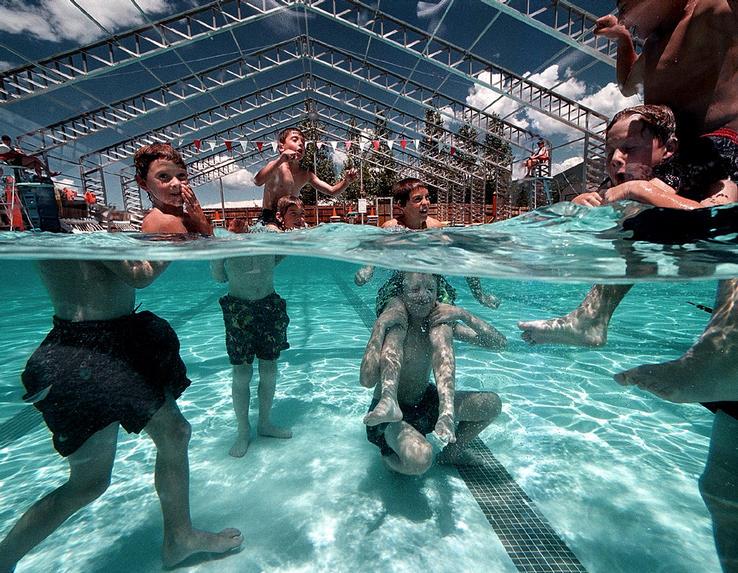
When sunlight passes through the atmosphere and enters a lake, what happens to its speed?
It increases.
It remains the same.
It decreases.
It first decreases, then increases.
What happens to the light from a flashlight when it is directed at a smooth and shiny surface like a bathroom mirror?
It is absorbed completely.
It passes through the surface.
It is reflected.
It becomes scattered.
Which of the following materials will light not pass through?
Glass
Water
Wood
Clear plastic
What happens to the speed of light when it passes from a denser medium to a less dense medium?
It increases.
It decreases.
It stays the same.
It stops.


Which of the following shows the principle of light reflection? Tick the correct answers.
A
B
D
E
F

During a physics class experiment, Anika observes that the color of light changes when it passes from air into water. She wonders, the wavelength of light depends
only on the source.
only on the medium.
on both the source and the medium.

1. Your friends say that they saw a special nail polish that changes color when it is out in the sun. Can light from the sun cause the nail polish to change color?
No. Light is not a physical thing, so it cannot change physical things like nail polish.
Yes. Light from the sun can pull energy out of the nail polish, causing it to change color.
Yes. The nail polish can take in energy from the light, causing it to change color.
No. Light can only change things by warming them up, so it cannot cause the nail polish to change color.
When light hits a barrier that is solid/opaque what is usually created?
a hot object
a shadow
nothing
When you shine sunlight through a magnifying glass onto a piece of paper, you can sometimes set the paper on fire. Why does this happen?
The glass of the magnifier heats up.
The energy of the Sun is focused in one small place.
The energy of the Sun is spread out over the whole piece of paper.
Sunlight sets everything on fire if it sits still long enough.
Photons are particles of light.
True
False
Light behave like
a particle
a wave
waves AND particles
The sky is blue because air molecules in the sky
scatter blue light the best
are sources of white light
absorb all of the blue light
are mirrors that reflect only blue light
White light is composed of all the colors of the spectrum.
Light must be _______________ in order for the material to be affected by light.
reflected
penetrated
absorbed
surrounded
When light reflects off a surface, what is the relationship between the angle of impact and the angle of reflection?
The angle of impact is greater than the angle of reflection
The angle of impact is less than the angle of reflection
The angle of impact is equal to the angle of reflection
There is no relationship between the angle of impact and the angle of reflection
How does the color of a surface affect its ability to reflect light?
Darker colors reflect more light.
Lighter colors absorb more light.
Lighter colors reflect more light.
Color has no effect on light reflection.
Law of Reflection states that the incident angle is ____ the reflected angle
greater than
less than
equal to
If light strikes a plane mirror at a 45o angle, what angle will it reflect?
145o
90o
45o
180o
What type of reflection occurs when light beams reflect at the same angle usually after hitting a smooth surface?
Diffuse reflection
Regular reflection
Scattered reflection
Refracted reflection
True or False? Reflection is the bending of light rays
True
False
regulates how much light enters the eye
cornea
iris
sclera
contains millions of light receptor cells called rods and cones
retina
optic nerve
lens
the whites, outer, protective layer of your eyeball
eyelid
sclera
cornea
the opening in our eyes which change shape depending on the movement of the iris
optic nerve
lens
pupil
the pathway through which electrical impulses send visual images to our brain
canal of schlem
blood vessels
optic nerve
changes shape to allow us to focus near and far and near again
lens
cornea
iris
eyelids, eyelashes and eyebrows help to protect our eyes
true
false
the part of the eye that determines our eye color
cornea
pupil
iris
if the cornea of our eye is like a "windshield" then this structure is like a "windshield wiper"
eye lids
eye brows
eye lashes
structures of the outer eye (choose all that apply)
cornea
retina
sclera
our eyes can see when... (choose all that apply)
they detect an object that creates light
light is reflected off of an object and detected by our retina
there is no light available
What is the job of the lens?
Let in light
Focus and defocus
Keep dust out
Protect from injury
What is the job of the retina?
Carrying signals to your brain
Allowing light into the eye
Focusing and defocusing
Converting light into electronic signals

