
 Worksheets
4th Grade Science Post Assessment
Total questions: 90
Worksheet time: 1hrs 21mins
What type of energy is associated with the movement of objects?
potential energy
kinetic energy
What is the layer of the Earth's interior that is made up of solid rock?
Earth's Layers
continental drift
Alfred Wegener
Plate tectonics
What type of resource can be replenished over time?
renewable resource
non-renewable resource
What is the process of breaking down rocks into smaller pieces?
weathering
erosion
chemical weathering
physical weathering
What is the force that causes an object to move?
balanced force
unbalanced force
gravity
friction
What type of collision conserves kinetic energy?
elastic collisions
inelastic collisions
Kinetic energy is the energy of:
Position
Motion
Heat
Light
What type of energy is stored in food?
Mechanical energy
Chemical energy
Nuclear energy
Thermal energy
Which of the following is NOT a form of energy?
Electricity
Sound
Gravity
Light
Which of the following is a form of energy?
Speed
Heat
Weight
Pressure
In which state of matter do particles have the highest energy?
Solid
Liquid
Gas
Plasma
Potential energy is the energy:
Of motion
Stored due to an object's position
Released during a chemical reaction
Of light
What happens to the potential energy of an object as it falls freely towards the ground?
It increases
It decreases
It remains constant
It converts into kinetic energy
Which device is specifically designed to convert mechanical energy into electrical energy?
Battery
Solar panel
Generator
Light bulb
Which of the following is an example of energy transformation in a flashlight?
Electrical energy to light energy
Chemical energy to electrical energy
Both A and B
Mechanical energy to thermal energy
What does the Law of Conservation of Energy state?
Energy cannot be created or destroyed, only transformed.
Energy can be created during chemical reactions.
Energy is always lost as heat.
Energy can be destroyed but not created.
What is the primary form of energy used by plants during photosynthesis?
Kinetic energy
Thermal energy
Solar energy
Chemical energy
In a hydroelectric power plant, water falling from a height transforms potential energy into what type of energy?
Chemical energy
Kinetic energy
Thermal energy
Electrical energy
If a biker traveled 15 mi at a constant speed in 5 hours, at what speed was it traveling?
0.5 m/s
75 J
3 m/s
3 mi/hr
What type of energy is possessed by a moving car?
Chemical energy
Kinetic energy
Potential energy
Thermal energy
If an object is not moving the forces acting upon it are _____________
balanced
unbalanced
weak
strong
What type of energy does a compressed spring have?
Kinetic energy
Potential energy
Thermal energy
Chemical energy
If you lift a 2 kg book to a shelf 1 meter high, how much work have you done against gravity? Assume g=9.8m/s2 .
19.6 J
9.8 J
2 J
4 J
Which of the following is a true statement about power in the context of physics?
Power is the rate of doing work or the rate of energy transfer.
Power is the total amount of energy transferred.
Power is independent of time.
Power decreases as the speed of doing work increases.
If a toy car is lifted to a height of 2 meters, what type of energy is primarily increased?
Kinetic energy
Thermal energy
Potential energy
Electrical energy
If a toy car is lifted to a height of 2 meters, what type of energy is primarily increased?
Kinetic energy
Thermal energy
Potential energy
Electrical energy
When you rub your hands together on a cold day, mechanical energy is primarily converted into what type of energy?
Chemical energy
Electrical energy
Thermal energy
Kinetic energy
A battery converts which type of energy into electrical energy?
Kinetic
Thermal
Chemical
Potential


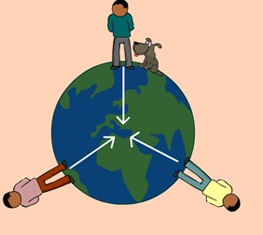
What is gravity?
A force that pulls
A force that pushes
energy
friction

A _____ is a pull or a push.
force
friction
gravity
speed

_____ is the force that slows and stops motion between touching objects.
Friction
Gravity
Pull
Push


What is this a picture of?
plate tectonics
continental drift
pangaea
glacier scaring
Scientists think that the continents once formed a giant landmass that broke apart, and then slowly drifted apart. What is the name given to this hypothesis?
sea-floor Spreading
plate tectonics
continental drift
Pangaea


This famous fault in California has a lot of earthquakes!
New Madrid
Denali Fault
Ramapo Seismic Zone
San Andreas Fault

What type of boundary is shown in the diagram?
Divergent
Convergent
Transform

What type of boundary is shown in the diagram?
Divergent
Convergent
Slide/Transform

What type of boundary is shown in the diagram?
Divergent
Convergent
Slide/Transform


What is the name of melted rock that is underneath the Earth?
mantle
magma
iron
nitrogen
What is the thickest layer of Earth?
outer core
inner core
mantle
crust
What is the thinnest layer of Earth?
outer core
inner core
mantle
crust
What layer of Earth do we live on?
Inner core
outercore
mantle
crust
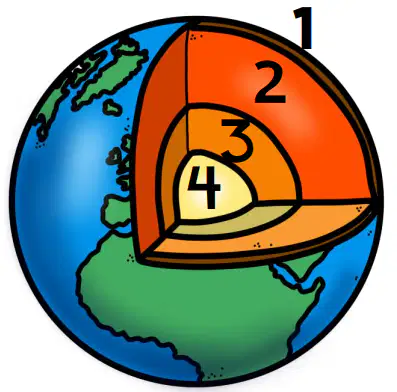
What layer of Earth does #4 show?
outer core
inner core
mantle
crust

What layer of Earth does #3 show?
outer core
inner core
mantle
crust
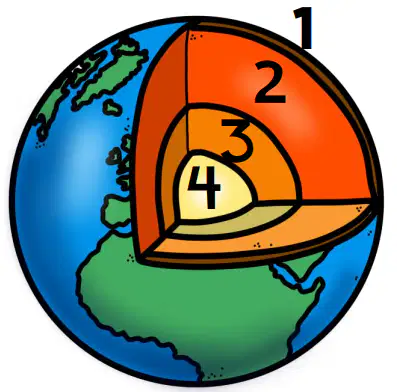
What layer of Earth does #2 show?
Inner core
outer core
mantle
crust
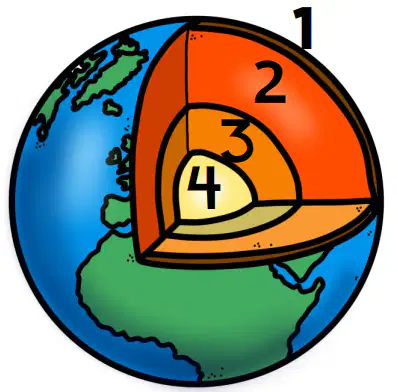
What layer of Earth does #1 show?
inner core
outercore
mantle
crust

The breaking down or wearing away of earth materials is known as
erosion
weathering
deposition
landforms

The process of sediment being dropped off in a new location is called
deposition
weathering
rocks
erosion

The movement of sediment and rock particles is called
weathering
cementation
deposition
erosion

Weathering can be caused by
water
wind
ice
all of the above

The process can either be physical or chemical
erosion
deposion
building
weathering

The Grand Canyon was caused by _____________________ erosion from the Colorado River.
water
wind

Physical weathering is when?
When rocks are broken down by wind and temperature.
When rocks are broken down by chemicals and pollution.
When rocks are broken down because of miners.
When rocks are broken down by lightening
Chemical weathering is when?
When rocks are moved into a new location.
Rocks break down into smaller pieces because of wind and temperature.
Rocks shrink because of low temperatures.
The minerals that the rocks are made up of change and can dissolve away.
A resource is considered renewable if it -
can be created only over millions of years
is made of Earths’ materials like rocks and minerals
can be replaced in a relatively short amount of time
is useful to humans in making energy and materials
Which of the following is a non-renewable resource?
Paper
Coal
Milk
Water

Which of the following resources is collected by the panels on the roof of this home?
air
water
wind
sunlight
What is conservation?
Saving natural resources.
Watching television throughout the day.
Using natural and human resources.
Leaving the water running.
A resource that can be replaced in a human lifetime
renewable
nonrenewable
conservation
resource
A resource that cannot be replaced in a human lifetime
renewable
nonrenewable
conservation
resource
Stored Energy
Potential Energy
Kinetic Energy
Collision
Energy Transfer
Energy of Motion
Energy Transfer
Potential Energy
Speed
Kinetic Energy
When two or more objects hit each other
Crash
Collision
Kinetic Energy
Energy Transfer
when objects collide and one or more of the objects changes shape
Collision
Elastic Collision
Kinetic Energy
Inelastic Collision
when objects collide and NO KINETIC ENERGY is lost
Collision
Kinetic Energy
Elastic Collision
Inelastic Collision
Energy can be created and destroyed, but not transformed.
False
True
An object's inertia depends on ...
the weight or mass of the object
mass and velocity



