
Font size
 Worksheets
Living Things
Total questions: 96
Worksheet time: 1hrs 12mins
What characteristic is this:
The smallest unit of an organism that carries the function of life.
Made up of cells
Grow and Develop
Respond
Homeostasis
Use Energy
What characteristic is this:
Cells increase as the organism gets older.
Made up of cells
Grow and develop
Respond
Use Energy
Reproduce
What characteristic is this:
Living things must interact with their surroundings.
Grow and Develop
Respond
Homeostasis
Use Energy
Reproduce
What characteristic is this:
Living thins must keep their body balanced (body temp., enough food and water, sugar in bloodstream)
Homeostasis
Use Energy
Reproduce
Made up of cells
Respond
What characteristic is this:
Used by organisms, plants get it from the sun, and animals get it from eating.
Homeostasis
Use energy
Reproduce
Respond
Grow and Develop
What characteristic is this:
They have to make more of themselves.
Reproduce
Be made of cells
Grow and develop
Respond
Use Energy
What is an example of "homeostasis"?
Body temperature staying the same
A mother dog having puppies
A puppy growing into an older dog
An example of a multicellular organism is a...
bacteria
Human (animal)
plant
fungi
Responding to change helps an organism to survive. Which are a response to change in an environment? There are two correct choices.
A cell reproduces asexually.
You get hot and sweat.
A cell only grows in a certain environment.
You get cold and shiver
which one of these is NOT one of the 3 domains of all living things?
Eukarya
Bacteria
Virusia
Archaea
If a virus is not made of cells, what is it made of?
smaller cells than bacteria
molecules, which are atoms bonded together
archaea
water and dirt
Which of these can survive living in extreme conditions like hot springs?
bacteria
archaea
fungi
eukarya
Which of these words describes organisms in the Animalia kingdom?
unicellular
multicellular
Which of these options is able to trick a cell into making copies of it?
fungi
bacteria
virus
archaea
a singular living thing is called?
an organ
an organism
a blood cell
a molecule
A structure that is found in plant cells but not in animal cells is a
cell wall.
nucleus.
cell membrane.
nuclear envelope.
Which of the following is NOT one of the four kingdoms of eukaryotes?
fungi.
archaea.
protists.
plants.
A group of organisms that can mate with each other and produce offspring that can also mate and reproduce is called a(n)
order.
phylum.
kingdom.
species.
A change in an organism’s environment that causes a reaction is called a(n)
response.
classification.
stimulus.
variable.
An organism is a(n) ________________________ if it can manufacture its own food.
autotroph
heterotroph
parent
genus
The scientific study of how things are classified is called
________________________.
phylum
genus
taxonomy
classification
The first word of an organism’s scientific name indicates the
________________________.
genus
phylum
species
kingdom
The process of grouping things based on their similarities is called __________________.
eukaryote
nucleus
classification
binomial nomenclature
An organism whose cell(s) contain a nucleus.
eukaryote
prokaryote
species
taxonomy
An organism whose cell lacks a nucleus.
eukaryote
prokaryote
species
taxonomy
An organism that is made up of many cells is unicellular.
True
False
An organism whose cells contain nuclei is called a eukaryote.
True
False
The domains of bacteria and protists contain only prokaryote organisms.
True
False
Which answer choice is the largest category of classification?
Domain
What is the correct order for scientific names?
A __________ uses a series of paired statements to identify organisms.
What 2 characteristics do we use to tell if organisms are related?
Physical and chemical
A classification system
groups animals according to the way they move
consists of only one species of organism
groups living things according to similar characteristics
Where are bacteria located?
only in the water
everywhere
only on my hands.

Which of these statements is true?
A virus is unicellular, it has only one cell.
A virus may sometimes be multicellular, have many cells.
A virus has no cells
A viruses are considered
living
non-living
What do viruses need to reproduce?
genetic material
a host cell
bacteria
Viruses are bigger than a cell.
TRUE
FALSE
Viruses can´t __________ by themselves.
reproduce
communicate
die
infect people

A vaccine is a weakened version of a virus.
(La vacuna es una versión debilitada del virus)
TRUE
FALSE
Bacteria is a _______, meaning they can
only be seen under certain types of microscopes
microorganism
host
soil
Bacteria cells do not have a _______ – the DNA inside the cell floats freely
nucleus
cell
cytoplasm
The ________ is a tail-like structure that helps the bacteria move in a swim-like motion.
nucleus
flagellum
foot
cytoplasm

Mushrooms reproduce by _____________.
seeds
spores
laying eggs

All fungi are harmful to us.
True
False

Which of the following is used to see microorganisms?


Where are the spores of a mushroom found?
cap
gills
stalk

Bacteria can be useful or harmful to us.
True
False
Bacteria are eukaryotic
True
False
bacteria can be found in the shape of....
rods
spirals
spheres
all of the above
Both bacteria and plant cells both have a
cell whall
capsule
pili
Fungi cannot make their own food
true
false
This is used in photosynthesis to get energy from the sun.
chlorophyll
carotenoid
antocyanins
betalains

Protists that are heterotrophs are ______________.
fungus-like
animal-like
plant-like
Protists that are autotrophs are ______________.
fungus-like
animal-like
plant-like
Protists that absorb food from outside their body are ______________.
fungus-like
animal-like
plant-like
What are the branching tubes fungi use to absorb food called?
hyphae
amoeba
algae
pseudopod
Examples of these plants include mosses, liverworts, and other plants with no xylem or phloem
dicot
vascular plant
monocot
nonvascular plant


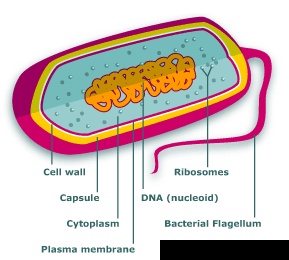
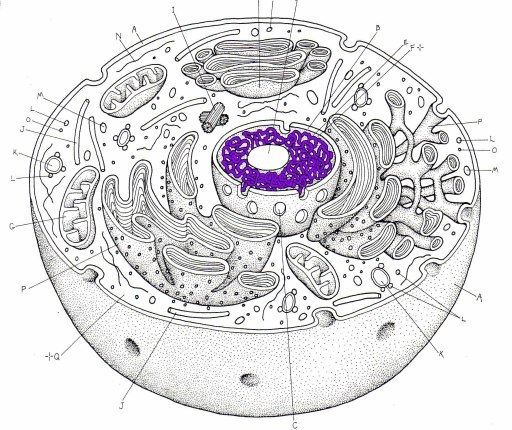
What is the function of the cell wall?
Gel-like fluid that supports the cell
Place where materials are processed and moved around the cell
Storage space for water, waste, and food
Helps maintain shape and structure
What is the function of the vacuole?
Gel-like fluid that supports the cell
Place where materials are processed and moved around the cell
Storage space for water, waste, and food
Helps maintain shape and structure
What is the function of the cytoplasm?
Gel-like fluid that supports the cell
Place where materials are processed and moved around the cell
Storage space for water, waste, and food
Helps maintain shape and structure

What organelle is the number 4 point to?
Vacuoles
Cytoplasm
Chloroplast
Ribosome
What organelle is the number 2 point to?
Cell Membrane
Cytoplasm
Chloroplast
Ribosome
What organelle is the number 1 point to?
Vacuoles
Cytoplasm
Golgi Bodies
Cell Wall
What organelle is the number 10 point to?
Vacuoles
Chloroplast
Golgi Bodies
Cell Wall
Part of a eukaryotic cell that contains DNA (genetic material).
nucleus
mitochondria
ribosome
cytoplast
What part of a cell controls what enters and exits?
nucleus
cell wall
cell membrane
cytoplasm
What produces energy in plant and animal cells?
mitochondria
cell wall
nucleus
cytoplasm
Which of these types of cells DO NOT have a nucleus?
Prokaryotic
Eukaryotic
Animal cell
Plant Cell

Using the diagram, which type of asexual reproduction is being demonstrated by the bacterial cell?
Binary Fission
Budding
Spore Formation
Regeneration
How many parents are required for asexual reproduction?
none
1
2
4
How many parents are involved with sexual reproduction?
none
1
2
4
What are microorganisms?
organisms that are unicellular
organisms that are multicellular
organisms that can only be seen with a microscope
eukaryotes
If a bacterium is a producer, it...
makes its own food
feeds on dead organisms
gets nutrients by feeding on other organisms
supplies goods for others to purchase
A process by which bacteria share information
conjugation
binary fission
endospore
decomposers
Bacteria creates an ____________ to resist unsuitable conditons
Endospore
Cellular Respiration
Pasteurization
Flagellum

