
 Worksheets
Temperature and Heat and Specific Heat Combined
Total questions: 101
Worksheet time: 1hrs 15mins


The absolute coldest anything can get.
In Celsius it's at -273 degrees. Or 0 degrees Kelvin.
Absolute cold
Kelvin
Absolute zero
I don't know


Three substances, A - 30⁰C ; B - 60⁰C ; and C - 45⁰C are left on a counter overnight. The next morning they are both 21⁰C. Which substance exchanged the most thermal energy?
Substance A
Substance B
Substance C
The total kinetic energy of a substance's particles (speed and amount)?
thermal energy
heat
convection
conduction
Which one has more thermal energy?
an ice cube in a glass of lemonade
a bathtub full of warm water
a pot of soup boiling on the stove
a cup of hot coffee
The condition where two substances in physical contact with each other exchange no heat energy. They are said to be the same temperature.
Thermal Energy
Cooler to Warmer
Energy Transfer
Thermal Equilibrium

What happens to the temperature if I add ice cubes to a glass of soda
The heat transfers from the coke to the ice
The heat transfers from the ice to the coke
Two objects have different temperatures. Object A has a temperature of 42 degrees and Object B is 37 degrees. Which direction should the energy transfer between Objects A and B?
From Object A to Object B
From Object B to Object A
Energy will not transfer
Energy will transfer both directions
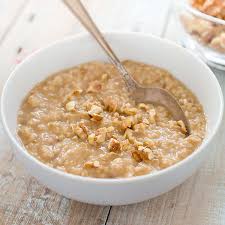
You leave your cold spoon in a hot bowl of oatmeal. What happens after an hour?
The temperature of both the oatmeal and the spoon stay the same
The spoon and the oatmeal become the same temperature
Only the temperature of the oatmeal will change
Only the temperature of the spoon will change
Thermal Energy is
the energy of electrons moving through a circuit
the energy stored due to its position
the energy of particles in motion which can be described as heat
the energy of moving downhill


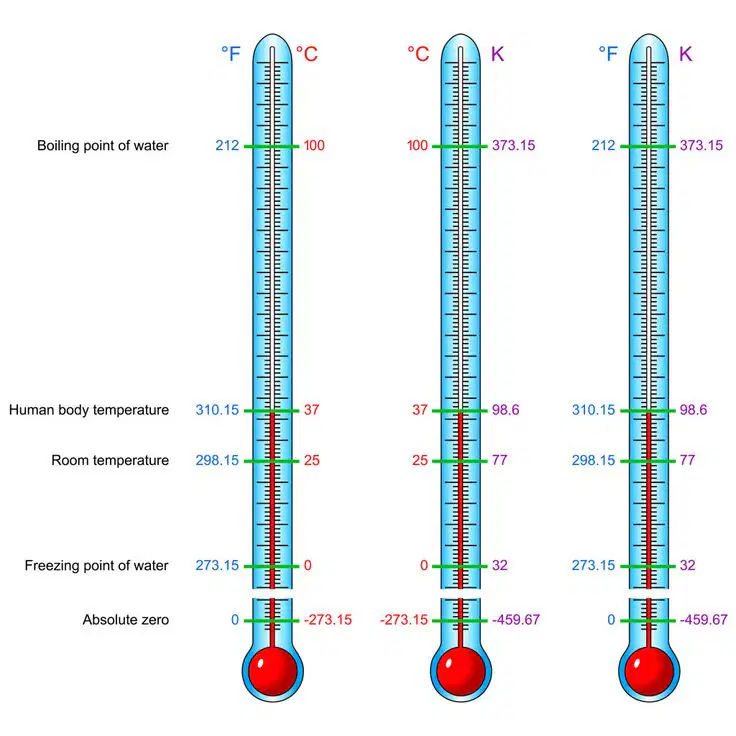
According to it, water freezes at 32 degrees and boils at 212 degrees.


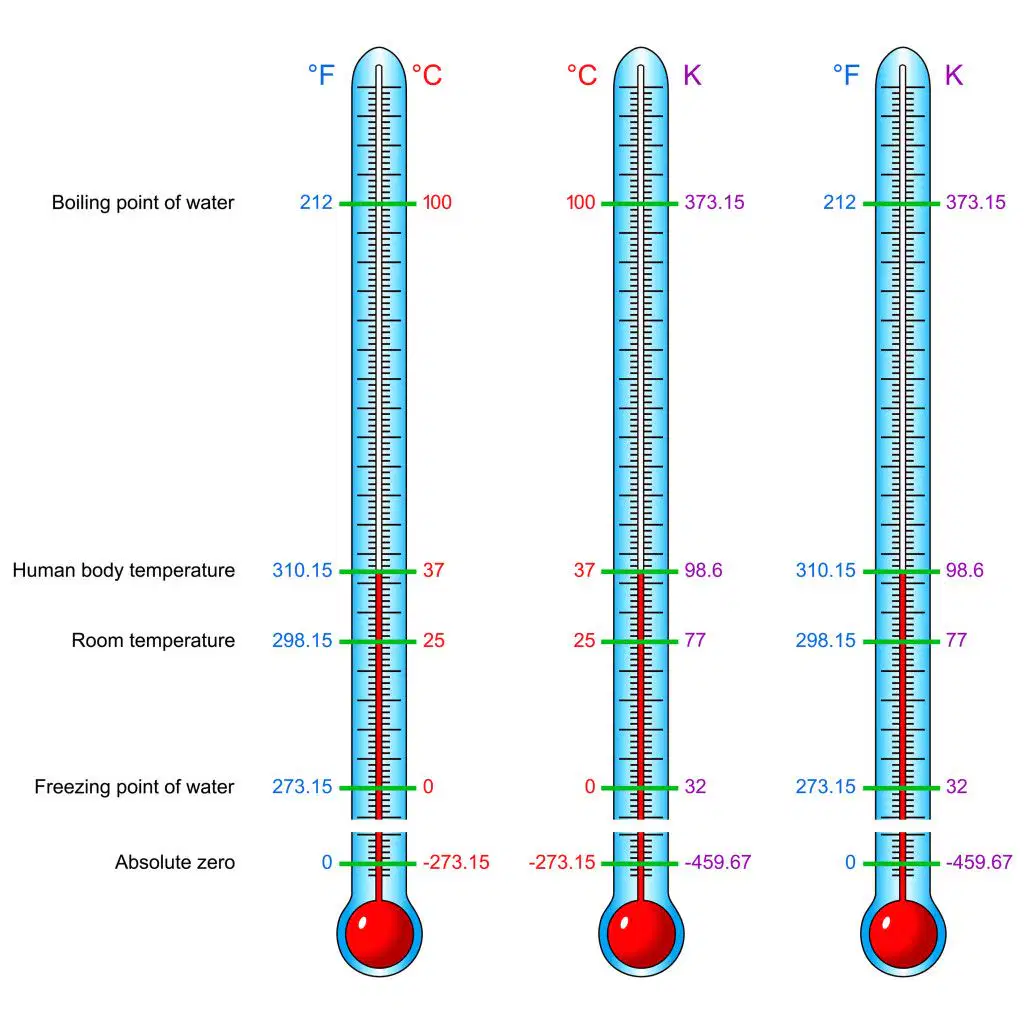
What is the freezing/melting point of water of the Celsius scale?
−273oC
0oC
32oC
273oC
What is the freezing/melting point of water of the Fahrenheit scale?
−273oF
0oF
32oF
273oF
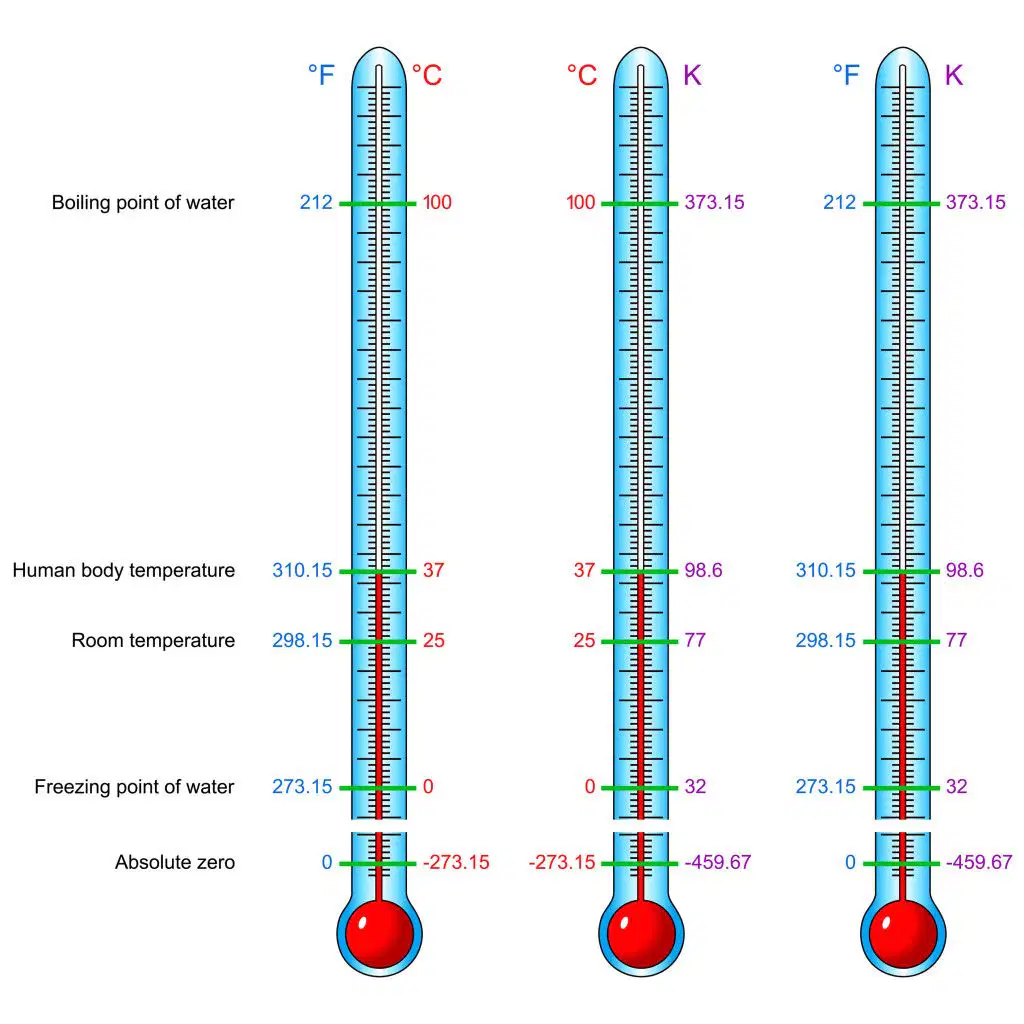
What is the boiling point of water on the Celsius scale?
0oC
373oC
100oC
212oC
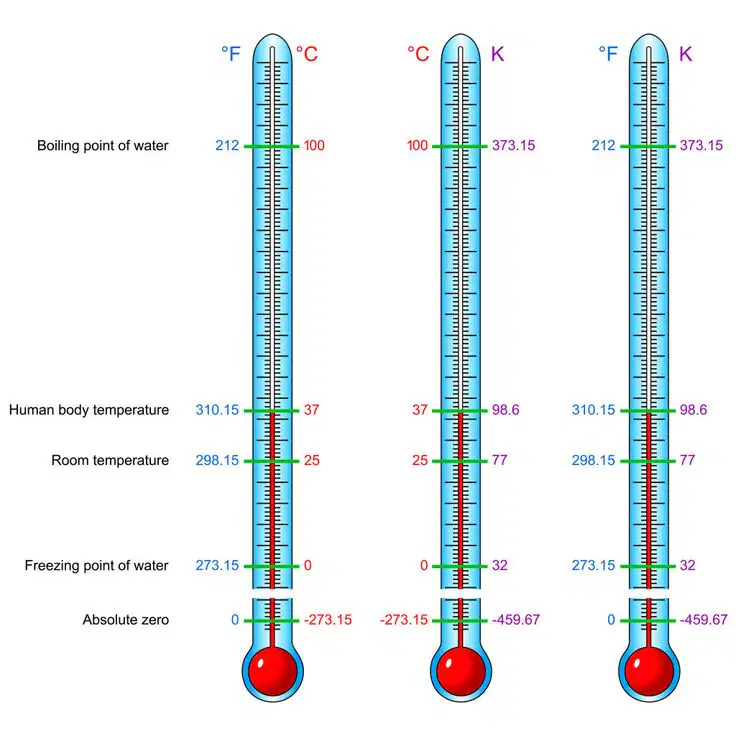
What is the boiling point of water on the Fahrenheit scale?
0oF
373oF
100oF
212oF
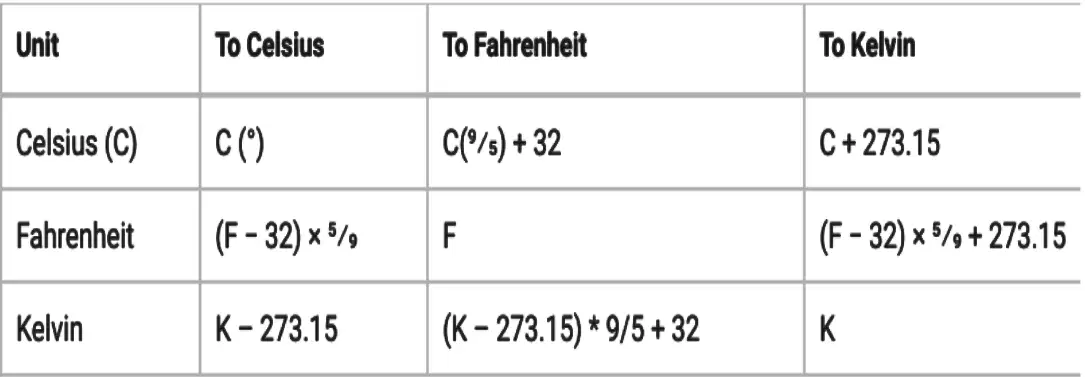
Convert
0oC to Kelvin
−273 K
273 K
32 K
−32 K
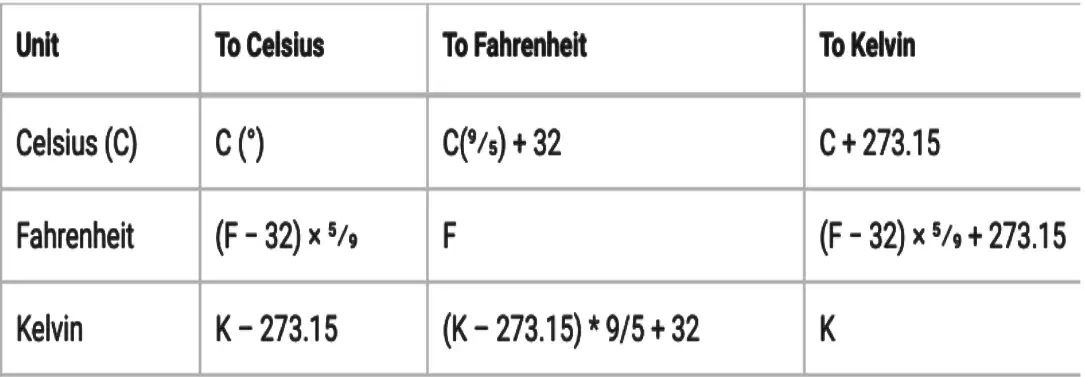
Convert
100oC to Kelvin
373 K
273 K
212 K
0 K


A measure of the average kinetic energy of the particles in an object is called



What is specific heat capacity?
The measure of a substance's resistance to change in temperature
The amount of energy required to change a substance from solid to liquid state
The ability of a substance to conduct electricity
Amount of heat required to raise the temperature of a 1kg of a substance by one degree Celsius
How do you calculate specific heat capacity?
By counting the number of atoms in the substance
By measuring the volume of the substance
Using the formula E = mc^2
Using the formula Q = mcΔT

What is the specific heat capacity of water?
4184 J/g°C
5600 J/kg°C
2500 J/kg°C
3750 J/kg°C

What is the specific heat capacity of metals?
100 J/kg°C
Varies with color
50 J/kg°C
It varies by type of metal
Give an example of a real-life application of specific heat capacity.
Sleeping
Reading
Cooking
Swimming

Define specific heat capacity.
The ability of a substance to conduct electricity
The measure of a substance's resistance to flow
The amount of energy required to change a substance from a solid to a liquid
Amount of heat required to raise the temperature of a kilogram of a substance by one degree Celsius

Use the formula in the picture: Aluminum has a specific heat capacity of 900J/kg°C. How much heat does a 5kg piece of aluminum absorb if its temperature increases by 10°C?
45 J
0.45 J
450 J
4500 J

Why is water often used as a coolant in engines and other machinery?
Water is not flammable and can withstand high temperatures
Water is a good conductor of electricity
Water is readily available and inexpensive
Water has a high specific heat capacity so it can absorb a lot of heat from the machine
Explain how specific heat capacity affects the temperature change of a substance when heat is added or removed.
It causes the substance to evaporate
It only affects the color of the substance
It affects the temperature change by determining how much heat energy is needed to raise or lower the temperature of a substance.
It has no effect on the temperature change

How does specific heat capacity play a role in cooking food?
It affects the texture of the food after cooking.
It determines the amount of heat needed to cook different types of food.
It determines the color of the food when cooked.
It determines the price of the food in the market.


If two objects have different temperatures, heat will flow from the warmer object to the cooler one UNTIL ____________
one reaches a temperature of zero
they both have an equal temperature
one runs out of energy
When I cook bacon, it touches the pan. It is cooked because
heat transfers from the pan to the bacon through convection
heat transfers from the pan to the bacon through conduction
heat transfers from the bacon to the pan through conduction
heat is transferred as energy
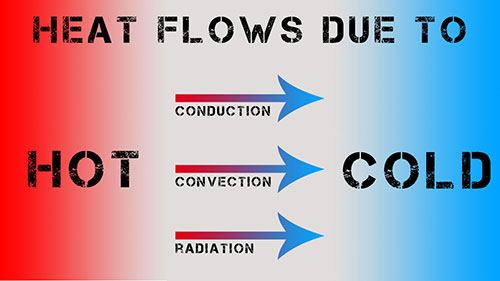
Which type of heat transfer occurs as heat moves in a circular motion in a liquid or gas?
conduction
convection
radiation
cooking

Heat is defined as
the transfer of thermal energy from one object to another due to temperature difference
the temperature of a solid, liquid, or gas
The kinetic energy of a solid, liquid, or gas.
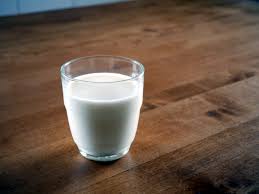
During the summer, Chang takes a glass of milk from the refrigerator and places it on the kitchen counter. Over time, energy as heat is transferred to the milk from the air. Which change would most likely occur?
The temperature of the milk will increase.
The temperature of the milk will decrease.
The milk will change from a liquid to a gas.
The milk will change from a liquid to a solid.

Joe places two solid objects in contact with each other. Which property determines the direction of the flow of heat between the two objects?
material of the objects
volume of objects
density of objects
temperature of objects
Jeriah places two metal cubes in contact with each other. Energy transfers as heat flows from Cube A to Cube B. What conclusion can you draw regarding Cube A?
It is larger than Cube B.
It is cooler than Cube B.
It is smaller than Cube B.
It is warmer than Cube B.
In the transfer of heat, what happens to the object with less heat?
The cooler objects makes the warmer object cold
The warmer objects gives to the cooler object until they are the same temperature.
The warmer object remains warm
The colder objects remains at the same temperature.
Hot water rising as cooler water sinks is an example of
conduction
convection
radiation
sublimation
elimination
In order to make iced tea Lois brings a pitcher of water to a boil, adds tea and allows it to steep for 5 minutes. After 5 minutes have passed Lois removes the tea bag and adds ice to cool the tea. Which of the following best describes the direction of the flow of thermal energy?
Thermal energy flows from the tea to the ice.
Thermal energy flows from the ice to the tea.
Thermal energy flows between the ice to the air equally.
Thermal energy flows between the ice and the tea equally.
An air conditioner cools a room. The cool air sinks and the warmer air rises. This is an example of
radiation
conduction
convection
constipation
reiteration
You hold an ice cube in your hand and it melts. This is an example of
convection
conduction
radiation
translocation


Which will heat up faster?
copper
granite
iron
basalt
Which of the following best explains why the sand at the beach is hotter than the water?
Sand has a higher specific heat than water.
Sand has a lower specific heat than water.
There is more water than sand at the beach.
There is more sand than water at the beach.

Which state of matter does this image represent?
liquid
solid
gas
Which state of matter has more kinetic energy than liquid
gas
solid
Which state of matter has less kinetic energy than liquid?
gas
solid
To melt a solid, energy must be...
added
removed
To condense a gas to a liquid, energy must be
added
removed
To evaporate a liquid, energy must be...
added
removed
To freeze a liquid into a solid..
heat must be removed
coldness must be added
Burning your hand on a hot stove is an example of
convection
radiation
conduction
electrocution
A sunburn is caused by
convection
conduction
radiation
ice cream
In the transfer of heat, what happens to the object with less heat?
The cooler objects makes the warmer object cold
The warmer objects gives to the cooler object until they are the same temperature.
The warmer object remains warm
The colder objects remains at the same temperature.
Absolute zero
indicates the complete absence of heat/energy
is the coldest possible temperature
is when all molecular motion stops
All of the above

