
 Worksheets
comp review
Total questions: 166
Worksheet time: 3hrs 1mins

Why did Genghis Khan invade China?
He wanted to secure the Silk Roads for his people.
His people needed more farmland.
The Mongol tribes needed more grazing lands.
The Mongol tribes needed a route to the East
China Sea.

Where did the Mongols live before invading
China?
They came from the steppes of northwest China.
They were shepherds in what is now Iran.
The Mongols had migrated to India from Arabia.
The Mongols came from southern Russia.

Who was the first ruler to unite all China since the
end of the Tang dynasty?
Genghis Khan
Yuan Khan
Kublai Khan
Marco Polo

What was life like for the Chinese under Mongol
rule?
The Chinese were well treated by their Mongol
rulers.
The Chinese were kept in top government
positions.
The Chinese were in a higher class than
foreigners.
The Chinese were treated as second-class citizens.

How did the Mongols treat foreigners?
They did not allow foreigners in China.
They gave power and good jobs to foreigners.
They brought in foreigners as servants to Chinese
nobility.
They hired foreigners as workers on government
projects.

How did travel on the Silk Roads change under the
Mongols?
The Silk Roads were closed and trade ended by
the Mongols.
Mongol control of the routes meant safer travel
for the travelers.
Kublai Khan personally decided how much to pay
for trade goods.

Which two cities on the Arabian peninsula are holy to Muslims?
Constantinople and Athens
Cairo and Rome
Mecca and Medina
Baghdad and Jerusalem

Which of the following is an example of Islamic architecture?
Parthenon
Dome of the Rock
Pantheon
Hagia Sophia

Who is the founder of Islam?
Muhammad
Jesus
Gautama

The Islamic region split into which of the following two sets.
Sunni and Shia
Eastern Orthodox and Roman Catholic
Mahayana and Theravada
11. As the Muslim Empire grew, Islam spread into all of the following EXCEPT
Mesopotamia and Persia
Egypt North Africa, and Spain
Australia and the Americas
-
Who conquered what remained of the Byzantine Empire in 1453?
The Mongols
The Ottoman Turks
The Seljuk Turks
Istanbul became the new Ottoman capital. It was known before as:
Rome
Athens
Constantinople
Jerusalem

The Mughal Empire was situated in what modern nation?
Iran
India
Saudi Arabia
Turkey
Put the Islamic Caliphates in the correct chronological order -
Rashidun, Umayyad, Abbasid
Abbasid, Rashidun, Umayyad
Umayyad, Abbasid, Rashidun
Rashidun, Abbasid, Umayyad

What was the lasting impact of pilgrimages to Mecca and other holy Cities?
Decentralized governments in Europe and the Arabian Peninsula.
Increased cross-cultural interactions that resulted in the diffusion of literary, artistic, and cultural traditions.
The flourishing of Mayan city-states.
The peasant revolts in Western Europe.
How did increased Arabic Trade impact their neighbor regions?
Increased Bantu Migrations.
Expanded the Silk Road.
Influenced maritime migrations of the Polynesian peoples.
Greatly increased the spread of Islam.
What did most people within the Islamic Empires have in common culturally?
Most practiced the religion of Islam
The Shia form of Islam
Most people converted to Orthodox Christianity
Many remained true to their polytheistic beliefs

What similarity is shared amongst the Jewish, Christian and Muslim faiths
All three faiths abstain from eating pork
all three faiths are monotheistic
All three faiths worship Jesus as a God
All three faiths began in India
What was promised by the Rightfully guided Caliphs?
To reclaim the Roman Empire
To persecute Christians and Jews
To force all non-muslims to convert to Islam
Stay true to the Qur'an and Muhammad's message
Why did Bedouins organize their society into clans (family based groups)?
To get to the afterlife
So they could clash with their clans
For Safety and Security
To follow the word of Allah
Who governed the provinces of the Umayyad Caliphate?
Muhammad
Non-Muslim believers
Arab military elites
The Caliph
What was the focus of the Abbasid Caliphate and how did they carry this out?
Creation of a new religion, trade
Government administration/ Trade, bureaucracies
Conquest, strong military
Expansion of empire, taxes
Which Caliphate was led by the 4 "rightly guided" Caliphs?
Rashidun
Ummayad
Abbasid
Which Caliphate's capitol city was eventually located in Cordoba in modern day Spain?
Rashidun
Ummayad
Abbasid
Which Caliphate's capitol in Damascus, Syria was conquered forcing them to move to Baghdad, Iraq?
Rashidun
Ummayad
Abbasid
Which of the three caliphates lasted the longest?
Rashidun
Ummayad
Abbasid
Term for the effect of a person's actions in this and in previous lives.
Hindus worship God in many forms.
Which city-state gained power before the Peloponnesian War?
Athens
Sparta
Corinth
Ionia
What is a result of the Peloponnesian War?
Greece gained a lot of land
Greeks lost their sense of community
Athens got richer.
Sparta gained soldiers from Persia.
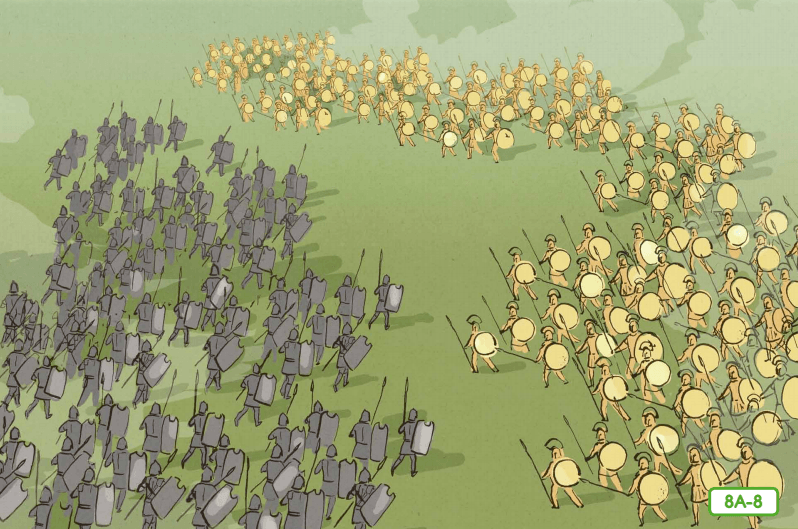

How did the Persian Wars begin?
After the Spartans conquered a part of Asia Minor, they decided to conquer Persia as well.
After the Persians conquered a part of Asia Minor, they decided to conquer Sparta as well.
After the Persians conquered a part of Asia Minor, colonies in the area rebelled with support from Athens.
After the Athenians conquered a part of Asia Minor, colonies in the area rebelled with support from Persia.

How did the Persian Wars change the relationship between Athens and Sparta?
They started forming a common Greek identity and culture.
They no longer wanted to depend on each other for help.
They joined together to form a single city-state to fight off common enemies.
They worked on opposite sides of the conflict and kept fighting each other.
What was one consequence of the Peloponnesian Wars?
Athens became the dominant Greek city-state since it had the largest navy.
The Greek city-states started forming a common Greek identity and culture.
The Greek city-states were vulnerable to conquest by the Macedonians.
Sparta became the dominant Greek city-state since it was strengthened by the war.

How did King Phillip II's conquest of the Greek city-states affect them?
They were unified under Persian rule.
They were unified under Macedonian rule.
They were unified under Athenian rule.
They were unified under Spartan rule.

Alexander the Great was the son of ________ of Macedon.
King Xerxes
Cyrus the Great
King Darius I
King Philip II

Alexander the Great's empire included territory in _______.
North America and South America
Europe, Asia, and South America
Europe, Africa, and Asia
Europe, Australia, and Asia

After Alexander's death, his empire _______.
continued just as it had for five hundred years
came under the control of Chinese dynasties
grew enormously
fell apart

How did Hellenistic culture spread around the world?
through the trade relationships of Athens
through the military conquests of Alexander the Great
through the trade relationships of Aristotle
through the military conquests of Philip II

Use the map to answer this question. Which landform covered most of ancient Mesopotamia?
the Tigris and Euphrates River Valley
the Caspian Sea
the Nile River
the Syrian Desert
Anthropologists believe that the first use of cuneiform, the earliest known writing, was to _________.
record important battles
keep records of business matters
list kings in order
keep inventories of things captured in battle
Which of the following groups of people did not live in Mesopotamia at one time in history?
Assyrians
Sumerians
Egyptians
Chaldeans
The few people in ancient times who could read and write were called __________.
rulers
stelas
scribes
ziggurats
Which description best fits the Epic of Gilgamesh, one of the world's oldest written stories, which came from Mesopotamia?
an account of a Mesopotamian king and his battles
a legend about a king traveling the world and defeating a monster
a love story about King Gilgamesh
a description of all the kings who ever ruled Mesopotamia
Which warrior people were known as the cruelest group to live in Mesopotamia?
Assyrians
Sumerians
Egyptians
Chaldeans
Even though very few people could read, the Babylonian King Hammurabi ordered that his laws be displayed where all the people could see them. These laws, called the Code of Hammurabi, were written on _________.
clay tablets
papyrus scrolls
a huge black stone
the walls of his palace
Justinian had a code of ________ made.
rulers
law
conduct
faith
The city of _____________ was the capital of the Eastern Byzantine Empire.
Alexandria
Rome
Istanbul
Constantinople

Justinain was known for building the __________.
Ankor Wat
Hagia Sophia
Colosseum
Parthenon

What type of art is the picture?
montage
mural
mosaic
oil portrait
Constantinople was a site of encounter because? 2 answers
only Christianity was allowed there
many religions and culture were shared
Trade routes from Asia and Africa passed through it
Trade routes from Europe and Asia passed through it
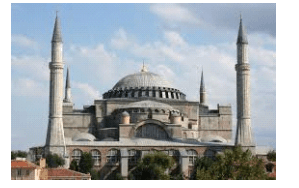

Which group conquered Constantinople?
Persians
Huns
Ottoman Turks
Carthage
Why was Constantinople such a prosperous city?
located at the crossroads of trade
Great architecture
Strong autocratic rulers
The pope lives there

What emperor had the law code re-written and organized?
Charlemagne
Justinian
Theodora
Constantine
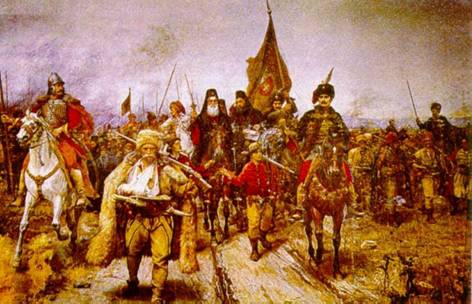
Who conquered the Byzantines in 1453?
The Franks
The Ottoman Turks
The Holy Roman Empire
The Mongols


Why do people migrate?
Economics
Politics
Religion
All of these and more
The word "migration" refers to what?
The movement of only people.
The movement of people and animals looking for resources.
The movement of animals only.
None of these answers are correct.
True or False: Bantu is a language and a type of culture.
True
False
Rome had a strong army because they organized themselves in
legions
calendarium
navies
punic
Who sent troops to invade Rome during the Punic
Wars?
Visier
Centuries
Carthage
Tailgaters
During the first Punic War - Cathage sent its armies to
Rome
Sicily
Vienna
legion
At the end of the first Punic War which group had control of the island of Sicily?
Rome
Cathage
Phoenicians
Invaders
The name of the general from Carthage that tried to invade Rome is...
Jacob
Hannibal
Legion
Punic
Hannibal tried to invade Rome by a sneak attack by going through
China
India
Greece
Spain
Carthage is on the continent of
Europe
Asia
USA
Africa
One unique aspect of Hannibal's army was that he had
lions
elephants
rats
tigers
Italy is a
island
peninsula
continent
city
The wealthy citizens of Rome were called
patricians
plebeians
slaves
commoners
After the Punic Wars - Rome
lost territory
gained territory
lost power
gained control of Autrailia
The written laws of Rome were known as
Bill of Rights
Constitution
Twelve Tables
Nine Laws
Which was the major cause of the Punic Wars?
The Carthaginians killed a Roman senator
Rome wanted Sicily so that they can control more of the trade in the Mediterranean
The expansion of Macedonia caused the Romans to want more territory so that they could be stronger
Julius Caesar became the dictator and wanted to take over the world
Who are plebeians?
Wealthy class
Slaves
Workers and Landowners
Rulers of the government
The Punic Wars was a war between
Rome and Greece
Rome and Carthage
Greece and Egypt
Rome and Persia
What is a word that means to reject others ideas?
Venus
veneer
veto
vetco
The Council of Plebs gave the plebians the power to pass laws, essentially giving them equal rights.
True
False
The first code of Roman Laws were called what?
the 12 apostles
the code of Hammurabi
the 12 tables
the 12 chairs

Consuls
Two Roman leaders that shared power for 1 year
1 Roman leader with infinite power
Two Greek leaders that ruled for 2 years
Two army generals

Forum
A public meeting place where goods and ideas can be shared.
A public meeting place where goods and ideas can NOT be shared.
A non public meeting place
A shopping mall
What does Augustus Caesar becoming dictator represent?
The rise Roman Republic
The rise of the Roman Empire
The end of the Roman Empire
The spark of Roman Civil War
True or false:
The Romans allowing conquered people to maintain their religion was a factor that helped the Roman Empire last so long.
True
False
What was an effect of the expansion of road networks the Roman Empire completed?
they provided access to varied trade goods.
they allowed Romans to go out into nature and become connected to the natural world
They were unable to defend the roadside and lost territory.
They became scared of how far they could walk
True or false:
Farmers were treated unfairly in both the Roman Republic and Roman Empire
True
False
What did aqueducts do?
Bring water into cities for drinking and bathing
Get rid of water
Bring in water only duck animals
aqueducts are sussy
True or false:
Germanic groups led to the downfall of the Roman Empire
True
False
True or False:
Internal power struggles had nothing to do with the downfall of Western Rome
True
False
Was Latin adopted by the areas Rome took over?
Yes, and it lasted for many years afterwards.
No, what even is Latin, we don't speak it so it does not matter.
True or False:
The apostles spread Jesus' message after his death
True
False
What province did Christianity come from?
Judea
Sparta
Rome
Carthage
What did Constantine do that continued Diocletian's reforms to strengthen Rome?
He continued to build a stable workforce and military
He outlawed Christianity
He gave everyone bread
He put on circuses
Do Christians believe Jesus is the son of God?
Yes
No
True or False:
Christianity became the official religion of Rome
True
False
What type of farming did the Mayans use?
terraced farming
slash and burn farming
chimapas or floating gardens
circular crop formations
Where was the Mayan civilization located?
Yucatan Peninsula
Andes Mountains
Valley of Mexico
Great Plains

Which civilization used this type of agriculture?
Mayan
Aztec
Inca
Hopewell
Where was the Inca civilization located?
Great Lakes Region
Valley of Mexico
Andes Mountains
Yucatan Peninsula
Where was the Aztec civilization located?
Great Lakes Region
Valley of Mexico
Andes Mountain
Yucatan Peninsula
-Smallpox Outbreak Kills Millions
-Spanish Conquistadors Welcomed as gods
-Advanced Weapons Easily Defeat Mighty Native Warriors
What event are the headlines describing?
the decline of the Germanic barbarians
the decline of the Roman Empire
the decline of the Aztec and Inca Empires
the decline of the West African Kingdoms
Which is a similarity between the Mayan, Aztec, and Inca civilizations?
they all developed advanced and complex societies
they all were conquered by the conquistadors
they all did not believe in a strong central government
they all were located in South America
Which characteristics make up the religious beliefs of the civilizations of Mesoamerica?
human sacrifice
polytheistic
sun worship
pay charity tax
Why did the Mayan, Aztec, and Inca civilizations develop their own social hierarchy?
to promote organization and order in society
the gods spoke to the priest and told them to make one
to determine the order of human sacrifice
Spanish conquistadors forced them to create one
Which statement describes the government structure of the Mayan, Aztec, and Inca civilizations?
all three lacked strong central governments
all three had strong central governments
all three were based upon equal social classes
all three allowed for democratic voting by citizens
How were the Mayan and Aztec civilizations similar to each other?
both practiced a religion based on monotheism
both lacked a strong central government
both developed complex calendar systems
both had military weapons superior to that of the Europeans
In which modern-day country were the Incas located?
Brazil
Peru
Mexico
Honduras
What was one of the primary religious practices of the Aztecs?
human sacrifice to honor the gods
praying to only one god
religious festivals to honor the gods
pilgrimage to the capital city
What was the name of the Mayan achievement depicted above?
base-10 numbering system
base-19 numbering system
base-20 numbering system
base-40 numbering system

Why were these important?
Suspension bridges were fun to play on
Suspension bridge used to sacrifice humans
Suspension bridge were used as defense in battle.
Suspension bridge allowed fast travel in the Incan Empire
Why might the Valley of Mexico under the Aztecs have attracted such large migrations of people?
Because the Aztec capital was a prosperous and thriving city
Because most people were farmers and wanted to farm the vast lands conquered by the Aztecs
Because the Aztec’s peace treaties attracted new trading partners
Because a plague drove people out of areas north of the Valley of Mexico

The _____________ created floating gardens, or "chinampas" in addition to creating a beverage from chocolate.
Olmec
Aztec
Maya
Inca

What often happened to the losers of the Mesoamerican ball game?
They were killed
They had to build a new stadium
Their children were sacrificed to the gods.
They were made into slaves.
Which of the following statements best describes Maya cities?
Maya cities had pyramids and palaces in their centers.
Maya cities had relatively few buildings.
Maya cities were made mostly from tropical woods.
Maya cities were built on islands in lakes.
Which of the following are not one of the theories about why the Mayans declined?
An earthquake destroyed their lands and they had to move.
Diseases such as yellow fever sickened and killed them. Also, the invasion of the plant hopper destroyed their crops.
An environmental disaster such as a drought destroyed their crops and habitat.
A famine wiped them out or forced them to move elsewhere.

Both the Incans and Aztecs were conquered by the __________________.
English armada
Spanish conquistadors
Christopher Columbus
Yellow Fever

Based on the map, which statement is true?
Mayans traded with nearby areas.
Mayans did not know how to build pyramids.
Mayan civilization was land locked (no access to oceans).
Mayans were isolated and did not trade.
Many feats of Aztec engineering were made necessary by Tenochtitlan’s location
on a small island in a shallow lake.
in the middle of a dense jungle.
in the middle of a harsh desert.
at a high altitude in the mountains.
A major breakthrough of the Maya was
developing the concept of zero.
creating metal tools.
domesticating horses and oxen.
inventing the wheel.

