wayground logo

Free Printable Worksheets

Font size

S
M
L
XL
Worksheets

EOY Assessment

Total questions: 76

Worksheet time: 1hrs 17mins

Name
Class
Date
1.

What is a sac-like structure used to store water, waste, and nutrients?

a)

golgi body

b)

vacuoles

c)

nuclear membrane

d)

lysosomes

2.
Animal cells do not have...
a)
mitochondria
b)
lysosomes
c)
vacuoles
d)
chloroplasts
3.
This protective layer controls what enters and leaves the cell
a)
ribosome
b)
cytoplasm
c)
endoplasmic reticulum
d)
cell membrane
4.
The system of channels that transport materials throughout the cell
a)
nucleous
b)
golgi body
c)
vacuoles
d)
endoplasmic reticulum 
5.
What is the control center of the cell that directs all the cell's activities?
a)
nucleus
b)
cell wall
c)
vacuole
d)
nuclear membrane
6.
Cell theory states that...
a)
all living things are made of cells
b)
cells are the basic unit of life 
c)
living things come from other living cells
d)
All of the above 
7.
The basic unit of life is the _______________
a)
atom
b)
cell
c)
molecule
d)
organic compound
8.
What are the green organelles in a plant cell that use sunlight to create food?
a)
vacuoles
b)
mitochondria
c)
chloroplasts
d)
lysosomes
9.
D=
a)
Endoplasmic Reticulum
b)
Golgi Body
c)
Mitochondria
d)
Chromosomes
10.
G=
a)
Vacuole
b)
Cell Wall
c)
Mitochondria
d)
Chromosomes
11.
L=
a)
Vacuole
b)
Cell Wall
c)
Mitochondria
d)
Chloroplast
12.
i=
a)
Vacuole
b)
Cell Wall
c)
Mitochondria
d)
Chloroplast
13.
According to cell theory, where did this cell come from?
a)
another living cell
b)
energy from sun
c)
a multicellular organism
d)
the nonliving environment
14.

Mitosis is cell division that results in . . .

a)

2 cells different from the parent cell.

b)

2 cells breaking off of the parent cell.

c)

4 cells with half the number of chromosomes

d)

2 cells identical to the parent cell.

15.
Cell A is. . .
a)
a plant cell
b)
a photosynthesis cell
c)
an animal cell
d)
a mess
16.

A cell with a true nucleus is called a(n) _________.

a)

probiotic

b)

nucleolus

c)

prokaryote

d)

eukaryote

17.
Chloroplasts carry out...
a)
Phagocytocis
b)
Phylocytosis
c)
Photosynthesis
d)
Respiration
18.
A homozygous dominant dog with brown fur is crossed with a heterozygous dog with brown fur. What are the percentages of the possible genotypes?
a)
100% BB
b)
75% BB and 25%Bb
c)
50 % BB and 50% Bb
d)
50% Bb and 50% bb
19.
Genotype refers to the ...
a)
physical expression of the genes
b)
the possible combination of alleles in a gene
c)
whether an allele is dominant or recessive
d)
how an organism will appear
20.

Squidward has light blue skin, and his genotype for this trait is Bb. Which of the following would describe Squidward?

a)

Purebred

b)

Hybrid

c)

Homozygous

d)

x-linked

21.

Which of the following is a phenotype?

a)

purebred

b)

Bb

c)

bb

d)

Blue eyes

22.

having two of the same alleles for the trait (sometimes called purebred).

a)

homozygous

b)

hetrozygous

c)

protein

d)

chromosome

23.
having two different genes for a trait (sometimes called hybrid).
a)
protein
b)
homozygous
c)
heterozygous
d)
genotype
24.

If B= brown/black eyes

b= blue/green/hazel eyes


Two brown eyed parents (Bb) have a baby. What is the chance the baby is blue eyed?

a)

0 %

b)

25%

c)

50%

d)

75%

25.

G = green

g = yellow


The genotype for a yellow plant is...

a)

GG

b)

Gg

c)

gg

d)

all of the choices result in yellow

26.

In this pedigree, the shaded individuals represent family members that CAN roll their tongue. How many males in the 2nd generation can roll their tongue?

a)

1

b)

2

c)

3

d)

5

27.

In this pedigree, how many females are in the entire chart?

a)

2

b)

3

c)

5

d)

8

28.

S= spotted

s= striped legs


Naveen is homozygous recessive. What's his phenotype?

a)

spotted legs

b)

striped legs

c)

SS

d)

ss

e)

Ss

29.

Squidward has purple palms and his genotype for this trait is bb. Squidward is considered to be ____ for this trait.

a)

homozygous recessive

b)

homozygous dominant

c)

heterozygous

30.

Osmosis is the movement of _____ across a membrane.

a)

food

b)

energy

c)

oxygen

d)

water

31.
What is diffusion?
a)
when molecules move 
b)
when molecules move from a high concentration to a low.
c)
no movement 
d)
molecules move everywhere
32.
Where does photosynthesis occur?
a)
mitochondria
b)
stomata
c)
xylem
d)
chloroplast
33.
Where in the cell does cellular respiration happen?
a)
chloroplast
b)
mitochondria
c)
nucleus
d)
cell membrane
34.

The processes through which plant cells take in light energy, water, and carbon dioxide, and convert it into chemical energy in the form of glucose (food) is called ______________.

a)

Photosynthesis

b)

Cellular Respiration

c)

Osmosis

d)

Diffusion

35.
Process where food is broken down to release chemical energy. Occurs in the mitochondria.
a)
Cellular Respiration
b)
Photosynthesis
c)
Active Transport
d)
Passive Transport
36.

A semi-permeable membrane will allow _________ to pass through.

a)

some things

b)

all things

c)

nothing

37.

Movement of molecules using energy.

a)

Active Transport

b)

Passive Transport

c)

Endocytosis

d)

Exocytosis

38.
Passive transport
a)
 always occurs slowly
b)
 does not require energy
c)
requires energy
39.
Why is DNA important?
a)
it is very small and very complicated
b)
it's in everything
c)
it serves as the blueprint for traits of all living things
d)
because we eat it every day for energy
40.

Which of the following are differences in the structure between RNA and DNA

a)

DNA uses deoxyribose sugar, RNA uses sugar ribose

b)

DNA pairs Adenine with Uracil, RNA pairs Adenine with Thymine

c)

DNA is a double helix, RNA is a single helix

d)

DNA pairs Adenine with Thymine, RNA pairs Adenine with Uracil

41.

Which term describes an organism that gets its energy from the sun and serves as the foundation for all food chains?

a)

Consumer

b)

Decomposer

c)

Producer

d)

Carnivore

42.
In which type of symbiosis does one benefit and one is harmed?
a)
Symbiosis 
b)
Mutualism
c)
Parasitism
d)
Commensalism
43.

When a honeybee pollinates flowers, the bee gets access to nectar, while the flowers gain the chance to reproduce. This is an example of:

a)

Amensalism

b)

Commensalism

c)

Parasitism

d)

Mutualism

44.
Mistletoe extracts water and nutrients from a spruce tree. The spruce tree is harmed. 
a)
parasitism
b)
commensalism
c)
mutualism
45.

A lion kills and eats a zebra. This is an example of

a)

Symbiosis

b)

Competition

c)

Predation

46.
The arrows in a food chain or web represents what?
a)
They point to the organism that is being eaten.
b)
It shows how sunlight flows within an ecosystem.
c)
They show what direction the energy is flowing between organisms. 
d)
They represent how water is transferred within a habitat.
47.

What is a herbivore?

a)

an animal that gets energy from eating other animals

b)

an organism that gets energy from eating only plants

c)

an animal that gets energy by eating both plants and other animals

48.
An animal that eats other animals is a....
a)
carnivore
b)
omnivore
c)
herbivore
d)
decomposer
49.

__________________ are consumers that eat BOTH Plants and Animals for food.

a)

Omnivores

b)

Producers

c)

Herbivores

d)

Carnivores

50.

The largest number of individuals that an environment can support long term is...

a)

carrying capacity

b)

emigration

c)

immigration

d)

population density

51.

These eat secondary consumers.

a)

primary consumers

b)

primary producers

c)

autotrophs

d)

tertiary consumers

52.

These eat herbivores.

a)

secondary consumers

b)

primary consumers

c)

bacteria

d)

primary consumers

53.

The Remora fish swim alongside the shark and take scraps of food that the shark drops during feeding. The shark does not eat the Remora and appears unaffected by its presence.

a)

Parasitism

b)

Predation

c)

Competition

d)

commensalism

54.

Which two body systems deliver oxygen to your cells and take away carbon dioxide?

a)

Respiratory and Nervous

b)

Circulatory and Nervous

c)

Circulatory and Excretory

d)

Respiratory and Circulatory

55.

What is the body system that sends and receives electrical signals from the brain?

a)

Muscular

b)

Skeletal

c)

Nervous

d)

Digestive

56.

Which body system transports oxygen and nutrients through out the body?

a)

Muscular

b)

Nervous

c)

Digestive

d)

Circulatory

57.

All your body systems work together to maintain a stable environment which is called __________________.

a)

Hydration

b)

Regular

c)

Gucci

d)

Homeostasis

58.
The process by which the body breaks down food so that it can be used for energy.
a)
composition
b)
digestion
c)
deposition
d)
absorption
59.
What is the main purpose of the immune system?
a)
Support the body through bones and muscles
b)
Get rid of waste from the body
c)
Protect the body from pathogens
d)
Move blood through the body
60.

Helping to clean up the lab or classroom is the job of

a)

old students.

b)

the lead lab students.

c)

each and every student.

d)

only the teacher.

61.
Approved eye protection devices (such as goggles) are worn in the laboratory
a)
to improve vision
b)
only if you don't wear glasses
c)
anytime heat, chemicals, or glassware are used
d)
to avoid eye strain
62.
Follow all ________________ instructions and directions carefully.
a)
written
b)
verbal
c)
silly
d)
written and verbal
63.

Conduct yourself in a _____________ manner at all times in the laboratory.

a)

safe

b)

respectful

c)

responsible

d)

all of the ways listed are correct

64.
A microscope is an instrument that.
a)
makes faraway objects look closer.
b)
makes small objects appear larger.
c)
decreases the size of small objects.
d)
increases the size of small objects.
65.

What is variation?

a)

Differences or changes within a group or population.

b)

The absence of differences or changes within a group or population.

c)

The process of maintaining consistency within a group or population.

d)

Similarities or similarities within a group or population.
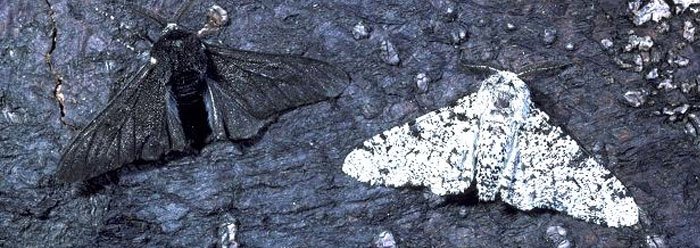
66.
The trees these moths used to live on were white, but have been covered in soot from coal factories. Which moth will be more successful in this environment?
a)
Dark moth
b)
Light moth
c)
Both will be equally successful
d)
Neither will be successful
67.
What is the advantage of having different shaped beaks?
a)
To look different from other species.
b)
To be able to eat the food readily available in the environment.
c)
To protect itself against predators.
d)
To protect itself against prey.
68.
Why are advantageous traits more likely to be passed onto offspring?
a)
Because they are more likely to survive and reproduce.
b)
Because they come from dominant alleles.
c)
Because they come from recessive alleles.
d)
Because the trait is an acquired phenotype.
69.
One characteristic feature of the tundra is that only the surface thaws in the summer and refreezes in the winter, leaving a permanently frozen subsoil. This characteristic is known as 
a)
Hoarfrost
b)
Glaciation
c)
Permafrost
d)
Crystallization 
70.
Which biome is characterized by low temperatures and low amounts of rainfall?
a)
Tundra
b)
Desert
c)
Temperate Deciduous Forest
d)
Tropical Rainforest
71.
Which of the following is an abiotic factor in a biome?
a)
types of trees
b)
number of insect species
c)
average temperature
d)
mosses and algae
72.
greatest diversity of all the biomes
a)
savanna
b)
desert
c)
tropical rain forest
d)
TDF
73.
very dry and often very hot
a)
desert
b)
TDF
c)
taiga
d)
tundra
74.
This biome is found around the equator and is home to a large amount of biodiversity.
a)
Deserts
b)
Tropical Rain Forests
c)
Savannas
d)
Chaparral 
75.

Which biome has trees that lose their leaves in the fall and regrow them in the spring?

a)

deciduous forest

b)

coniferous forest (taiga)

c)

tropical rain forest

d)

desert

76.
Which biome has coniferous trees (which don't lose their leaves)?
a)
Taiga
b)
Temperate Forest
c)
Tundra
d)
Grasslands