
NEW
Font size
S
M
L
XL
 Worksheets
Global - Renaissance through Enlightenment
Total questions: 36
Worksheet time: 18mins
Name
Class
Date
1.
What does the term Renaissance mean?
a)
Review
b)
Rebirth
c)
Reconquering
d)
Holy war
2.
In which modern-day country did the Renaissance begin?
a)
France
b)
Spain
c)
Italy
d)
Greece
3.
What society did the people of the Renaissance look to for inspiration?
a)
The Greeks and Romans
b)
The Middle Ages
c)
The Japanese
d)
The Muslims
4.
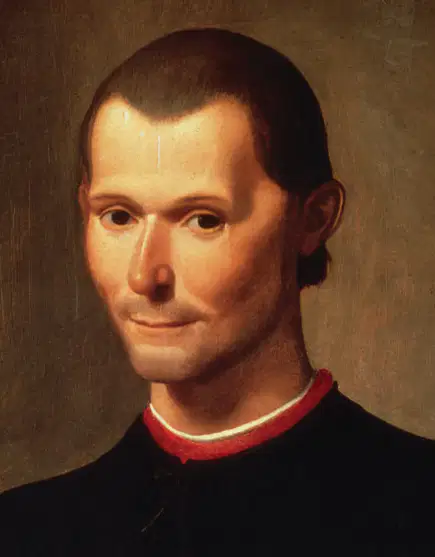
Who wrote “The Prince”?
a)
Michelangelo
b)
Thomas More
c)
Leonardo Da Vinci
d)
Niccolo Machiavelli
5.
What was one influence of the Crusades?
a)
The Christians took over Jerusalem
b)
Italy was conquered by the Muslims
c)
Increased demand for middle eastern products
d)
There was no influence
6.
How did a patron influence the Renaissance?
a)
A patron gave money to someone in order to start a new business
b)
A patron gave money to someone in order to create art
c)
A patron gave weapons to someone in order to start a holy war
7.
Which of the following was NOT an area of cultural advancement during the Renaissance?
a)
Agricultural technology
b)
arts
c)
philosophy
d)
literature
8.
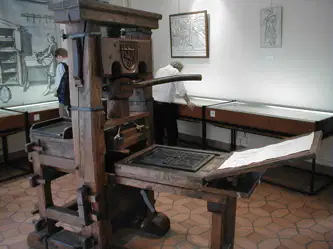
What was the first full-sized book Gutenberg printed?
a)
Utopia
b)
Romeo and Juliet
c)
the Bible
d)
The Prince
9.
The Protestant Reformation can best be defined as a -
a)
period of time whereby priests held the ultimate religious power
b)
religious revolution to create one and only one form of Christianity
c)
religious reform movement that led to the founding of other branches of Christianity
d)
push to spread Christianity into Ireland and Scotland
10.
Why was John Wycliffe declared a heretic after his death?
a)
he worked for the Ottoman army
b)
he spied on English authority
c)
He believed in witchcraft
d)
His writings challenged the Catholic church
11.
In which city did Luther write his famous Protestant rules?
a)
Wittenberg
b)
Manchester
c)
Nottingham
d)
Stratford-upon-Avon
12.
Martin Luther protested the Catholic Church by doing what?
a)
Creating a new church called the Martinian Church.
b)
Boycotting all church services.
c)
Nailing the 95 Theses to his church door.
d)
Mailing letters to the Pope.
13.
Which of the following was one of Luther's main beliefs?
a)
Men and women are naturally sinful.
b)
Christians needed to be baptized again as adults.
c)
Good works were required for salvation.
d)
All people with faith were equal.
14.
Luther protested the practice of selling indulgences. What was that practice?
a)
Clergy members bought them to get higher offices.
b)
Selling pardons or forgiveness for sins.
c)
It allowed people to practice any religion.
d)
Indulgences permitted priests to marry and have children.
15.
What was one of John Calvin's major teachings?
a)
humanism
b)
adult baptism
c)
indulgences
d)
predestination
16.
John Calvin preached the concept of “predestination” which means that -
a)
every day should be planned out ahead of time
b)
humans have no control over their daily lives
c)
God has planned out a person's life
d)
fate does not exist; human action rules all
17.
Predestination was one of the main doctrines of
a)
theocracy.
b)
Calvinism.
c)
Lutheranism.
d)
the Catholic Reformation.
18.
Who declared himself the head of the English Church?
a)
Henry VIII
b)
John Knox
c)
Martin Luther
d)
Emperor Charles V
19.
Over his lifetime, Henry VIII had 6 wives. This was mostly due to -
a)
bad luck
b)
love
c)
political reasons
d)
his popularity
20.

Why did Henry VIII want a divorce from Catherine of Aragon to marry a younger woman?
a)
Catherine was too old to provide an heir
b)
Henry was known for being a player
c)
Catherine of Aragon was going to be hanged for treason
d)
Nobody knows the real reason behind his decision
21.
When the Pope refused to grant him a divorce, Henry VIII -
a)
plotted to kill the Pope
b)
split from the church and created the Church of England
c)
ends up married to Catherine forever
d)
took Anne Boleyn as his mistress instead
22.
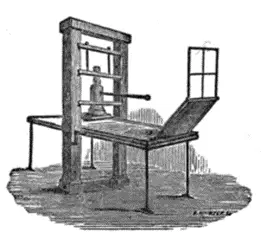
What was an important effect of the invention of the printing press?
a)
Gutenberg used his wealth from the invention to support artists
b)
It led to the development of public libraries
c)
It led to the renewed study of Latin and Greek
d)
It increased literacy and the use of the vernacular
23.

What was the northernmost country where Calvinism spread?
a)
Norway
b)
Netherlands
c)
Scotland
d)
Poland
24.

Which cities were the centers of Calvinism and Lutheranism?
a)
Rotterdam and London
b)
Geneva and Wittenberg
c)
Wittenberg and Rotterdam
d)
Worms and Geneva
25.

Between 1500 and 1600, which religion was dominant in the greatest number of countries?
a)
Anglican
b)
Calvinist
c)
Lutheran
d)
Roman Catholic
26.
What concept was the belief in "divine right" used to support?
a)
absolute rule
b)
freedom of religion
c)
separation of church and state
d)
waging war for religious purposes
27.
What king became France's most powerful ruler and boasted "I am the state"?
a)
Henry II
b)
Henry IV
c)
Louis IX
d)
Louis XIV
28.
What political purpose did the splendid palace at Versailles serve?
a)
to aid the artists of the time by displaying their works for others to see
b)
to show the power of Louis XIV and arouse the envy of the other monarchs
c)
to reflect the religious faith of Louis XIV and give the appearance of strength and virtue
d)
to reflect Louis XIV's ideas of westernization and his desire to modernize his country
29.
What was Peter the Great the first Russian ruler to try to do?
a)
westernize Russia
b)
reduce the power of the nobles
c)
add territory to the Russian state
d)
organize and utilize a secret police force
30.
The heliocentric, or sun-centered, theory was proposed by
a)
Galileo Galilei.
b)
Nicolaus Copernicus.
c)
Francis Bacon.
d)
Isaac Newton.
31.
What was Montesquieu's influence on the U.S. Constitution?
a)
public elections
b)
branches of government
c)
the Bill of Rights
d)
representatives
32.
Which of the following did the Enlightenment promote?
a)
a belief in progress
b)
a more secular outlook
c)
faith in science
d)
all of the above
33.

The heliocentric theory challenged the
a)
political scientists.
b)
observed patterns.
c)
geocentric theory
d)
mathematical theories.
34.

Between 1550 and 1789, Enlightenment ideas swept
a)
only through France and colonial America.
b)
only through European society.
c)
through European society and colonial America.
d)
throughout the world.
35.

Salons helped to spread
a)
the geocentric theory.
b)
only the ideas of the philosophes.
c)
only the ideas of political scientists.
d)
Enlightenment thinking.
36.

Which of the following was influenced by Enlightenment Ideas?
a)
literate middle class
b)
thinkers and artists
c)
American colonists
d)
all of the above
Reset

