
Font size
 Worksheets
PS/S FINAL EXAM REVIEW 2024
Total questions: 92
Worksheet time: 46mins
A process used by scientists to gather evidence that leads to understanding is _______.
the scientific method
continental drift
the big bang theory
Which of the following statements about density is TRUE?
density is a physical property of matter and sizes doesn't matter.
density is not a property of matter and so density depends on the size of the object.
density of a small piece of gold and a large piece of gold will be different.
Particles will move faster and farther apart when its state changes from _______.
liquid to solid
gas to liquid
liquid to gas
The force that ALWAYS opposes motion is called (a) .
Which of the following is a unit of speed?
m/s2
N
Which of the following is NOT accelerated motion?
a ball being juggled
a person walking at 2.5 m/s along a straight road
a braking cyclist
Inertia is the resistance of a physical object to change its state of (a) .
Any change in an object’s velocity is caused by ____________.
the object’s mass
a balanced force
an unbalanced force
The gravitational force between two objects is proportional to their ___ and decreases rapidly as the distance between the masses ___.
masses, increases
distance, decrease
masses, decreases
(a) is defined as mass times velocity.
Newton’s first law of motion applies to _________.
only objects that are moving
all objects, whether moving or not
only objects at rest
Kinetic energy is _____________.
energy of motion
energy of position
non-mechanical energy
When the motion of an object is shown by a straight line on a distance vs. time graph with distance on the y-axis (dependent), the slope of the line is the (a) of the object.
________ is the energy created by wind turning wind turbines.
geothermal
nuclear
Renewable resources ...
are not replaceable
used more frequently
never going to run out
Which of the following is a renewable resource?
oil
natural gas
Geologists classify a certain section of Earth as lithosphere. Which of the following could it be?
outer core
inner core
Three common states of matter are ___.
S,L,G
S,P, G
What is one disadvantage of using wind power?
it is renewable
it is not always windy
wind is everywhere
Natural Gas is a __________ energy resource.
renewable
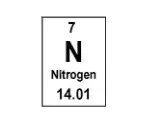
An atom of nitrogen has how many electrons?
7
14.01
21
Forces that shape Earth’s surface can be divided into what two groups?
constructive and physical.
constructive and destructive.
chemical and destructive.
What is the reaction force when you place a cup on a table?
the force of the cup down on the table
the force of gravity up on the cup
the force of the table up on the cup
The SI unit of force, named after the scientist who described the relationship between motion and force, is called the ______.
Newton.
Smithsonian
Einstein.
Which of the following is a disadvantage of wind energy?
it is renewable
it is not always windy
wind is everywhere
What is a renewable energy source?
An energy source that can be used up and never replaced
An energy source that produces a lot of pollution
An energy source that can be replenished naturally over time
Which of the following indicate that an object has been subjected to an unbalanced force?
The object speeds up.
The object slows down.
Both a and b are correct
Which of the following correctly states Newton's third law of motion? Forces occur in matched pairs that are ______.
equal in magnitude and opposite in direction.
equal in magnitude and equal in direction
opposite in magnitude and equal in direction.
What is a variable could be tested in our wind turbine design?
The color of the blades
The shape of the blades
The type of soil the turbine is placed on
The gravitational force between any two objects is dependent on their ____.
gravity constants and distance apart.
masses and distance apart
distance apart and density
Compared to your weight and mass on Earth, if you were on the moon ________.
your weight and mass would both be less
your weight would be less, but your mass would remain the same
your weight would remain the same, but your mass would be less.
The ________ variable is plotted on the x-axis of a graph.
dependent
control
independent
Which of the following is an example of a non-renewable energy source?
Solar energy
Wind energy
Coal
Which statement illustrates Newton’s first law?
A stone will not move unless something pushes or pulls it.
A ball rolling across the floor eventually slows down.
Both a and b
Which object has the greatest inertia?
tennis ball
bowling ball
beach ball
What force causes a skater sliding on the ice to gradually slow down?
balanced force
inertia
friction
A seat belt helps you when your car stops suddenly by providing a(n)
balanced forward force.
balanced backward force
unbalanced backward force.
One newton (N) is equal to 1kg per ________
1 m/s.
9.8 m/s.
1 m/s².
Which of the following will result in the greatest acceleration?
56 N acting on a 1-kg box
56 N acting on a 2-kg box
23 N acting on a 2-kg box
What is net force?
The negative force acting on an object
The force required to move an object
applied force and resistance force
Which of the following forces can both attract and repel?
Gravitational force
Electromagnetic force
Strong nuclear force
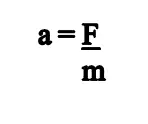
A 0.25 kg steel ball experiences a net force of 1.15 N as it rolls down a ramp. What is the acceleration of the ball?
0.29 m/s²
0.90 m/s²
4.6 m/s²
What is a force?
A push or pull on an object
The speed of an object
The mass of an object
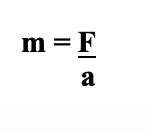
A baseball accelerates downward at 9.8 m/s². The force pulling the ball downward is 1.4 N. What is the mass of the baseball?
3.2 kg
0.4 kg
0.14 kg
What is velocity?
Speed in a given direction
Distance in a given direction
Speed without direction
The force exerted on the racket by a hit tennis ball is the
gravitational force
reaction force
acceleration
What force holds the nucleus together?
Gravitational force
Electromagnetic force
Strong nuclear force
An object’s momentum is determined by the object’s ______. (Hint: Think about the variables in the momentum equation)
weight and velocity
mass and acceleration
mass and velocity
Two identical cars are traveling at equal speeds. One is going north and the other south. If they collide head-on and stick together, what will happen to the motion of the cars?
Both cars will move north
Both cars will move south
Both cars will stop
What is the momentum of a 255 g apple falling at 16.0 m/s?
4.08 m/s² downward
4.08 kg • m/s downward
15.9 m/s² downward
Which of the following has a momentum of zero?
newspaper lying on a table
plane flying through the air
leaf falling to the ground
When a moving bowling ball hits a pin, some of the ball’s momentum
doubles in force.
increases the pin’s mass.
is transferred to the pin.
What is a vector quantity?
A quantity with only magnitude
A quantity with both magnitude and direction
A quantity with only direction
How does the total momentum of two objects before a collision compare with the total momentum after the collision?
It is the same.
It is less.
It is equal to zero.
Speeding up, slowing down, and changing direction is best described as
speed
distance
acceleration.
The slope of a line on a distance-time graph is
distance.
time
speed
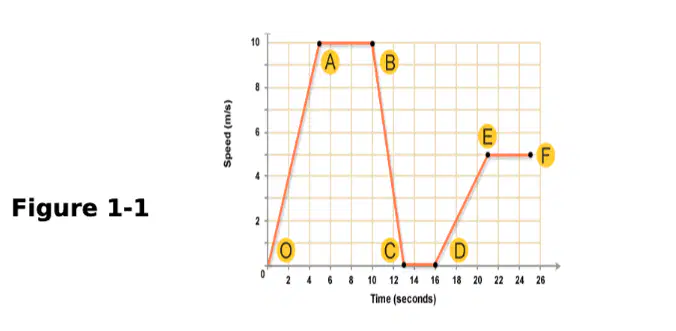
During which section of the graph above (Figure 1-1) is the person NOT moving at all?
O-A
C-D
E-F
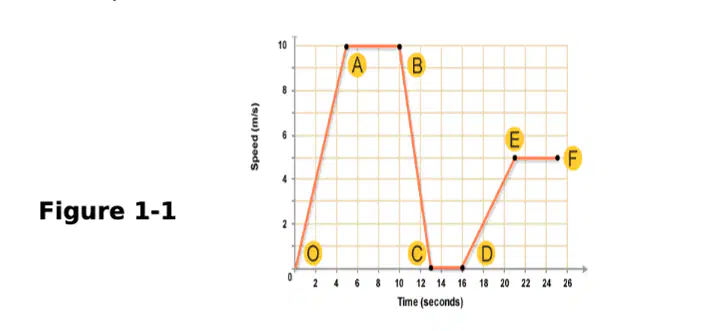
During which section is the person going back the way they came?
B-C
O-A
A-B
Moving from 0 m/s to 25 m/s in 8.0 s equals an average acceleration of ____.
0.312 m/s.
0.312 m/s^2.
3.12 m/s^2.
On a velocity vs. time graph, what shows the value of the acceleration?
the slope of the line
the y-axis
the x-axis
What happens when a car slows down and velocity changes?
positive acceleration
negative acceleration
constant acceleration
What is the layer directly beneath Earth’s crust called?
outer core
inner core
mantle
Because of intense pressure, the inner core of Earth is
liquid.
solid.
gaseous.
Which of the following gives evidence for plate tectonics?
magnetic alignment of oceanic rock
cooling molten rock
the age of Earth’s crust
Mid-oceanic ridges are formed by ________.
bends and folds along the subduction zone.
the diving of oceanic plates.
collisions of Earth’s continental crust.
Where do most earthquakes occur?
along convergent boundaries
at vents in Earth’s crust
along shifting plate boundaries
The location on Earth’s surface where most earthquake damage occurs is called the ________.
focus.
epicenter.
vent.
Longitudinal waves are called primary waves because they ________.
are shaped like a “P.”
reach recording stations first.
only move across Earth’s surface.
A __________ wave does not originate from the focus.
surface
transverse
direct
Which of the following statements is not true about the Richter scale?
The Richter scale measures the magnitude of an earthquake.
Earthquakes with equal ratings do not have the same severity.
The Richter scale allows us to make predictions of earthquake severity.
Where do volcanoes tend to form?
convergent plate boundaries
divergent plate boundaries
both a and b are correct
Shield volcanoes are known for their ______________.
small size
viscous Magma
What determines the severity of volcanic eruptions?
composition of magma
size of the volcano
number of vents
Volcanoes that form along convergent plate boundaries are located _________.
along the Ring of Fire.
at high altitudes.
at the edges of plate collisions.
Cinder cone and composite volcanoes both____________.
go dormant quickly.
have trapped gas.
have mild eruptions.
Which of these does not support the theory of plate tectonics?
Some continental coastlines fit together.
Similar fossils are found on separate continents.
Earth’s core is solid.
A geologic feature of divergent plate boundaries in oceanic crust is the formation of
mountain ranges.
U-shaped valleys
faults.
A zone where oceanic crust dives beneath continental crust is called a zone of
subduction.
divergence
coastal
Earthquakes occur mostly__________.
in the middle of continents.
reduction.
in the asthenosphere.
A cinder cone is caused by _____________.
converging plates
large amounts of gas trapped in the magma
vents
Composite volcanoes are made up of __________.
many layers of ash, cinders, and lava.
many layers of lava rich in magnesium and iron.
many layers of cinder
What causes an earthquake to occur?
Stress forces exceed the strength of rock
Magma forces the crust apart
Mountains become too tall and break the surface under them
The motion of tectonic plates causes stretching, which produces faults and folds in Earth’s crust.
True
False
Short, isolated chains of volcanoes, such as the Hawaiian Islands, occur at __________.
divergent boundaries.
convergent boundaries.
hot spots.
What type of structure forms when magma hardens in a volcano’s pipe?
batholith
a sill
a volcanic neck
A quiet eruption occurs when a volcano is filled with __________.
very hot, low-silica magma.
high-silica magma.
cinders and lava bombs.
What information has been found from seismograms of earthquakes?
the size and shape of tectonic plates
the location of liquid and solid layers in Earth’s interior
the location and strength of Earth’s magnetic field
What is a frame of reference?
A system of objects that are moving with respect to one another
A system of objects that are not moving with respect to one another
The distance between two points
Which of the following is not a rock?
granite.
sandstone
quartz
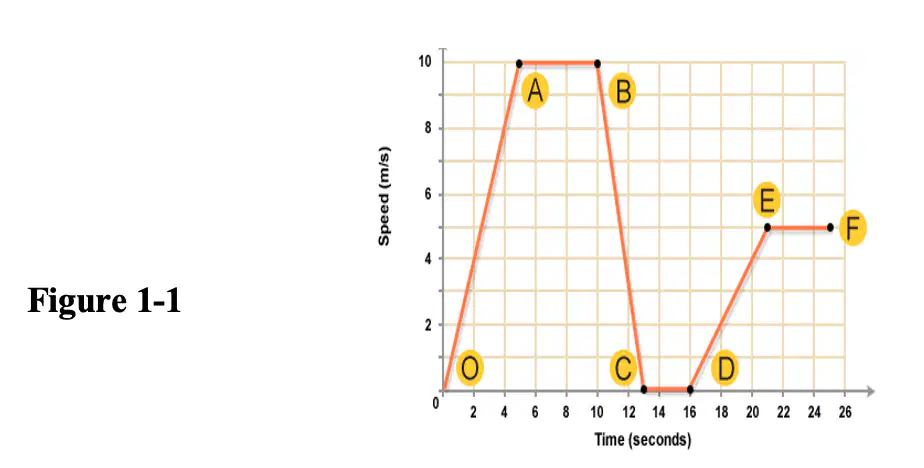
The slope of a line on a distance-time graph is
distance
time
speed
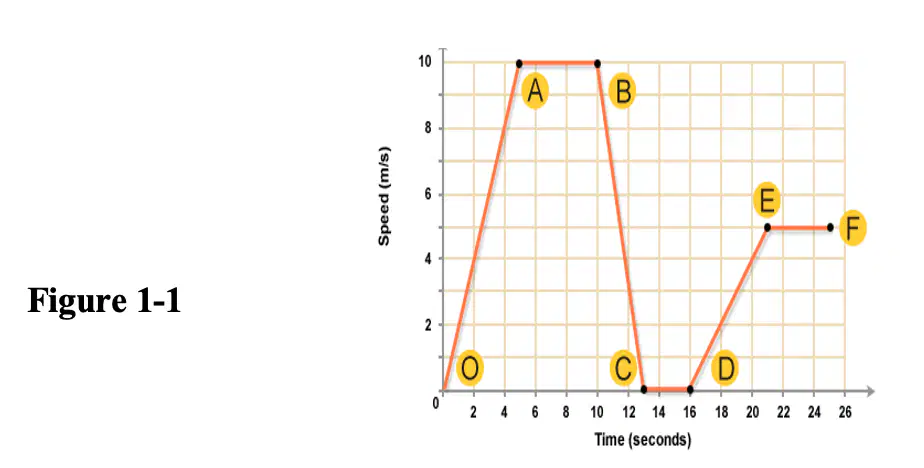
During which section of the graph above (Figure 1-1) is the person NOT moving at all?
O-A
C-D
E-F

During which section is the person going back the way they came?
B-C
O-A
A-B

