
 Worksheets
Living Environment Review
Total questions: 100
Worksheet time: 2hrs 40mins

Sac within the cytoplasm that STORES fluid, plants have a larger one that stores food and water.
vacuole
lysosome
cell wall
ribosome
Is the jelly-like substance in the cell that contains the organelles
ribosome
cytoplasm
cell wall
chloroplast

This structure is only found in plants and prokaryotes (Gives it a rigid shape)
cell wall
cytoplasm
centriole
nucleus
This organelle make PROTEINS for the cell
chloroplast
ribosome
lysosome
cell wall

Only found in plant cells, site of Photosynthesis
cell wall
cell membrane
chloroplast
cytoplasm
this organelle makes ATP.
chloroplast
mitochondria
ribosome
nucleolus

Large storage for plant cells. Typically stores water and nutrients.
Chloroplast
Vacuole
Lysosome
Cytoplasm
The cell membrane is located...
underneath the cell wall of a plant cell.
outside of the cell wall of a plant cell.

DNA

In what organelle is the genetic material found inside?
Endoplasmic Reticulum
Golgi Complex
Nucleolus
Nucleus
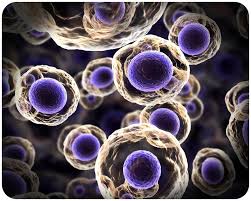
Prokaryotes are __________ than eukaryotes because they have fewer
organelles and no nucleus.
smaller
bigger
same size
undefined
Choose the similarity between prokaryotes and eukaryotes.
both have cell walls
both contains cytoplasm, ribosomes, and DNA
both are able to reproduce by mitosis
both are found in the same organism

Which organelle is correctly paired with its function?
lysosome - synthesize carbohydrates
mitochondria - synthesize proteins
chloroplast - site for photosynthesis
nucleus - site for cellular respiration

What is number 1 and what does it do?
ribosome; protein synthesis
ribosome; cellular respiration
mitochondrion; cellular respiration
nucleus; controls cell activities
Which molecule can not more through a cells membrane?
Water
Glucose
Starch
Iodine
It may be harmful when people compete to see who can hold their breath the longest underwater. Without oxygen, brain cells
cannot make enough ATP
have too few mitochondria
make too many enzymes
have too much water
Any organism that can synthesize its own food.
autotroph
/autotrophic
fungi
monera
eukaryotic
What does a 'region with high concentration' mean?
SMALL number of particles
LARGE number of particles
UNEVEN number of particles
no particles
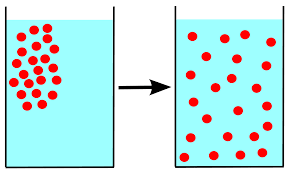
The picture below is an example of _________________.
osmosis
isotonic
diffusion
active transport
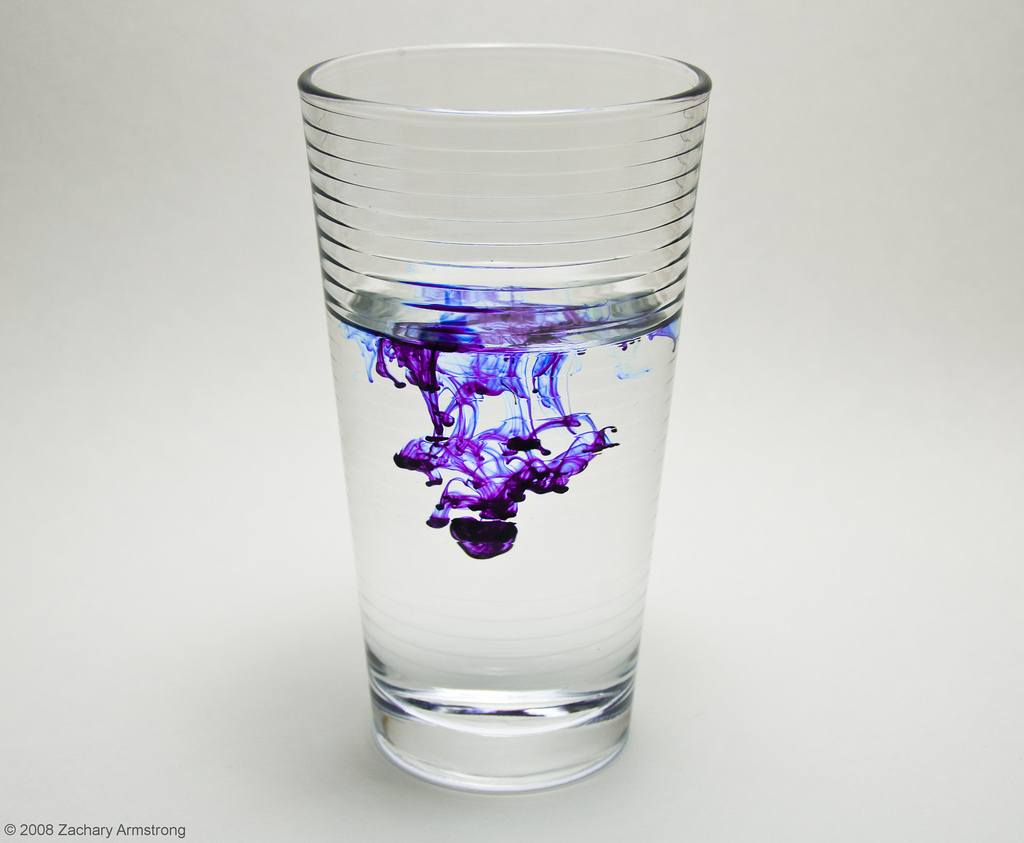
Where is there a low concentration of dye?
at the bottom of cup
in the color
at the top of cup
no concenteraion gradient

How do the particles move in diffusion?
From a region of low concentration to a region of high concentration
From a region of high concentration to a region of low concentration
From a region of low concentration to a region of low concentration
From a region of high concentration to a region of high concentration
What is DIFFUSION?


Which of the following is a product of cellular respiration?
Radiant Energy
Oxygen
Glucose
Water

What are the reactants (taken into) of cellular respiration? (Mark all of them!)
oxygen
glucose
carbon dioxide
water
energy
Does cellular respiration store or release energy?
Store
Release
Photosynthesis is a biological process that occurs in autotrophs. Which of the following is produced as a result of photosynthesis?
Water and light
Glucose and chlorophyll
Glucose and oxygen
Carbon dioxide and water
Where do the reactions of photosynthesis take place in autotrophs?
Chloroplast
Mitochondria
Cell Walls
Cytoplasm
Where does the energy for plants to perform photosynthesis come from?
Breaking down ATP
sunlight
glucose metabolism
None of the Above
What is the chemical equation for photosynthesis? Choose the BEST answer
C6H12O6 + O2 -> CO2 + H2O
CO2 + H2O --> C6H12O6 + O2
6 CO2 + 6 H2O --> C6H12O6 + 6 O2
C6H12O6 + 6 O2 -> 6 CO2 + 6 H2O
What is the pigment responsible for absorbing light energy in chloroplasts during photosynthesis?
None of the Above
Carotenoids
Xenophylls
Chlorophyll
Cellular Respiration involves the chemical breakdown of _____ to form ATP Energy
Fats
Fructose
Glucose
Proteins
True of False, Plants can perform Cellular Respiration and Photosynthesis
False
True
Photosynthesis is ...
The process in which organisms convert/transfer energy from glucose to ATP.
The process in which organisms exchange carbon dioxide and oxygen in their lungs.
The process of taking a picture.
The process of plants converting/transferring solar energy to chemical energy to make their food.
oxygen and carbon dioxide
light and water
Which process does heterotrophs and autotrophs undergo in order to convert glucose into ATP?
cellular respiration
osmosis
photosynthesis
transcription
Cellular respiration is a chemical reaction that converts chemical energy stored in glucose into which large molecule?
carbohydrate
citric acid
pyruvate
ATP
What is the main purpose of photosynthesis?
To make food
To create energy
To release oxygen
To absorb sunlight
Macromolecules are made of repeating subunits called
monomers
monosaccharides
polymers
polysaccharides
A __________ consists of many monomers bonded together.
monomer
hydrocarbon
peptide
polymer

More than one of one species in an area.
population
community
ecosystem
organism

All the different populations living together in a specific area/region at a certain time.
population
community
ecosystem
biome

Anything that prevents a population from growing too large.
Biotic Factor
Limiting Factor
Abiotic Factor
Ecosystem

An animal that eats other animals is a(n)...
carnivore
omnivore
herbivore
decomposer

Bacteria, fungi, and earthworms are examples of:
scavengers
carnivores
decomposers
producers

A(n) __________ is an organism that eats BOTH plants and animals for energy.
Omnivore
Decomposer
Carnivore
Herbivore

All of the living AND non-living things together in an particular area is called a(n):
ecosystem
biome
community
population

Vultures, which feed on the remains of dead organisms, are best described as _____________.
primary consumers
scavengers
omnivores
herbivores

__________ is an organism that only eats plants for energy.
Carnivore
Herbivore
Omnivore
Consumer

__________ is an organism that only eats meat for energy.
Omnivore
Consumer
Herbivore
Carnivore
What is an Omnivore?
An animal that eats plants only
An animal that eats animals only
An animal that eats both plants and animals
An animal that eats dead animals
Where do consumers get energy?
The sun
The water
Eating other organisms
Eating dirt
The nonliving aspects of an ecosystem.
Abiotic factors
Biotic factors
biome
community
A collection of organisms that belong to different populations but all live in the same area and interact with one another.
Population
Ecosystem
Community
Species
Organisms that can capture energy from inorganic, nonliving sources.
Producers
Consumers
Decomposers
Carnivores
Rejection of a newly transplanted organ is caused by
the immune system reacting to the presence of the organ
antibiotics that stimulate the immune system to attack the organ
inheritance of genetic disorders from infected individuals
development of cancerous cells in the organ
As blood glucose levels increase, hormones are released to return glucose levels to normal. This is an example of
a nervous system disorder
the synthesis of antibodies
a stimulus and a response
an antigen and antibody reaction
Which statement describes a failure of homeostasis in humans?
When activity in an individual increases, the body temperature rises and the individual sweats.
As the concentration of carbon dioxide increases in the human body, the lungs begin to expel more carbon dioxide.
A viral infection leads to a decrease in the number of white blood cells being produced in the body.
After an individual gets a cut, certain chemical changes begin the healing process.

Which biological process is represented in the diagram below?
photosynthesis
respiration
digestion
replication

The diagram below shows specialized plant cells that control openings called stomates. The proper function of these cells is vital to the survival of the plant because they regulate the
rate of glucose use by root cells
absorption of sunlight by leaf cells
products of photosynthesis in the stem
exchange of gases in leaves

Substance X directly supplies energy for various life functions, as shown in the diagram below. Which substance is represented by X in the diagram?
ATP
DNA
starch
glucose

The structural formulas shown below represent parts of two different complex carbohydrate molecules composed of glucose subunits. Molecules 1 and 2 differ in their overall structure. Due to the differences in structure, each of these molecules most likely
is composed of different molecular bases
forms a different protein
contains different elements
performs a different function

To capture their prey, spiders have fangs, which pierce the body wall of insects and inject venom. Spider venoms usually contain specific proteins that attack the cell membranes of the prey. The membranes and most of the contents of the insect’s body turn into a liquid that the spider then ingests for food. These specific venom proteins are most likely
ATP molecules
DNA molecules
biological catalysts
regulatory hormones

Lymphatic capillaries are found throughout the body. Both the lymphatic and circulatory systems transport substances between the bloodstream and body tissues. These two systems are also involved in fighting infections. The arrows shown in the diagram that go from the blood capillaries to the interstitial fluid most likely represent the
release of red blood cells, so that they can diffuse into body cells and fight bacteria
movement of materials from the circulatory system that will eventually enter lymphatic capillaries
transport of digestive enzymes from the blood to help with the digestion of glucose in muscle cells
transport of glucose molecules from the blood to be used by cells to attack proteins and fats
Doctors often use certain medications to treat infections. A few people have a reaction to some of these medications, such as itching, swelling, or trouble breathing. This is an example of
using antibodies to cure a medical problem
the body’s immune system overreacting to a usually harmless substance
the body creating a mutation to fight unknown pathogens
a vaccine causing the body to produce antigens against the infection
A small lizard spends the morning hours lying in the sunlight until its body temperature rises. Later on in the day, the lizard rests in a shady area until its body temperature cools. This type of behavior is important to
maintain homeostasis
detect variations
attract mates
obtain nutrients

The Venus flytrap is a plant that has a unique system by which it traps and breaks down its prey. Unsuspecting insects land on the leaf and touch tiny hairs located on the leaf, triggering the leaf to close around the prey. The substance responsible for breaking down the Venus flytrap’s prey most likely contains
chlorophyll molecules
glucose molecules
hormone molecules
enzyme molecules
It may be harmful when people compete to see who can hold their breath the longest under water. Without oxygen, brain cells
cannot make enough ATP
have too few mitochondria
make too many enzymes
have too much water

Students did an experiment comparing the activity of four different enzymes, A, B, C, and D. The results are represented in the graph below. A valid conclusion based on the information in the graph is that
the pH of some enzymes changes as the temperature changes
enzymes change color in proportion to the rate of activity
a difference in the pH of an environment changes enzyme activity
enzyme activity causes acids to change into bases over time

The diagram below represents changes that take place within the human body. The diagram represents
cellular differentiation
dynamic equilibrium
gene interaction
biological evolution

Sailors in the past may have heard the greeting from a passing ship, “Avast ye scurvy dogs.” This greeting would be a reference to a disease known as scurvy, which is due to inadequate intake of vitamin C. Which row in the chart below correctly identifies the cause of this disease and a possible treatment for it?
Row 1
Row 2
Row 3
Row 4
In the 1660s, Flemish physician Jan van Helmont grew a small willow tree in a pot of soil. He added only water to the pot. At the end of five years, he found that the tree had gained 75 kilograms, but there was very little change in the mass of the soil. Van Helmont concluded that the plant gained weight directly from the water. We now know that this conclusion is only partially correct because, in addition to water, photosynthesis also requires
oxygen from the atmosphere
carbon dioxide from the atmosphere
proteins from animal prey
carbohydrates from the soil
Doctors sometimes use a vaccine to prepare the body to defend itself against future infections. These vaccines most often contain
antibodies
antibiotics
white blood cells
weakened pathogens
Anhidrosis is the inability to sweat normally. If the human body cannot sweat properly, it cannot cool itself, which is potentially harmful. Anhidrosis most directly interferes with
a feedback mechanism that maintains homeostasis
an immune system response to harmless antigens
the synthesis of hormones in the circulatory system
the enzymatic breakdown of water in cells

Carmine, a compound that comes from the cochineal beetle, shown below, is used as a food coloring. The food coloring is not harmful to most people, but in a small number of individuals, it causes a reaction and affects their ability to breathe. This response to carmine is known as
a stimulus
an allergy
natural selection
an adaptation
The first step in the scientific method is
conclusion
hypothesis
observation
experiment
During a controlled experiment, a scientist isolates and tests
a conclusion
a mass of information
a control group
a single variable
Information gathered from observing a plant grow 3 cm over a two-week period is called
inferences
variables
hypotheses
data
Based on your observations, you suggest that the presence of wter could accelerate the growth of bread mold. This is
a conclusion
a hypothesis
an experiment
an analysis
What direction does a microscope turn the object you are viewing?
Forward
Inside out
Backwards and upside down
Sideways
What is the substance the enzyme works on called?
Substrate
Product
Active Site
Complex

