
Font size
 Worksheets
Mix Immune system
Total questions: 132
Worksheet time: 1hrs 23mins
What is the main function of the immune system?
To fight harmful substances that enter the body
To carry oxygen, nutrients, and hormones to cells
To move fresh air into your body while removing waste gases
To release hormones into the bloodstream
What organ is not part of the Immune System?
thymus
lymph nodes
hypothalamus
lungs
Innate immunity.....
is activated immediately upon infection
depends on an infected animal's previous exposure to the same pathogen
is based on recognition of antigens that are specific to different pathogens
is found only in vertebrate animals
All of the following are parts of the immune system except _____.
skin
bladder
thymus
spleen
bone marrow
Innate immunity includes
The first line of defence and the second line of defence
All lines of defence
Phagocytes only
Innates
These cells make antibodies
T cells
Phagocytes
Pathogens
B cells
This WBC stains readily with basic dyes. It is involved in inflammatory reactions in your body, especially those related to allergies and asthma
Answer choices
neutrophil
basophil
eosinophil
monocyte
สารแอนติบอดี ซึ่งสร้างโดยเม็ดเลือดขาวจะมีการลำเลียงไปในร่างกายโดยระบบใด
ระบบหมุนเวียนเลือด
ระบบหมุนเวียนน้ำเหลือง
ดูดซึมผ่านทางเนื้อเยื่อ
ซึมผ่านไปกับของเหลวระหว่างเซลล์
การให้ทารกดื่มนมของมารดา ทารกได้รับภูมิคุ้มกันชนิดใด
ภูมิคุ้มกันก่อเอง
ภูมิคุ้มกันที่รับมา
ภูมิคุ้มกันที่ก่อเองและรับมา
ไม่ได้รับภูมิคุ้มกัน
เม็ดเลือดขาวในข้อใดเกี่ยวข้องกับการสร้างแอนติบอดี
นิวโทรฟิล
โมโนไซต์
เบโซฟิล
ลิมโฟไซต์
ข้อความใดแสดงถึงการทำงานของระบบภูมิคุ้มกัน
นิวรับประทานยาที่แพทย์สั่งจนครบ
ปิ๋มหายหวัดได้เองโดยไม่ต้องไปหาหมอ
โบใช้แอลกอฮอล์เช็ดรอบปากแผลที่โดนมีดบาด
ปาล์มนำเบาตาดีนใส่บริเวณบาดแผล
เซลล์บีและเซลล์ทีทำงานสัมพันธ์กันลักษณะใด
เซลล์บีกระตุ้นเซลล์ทีให้ผลิตแอนติบอดี
เซลล์ทีผู้ช่วยกระตุ้นให้เซลล์บีสร้างแอนติบอดี
เซลล์บีสร้างแอนติบอดีเพื่อกระตุ้นการทำงานของเซลล์ที
เซลล์ทีผู้ช่วยสร้างแอนติเจนกระตุ้นการทำงานของเซลล์บี
ถ้าตรวจเลือดแล้วพบว่าเม็ดเลือดขาวเพิ่มมากขึ้นผิดปกติแสดงว่าน่าจะเป็นโรคอะไร
เอดส์
การติดเชื้อ
โลหิตจาง
ธาลัสซีเมีย
จงยกตัวอย่างชื่อของ ฟาโกไซต์ (Phagocyte) 2 ชนิด
(a)
ให้นักเรียนยกตัวอย่างลิมโฟไซต์ 2 ชนิด (ตามที่นักเรียนได้เรียนรู้จากบทเรียนนี้)
(a)

Chemical that causes the blood vessels around the infection to dilate (expand) so that more blood can flow to the infection
Stomach acid
Mucus
Epithelial cells
Histamines
What is phagocytosis?
WBCs
When a cells eat other cells
When a cell collapses
When a cell releases nutrients


What is the function of a B lymphocyte?
Helps coordinate the function of other immune cells and directly attacks various infected cells and tumors
Plays a major role in allergic response by producing histamine; also produces heparin to control blood clotting
Functions specifically to combat parasitic infection, they also help to promote inflammation and play a role in allergic reactions
Produces antibodies, which target specific pathogens by binding to the antigens presented on their surfaces
Young white blood cell found in the blood stream which gives rise to a mature phagocytic cell once it migrates to tissues
What is the function of a basophil?
Plays a major role in allergic response by producing histamine; also produces heparin to control blood clotting
Functions specifically to combat parasitic infection, they also help to promote inflammation and play a role in allergic reactions
One of the first responders in the immune system, it phagocytoses pathogens and may present the phagocytosed antigens to other immune cells
Helps the blood clotting process by gathering at the site of an injury, sticking to the lining of the injured blood vessel, and forming a platform on which blood coagulation can occur
Functions in transport and gas exchange
Which of the following is a young white blood cell found in the blood stream which gives rise to mature phagocytic cells once it migrates to tissues?
Erythrocyte
Basophil
Macrophage
Monocyte
Thrombocyte
Which of the following is a young white blood cell found in the blood stream which gives rise to mature phagocytic cells once it migrates to tissues?
Erythrocyte
Basophil
Macrophage
Monocyte
Thrombocyte
หากระบบภูมิคุ้มกันเกิดความผิดปกติในการทำหน้าที่ Defense จะส่งผลให้เกิดสิ่งใดขึ้นกับร่างกายของเรา
เกิดการติดเชื้อ
เกิดโรคมะเร็ง
เกิดสภาวะภูมิแพ้
เกิดการต่อต้านเนื้อเยื่อของตนเอง
เม็ดเลือดขาวชนิดใด ไม่ใช่ Phagocytic cells
Neutrophil
Eosinophil
Macrophage
Lymphocyte

เม็ดเลือดขาวในภาพ คือ เม็ดเลืดขาวชนิดใด
Neutrophil
Eosinophil
Basophil
Monocyte

เม็ดเลือดขาวในภาพ คือ เม็ดเลือดขาวชนิดใด
Neutrophil
Eosinophil
Basophil
Monocyte
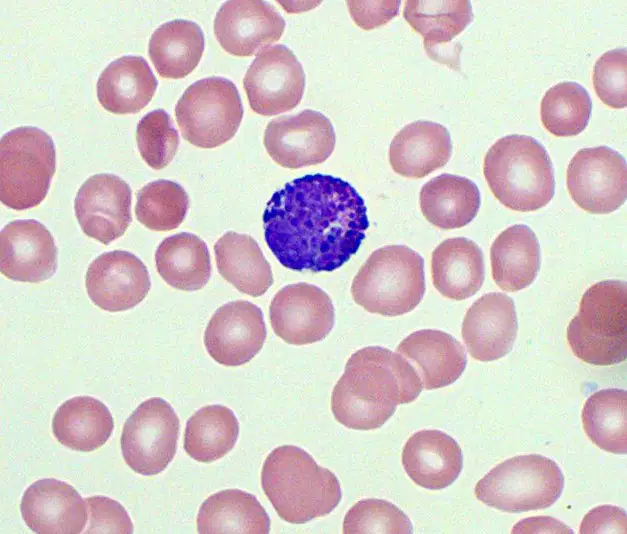
เม็ดเลือดขาวในภาพ คือ เม็ดเลือดขาวชนิดใด
Neutrophil
Eosinophil
Basophil
Lymphocyte

เม็ดเลือดขาว 1 และ 2 ในภาพ คือ เม็ดเลือดขาวชนิดใด
1. Neutrophil
2. Lymphocyte
1. Monocyte
2. Lymphocyte
1. Neutrophil
2. Monocyte
1. Lymphocyte
2. Lymphocyte

เม็ดเลือดขาว 1 และ 2 ในภาพ คือ เม็ดเลือดขาวชนิดใด
1. Lymphocyte
2.Eosinophil
1.Neutrophil
2.Neutrophil
1.Monocyte
2.Neutrophil
1.Monocyte
2.Eosinophil
ข้อใด ไม่ใช่ คุณสมบัติของแอนติเจนที่ดี
สามารถจับหรือทำปฏิกิริยากับแอนติบอดี
มีขนาดโมเลกุล มากกว่า 100,000 Da
เป็นสารที่มีโครงสร้างไม่ซับซ้อน
เป็นสารซึ่งสามารถถูกย่อยได้
ข้อใด ไม่ใช่ คุณสมบัติของแอนติเจนที่ดี
สามารถจับหรือทำปฏิกิริยากับแอนติบอดี
มีขนาดโมเลกุล มากกว่า 100,000 Da
เป็นสารที่มีโครงสร้างไม่ซับซ้อน
เป็นสารซึ่งสามารถถูกย่อยได้
ข้อใดเป็นคุณสมบัติของ Innate Immunity (มีข้อถูกหลายข้อ)
เป็นด่านแรกในการต่อสู้และป้องกันเชื้อโรค
มีความจำ ตอบสนองเชื้อโรคเดิมที่เข้ามาอีกครั้งได้รุนแรงขึ้น
ตอบสนองค่อนข้างเร็ว (เป็นนาที หรือไม่เกิน 6 ชั่วโมง)
มีอยู่ก่อนแล้วตั้งแต่กำเนิด
Which type of WBC is the "first responder", most mobile & active?
Neutrophils
Eosinophils
Basophils
Lymphocytes
Which WBC kills parasites?
neutrophils
eosinophils
monocytes
basophils
Which of the following is the largest WBC?
lymphocyte
basophil
neutrophil
monocyte
Which of these immunoglobulins is present in external secretion?
IgG
IgM
IgA
IgE
Cytokine ใดทำหน้าที่ต่อต้านการเพิ่มจำนวนของไวรัส
Chemokine
Interleukin
Tumer necrosis factor
Interferon
WBC ใดเกี่ยวข้องกับ Allergy
Neutrophil
Basophil
(Mast cell)
NK cell
Macrophage
MHC class I surveillance เป็นการทำงานของเซลล์ใด
NK cell
Plasma cell
Macrophage
Mast cell
บริเวณของแอนติเจนที่จับกับแอนติบอดีเรียกว่า
Antigen binding site
Paratope
Epitope
Complementarity-determining regions (CDRs)
Pathogen associated
molecular patterns (PAMPs)
พบในอะไร ของระบบใด
microbe (innate immunity)
microbe (adaptive immunity)
host (innate immunity)
host (adaptive immunity)
Pattern Recognition Receptors (PRRs) พบในอะไร ของระบบใด
Microbe (Innate immunity)
Microbe (Adaptive immunity)
Host (Innate immunity)
Host (Adaptive immunity)
Hapten จัดเป็นอะไร
Immunogen
Immunoglobulin
Antigen
Antibody
WBC ใดไม่อยู่ใน Innate immunity
NK cell
Plasma cell
Monocyte
Mast cell
WBC ใดเกี่ยวข้องกับ Allergy
Neutrophil
Basophil
(Mast cell)
NK cell
Macrophage
Cytokine ใดทำหน้าที่ต่อต้านการเพิ่มจำนวนของไวรัส
Chemokine
Interleukin
Tumer necrosis factor
Interferon
MHC class I surveillance เป็นการทำงานของเซลล์ใด
NK cell
Plasma cell
Macrophage
Mast cell
Humoral Immune Response (HIR) คือการตอบสนองของเซลล์ใด
B cell
NK cell
T cell
Macrophage
Cell-Mediated Immune Reponse (CMIR) ใน Adaptive Immune คือการทำงานของเซลล์ใด
Plasma cell
Platelet
T cell
B cell
T cell ชนิดใดยับยั้ง Helper T cell หลังจากที่กำจัดสิ่งแปลกปลอมเสร็จสิ้นแล้ว
Th17
Th1 & Th2
Ts cell
Treg
T cell ชนิดใดยับยั้ง Cytotoxic T cell หลังจากที่กำจัดสิ่งแปลกปลอมเสร็จสิ้นแล้ว
Th17
Th1 & Th2
Ts cell
Treg
CD4+ ไม่พบในเซลล์ใด
Th1 & Th2
Th17
Treg
Tc
CD8+ พบในเซลล์ใด
Th1 & Th2
Th17
Treg
Tc & Ts
การให้วัคซีน จัดเป็น Acquired immunity แบบใด
Natural Active
Artificial Active
Natural Passive
Artificial Passive
การฉีดเซรุ่ม (Immunoglobulin Injection) และการถ่ายน้ำเหลือง (Serum Transfusion) จัดเป็น Acquired immunity แบบใด
Natural Active
Artificial Active
Natural Passive
Artificial Passive
เซลล์ใดไม่จัดเป็น Antigen-Presenting Cells (APCs)
B cell
Dendritic cell
Macrophage
Th cell
เซลล์มีสมบัติเป็น APCs ที่ดีที่สุด
B cell
Dendritic cell (Langerhans cell)
Macrophage
Mast cell
Antigen-presenting cells (APCs) นำเสนอ Ag ผ่านสิ่งใด ให้แก่เซลล์ใด
MHC class I ให้แก่ Th cell
MHC class I ให้แก่ Tc cell
MHC class II ให้แก่ Th cell
MHC class II ให้แก่ Tc cell
Infected cell และ Tumor cell นำเสนอ Ag ผ่านสิ่งใด ให้แก่เซลล์ใด
MHC class I ให้แก่ Th cell
MHC class I ให้แก่ Tc cell
MHC class II ให้แก่ Th cell
MHC class II ให้แก่ Tc cell
ข้อใดเป็นคุณสมบัติของ Adaptive Immune Response (มีคำตอบที่ถูกหลายข้อ)
เกิดขึ้นหลังจากร่างกายได้รับเชื้อโรค
มีความจำเพาะต่อสิ่งแปลกปลอมที่มากระตุ้น
มีความจำ สามารถตอบสนองต่อเชื้อโรคเดิมที่เข้ามาอีกครั้งได้รวดเร็ว และรุนแรงขึ้น
ตอบสนองได้ทันที ใช้เวลาเป็นนาทีหรือไม่เกิน 6 ชั่วโมง
ข้อใดเป็นภูมิคุ้มกันแบบจำเพาะที่เรา "สร้างขึ้นเอง"
(active acquired immunity) (มีคำตอบที่ถูกหลายข้อ)
ภูมิคุ้มกันที่เกิดขึ้นหลังจากการเป็นโรค
ภูมิคุ้มกันที่ทารกได้รับจากการกินนมแม่
ภูมคุ้มกันที่เกิดจากการฉีดวัคซีน
การได้รับเซรุ่มแก้พิษงู
เซลล์และองค์ประกอบของภูมิคุ้มกันใด ที่ทำหน้าที่หลักใน Humoral immune response
T lymphocyte and Antigenpresenting cells
B Lymphocyte and Antibody
NK cell and Cytokines
Macrophage and Complement
Immune cells ทำหน้าที่สร้างแอนติบอดีคือเซลล์ใด
T helper cell
Macrophage
Plasma cell
Antigen presenting cell
Immunoglobulin ที่จะมีปริมาณสูงขึ้นมากภายหลังได้รับการกระตุ้นด้วย
แอนติเจนเดิมเป็นครั้งที่สองคือ ...
IgA
IgG
IgM
IgD
Immunoglobulin ชนิดใด ที่พบมากในสารคัดหลั่งของร่างกาย (เช่น น้ำนม, น้ำตา, น้ำลาย)
IgA
IgD
IgG
IgM
ข้อใดเป็นคุณสมบัติของระบบภูมิคุ้มกันแบบ cell-mediated immune response (มีคำตอบที่ถูกหลายข้อ)
เป็นภูมิคุ้มกันแบบจำเพาะ (specific immune response)
เป็นการทำงานร่วมกันระหว่าง Antigen presenting cell และ T lymphocyte
เป็นการทำงานโดยการสร้าง Antibody
ตอนสนองอย่างรวดเร็ว ใช้เวลาเป็นนาทีหรือไม่เกิน 6 ชั่วโมง
เซลล์ใดบ้างต่อไปนี้ ทำหน้าที่เป็น Antigen presenting cells (ตอบได้หลายข้อ)
B lymphocyte
Macrophage
Dendritic cell
NK cell
T lymphocyte ชนิดใดที่ทำหน้าที่ในการทำลายเซลล์ที่ติดเชื้อ หรือ เซลล์ที่มีความผิดปกติ
T helper cell
Cytotoxic T cell
ข้อใดเป็นการทำงานร่วมกันระหว่าง Innate immunity และ Specific immunity (ตอบได้หลายข้อ)
Antibody ทำหน้าที่เป็น opsonin ช่วยให้เกิด Phagocytosis ได้ดีขึ้น
NK cell ทำงานร่วมกับ antibody ในกระบวนการ ADCC
Macrophage ทำหน้าที่เป็น Antigen presenting cell ให้กับ T lymphocyte
Antigen-Antibody complex กระตุ้นระบบ complement
Examples of the complement proteins are
C11-C19
C1-C9
C0-C5
C7-C14
A classical pathway produce................to lysis the cell
MAC
NAC
SAC
BAC
What is a function of C-reactive protein (CRP) as an acute phase reactant?
Removes iron from gut
Modifies cholesterol metabolism
Promotes the activation of Complement
Modulates wound healing response
Which antibody is primarily involved in allergic reactions?
IgA
IgD
IgE
IgM
cytotoxic T cell
helper T cell
memory T cell
suppressor T cell
Neutralization is when
antibodies bind to an antigen and activate complement
antibodies bind to an antigen and enhance phagocytosis
antibodies bind to an antigen and stop the antigen from binding to host cells
antibodies bind to antigens and cause them to clump together
Opsonization is when
antibodies bind to an antigen and activate complement
antibodies bind to an antigen and enhance phagocytosis
antibodies bind to an antigen and stop the antigen from binding to host cells
antibodies bind to antigens and cause them to clump together
Agglutination is when
antibodies bind to an antigen and activate complement
antibodies bind to an antigen and enhance phagocytosis
antibodies bind to an antigen and stop the antigen from binding to host cells
antibodies bind to antigens and cause them to clump together
Natural killer cells destroy infected cells and cancer cells by:
releasing antibiotics to break down the cell membrane.
releasing cytokines, perforins, and granzymes to break down the cell membrane.
releasing histamine to give signals other blood cells to aggregate.
releasing lysozyme to digest target cells.
Which of the following are examples of innate (non-specific) immunity?
(more than one correct answer)
Skin forms a physical and antiseptic barrier to pathogens.
Leukocytes detect the antigens of the bacterium and produce antibodies.
Macrophages engulf bacterial cells at the site of infection.
The body produces large numbers of memory cells.
What are the benefits of vasodilation in the inflammatory response?
Increases the vascular permeability so phagocytes can be recruited to the site of infection
Decreases vascular permeability so that phagocytes can stay within the bloodstream
Increases blood flow to allows better oxygenation
Increases blood flow to increased hydrostatic pressure and fluid leakage which dilutes toxic agents
Which of the following are outcomes of activation of the complement system? (select all that apply)
Activation of T cells
More inflammation
Restriction of phagocytosis
Lysis of a target cell
bring more phagocytes to the area
Virus infected cells in a person infected with COVID-19 would be releasing ______, which acts as an antiviral and prevent neighboring cells from severe infection
Complement proteins
Interferon
antibodies
All of the above
Inflammation
causes reduced blood circulation to the damaged/infected area
brings more phagocytes to the damaged/infected area
releases Natural Killer cells
produces antibodies
Natural Killer Cells
Block adherence to host cells
destory virus-infected cell and tumor cells
phagocytose virus-infected cells
Block the complement cascase
Lysozyme
is a protective protein in skin
digests peptidoglycan of the bacterial cell wall
binds to iron
is secreted from some bacterial cells
inflammation
coagulase
phagocytosis
fever
Fever (select all that apply)
slows the growth of bacteria
dehydrates bacteria
enhances the activity of interferons
helps tissues to repair more quickly
causes the production of acids in the host cell
During inflammation
phagocytosis is prevented
blood vessels become more permeable/leaky
the area becomes cold to the touch
tissue repair is slowed
Interferons
cause vasodilation
cause cell lysis
cause antiviral proteins to be made in uninfected cells
activate the complement cascade
What is the main function of complement related to the bursting of microbial cells?
Immune complex clearance
Cytolysis
Phagocytosis
Inflammation
Which pathway of complement activation involves the interaction between lipid-carbohydrate complexes on the surface of microbes and complement protein factors B, D, and P?
Classical pathway
Alternative pathway
Lectin pathway
Terminal pathway
What is the role of Properdin in complement pathway regulation?
Cleave and inactivate C3b and C4b
Accelerate the dissociation of C3 convertase
Stabilize the alternative pathway C3 convertase
Inhibit MAC formation
Which complement protein fragment binds to mast cells and causes them to release histamine during inflammation?
C6
C5a
C7
C3a
What is the function of C5a in complement activation?
Enhance vasodilation and vasopermeability
Opsonization
Chemotaxis for neutrophils
Cellular lysis via the MAC
Which pathway of complement activation involves the binding of antibodies to antigens (microbes)?
Alternative pathway
Lectin pathway
Terminal pathway
Classical pathway
What is the function of C1 Inhibitor in complement pathway regulation?
Bind to C1, thereby preventing it from initiating complement activation
Cleave and inactivate C3b and C4b
Accelerate the dissociation of C3 convertase
Stabilize the alternative pathway C3 convertase
Which complement protein is responsible for inhibiting MAC formation?
Membrane Inhibitor for Reactive Lysis
Anaphylatoxin Inhibitor
S-protein (vitronectin)
Homologous restriction factor
What is the role of Factor I in complement pathway regulation?
Inhibit MAC formation
Stabilize the alternative pathway C3 convertase
Accelerate the dissociation of C3 convertase
Cleave and inactivate C3b and C4b
Which complement protein fragment serves as an opsonin that facilitates immune complex clearance?
C3b
C5a
C5b
C3a
What is the function of C5b in complement activation?
Opsonization
Start the assembly of the Membrane Attack Complex (MAC)
Cellular lysis via the MAC
Chemotaxis for neutrophils
Which complement pathway begins with antibody binding to a cell surface and ends with the lysis of the cell?
Terminal pathway
Lectin pathway
Alternative pathway
Classical pathway
What is the main function of complement related to the attraction of cells into inflammatory sites?
Cellular lysis
Chemotaxis
Anaphylatoxin
Opsonization
Which complement protein fragment is responsible for enhancing vasodilation and vasopermeability during inflammation?
C3a
C5a
C6
C7
Which complement protein is responsible for opsonization and phagocytosis of pathogens?
C3a
C5a
C6
C3b
Complement is a
Protein
Carbohydrate
Lipid
Glycoprotein
Antibody involved in classical complement pathway is
IgA
IgG
IgD
IgE
Complement component acting as chemotactic factor
C5a
C2a
C3b
C4b
Complement component C3b:
Directly injures bacteria.
Is an anaphylatoxin.
Is the inactive form of C3.
Opsonizes bacteria.
The classical and alternative pathways meet at complement component:
C3
C4
C4b
C5
The deficiency of the complement component factor D and properdin lead to recurrent bacterial infection. Which of the following pathway is affected in this condition?
Alternative pathway
Classical pathway
Lectin binding pathway
None of the above
Which of the following isotype antibody is a potent activator of the classical pathway ?
IgM
IgA
IgE
IgG
Antibodies are produce by ______________
T cells
Macrophages
Plasma cells
Platelets
Match the immunoglobulin (s) with the functional description: Activates the complement system
IgG and IgM
IgG and IgA
IgA and IgE
IgM and IgE
Match the immunoglobulin (s) with the functional description: Predominant in the primary (early) immune response
IgG
IgM
IgE
IgA
immunoglobulin ใดพบตั้งแต่อยู่ในครรภ์มารดา?
IgG
IgM
IgE
IgA

