Wayground logo

Free Printable Worksheets

Font size

S
M
L
XL
Worksheets

joel 6

Total questions: 90

Worksheet time: 2hrs 46mins

Name
Class
Date
1.
Two Reactants and One Product
a)
Decomposition
b)
Synthesis
c)
Combustion
d)
Single Replacement
2.
One reactant into several products.
a)
Decomposition
b)
Synthesis
c)
Combustion
d)
Single Replacement
3.
One element replaces another in a compound.
a)
Synthesis
b)
Combustion
c)
Single Replacement
d)
Double Replacement
4.
Always starts with a Hydrocarbon that reacts with oxygen and produces carbon dioxide and water. 
a)
Decomposition
b)
Synthesis
c)
Combustion
d)
Single Replacement
5.

The metal ions in two compounds switch.

a)

Synthesis

b)

Combustion

c)

Single Replacement

d)

Double Replacement

6.

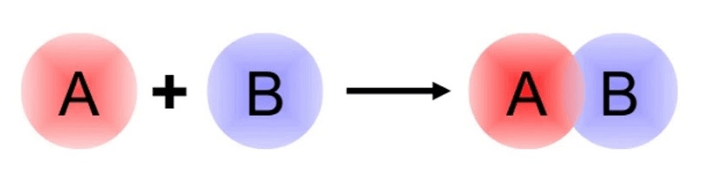
What is the type of reaction shown above?

a)

Synthesis

b)

Decomposition

c)

Single Replacement

d)

Double Replacement

7.
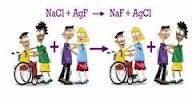
This pictures simulates what type of reaction?
a)
Synthesis
b)
Decomposition
c)
Single Replacement
d)
Double Replacement
8.

Identify the reaction type:

C2H6 + O2 --> CO2 + H2O

a)

Double replacement

b)

Synthesis

c)

Acid base

d)

Combustion

9.

Identify the reaction type for the following equation:

K + F2 --> KF

a)

Double replacement

b)

Single Replacement

c)

Synthesis

d)

Decomposition

10.

Identify the type of reaction:

ZnCl2 + Mg --> Zn + MgCl2

a)

Precipitate

b)

Single Replacement

c)

Double Replacement

d)

Decomposition

11.

PCl5 + ___ H2O → ___ HCl + H3PO4

a)

4, 5

b)

1, 6

c)

3, 8

d)

2,2

12.

__ Al + __ FeO → Al2O2 + __ Fe

a)

1, 1, 2

b)

2,1,2

c)

2, 2, 2

d)

2,4,2

13.
 Mg  +  ___ HCl  →   MgCl2  +   H2
a)
1
b)
2
c)
3
d)
4
14.
Which problem is balanced?
a)
PbO2 + 2H2
b)
SO2 + H20 --> H2SO4
c)
2Na + 2H2O --> 2NaOH + H2
15.
Balance this equation.
_CF4 + _Br2 -- _CBr4 + _F2
a)
2,1,2,1
b)
1,2,2,1
c)
1,2,1,2
d)
2,2,2,2
16.
What is the little number after an element in a chemical equation called.
Example: H2
a)
Coefficient 
b)
Subscript
c)
Atom
d)
Equation
17.
What does the Law of Conservation of Mass state?
a)
Matter cannot be gained or lost in a chemical reaction.
b)
Matter can only be lost in a chemical reaction.
c)
Matter can only be gained in a chemical reaction.
d)
Matter can be gained and lost in a chemical reaction. 
18.
Is the equation balanced?: 2H2O + O2 --> 4MgO + 3Fe
a)
Yes
b)
No
19.
Is this equation balanced?
a)
yes
b)
no
c)
Not enough information
20.
When balancing equations a ____ can be placed to the left of a formula of a substance to make the equations balanced
a)
charge
b)
subscript
c)
random number
d)
coefficient
21.

Balance this equation:

__H2+O2--> 2H2O

a)

2

b)

3

c)

4

d)

6

22.

Balance this equation:

F3+H3-->_HF

a)

2

b)

3

c)

4

d)

6

23.

Balance this equation:

Cu5+S5 --> _CuS

a)

2

b)

3

c)

4

d)

5

24.

Balance this equation:

C + __O --> CO2

a)

2

b)

3

c)

4

d)

5

25.

Balance this equation:

6FeO --> __Fe2 + 6O

a)

2

b)

3

c)

4

d)

5

26.

Balance this equation:

2H + _O + 2S --> 2HSO4

a)

2

b)

3

c)

4

d)

8

27.

Law of Conservation of mass says that: Matter _____ be created or Destroyed

a)

Cannot

b)

will

c)

better

d)

can

28.

Physical or Chemical change?: Cutting an apple in half

a)

Chemical

b)

Physical

29.

Which of these are Indicators of Chemical Reactions?

a)

Creation of Light

b)

Change in Odor

c)

Change in Temp

d)

Change in Color

e)

Melting

30.
Changes in size and shape are examples of ­­­­­_____ changes in matter.
a)
Physical
b)
Chemical
31.
True or false: Some physical changes involve chemical reactions.
a)
True
b)
False
32.
True or false: A physical change can result in an entirely different substance.
a)
True
b)
False
33.
Physical changes can be brought about by
a)
Cutting
b)
Bending
c)
Dissolving
d)
All of the following are correct.
34.
True or false: Physical changes include changes in the state of matter.
a)
True
b)
False
35.
Is melting butter for popcorn a chemical or physical change?
a)
chemical
b)
physical
36.
Which of the following is NOT an example of a physical change?
a)
crumpled paper
b)
pencil sharpening
c)
shrunken clothing
d)
rust
37.
A change where one or more new substances are created.
a)
Physical Change 
b)
Chemical Change 
38.
Fizzing, foaming, and burning are all examples of
a)
Chemical change
b)
Physical change
39.
When you break a cracker into pieces it is a...
a)
Chemical change
b)
Physical change
40.
Which of these is a result of a chemical change?
a)
A mixture
b)
A solution
c)
A new substance
d)
Melting or freezing
41.

KCl

a)

krypton chlorine

b)

potassium chlorine

c)

potassium chloride

d)

chlorine potasside

42.

Li2O

a)

lithium oxide

b)

dilithium oxide

c)

lithium dioxide

d)

lithium oxygen

43.

ZnO

a)

zinc oxygen

b)

zinc oxide

c)

oxygen zinc

d)

oxygen zincide

44.

MnBr4

a)

manganese bromide

b)

manganese bromine

c)

magnesium bromide

d)

magnesium bromine

45.

CaCO3

a)

calcium carbonide

b)

calcium carbonate

c)

calcium carbon oxide

d)

calcium carbon oxygen

46.

Ba(NO3)2

a)

barium nitrate

b)

barium nitride

c)

barium nitrogen oxide

d)

barium nitrite

47.

HCl

a)

hydrogen chloride

b)

hydrogen chlorine

c)

chlorine hydride

d)

chloride hydride

48.

CO2

a)

carbon monoxide

b)

carbon dioxide

c)

monocarbon dioxide

d)

carbon oxide

49.

NaHCO3

a)

sodium carbonate

b)

sodium hydrogen carbonate

c)

sodium carbonide

d)

sodium hydrogen carbonide

50.

PbCO3

a)

lead carbonate

b)

lead carbonide

c)

plutonium carbonate

d)

promethium carbonate

51.

Sodium bromide

a)

NaBr

b)

SoBr

c)

NaB

d)

SBr

52.

Potassium iodide

a)

KI

b)

PI

c)

KIo

d)

PIo

53.

Copper carbonate

a)

CuC

b)

CuCO3

c)

CoCO3

d)

CoCa

54.

What is the formula for copper(II) nitrate?

a)

CuNO3

b)

Cu2NO3

c)

Cu(NO3)2

d)

CuN

55.

What is the formula for aluminium oxide?

a)

AlO

b)

AlOx

c)

Al2O3

d)

Al3O2

56.

Calcium reacts with chlorine to form:

a)

CaCl

b)

Ca2Cl

c)

CaCl2

d)

CCl2

57.

Lead(II) carbonate has the formula:

a)

LeCO3

b)

PbC

c)

PbCO3

d)

Pb(CO3)2

58.

Magnesium sulfate has the formula:

a)

MSO4

b)

MgSO4

c)

Mg2(SO4)2

d)

MgS

59.

Barium sulfide has the formula:

a)

BaS

b)

Ba2S2

c)

BaSO4

d)

Ba(SO4)

60.

When magnesium and iodide react the product is:

a)

MgI

b)

MgIo

c)

MgI2

d)

Mg2I

61.

Solid carbon dioxide, more commonly known as dry ice, has the chemical formula _______.

a)

CO

b)

CO2

c)

CO3

d)

CH4

62.

Tetraphosphorus trisulfide has the chemical formula ________.

a)

P3S4

b)

P4S3

c)

F3S4

d)

F4S3

63.

NH3, more commonly known as ammonia, has the chemical name ________.

a)

Nitrogen Hydride

b)

Mononitrogen Trihydride

c)

Nitrogen Trihydride

d)

Mononitrogen Hydride

64.

Iron3+ combined with Oxygen gas, will form Iron (III) Oxide. This chemical is commonly found in metal that has been oxidized, giving a reddish orange color known as ________.

a)

Dust

b)

Glass

c)

Luster

d)

Rust

65.

Which of the following chloride compounds is considered a molecular compound?

a)

Aluminum Chloride

b)

Calcium Chloride

c)

Carbon Tetrachloride

d)

Hydrogen Chloride

66.

Hydrochloric acid, commercially known as muriatic acid, has the chemical formula ________.

a)

HCl

b)

HClO

c)

HClO2

d)

HClO3

67.

Acetic acid, having the formula CH3COOH or HC2H3O2, is commonly found in which condiment?

a)

Bagoong

b)

Patis

c)

Soy Sauce

d)

Vinegar

68.

Ca2+ combined with SO4-2 will form CaSO4, with a molecular ratio of _________.

a)

1:1

b)

1:2

c)

1:4

d)

2:2

69.

Using the classical system, Pb(NO3)4 has the chemical name _________.

a)

Lead (I) Nitrate

b)

Lead (IV) Nitrate

c)

Plumbic Nitrate

d)

Plumbous Nitrate

70.

What chemical will be formed from the combination of a hydrogen ion (H+) and a hydroxide ion (OH-)?

a)

Hydrogen Peroxide

b)

Table Salt

c)

Table Sugar

d)

Water

71.

When metals bond with non-metals they form what type of bonds

a)

molecular

b)

ionic

c)

cooperative

d)

lewis

72.
name the following ionic compound: NaF
a)
nitrogen fluorine
b)
sodium fluoride
c)
nitrogen fluoride
d)
sodium fluorine
73.
Name this compound: 
KF
a)
Potassium fluoride
b)
Potassium fluorite
c)
Fluorine potasside 
d)
Potassium fluorate
74.
The chemical formula of carbon tetrachloride is
a)
CCl
b)
C₄Cl
c)
CCl₄
d)
C(IV)Cl
75.
carbon monoxide
a)
CO
b)
CO2
c)
C2O
d)
COH
76.
Can be found on the periodic table
a)
Element
b)
Compound
c)
MIxture
77.
Classify: 
sulfur dioxide, SO2
a)
ionic compound
b)
molecular compound
c)
metallic element
d)
non-metallic element
78.
What types of elements combine to form a molecular compound?
a)
two or more metals
b)
two or more different nonmetals
c)
a metal and a non-metal
d)
two of the same nonmetal
79.
The chemical formula of dinitrogen textroxide is
a)
Ni₂O₄
b)
NiO
c)
N₂O₄
d)
NiO₂
80.

What is the official (IUPAC) name for H2O?

a)

Hydrogen Oxide

b)

Oxygen Dinitride

c)

Agua

d)

Dihydrogen Monoxide

81.
Which elements are found on the right side of The Periodic Table?
a)
Metals
b)
Nonmetals
c)
Metalloids
d)
Water
82.
Which of these metals is usually observed in a "liquid" state?
a)
Cadmium
b)
Indium
c)
Mercury
d)
Thallium
83.
Which of these compounds is ionic? 
a)
Carbon dioxide
b)
Dinitrogen Trioxide
c)
Silicon tetrachloride
d)
Lithium bromide
84.

What is the correct name of MgCl2?

a)

magnesium chlorine

b)

magnesium dichloride

c)

magnesium chloride

d)

magnesium (II) chloride

85.

What is the name for SO2?

a)

sulfur dioxide

b)

sulfur (II) oxide

c)

sulfur oxygen

d)

sulfur oxide

86.

What is the name for P2O5?

a)

phosphorus pentoxide

b)

diphosphorus pentoxide

c)

biphosphorus oxide

d)

phosphorus oxide

87.

LiBr is called

a)

lithium bromine

b)

lithium (I) bromine

c)

lithium bromide

d)

lithuim (I) bromide

88.

Which of these combinations is an ionic compound made of?

a)

Metal and Metal

b)

Nonmetal and Nonmetal

c)

Metal and Nonmetal

d)

Cation and Cation

89.

What is the name of the compound with the formula Ba3P2?

a)

barium phosphide

b)

barium diphosphide

c)

tribarium diphosphide

d)

barium phosphorous

90.

What is the name of P₄S₁₀?

a)

phosphorous sulfide

b)

phosphorus sulfite

c)

tetraphosphorus decasulfide

d)

tetraphosphide decasulfide