
 Worksheets
Compounds
Total questions: 50
Worksheet time: 32mins
What are the states of matter?
Define a liquid.
Indefinite shape, indefinite volume
Definite shape, definite volume
Found in stars
Definite volume, indefinite shape
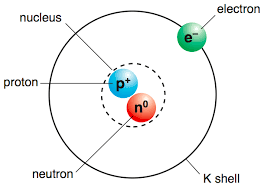
Which subatomic particles contribute the least to the mass of an atom?
Neutrons
Protons
Electrons
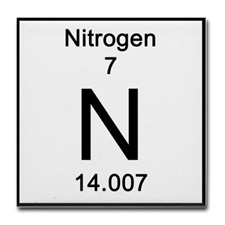

Where is the element's atomic MASS located?
at the top
at the bottom
the top number + the bottom number
the number of protons + the number of neutrons
Can compounds be found in the periodic table?
Yes
No
Is this an example of an element or a compound?
element
compound
Is this an example of an element or a compound?
element
compound
Select all the examples that are compounds.
CH4 (methane)
H2O2 (hydrogen peroxide)
NaCl (salt)
O (oxygen)
How many atoms of each element are in the following chemical formula? Si is silica and O is oxygen. Write your anwer as a complete sentence.
(rust) made up of?
3 oxygen
(a) elements are in H2O? (give a number as a answer.)
one carbon (C)
two oxygen (O)
How many atoms are represented in this compound? (Give your answer as a number.)
Na2CO3
(a)
How many elements are represented in the compound? (Give your answer as a number.)
Na2CO3
(a)
What is the difference between an element and a compound?
An element and a compound are the same thing
An element is made up of two or more different types of atoms, while a compound is made up of only one type of atom
An element is a pure substance made up of only one type of atom, while a compound is a substance made up of two or more different types of atoms chemically bonded together.
An element is a mixture of different substances, while a compound is a pure substance
Give an example of a compound.
Carbon dioxide (CO2)
Water (H2O)
Nitrogen (N)
Oxygen (O)
How are compounds classified?
Based on their taste and smell
Based on their chemical composition and structure
Based on their color and texture
Based on their size and weight
What are the two main types of compounds?
Metallic compounds and organic compounds
Ionic compounds and covalent compounds
Polar compounds and nonpolar compounds
Acidic compounds and basic compounds
Explain the difference between ionic and covalent compounds.
Ionic compounds are formed by the transfer of electrons between atoms, while covalent compounds are formed by the sharing of electrons between atoms.
Ionic compounds and covalent compounds are the same and can be used interchangeably.
Ionic compounds are formed by the sharing of electrons between atoms, while covalent compounds are formed by the transfer of electrons between atoms.
Ionic compounds are formed by the sharing of protons between atoms, while covalent compounds are formed by the transfer of protons between atoms.
What is a chemical formula?
A method for naming chemical elements
A way to represent the temperature of a chemical compound
A type of mathematical equation used in chemistry
A concise way of expressing information about the atoms that constitute a particular chemical compound.
How do you determine the formula of a compound?
By checking the weather forecast
By asking a friend
By identifying the elements present and their respective ratios in the compound.
By guessing randomly
What is a molecule?
A type of rock formation
A type of plant species
A unit of measurement for weight
A group of two or more atoms held together by chemical bonds.
Give an example of a molecular compound.
Oxygen (O2)
Calcium carbonate (CaCO3)
Water (H2O)
Sodium chloride (NaCl)
Explain the difference between a mixture and a compound.
A mixture and a compound are the same thing
A mixture is a pure substance, while a compound is an impure substance
A mixture is a combination of two or more substances that are not chemically combined, while a compound is a substance composed of two or more elements chemically combined in a fixed ratio.
A mixture is a substance composed of two or more elements chemically combined in a fixed ratio, while a compound is a combination of two or more substances that are not chemically combined
What type of bond is present in ionic compounds?
Covalent bond
Metallic bond
Ionic bond
Hydrogen bond
Give an example of an ionic compound.
Sodium chloride (NaCl)
Iron oxide
Calcium sulfate
Potassium nitrate
How do covalent compounds differ from ionic compounds?
Covalent compounds have high melting points, while ionic compounds have low melting points.
Covalent compounds involve sharing of electrons, while ionic compounds involve transfer of electrons.
Covalent compounds are always solid, while ionic compounds can be in any state of matter.
Covalent compounds involve transfer of electrons, while ionic compounds involve sharing of electrons.
Name a covalent compound.
Hydrochloric acid (HCl)
Salt (NaCl)
Carbon dioxide (CO2)
Water (H2O)
What is the general trend in melting points of ionic compounds?
Low
Constant
Fluctuating
High
Explain why ionic compounds are usually solid at room temperature.
Ionic compounds are solid at room temperature because they lack a lattice structure.
Ionic compounds are solid at room temperature due to the strong electrostatic forces of attraction between positive and negative ions in their lattice structure.
Ionic compounds are solid at room temperature because they contain only one type of ion.
Ionic compounds are solid at room temperature due to weak intermolecular forces.
What state of matter are most covalent compounds at room temperature?
Solid
Bose-Einstein condensate
Plasma
Gas or liquid
Why do covalent compounds generally have lower melting points compared to ionic compounds?
Weaker intermolecular forces
Stronger intermolecular forces
Greater electronegativity difference
Higher molecular weight
What is the melting point of most ionic compounds?
Low
Medium
Freezing
High
Give an example of a covalent compound that exists as a gas at room temperature.
Carbon dioxide (CO2)
Nitrogen gas (N2)
Hydrogen gas (H2) or oxygen gas (O2)
Chlorine gas (Cl2)
What type of compounds does carbon dioxide is?
inorganic compounds
organic compounds
Bread, rice and oats are a good source of carbohydrates. What type of compounds can we consider carbohydrates?
inorganic compounds
organic compounds
We need fuel for energy source and they can be found in fossils. Fossil fuel belongs to what type of compounds?
inorganic compounds
organic compounds
baking soda is a good cleaning agent, what type of organic compounds it belongs?
inorganic compounds
organic compounds
Alum "tawas" is an example of what compound?
inorganic compounds
organic compounds
Acetic acid is a compound found in vinegar, and we can produce it by using fermentation process. Acetic acid is what type of compound?
inorganic compounds
organic compounds
Vitamins that we can get from fruits and vegetables are examples of what compounds?
inorganic compounds
organic compounds
Urea (carbamide) is a useful fertilizer, what type of compounds is it?
inorganic compounds
organic compounds
motor vehicles produce CO and is a pollutant in air. This compound is an example of__________________?
inorganic compounds
organic compounds
If a compound is produced by nature and living organisms it is called_______.
inorganic compounds
organic compounds

