wayground logo

Free Printable Worksheets

Font size

S
M
L
XL
Worksheets

7/12

Total questions: 100

Worksheet time: 1hrs 15mins

Name
Class
Date
1.
What is atomic number?
a)
Number of protons in an atoms 
b)
Number of neutrons in an atom
c)
Mass of an atom
d)
Charge on an atom
2.
Which subatomic particles are found in the nucleus of an atom?
a)
Protons and Electrons
b)
Protons and Neutrons
c)
Neutrons and Electrons
d)
Protons, Neutrons and Electrons
3.
What electrical charge does a proton have?
a)
+1
b)
0
c)
-1
d)
+2
4.

What mass does a neutron have?

a)

1 amu

b)

0 amu

c)

-1 amu

d)

+2 amu

5.
The total number of protons and neutrons in an atom is called the...
a)
Atomic number
b)
Proton number
c)
Mass number
d)
Weight number
6.

How many protons does an aluminum atom have?

a)

27

b)

14

c)

40

d)

13

7.

How many electrons does a sodium atom have?

a)

23

b)

11

c)

12

d)

34

8.
Complete the missing label on the diagram.
a)
Neutron
b)
Centre
c)
Nucleus
d)
Sub atomic particle
9.
Atoms of the same element must always have the same number of _________
a)
electrons
b)
neutrons
c)
isotopes
d)
protons
10.

The _________ of an element equals the number of protons in an atom of that element.

a)

mass number

b)

atomic weight

c)

atomic number

d)

isotopes

11.
The __________ of an atom is the sum of the protons and neutrons in the nucleus of that atom.
a)
mass number
b)
atomic number 
c)
atomic weuight
d)
isotope weight
12.

The mass number of an element that has 18 protons, 18 electrons, and 19 neutrons is _____.

a)

12.5

b)

13

c)

25

d)

37

13.

What element has 9 protons, 9 electrons, and 10 neutrons?

a)

nitrogen

b)

oxygen

c)

fluorine

d)

neon

14.
What element is represented in this Bohr Model? 
a)
Carbon
b)
Hydrogen
c)
Aluminum
d)
Lithium
15.
Which particle is negatively charged?
a)
proton
b)
atom
c)
neutron
d)
electron
16.

What is the correct number of subatomic particles of a phosphorous atom with a mass of 31?

a)

p# - 15, n# = 15, e# = 15

b)

p# - 15, n# = 16, e# = 15

c)

p# - 15, n# = 15, e# = 16

d)

p# - 16, n# = 15, e# = 15

17.

What is the mass number of a nickel atom with 28 protons, 31 neutrons, and 28 electrons?

a)

31

b)

28

c)

59

d)

87

18.

How many neutrons does a silver atom with a mass of 108 amu have?

a)

47

b)

108

c)

61

d)

108

19.

What is the atomic number of a chlorine atom with a mass of 35 amu?

a)

17

b)

35

c)

18

d)

52

20.

Is the number below the element symbol on the periodic table the mass number?

a)

Yes!

b)

NO!!

21.
Subatomic particle with a charge of 0
a)
neutron
b)
proton
c)
electron
d)
quark
22.

Subatomic particles with a negative charge

a)

Electrons

b)

Neutrons

c)

Protons

d)

Quarks

23.
Subatomic particles with a positive charge
a)
neutrons
b)
atomic mass
c)
protons
d)
isotopes
24.

The smallest particle of an element.

a)

Element

b)

Molecule

c)

Atom

25.

These are found in the nucleus and have a neutral charge.

a)

proton

b)

electron

c)

neutron

26.
These will determine what element an atom is. 
a)
number of neutrons
b)
number of electrons
c)
number of atoms 
d)
number of protons 
27.

In an atom, the number of protons is equal to the number of ____________.

a)

energy levels

b)

neutrons

c)

neurons

d)

electrons

28.
What is the atomic mass of "F"
a)
9
b)
18
c)
17
d)
19
29.
An atom of the element with atomic number 6 always has _____.
a)
six protons in its nucleus
b)
an atomic mass of six
c)
more than six neutrons
d)
six electron clouds
30.
How many electrons does potassium K contain? (click to see image)
a)
19
b)
39
c)
20
d)
40
31.
How many protons are in this element?
a)
79
b)
196
c)
117
d)
Cannot be determined
32.

How many electrons does an Iodine atom have?

a)

53

b)

126

c)

73

d)

179

33.

How many neutrons does an Oxygen atom have?

a)

8

b)

16

c)

24

d)

7.999

34.
How many protons are in Beryllium?
a)
4
b)
9
c)
5
d)
2
35.
What is atomic number?
a)
Number of protons in an atoms 
b)
Number of neutrons in an atom
c)
Mass of an atom
d)
Charge on an atom
36.
Which subatomic particles are found in the nucleus of an atom?
a)
Protons and Electrons
b)
Protons and Neutrons
c)
Neutrons and Electrons
d)
Protons, Neutrons and Electrons
37.
What electrical charge does a proton have?
a)
+1
b)
0
c)
-1
d)
+2
38.

What mass does a neutron have?

a)

1 amu

b)

0 amu

c)

-1 amu

d)

+2 amu

39.
The total number of protons and neutrons in an atom is called the...
a)
Atomic number
b)
Proton number
c)
Mass number
d)
Weight number
40.
What element is represented in this Bohr Model? 
a)
Carbon
b)
Hydrogen
c)
Aluminum
d)
Lithium
41.

Which of the following statements is true about electrons?

a)

Adding or removing an electron from an atom changes the atomic mass.

b)

Adding or removing an electron from an atom changes the type of chemical element.

c)

Adding or removing an electron from an atom changes the net charge.

d)

Electrons are located in the nucleus of an atom.

42.

How do you estimate the atomic mass of an atom?

a)

The number of protons determines the atomic mass.

b)

You add electrons and neutrons.

c)

You add protons and electrons.

d)

You add protons and neutrons.

43.

The number of electrons an atom has depends on the number of _____.

a)

nuclei

b)

neutrons

c)

protons

d)

orbitals

44.

An atom can have a charge when the _____ number changes.

a)

neutron

b)

electron

c)

proton

d)

nuclei

45.

Which subatomic particles are located in the nucleus of an atom?

a)

electrons and protons

b)

protons and neutrons

c)

neutrons and electrons

d)

only protons

46.

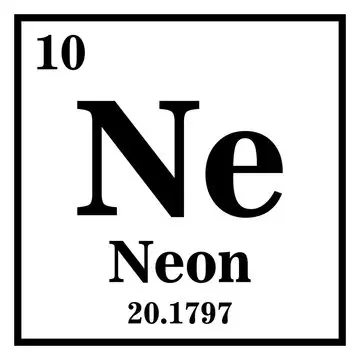
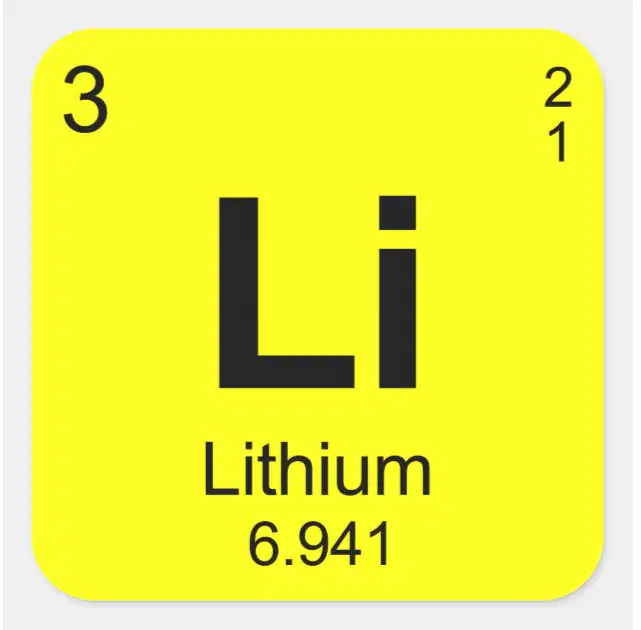
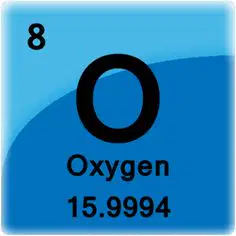
What is the atomic mass of the element in the periodic square?

a)

10

b)

20

c)

15

d)

5

47.

What is the atomic number of the element in the periodic square?

a)

3

b)

7

c)

2

d)

1

48.

How many protons are in the element on the periodic square?

a)

17

b)

35

c)

18

d)

8

49.

How many neutrons does the element on the periodic square have?

a)

4

b)

9

c)

5

d)

6

50.

How many electrons does the element on the periodic square have?

a)

8

b)

16

c)

15

d)

4

51.

Magnesium

a)

Mg

b)

Mn

c)

Me

d)

Ms

52.

Lithium

a)

Lh

b)

Lt

c)

Li

d)

Lm

53.

Lead

a)

Ld

b)

Pb

c)

Le

d)

La

54.

Aluminum

a)

Al

b)

Ai

c)

Am

d)

An

55.

Iodine

a)

I

b)

Io

c)

Id

d)

Ie

56.

Nickel

a)

Ni

b)

Nk

c)

Nc

d)

Nl

57.

Bromine

a)

Bm

b)

Br

c)

Bo

d)

Bn

58.

Oxygen

a)

O

b)

Ox

c)

Og

d)

Oy

59.

Copper

a)

Cu

b)

Cp

c)

Ce

d)

Cr

60.

Chlorine

a)

Ch

b)

Cl

c)

Co

d)

Cr

61.

Carbon

a)

C

b)

Ca

c)

Cr

d)

Cb

62.

Helium

a)

He

b)

Hl

c)

Hi

d)

Hu

63.

Iron

a)

Fe

b)

Ir

c)

Io

d)

In

64.

Tin

a)

Sn

b)

Ti

c)

Tn

d)

St

65.

Silver

a)

Ag

b)

Si

c)

Sl

d)

Sv

66.

Silicon

a)

Sl

b)

Si

c)

Sc

d)

Sn

67.

Platinum

a)

Pl

b)

Pn

c)

Pt

d)

Pm

68.

Phosphorus

a)

Ph

b)

P

c)

Ps

d)

Pr

69.

Flourine

a)

F

b)

Fl

c)

Fr

d)

Fn

70.

Hydrogen

a)

H

b)

Hd

c)

Hg

d)

Hy

71.
Which of the following is NOT one of the 4 most abundant elements in the human body?
a)
H
b)
C
c)
Fe
d)
O
72.
Which of the following are examples of Allotropes?
a)
Zinc and Zirconium
b)
Bromine-79 and Bromine-81
c)
Calcium Metal and Calcium Carbonate
d)
Red Phosphorus and White Phosphorus
73.
Which element is named after the person who first organized the periodic table of elements?
a)
Mendeleevium
b)
Einsteinium
c)
Nobelium
d)
Meitnerium
74.
Which of the following is a halogen?
a)
Krypton
b)
Bromine
c)
Potassium
d)
Bismuth
75.
Which of the following groups DOES NOT typically form compounds?
a)
Alkali Metals
b)
Alkaline Earth Metals
c)
Halogens
d)
Noble Gases
76.
All of the following are metals EXCEPT:
a)
Cu (Copper)
b)
Pb (Lead)
c)
Br (Bromine)
d)
Na (Sodium)
77.
In what year was the first periodic table of elements published?
a)
1705
b)
1769
c)
1869
d)
1805
78.
Based on the organization of the periodic table, periods:
a)
Contain A and B designations
b)
are vertical columns
c)
contain elements with similar behaviors
d)
are horizontal rows
79.
The box for an element on the periodic table will always include all the of the following EXCEPT:
a)
atomic mass
b)
proportions of the elements in a compound
c)
atomic number
d)
atomic symbol
80.
Elements in group 2 are also known as:
a)
Alkaline Earth Metals
b)
Halogens
c)
Noble Gases
d)
Alkali Metals
81.
How many naturally occurring elements are there?
a)
100
b)
118
c)
90
d)
2
82.
Elements that are between metals and nonmetals, and have characteristics of both are called?
a)
Metals
b)
Metalloids
c)
Nonmetals
d)
Halogens
83.
The majority of the periodic table of the elements consists of:
a)
Metals
b)
Nonmetals
c)
Halogens
d)
Metalloids
84.
The location of _____________ is group 15; period 3.
a)
N (Nitrogen)
b)
K (Potassium)
c)
P (Phosphorus)
d)
C (Carbon)
85.
Elements that are shiny and conduct heat and electricity are called:
a)
Nonmetals
b)
Metals
c)
Halogens
d)
Metalloids
86.

What is the charge of a proton?

a)

Positive

b)

Negative

c)

Neutral

d)

No charge

87.

What is the charge of an electron?

a)

Positive

b)

Negative

c)

Neutral

d)

No charge

88.

What is the charge of a neutron? (Two right answers)

a)

Positive

b)

Negative

c)

Neutral

d)

No charge

89.

Where are protons and neutrons found in an atom?

a)

Around the nucleus

b)

Outside the atom

c)

In the nucleus

d)

Doesn't exist

90.

Where are electrons found in an atom?

a)

Outside of the atom

b)

Outside of/around the nucleus

c)

In the nucleus

d)

Doesn't exist

91.

What is the overall charge of an atom?

a)

Positive

b)

Negative

c)

Neutral

d)

Doesn't exist

92.

The atomic number of an element tells you what about that element?

a)

Number of protons

b)

Number of neutrons

c)

Number of protons and electrons

d)

Number of electrons

93.

What does the atomic mass of an element tell you?

a)

Number of protons

b)

Weight of an element

c)

Number of electrons

d)

Number of neutrons

94.

What is the smallest unit of matter?

a)

Atoms

b)

Cells

c)

Molecules

d)

Organs

95.

How do you find the number of neutrons in an element?

a)

Atomic number

b)

Mass - atomic number

c)

Atomic mass

d)

Mass + atomic number

96.

What is the correct element symbol for calcium?

a)

C

b)

Ca

c)

O

d)

He

97.

What is the correct element symbol for oxygen?

a)

O

b)

C

c)

Ca

d)

He

98.

What is the correct element symbol for hydrogen?

a)

C

b)

Ca

c)

He

d)

H

99.

What is the correct element symbol for carbon?

a)

C

b)

Ca

c)

H

d)

He

100.

What is the correct element symbol for helium?

a)

C

b)

Ca

c)

He

d)

H