
Font size
 Worksheets
Chapter 2 Dipterans Part 1 Mosquito Biology Tutorial 2
Total questions: 33
Worksheet time: 19mins
What is the purpose of the scales on a mosquito's body?
Gives ability to stay afloat in water
Identification of species
Regulation of body temperature
Aiding in flight
Which part of the mosquito is used for gripping females during copulation?
Clasper
Cerci
Proboscis
Labium
Which of the following are the difference between Anopheline and Culicine mosquitoes?
Length of antennae in adult females
Presence of floats in eggs
Resting position of adults
The larval stages
What do mosquito pupae use to take in air?
Respiratory trumpets
Lungs
Skin
Gills
Which gas attracts mosquitoes?
H2O
O2
O3
CO2
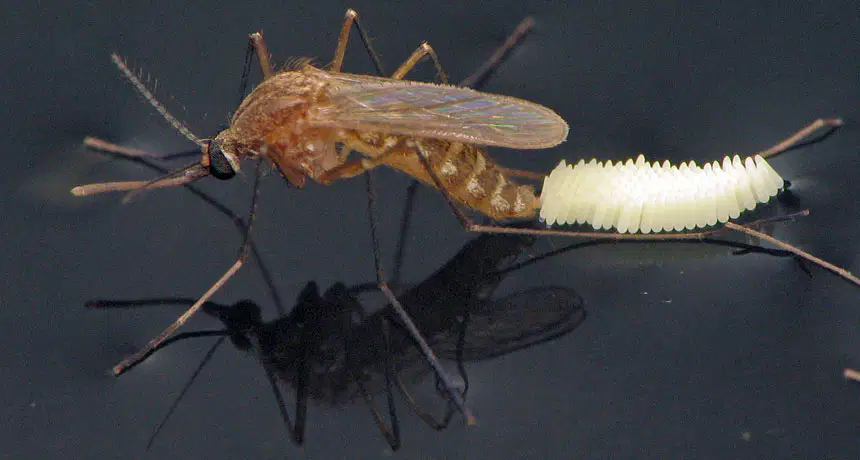
Can you identify these eggs?
Culex
Aedes
Anophelines
Mansonia
How do the mosquito larvae breathe?
Through respiratory openings near the tip of the
abdomen
By surfacing and gulping air with their mouths
Through respiratory openings near the tip of the
abdomen
Through gills located just behind the head
What do mosquito larvae primarily feed on?
Plant leaves
Yeasts, bacteria, protozoa, and other microorganisms
Blood
Small insects
What structure do mosquito larvae use to breathe?
Gills
Lungs
Siphon
Spiracles
What feature is used to differentiate male mosquitoes from female mosquitoes?
Males are larger in size
Males have bushier antennae
Males have longer palps
Males have shorter antennae
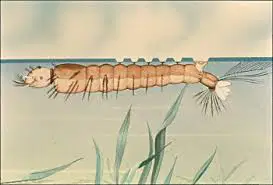
Identify the genus of the larvae.
Culex
Aedes
Anopheles
Mansonia
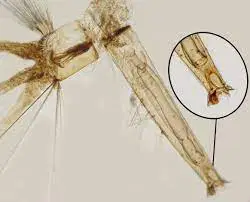
Identify the part shown in the diagram.
Haltere
Breathing trumpets
siphon
cerci

Sub family of the arthropod shown.
(a)

Name the species of arthropod shown.
(a)

Genus of the arthropod larvae shown.
(a)
Gender of the arthropod shown.
(a)

Genus of the arthropod larvae shown.
(a)

These eggs belong to which genus of mosquito?
(a)

Family of the arthropod shown
(a)
How many main regions are there on the insect body?
Two
Three
Four
None of the above

Genus of the arthropod shown based on the resting position.
(a)

Name the species of arthropod shown.
(a)
A proboscis is associated with which kind of mouthparts?
Sponging
None of these
Sucking
Chewing
Gender of the arthropod shown
(a)

Name the part shown in the larvae.
(a)
Some insects pass through four different stages of development before reaching maturity:
egg, larva, pupa, and adult. This series of changes is called
no metamorphosis.
gradual metamorphosis.
incomplete metamorphosis.
complete metamorphosis.
Which of the following is not a vector-borne disease?
Yellow fever
Dengue fever
Zika
Viral fever
Which of these arthropod groups does NOT have antennae?
insects
crustaceans
arachnids
centipedes
In the classification hierarchy, which grouping comes next in this series: Kingdom, Phylum, Class, ______?
Genus
Family
Species
Order
A proboscis is associated with which kind of mouthparts?
Sponging
Sucking
Chewing
None of these
Which of the following groups has an exoskeleton made of chitin?
Insects
Spiders
Crustaceans
all of the above
What is the disease agent of malaria?
Virus
Bacteria
Protist
Mosquito
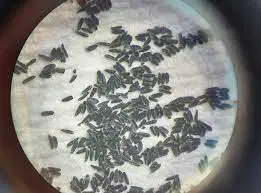
The following egg samples belong to mosquito of which genus?
(a)

