
 Worksheets
Characteristics & Needs of Living Things
Total questions: 65
Worksheet time: 5hrs 48mins
What are the four things that all living things NEED to survive?
A need is something a living thing must have to live.
True
False
Plants, animals and people are not living things.
True
False
An organism that can make its own food is called a producer or an________.
A consumer, also known as a _____________ is an organism that cannot make its own food; it must eat other organisms to survive.
They grow and devolop.
Which of the following is NOT a characteristic of all living things?
Made of cells
Water
Reproduces
Responds to surroundings
A(n) ___________ is a living thing.
rock
organism
table
pencil
Which of the following is NOT a need of living things?
Water
Food
Stable Internal Conditions
Grows and Develops

Bacteria is an example of a _______________ organism.
multicellular
unicellular
The prefix "multi" means ________.
One
More than one

A penguin is an example of a ______________ organism.
unicellular
single-celled
multicellular
Every living thing needs food to survive. Living things obtain their nutrients in different ways. Autotrophs are organisms who __________________________________.
cannot make their own food.
can make their own food.

A human is an example of a(n) ___________________, an organism who cannot make their own food.
heterotroph
autotroph
Identify the stimulus: You are walking home from school one day when a large dog jumps out at you from behind a tree. He starts to growl and shows his teeth. You quickly turn around and walk in the opposite direction.
Dog growling and showing teeth
Walking in opposite direction
Walking home from school
Tree
This need allows organisms to maintain stable conditions inside.
chemostasis
metastasis
homeostasis
hypostasis

What characteristics of living things is demonstrated in the picture?
reproducing
growing
getting and using energy
adapting over time

How do consumers (heterotrophs) get the energy they need to survive?


Green plants produce their own food through the process of photosynthesis. Which characteristic of life does this represent?
All living things use energy
All living things contain cells
All living things maintain homeostasis
All living things grow
A baby song bird hatches from its egg with both parent songbirds watching. Which characteristic of life does this represent?
All living things reproduce
All living things maintain homeostasis
All living things use energy
All living things grow
Over many hundreds of years, a population of rabbits living in the woods adapts to its surrounding with brown fur. Which characteristic of life does this represent?
All living things adapt to their environment
All living things grow
All living things use energy
All living things have cells

Identify the characteristic: a caterpillar hibernates in a cocoon and emerges as a butterfly.
All living things adapt to their environment
All living things use energy
All living things respond to their environment
All living things grow and develop

A pet goldfish needs fish food.
Which characteristic of life does this refer to?
Living things need energy
Living things are composed of one or more cells
Living things respond to their environment
Living things grow and reproduce
Living things maintain a stable internal environment
Which option is living?
Trees and leaves
Rocks
Lake
Fire
Fire has 6 of the 8 characteristics of life, which means it is living.
True
False
Something that has never shown the characteristics of life and never will:
dormant
nonliving
living
dead

Which of the following would be considered nonliving?
tree
bacteria
water
turtle
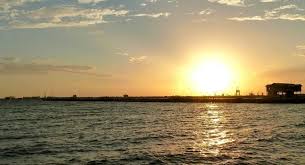
Biotic and abiotic?
Abiotic
Biotic
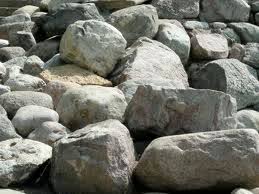
Biotic or abiotic?
Biotic
Abiotic
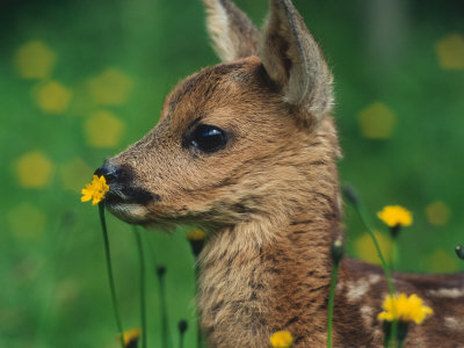
Biotic or abiotic?
Biotic
Abiotic
Nonliving elements in an ecosystem are called _______________.
biotic factor
abiotic factor
limiting factor
fear factor
Which of the following is an abiotic factor?
mushroom
air
elephant
coyote
Which of the following is a biotic factor?
sun
temperature
soil
grass
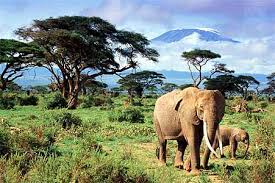
Temperature is an example of what kind of factor?
biotic
abiotic
dead
living


How are eukaryotic cells different from prokaryotic cells?
Eukaryotic cells have nuclei; prokaryotic cells don't
Eukaryotic cells are microscopic; prokaryotic cells are not
Eukaryotic cells contain genetic material; prokaryotic cells don't
Eukaryotic cells include bacteria; prokaryotic cells don't Prokaryotic


Organisms composed of many cells are called
Prokaryotic
Bacteria
Unicellular
Multicellular
Unicellular organisms are
Animals
Eukaryotic
Made of many cells
Made of one cell
All cells are divided into two different types of cells.
animal/plant
bacteria/plant
unicellular/multicellular
prokaryote/eukaryote
Which of the following is NOT a characteristic of a Prokaryotic cell?
unicellular
floating DNA
very small
complex
What are the 2 major types of cells?
animal and plant
animal and fungi
eukaryotic and prokaryotic
eukaryotic and animal
What are 4 things that ALL cells have in common?
nucleus, cell membrane, cell wall, and ribosomes
ribosomes, cell membrane, cytoplasm, and DNA
DNA, mitochondria, cell membrane, and ribosomes
Cytoplasm, cell membrane, ribosomes, and nucleus
Which statement was NOT included in cell theory?
All living things are composed of cells.
Living cells come only from other living cells.
Each cell contains a cell membrane, cytoplasm, nucleus, mitochondria, and endoplasmic reticulum.
Cells are the smallest structure of living things that can perform the functions necessary for life.

