
NEW
Font size
 Worksheets
ICPM 2 - Chapter 2
Total questions: 60
Worksheet time: 30mins
Which of the following is essential for implementing a successful total
quality management (TQM) program?
Resisting change in the organisation’s culture.
Attributing product defects to poor customer service.
Associating service defects to the production system.
Introducing a just-in-case inventory system.
Breaking down barriers between functions.

Users of Adobe Reader, created by Adobe Systems Incorporated, are
prompted to provide feedback on their experiences with the software in a
bid to improve the product. Adobe Systems Incorporated, in this case, is
trying to gain a competitive advantage through __________.
Superior efficiency
Superior infrastructure
Superior innovation
Superior speed and flexibility
Superior responsiveness to customers

Which of the following functions can help increase customer perceptions of
the utility of a company’s product through brand positioning and
advertising?
Design
Materials management
Production
Marketing
Customer service
Which of the following is a planning model that forces managers to choose
among competing projects so organisational resources are not spread
thinly over too many projects?
Six Sigma
Total quality management (TQM)
Stage-gate development Funnel
Product development plan
Business process reengineering

The process of designing the machine—worker interface operating system
efficiency is called __________.
Facilities layout
Flexible manufacturing
Process reengineering
Customer relationship management
Materials management

__________ is the graduate improvement and refinement of existing
products that occur over time as existing technologies are perfected.
Product development
Incremental product development
Quantum product innovation
Business process reengineering
Incremental product innovation

Which of the following should an organisation do in order to obtain a
competitive advantage through superior innovation?
Reduce the number of components that go into its products.
Decrease the number of product attributes and lower the price of its
products.
Set up a strong team to handle after-purchase support.
Produce products with technologies that have not been used
previously.
Provide high-quality products to create a brand-name reputation for its
products.

Which of the following is true about total quality management (TQM)?
Output goals and targets should include only numbers.
The number of steps to assemble a product should be increased.
Employees should be asked for suggestions about improvements.
Incentives such as bonus pay and promotional opportunities should be
eliminated.
A just-in-case inventory system should be introduced.

Which type of team members bear primary responsibility for the success of
a project and who stay with a project from inception to completion?
Utility team members
Product development members
Core members
Essential members
Sequential members

__________ is a technique that uses IT to develop an ongoing relationships
with the purchasers or buyers of an organisation’s product to maximize the
value an organisation can deliver to them over time.
Effective reliability management (ERM)
Organizational efficiency management (OEM)
Total quality management (TQM)
Continuous Innovation Management (CIM)
Customer relationship management (CRM)i

The development of a set of functional-level strategies that support a
company’s business-level strategy and strengthen its competitive
advantage is known as which of the following?
Total quality management
Human resource management
Value chain management
Materials management
Marketing management

Successful implementation of a total quality management (TQM) program
requires substantial cooperation between which of the following?
Regulators and the organization.
Customers and suppliers.
Different value chain functions.
Accounting and distribution functions.
Managers and stockholders.

Managers try to develop functional strategies that allow the organisation’s
value chain to deliver to customers __________.
Fewer product attributes at a lower price.
Smaller products at a higher price.
More product attributes at a higher price.
The same products at the same price.
The same product attributes at a lower price.

An organisation gains competitive advantage when it __________.
Lowers costs and decreases differentiation.
Increases costs and decreases differentiation.
Increases costs and increases differentiation.
Lowers cost and increases differentiation.
Increases costs and lowers prices.

To decrease product defects, materials managers must work closely with
___________ to improve the quality of the raw materials and obtained parts.
Suppliers
Customers
Employees
Stockholders
Distributors

Which of the following is not a product attribute or quality that most
customers prefer?
High-quality products
High prices
Products with valuable features
Customised products
Quick after-sales service

An organisation that is responsive to customers tries to satisfy their needs
and give them exactly what they want is a company attaining which of the
following?
Superior responsiveness to customers
Superior efficiency
Superior quality
Superior innovation
Superior speed and flexibility

__________ is a standard of excellence or superiority in a product or service.
Innovation
Uniqueness
Quality
Exceptionalism
Rarity

Which of the following is a written agreement that details product
development factors such as responsibilities, resource commitments,
budgets, time lines, and development milestones?
Contract book
Product development plan
Workflows
Business processes
Total quality management (TQM)

Which of the following is a set of activities and tasks that, once completed,
accomplish an organisational goal or add value to a product or service?
Workflows
Business processes
Quantum product innovation
Business process reengineering
Incremental product innovation

Which of the following is a strategy based on the use of IT to reduce the
costs associated with the product assembly processor the way services are
delivered to customers?
Six Sigma
Flexible manufacturing
Process reengineering
Niche marketing
Customer relationship management

A __________ is a plan of action to improve the ability of each of an
organisation’s departments to perform its task-specific activities in ways
that add value to an organisation’s goods and services.
Corporate-level strategy
Divisional-level strategy
Functional-level strategy
Business-level strategy
Branch-level strategy

Which of the following properly identifies the first step in the stage-gate funnel?
Draft a detailed product development plan.
Provide a list of technological requirements.
Encourage employees to come up with as many new product ideas as
possible.
Develop a detailed developmental budget.
Sign a written agreement that details factors such as responsibilities and
resource commitments.

Which of the following is a management strategy that focuses on
rethinking and redesigning workflows and business processes (the value
chain) from the ground up to achieve dramatic performance improvements
in cost, quality, speed, and service?
Workflows
Business processes
Quantum product innovation
Business process reengineering
Incremental product innovation

An organisation’s audit revealed that its customer support system is the
least effective department. The customer support system is a major source
of the organisation’s __________ defects.
Product
Manufacturing
Service
Distribution
Supply

According to Total Quality Management (TQM) philosophy, the __________,
not the __________ in quality control or engineering, define what quality is.
Managers; Customers
Customers; Managers
Employees; Managers
Managers; Employees
Employees; Customers

Which of the following should an organisation do in order to obtain a
competitive advantage through superior efficiency?
Make products that are much more reliable than the products available in
the market.
Reduce the number of inputs it requires to produce a given amount
of outputs.
Use technology to make its product unique and different when compared
to its rivals’.
Conduct surveys to determine whether a product will be successful in the
market.
Create products that will attract customers and charge a premium price
for those products.

An approach that creates teams of expert change agents known as “green
belts and black belts” to take control of problem finding, problem solving,
and training of other employees in implementing solutions is called
__________.
Total quality management
Continuous improvement
Six Sigma
Lean manufacturing
Return on quality (ROQ)

In a __________, machines are organised so that each operation needed to manufacture a product or process is performed at workstations arranged in a fixed sequence.
Process layout
Utility layout
Utility layout
Product layout
Fixed-position layout

A tire company’s products are more expensive than those offered by its
competitors, but are still sought after by customers since they are more
durable and perform better under harsh conditions. The tire company, in
this case, has achieved competitive advantage through __________.
Marketing strategies
Superior quality
Quantum product innovation
Pricing strategies
Promotional strategies

Which of the following is a measure of how well an organisation’s input
resources are used to produce its outputs?
Efficiency
Quality
Reliability
Flexibility
Responsiveness

__________ is the automation of business processes by coordinating tasks
between people and synchronising data between systems.
Workflows
Business processes
Quantum product innovation
Business process reengineering
Incremental product innovation

The __________ the input resources required to produce a given volume of
output, the __________ will be the efficiency of the operating system.
More; Higher
Fewer; Higher
Smaller; Lower
Fewer; Lower
Larger; Greater

Which of the following is the management of the value chain activities
involved in bringing new or improved goods and services to the market?
Product development
Incremental product development
Quantum product innovation
Business process reengineering
Incremental product innovation

Which of the following is an analytical tool that synthesises customer data
from a variety of sources to determine what customers want and value is
best?
Needs analysis
Value analysis
Value chain analysis
Customer relationship management (CRM)
Value chain management

The Donut House, a large donut bakery with outlets across several cities,
improves the quality of the dough it uses and introduces a wide range of
toppings and glazes to go with its donuts. This is an example of which of
the following?
Product development
Incremental product development
Quantum product innovation
Business process reengineering
Incremental product innovation

__________ is a plan that specifies all of the relevant information that
managers need in order to decide whether to proceed with a full-blown
product development effort.
Six Sigma
Total quality management (TQM)
Stage-gate development funnel
Product development plan
Business process reengineering

Which of the following is true of the impact of high-quality products?
High product quality results in high operating costs.
High product quality results in high employee productivity.
High product quality lowers efficiency.
High product quality reduces profits.
High product quality lowers customer retention.

Which of the following is a management technique that focuses on
improving attributes of an organisation’s products such as superior design,
features, reliability, and after-sales support?
Effective client management (ECM)
Organizational efficiency management (OEM)
Total quality management (TQM)
Product manufacture management (PMM)
Customer relationship management (CRM)

Which of the following functions is responsible for transforming creating,
assembling, or providing a good or service?
Materials management
Production
Customer service
Marketing
Sales

The stock of raw materials, inputs, and component parts that an
organisation has on hand at a particular time is called __________.
Storage
Inventory
Products
Stored components
Holdings
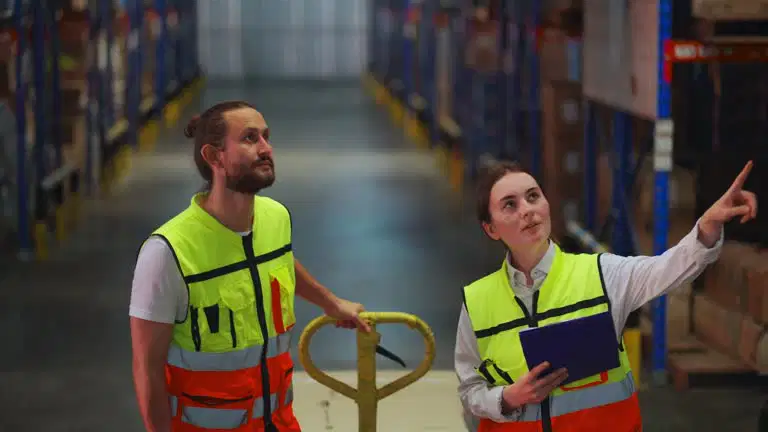
A system in which parts or supplies arrive at an organisation when they are
needed, not before is best known as a(n) __________.
Custom inventory system
Just-in-time (JIT) inventory system
Utility inventory system
Artificial intelligent inventory system
System Automated inventory (SAI) system

Six Sigma shares with TQM its focus on improving value chain processes to
increase __________.
Productivity
Quality
Innovation
Flexibility
Employee involvement

Which of the following is a potential outcome when organisations offer a
very high level of responsiveness to customers?
Quality of products will become low.
Customer satisfaction will decrease.
Company costs will become too high.
Customer relationship will not improve.
Production costs will decrease.

Self-managed teams use __________, in which different teams assemble
each component part and then send those parts to a final assembly team.
Process layouts
Fixed-position Layouts
Utility layouts
Product layouts
Sequential layouts
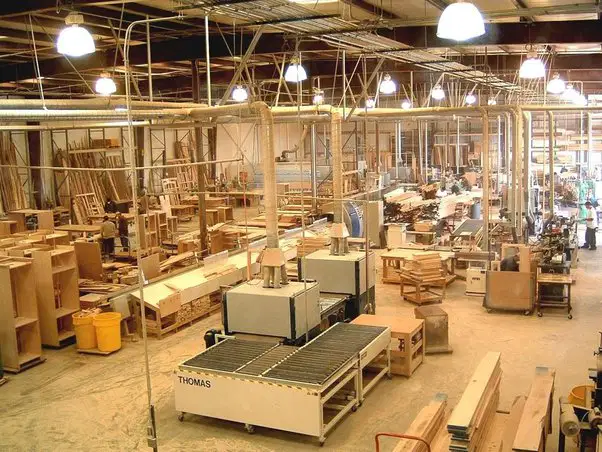
A firm manufacturers custom-made furniture based on customer
specifications. Which of the following facilities layouts would best suit the
firm’s needs?
Process layout
Fixed-position layout
Sequential layout
Product layout
Flexible manufacturing layout
In order to design for ease of production, a company should __________.
Adopt a challenging quality goal.
Design products that have fewer component parts.
Increase the average number of customer queries solved per day.
Decrease the number of employees performing a particular task.
Create an additional product to be supplied with a main product.
The goal of Six Sigma is to improve a company’s quality to only __________
defects per million by systematically altering the way all the processes
involved in value chain activities are performed.
Three
Ten
Thirty
Five
Three hundred
Which of the following must managers in product development avoid in
order to promote innovation and speed up production development?
Developing a structured process for evaluating ideas.
Funding too many project ideas at one time.
Providing incentives for employees to come up with ideas.
Allowing team members to brainstorm.
Establishing a stage-gate funnel.

The implementation of customer relationship management (CRM) is a
method of improving an organisation’s __________.
Inventory
Organisational structure
Responsiveness to customers
Product development plan
Facility layout
Which of the following is true about quantum product innovations?
Quantum product innovations are always more important than
incremental product innovations.
Quantum product innovations involve improving and refining existing
products.
Quantum product innovations are rarer than incremental product
innovations.
Quantum product innovations are more frequent than incremental
product innovations.
Quantum product innovations result largely from ongoing technological
advances.

A company with a strong __________ can create a perception of superior
value in the minds of its clients by solving client problems and supporting
clients after they have purchased its product.
Production function
Sales function
Customer service function
Marketing function
Materials management function

The main aim of flexible manufacturing is to __________.
Create products that can be modified easily.
Create a standard range of products.
Set up large workforces.
Improve an organization’s management systems.
Reduce the time required to set up production equipment.

The __________ function plays a crucial role in an organisation’s value chain
by locating customers and then informing and persuading them to buy the
company’s products.
Production
Materials management
Customer service
Marketing
Sales

A(n) __________ is a coordinated series or sequence of functional activities
needed to transform inputs into finished goods or services.
Operating system
Marketing function
Organizational hierarchy
Value chain
Customer relationship management system

An organisation that increases its quality can improve its profits by
__________ the prices of its products due to increased reliability and
__________ its operating costs due to increased productivity.
Increasing; Reducing
Reducing; Increasing
Increasing; Increasing
Decreasing; Reducing
Discounting; Increasing

Which of the following is essential for good value chain management?
The materials management function should hold greater inventories in
order to increase costs.
The marketing function should define business in terms of customer
needs rather than the type of products.
The production function should locate customers and persuade them to
buy the company’s products.
The sales function should control the movement of physical materials
from the procurement of inputs to delivery to the customer.
The customer service function should focus on offering high-quality
products at higher prices.

Illumin, a light bulb manufacturing company, strives to improve the
longevity and brightness of its bulbs by continuously changing designs and
trying different combinations of materials and component parts while
manufacturing them. This is an example of which of the following?
Product development
Incremental product development
Quantum product innovation
Business process reengineering
Incremental product innovation

Which of the following properly identifies the four steps in a needs
analysis?
Exploration, speculation and analysis, utilization, and evaluation
Speculation, data gathering and analysis, utilization, and evaluation
Exploration, data gathering and analysis, speculation, and evaluation
Exploration, data gathering and analysis, utilization, and evaluation
Exploration, data gathering and analysis, utilization, and speculation

__________ is the development of new, often radically different, kinds of
goods and services because of fundamental shifts in technology brought
about by pioneering discoveries.
Product development
Business processes
Quantum product innovation
Business process reengineering
Incremental product innovation

