
 Worksheets
Chapter 7 Microorganism
Total questions: 94
Worksheet time: 2hrs 41mins

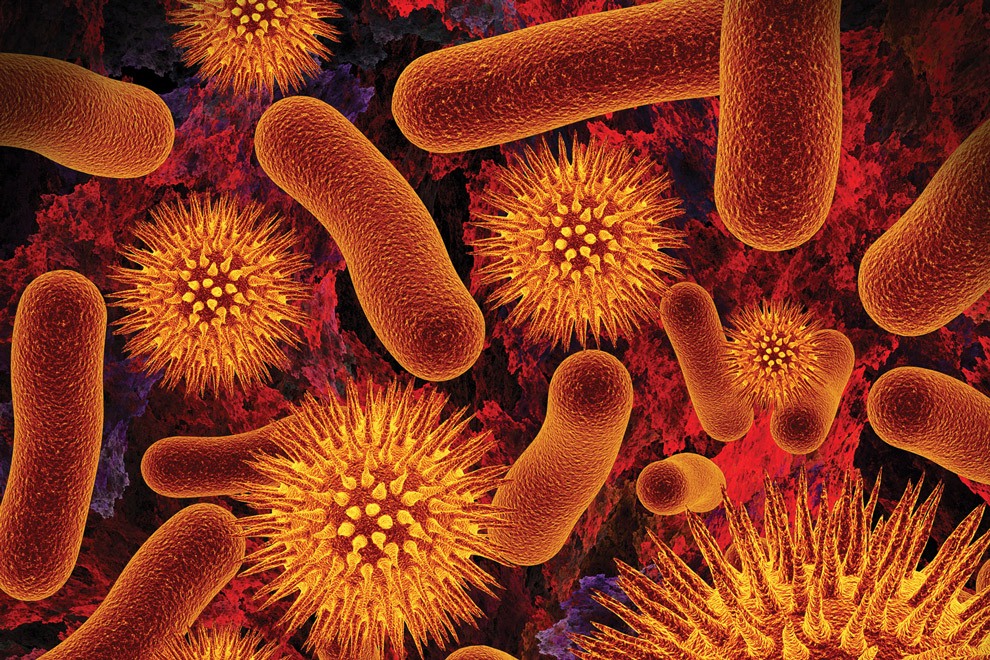


Yeast is used for making bread. Yeast is a
plant.
spice.
fungi.
bacteria.
Which microorganisms listed below can be harmful?
bacteria
fungi
protists
all of the above
Which statement is NOT true?
Microorganisms help dead things decay.
Microorganisms only live in soil.
Microorganisms cause disease.
Microorganisms are used to make cheese.

Diagram shows the food for a teenager at tea time.
Which of the following microorganisms is used to produce the food?
Yeast
Virus
Bacteria
Protozoa

Diagram shows two types of food.
Which of the following microorganisms is used to produce the food?
Yeast
Virus
Bacteria
Protozoa

Karen wants to make a soft bread for her daughter for breakfast.
Which microorganism is used?
Bacteria
Mucor
Protozoa
Yeast

Dead plants and animals in the soil are broken down into humus by the efforts of ......
bacteria only in the soil.
Viruses in the soil.
Fungi and viruses in the soil.
bacteria and fungi in the soil.
Mark three fields involved with the use of microorganisms
sport
industry
agriculture
medicine
_______________ are parasites, which means they can only survive inside the cells of other living things.
Viruses
Protozoa
Algae
Fungi
What is Malaria is caused by?
Protozoa
Virus
Algae
Bacteria
Which microorganisms have the ability to undergo photosynthesis process.
Fungi
Algae
Virus
Bacteria

What conclusion can you make based on the diagram above?
Microorganisms move
Microorganisms reproduce
Microorganisms breathe
Microorganisms grow

Most microorganisms cannot be seen without a ___________________.
binocular
smartphone
telescope
microscope

Yeast is used to make _______________.
doughnut
bun
bread
all of the above
Which best describes where you would find microorganisms?
in ponds, lakes, and oceans.
in animals, plants, and humans.
on food that has rotted.
everywhere around us.

Some microorganism helps dead things (plants and animals) _________________.
alive
decay
healthy
reproduce
Yeast is a type of ____________ that people use to make bread.
Bacteria
Algae
Protozoa
Fungi


The type of corona virus that is currently causing pandemic worldwide is
SARS
MERS
COVID-12
COVID-19

Organisms that cannot be seen with unaided eyes are?
Micrones
Microbials
Microorganisms
Microbiology
Helps to digest the food in your stomach.
Fungi
Algae
Yeast
Bacteria
_____________ can be many different sizes ranging from microscopic single celled yeasts used in bread making to macroscopic fungi which contain many cells such as moulds, mushrooms, and toadstools.
Protozoa
Fungi
Yeast
Algae
_____________ are single-celled spherical, spiral or rod shaped organisms.
Yeast
Algae
Penicillin
Bacteria
________________ come in many different sizes from microscopic single celled diatoms used in toothpaste to macroscopic alga which contain many like seaweed.
Algae
Fungi
Protozoa
Yeast
Which observation supports the claim that microorganisms are helpful to ecosystems?
Microorganism are to small to been seen without special equipment.
Microorganism need water and energy to survive.
Millions of microorganism can often be found in soil.
Microorganisms break down dead plants and animals, making nutrients available.
Some microorganism are harmful when they enter other living things and cause living things to ______________.
Grow quickly
Get sick
Reproduce
Produce Energy
An organism that gets energy by using dead organisms, nonliving materials, or waste as food.
Decomposer
Microorganism
Microscope
Beneficial
A scientific tool used to see small objects more clearly.
Microorganism
Decomposer
Beneficial
Microscope
A single-cell fungus
Health
Decomposer
Microorganism
Yeast
Are all microorganisms that live on and in us harmful?
Yes
No
Cells are the smallest things that exist.
True
False
Molecules are smaller than cells.
True
False
All living things are made of cells.
True
False
Some organisms are made of only one cell.
True
False
Which are bigger: humans or microorganisms?
humans
microorganisms
Mushrooms are a type of fungi
True
False
Is mold on food unsafe to eat?
No
Yes
Can fungus also cause other types of skin diseases?
Yes
No
What are the shapes of plant cells
Circles
Squares
Rectangles
Triangles
Micro means....
tiny
large
science
living
Bacteria is known as__________________ in an ecosystem when feeding on dead organisms.
Decomposers
Herbivore
Pathogens
Infections
Which observation supports the claim that microorganisms are helpful to ecosystems?
Microorganism are to small to been seen without special equipment.
Microorganism need water and energy to survive.
Millions of microorganism can often be found in soil.
Microorganisms break down dead plants and animals, making nutrients available.
What is a food chain?
The flow of energy from one thing to another
The way animals eat each other
The way the sun makes everything
How the plants grow

What do plants need to make their own food?
Sun, Water, and Animals
Sun, Coke, and Soil
Sun, Water, and Soil
Nothing at all
An example of a predator:
shark
mouse
rabbit
An example of prey:
lion
mouse
shark


Food webs show you everything an animal eats. Food chains show you one thing.


This organism is most likely
A primary consumer
A secondary consumer
A decomposer
A producer
Which of the following animals are herbivores?
I Goat
II Bear
III Lion
IV Squirrel
I and II
I and IV
II and III
III and IV
What are plants and animals that get their energy from eating other things?
Producers
Consumers
decomposers
herbivores
Which of the following animals are carnivores?
I Tiger
II Eagle
III Rabbit
IV Chicken
I and II
I and IV
II and III
III and IV

Which type of consumer is always a primary consumer?
Herbivore
Omnivore
Carnivore
Producer
Several food chains linked together make up
food web
food pyraid
ecosystem
_________ is a model that shows the path of energy as it flows from living to another.
food chain
model
food web
Energy goes from
producers to consumers
consumers to producers
decomposers to producers

Look carefully at the image. Which organism is tertiary consumer?
bird
lizard
grasshopper

There are 5 units of pesticide in the leaves, if the beetle eats 5 leaves, how many units of pesticides inside the beetle?
10 units
30 units
25 units
50 units
Plants are called producers because they can produce their own:
music
food
air
A living thing that breaks down dead plants and animals - such as, fungi, worms, bacteria, is:
decomposer
food web
omnivore
An animal that is hunted and eaten by another animal:
predator
prey
scavenger

Are fungi and bacteria same?
Yes
No
Decomposers get _____________ and energy while breaking down dead organisms and animal wastes.
nutrients
helium
oxygen
carbon dioxide

Identify the decomposer in the image given.
bacteria
virus
fungi
protozoa

