
 Worksheets
Foundations of the Universe Study Guide
Total questions: 67
Worksheet time: 2hrs 51mins
The atomic mass is the
number of protons and neutrons inside the nucleus
number of electrons or protons
number of protons, neutrons and electrons
All matter is made of _________.


What does the nucleus of an atom contain?
Electrons and neutrons
Protons and neutrons
Neutrinos and positrons
DNA and RNA
Identifies the number of protons in an atom's nucleus.
Electron Cloud
Atomic Theory
Atomic Number
Mass Number

The negatively charged particles in an atom
Proton
Electron
Neutron
Electron Cloud

The part of an atom where electrons are likely to be found.
Proton
Atom
Electron Cloud
Neutron


The subatomic particles that make up an atom.
solid, liquid, gas
electrons, protons, nucleus
energy, protons, nucleus
electrons, protons, neutrons

The number of protons in an atom is called the...
Mass
Atomic Number
Nucleus
Orbital
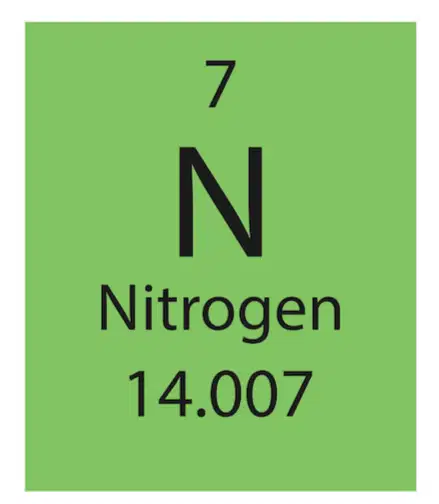
The mass number of an atom is the mass of ______ + ______
protons + neutrons
protons + electrons
neutrons + nucleus
protons + nucleus
If there are more protons than electrons, the atom is ______ charged.
positively
negatively
neutral
If there are more electrons than protons, the atom is _______ charged.
positively
negatively
neutral
_____ have a smaller mass than protons and neutrons.
isotopes
electrons
ions
breons
The separate atoms that make up a wooden table cannot be seen because the atoms are
too small
moving too fast
packed lightly together
hidden beneath the surface

What is the ATOMIC NUMBER in this element tile?
28
Ni
Nickel
58.693

What is the CHEMICAL SYMBOL in this element tile?
10
Ne
Neon
20.18

What is the charge of a neutron?
Positive
Negative
Neutral
Depends on the atom
Which subatomic particle is found outside the nucleus?
Proton
Neutron
Electron
Quark
Which of the following are compounds?
o3
H2O
N2
CO2
NaCl

Which of the following is a molecule?
He
H2
H20

What is the picture showing?
Atom
Element
Molecule
Compound

A _____ is a substance made by combining two or more different materials in such a way that no chemical reaction occurs.
Element
Compount
Molecule
Mixture
which of the following is a diatomic element?
HF
CO
CO2
H2
Which of the following describes a diatomic element?
two or more different elements that are bonded
two of the same elements that are bonded
Which of the following describes a monatomic element?
a single atom of hydrogen
three hydrogen bonded
.
The law of conservation of mass states that
matter can not be created or destroyed
matter can be destroyed
matter can be created
matter not change
.
If you have water as a product of a chemical reaction, which of the following could have been one of the reactants?
The reactants could include H2
NaCl
The reactants must include H2O
Students were looking at chemical reactions to investigate the law of conservation of mass. Of the following equations, which one does not follow the law of conservation of mass?
2HCl + Ca(OH)2
--> CaCl2 + 2H2O
Ca + O2 --> CaO
Q.
How could a student prove the law of conservation of mass during a chemical reaction?
boil the chemical reaction
light the chemicals on fire
measure the mass only before the reaction
measure the mass before and after the reaction
Conductivity (the ability to transfer heat and electricity) is most closely associated with which group of elements?
Non Metals
Metals
Metalloids
How do we find the number of valence electrons that an atom has?
Look at the atomic number.
It is the same as the number of protons.
Subtract the atomic number from the atomic mass.
Look at the group number for that element.
Families on the periodic table are grouped by their....
Atomic Number.
How different their properties are.
How similar their properties are.
How they look.
What is special about group 18 (Noble Gases)?
They react freely with most other elements.
They are inert (non-reactive).
They are conductive.
The Noble Gases only react with metals.
How many valence electrons do the Alkali Metals (Family 1) have?
1
2
10
8
The vertical columns on the periodic table are known as...
Groups
Periods
Cohorts
Columns
The horizontal rows on the periodic table are known as...
Groups
Periods
Cohorts
Columns
The period that an atom is on tell us the number of...
Protons
Electron Shells
Valence Electrons
Neutrons
Where can you find the Halogens on the periodic table?
Group 1
Group 2
Group 17
Groups 18
Which of the following is a compound?
Na
Cl2
H2O
Au

How many protons does this atom have?
238
92
146
330
Which group is the most reactive on the Periodic table?
Alkali Earth Metals
Noble Gases
Halogens
Alkali Metals
Why are valence electrons important?
They balance out the charges from the protons.
They are used in bonding.
They keep the atom stable.
They are not important to the atom.

Using the table above, what can you infer about this element?
It is most likely a liquid metal.
It is most likely a solid metal.
It is a metalloid.
It is a non-metal.
Which of the following is an example of measuring density?
comparing cubes that float or do not float
putting a cube on a scale.
Which of the following are compounds?
o3
H2O
N2
CO2
NaCl
A _____ is a substance made by combining two or more different materials in such a way that no chemical reaction occurs.
Element
Compount
Molecule
Mixture
Which of the following describes a diatomic element?
two or more different elements that are bonded
two of the same elements that are bonded
Which of the following describes a monatomic element?
a single atom of hydrogen
three hydrogen bonded
.
The law of conservation of mass states that
matter can not be created or destroyed
matter can be destroyed
matter can be created
matter not change
Q.
How could a student prove the law of conservation of mass during a chemical reaction?
boil the chemical reaction
light the chemicals on fire
measure the mass only before the reaction
measure the mass before and after the reaction

