
Font size
 Worksheets
Cell Structure and Function Quiz
Total questions: 41
Worksheet time: 26mins
Which of the following is a characteristic organelle of prokaryotic cells?
Nucleus
Ribosome
Mitochondria
Golgi apparatus
What is the primary function of the mitochondria in eukaryotic cells?
Protein synthesis
Energy production
Photosynthesis
Waste removal
Which structure is unique to plant cells and provides rigidity and support?
Cell membrane
Cell wall
Lysosome
Centriole
What is the main function of the cell membrane in animal cells?
Photosynthesis
Structural support
Regulating the movement of substances in and out of the cell
Protein synthesis
Which of the following is a key difference between plant and animal cells?
Presence of a nucleus
Presence of mitochondria
Presence of a cell wall
Presence of ribosomes
Which organelle is responsible for photosynthesis in plant cells?
Mitochondria
Chloroplast
Ribosome
Nucleus
What is the function of ribosomes in both prokaryotic and eukaryotic cells?
DNA replication
Protein synthesis
Lipid synthesis
Energy production
Which of the following is not found in prokaryotic cells?
Cell membrane
Nucleus
Ribosome
Cytoplasm
What is the primary function of the Golgi apparatus in eukaryotic cells?
Energy production
Protein modification and sorting
DNA replication
Photosynthesis
Which of the following structures is found in animal cells but not in plant cells?
Chloroplast
Cell wall
Centriole
Large central vacuole
Which organelle is known as the "powerhouse of the cell" in eukaryotic cells?
Nucleus
Mitochondria
Ribosome
Endoplasmic reticulum
What is the function of lysosomes in animal cells?
Protein synthesis
Digestion of macromolecules
Photosynthesis
Energy production
Which of the following is a function of the cell membrane?
DNA replication
Protein synthesis
Selective permeability
Photosynthesis
Which structure is responsible for maintaining cell shape and protecting the cell in plant cells?
Cell membrane
Cell wall
Nucleus
Mitochondria
Which of the following is a characteristic of eukaryotic cells but not prokaryotic cells?
Presence of ribosomes
Presence of a nucleus
Presence of a cell membrane
Presence of DNA
What is the role of the endoplasmic reticulum in eukaryotic cells?
Energy production
Protein and lipid synthesis
DNA replication
Photosynthesis
Which of the following is a function of the large central vacuole in plant cells?
Energy production
Storage of nutrients and waste products
Protein synthesis
DNA replication
Which of the following is a function of the nucleus in eukaryotic cells?
Energy production
Storage of genetic information
Protein synthesis
Photosynthesis
Which organelle is responsible for packaging and distributing proteins in eukaryotic cells?
Endoplasmic reticulum
Golgi apparatus
Ribosome
Lysosome

Which organelle is this?
mitochondria
nucleus
ribosome
Golgi apparatus

Which organelle is this?
mitochondria
nucleus
ribosome
Golgi apparatus

Which organelle is this?
mitochondria
nucleus
ribosome
Golgi apparatus

Which organelle is this?
mitochondria
nucleus
ribosome
Golgi apparatus

Which organelle is this?
centrioles
endoplasmic reticulum
lysosome
cytoskeleton

What is below A?
cytoplasm
mitochondrion
contractile vacuole
cell membrane

What is below B?
ribosome
cytoplasm
lysosome
food vacuole

Which of the following is involved with facilitated diffusion?
d
e
f
g

Letter Z
is a transport protein
is cholesterol
is a phospholiped
is ATP

Which is a cholesterol?
a
b
c
d

What part is hydrophilic?
D
E
H
I

Where are the fatty acids?
E
F
G
H
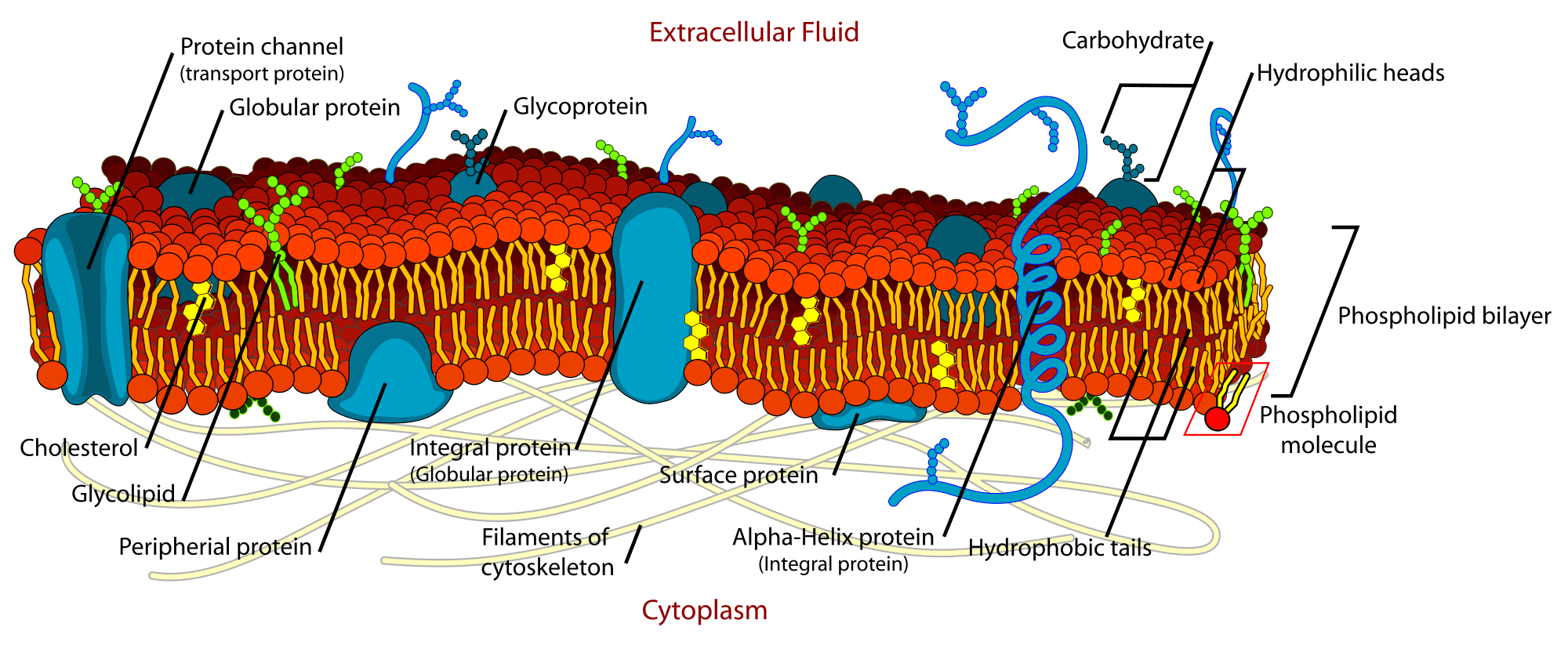
What is this image?
cell membrane
proteins
carbohydrates
The term "fluid" applies to the cell membrane because...
Cell membranes only allow SOME molecules to pass across the membrane
Cell membranes are able to flow
Cell membranes are made from a variety of different molecules

The term "mosaic" applies to the cell membrane because...
cell membranes are able to bend, stretch and change shape
Cell membranes are able to flow
Cell membranes are made from a variety of different molecules

The majority of the cell membrane is made of which macromolecule?
Phospholipids
Carbs
Proteins
Nucleic acids

The 'membrane' pictured below would not be able to form because
the 'heads' would repel each other
the 'tails' would repel water on either side
the cell membrane isn't a bilayer
the membrane does not contain phospholipids

Analyze the cell membrane diagram. Identify the letter that is considered hydrophobic.
F
G
H
B

Select ALL that describe the cell membrane.
Selectively Permeable
Fluid Mosaic
Nucleus
Phospholipid Bilayer

