wayground logo

Free Printable Worksheets

Font size

S
M
L
XL
Worksheets

0.0 ALL Questions 92

Total questions: 93

Worksheet time: 1hrs 22mins

Name
Class
Date
1.
A prediction or guess based on observations.
a)
data
b)
scientific process
c)
hypothesis
d)
question
2.

The information you collect while doing your experiment is called

a)

conclusions

b)

data

c)

hypotheses

d)

procedures

3.
The independent variable is the ONE thing you _____.
a)
change on purpose
b)
control or keep constant
c)
measure
4.

The variable that is being measured or observed is called the _______________. Hint: this is the variable that is the result or effect

a)

independent variable

b)

dependent variable

c)

control variable

5.

What is a constant/control in an experiment?

a)

Things that do not change in a experiment. It's the variable that stays the same. You can have many variables stay the same.

b)

It's the variables that the scientist changes in the experiment

c)

It's the variables that are being measured in an experiment

6.
What is being changed in this experiment?
a)
ramp height
b)
the speed that the ball rolls
c)
type of ball
7.
What is being kept constant?
a)
ramp height
b)
speed of the ball rolling
c)
type of ball
8.

How many independent variables should you have in an experiment?

a)

two

b)

as many as possible

c)

four

d)

one

9.
What is the Responding (Dependent) Variable in this graph?
a)
Plant Growth
b)
Growth (cm)
c)
Hours
d)
15
10.

What is the dependent variable of the graph?
a)
Grade
b)
Number of Students
11.

A student wants to test the effects of different types of exercise on heart rate.  What would be the dependent variable of the experiment?

a)

the measurement of heart rate

b)
type of exercise
c)
amount of exercise
d)
time of day exercise occurs
12.
What would the INDEPENDENT variable be in an experiment testing which  paper airplane design goes furthest?
a)
the paper used
b)
the paper airplane design
c)
the distance of each plane's flight
d)
how hard the plane is thrown
13.
Josie was performing an experiment where she grew the same kind of tomatoes in the same soil and amount of water.  She sat one in the sun and one in a closet for 14 days.  What is the independent variable in Josie's experiment?
a)
tomatoes
b)
soil
c)
sunlight
d)
water
14.

Which of the following shows the correct sequence for the scientific method inquiry?

a)

Conclusion, Experimentation, Hypothesis, Observation

b)

Observation, Experimentation, Hypothesis, Conclusion

c)

Observation, Hypothesis, Experimentation, Conclusion

d)

Experimentation, Conclusion, Observation, Hypothesis
15.

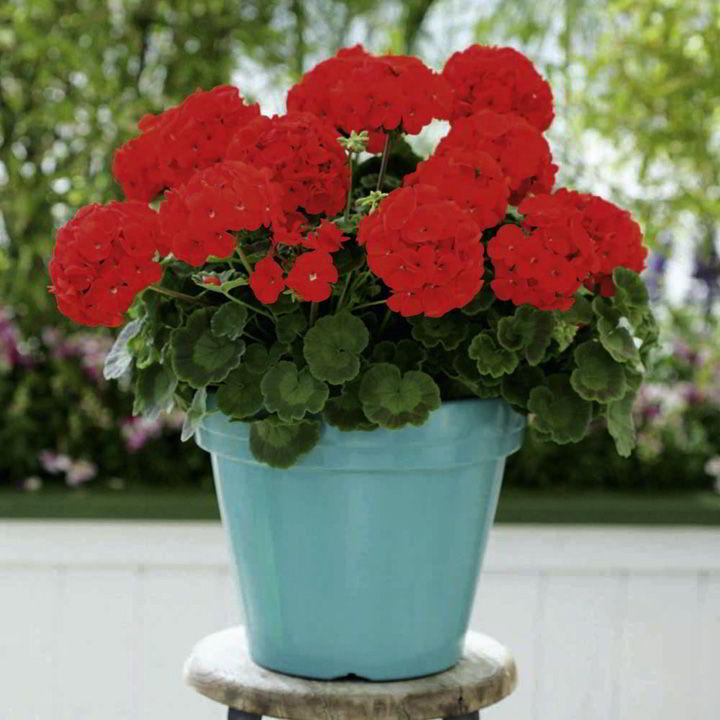
Susan said, “If I fertilize my geranium plants, then they will have more flowers.”

a)

recognize a problem

b)

test the hypothesis with an experiment

c)

form a hypothesis

d)

draw conclusions

16.
A series of steps used by scientists to solve a problem or answer a question. 
a)
scientific method
b)
recipe
c)
data collection
d)
metric system
17.
Which is NOT a step in the scientific method?
a)
Make observation
b)
Form a theory
c)
Collect data
d)
Form a hypothesis
18.
A testable explanation to a problem that has not yet been tested. 
a)
data
b)
theory
c)
hypothesis
d)
fact
19.
Testing a hypothesis often involves a(n):
a)
answer
b)
experiment
c)
problem
d)
safety check
20.
This variable in an experiment is the one being changed by the scientist. 
a)
dependent variable
b)
independent variable
c)
data
d)
control group
21.
The summary at the end of an experiment that explains the results. 
a)
conclusion
b)
procedures
c)
materials
d)
responding variable
22.
The name of the information that you get from your experiment (you organize it into charts and graphs).
a)
observations
conclusion
b)
data
c)
variables
d)
hypothesis
23.
An experiment is performed on plants to see how different liquids affect plant growth. Each plant in the experiment is given a different liquid; water, apple juice, or milk. Each plant has the same amount of soil, sunlight, and listens to the same music. In this investigation, the independent variable is ...
a)
The type of plant
b)
The amount of sunlight
c)
The type of music
d)
The type of liquid
24.
Dependent variable means
a)
the scientist controls what to test
b)
educated guess
c)
ask a question
d)
what is being measured
25.
If you increase the amount of spinach you eat, then you will increase the iron in your blood. 
What's the dependent variable?
a)
increase the amount of iron in your blood
b)
spinach you eat
26.
If I ride my bike to school instead of walking, then I will get to school faster. What is the dependent variable?
a)
True
b)
How fast you get to school
c)
Riding a bike or walking
d)
False
27.
Will a construction paper air plane fly faster than an airplane made from notebook paper? Choose the best hypothesis.
a)
If I make a paper airplane from notebook paper, then it will fly faster than construction paper.
b)
Yes.
c)
No.
d)
I think the construction paper air plane will fly faster.
28.
If I study for my scientific method test, then I will have a better test score. What is the dependent variable?
a)
Scientific Method
b)
Studying
c)
Independent variable
d)
Test score
29.
If I read this question carefully, then I will answer it correctly. What is the independent variable?
a)
I hope so
b)
Yes
c)
Reading or not reading carefully
d)
Likelihood of a correct answer
30.
You use the scientific method all the time to solve everyday problems.
a)
True
b)
False
31.
This is the group that we will compare our experimental group to. This group stays "normal."
a)
Control Group
b)
Experimental Group
c)
 Normal Group
d)
Weird Group
32.
This is the group that is affected by the independent variable or the group that is changed.
a)
Control Group
b)
Experimental Group
c)
Changed Group
d)
Cool Group
33.
After you write your conclusion, it is important to share your results with others. 
a)
True
b)
False 
34.
True or False: Your hypothesis can never be wrong.
a)
True
b)
False
35.
In a controlled experiment, how many variables can be worked with at a time? 
a)
one
b)
none
c)
two or more
d)
how ever many makes sense.
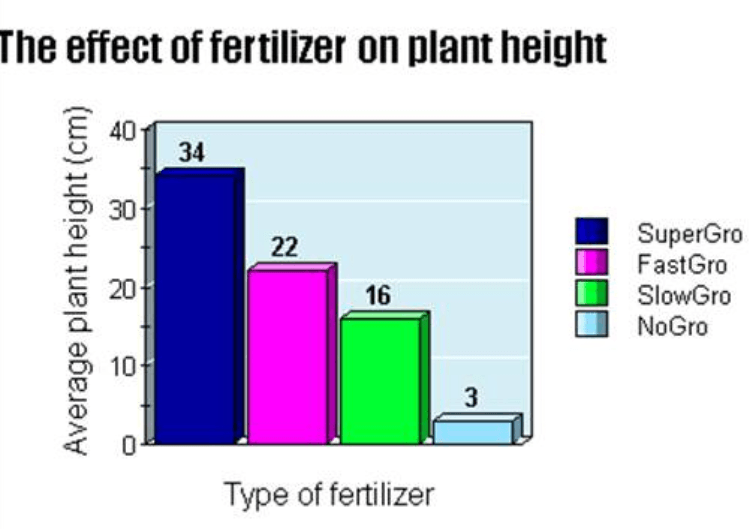
36.

What is the independent variable?

a)

Type of fertilizer

b)

Average plant height

c)

The effect of fertilizer on plant height

d)

The effect of plant height on fertilizer

37.

What is the title of this graph?

a)

Type of fertilizer

b)

Average plant height

c)

The effect of fertilizer on plant height

d)

The effect of plant height on fertilizer

38.

What is the dependent variable?

a)

Type of fertilizer

b)

Average plant height

c)

The effect of fertilizer on plant height

d)

The effect of plant height on fertilizer

39.

What is the BEST title for this graph?

a)

The Relationship between Time Spent Studying and Test Grades

b)

The effect of Time Spent Studying and Test Grades

c)

Time Spent Studying

d)

Test Grades

40.

What is the independent variable for this graph?

a)

The Relationship between Time Spent Studying and Test Grades

b)

The effect of Time Spent Studying and Test Grades

c)

Time Spent Studying

d)

Test Grades

41.

Which discipline division awarded the least degrees?

a)

Pyschology

b)

Business

c)

Engineering

d)

Education

e)

Visual & Performing Arts

42.

What is the best TITLE for this graph?

a)

The effect of missed free throws on wins

b)

The relationship between missed free throws and wins

c)

Number of missed free throws

d)

Number of wins

43.

Which variable always goes on the y-axis (vertical)?

a)

Independent

b)

Dependent

c)

Constant

d)

Control

44.

What is the independent variable on this graph?

a)

Year

b)

Number of Visitors

c)

Visitors to a Park

d)

none of these

45.

How many people visited the park in 1997?

a)

20

b)

40

c)

60

d)

50

e)

35

46.
In which year did exactly 60 students have scholarships?
a)
2010
b)
2011
c)
2012
d)
2013
47.
In August, how many metric tons did Clark's Paper Mill and Tyler Paper Mill produce all together?
a)
10
b)
70
c)
80
d)
90
48.
After the refrigerator, which appliance is used the most on weekdays?
a)
Television
b)
Heater
c)
Lights
d)
Computer
49.
Which appliance is used twice as many hours on the weekends as it is on weekdays?
a)
Lights
b)
Computer
c)
Refrigerator
d)
Television
50.
What is this graph showing you?
a)
The worlds population is staying the same.
b)
The worlds population is going down (decreasing).
c)
The worlds population was growing but now is decreasing.
d)
The worlds population has been growing and will continue to grow. 
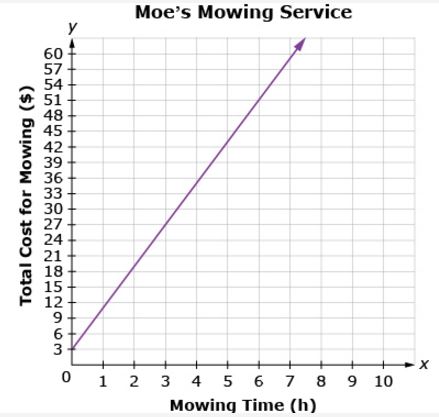
51.
What is the general trend of this line graph?
a)
The more you mow, the less money you make.
b)
You make the same amount of money regardless of how long you mow.
c)
The more you mow, the more money you make.
d)
Mowing is dangerous.
52.

Which month had the biggest difference between the high and low temperatures?

a)

January

b)

April

c)

October

d)

November

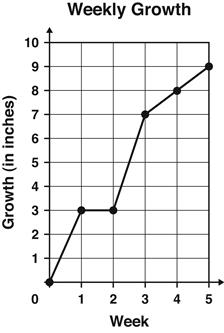
53.

The graph shows the number of inches a plant grew each week.

Between which 2 weeks did the plant grow the MOST?

a)

Week 1 and Week 2

b)

Week 2 and Week 3

c)

Week 3 and Week 4

d)

Week 4 and Week 5

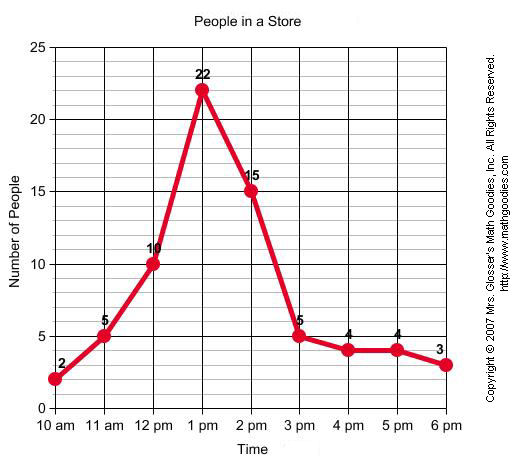
54.
Between which two times was the greatest increase in number of shoppers?
a)
12pm and 1pm
b)
1pm and 2pm
c)
2pm and 3pm
d)
10am and 11am
55.

Why are graphs and charts important to analyze data?

a)

Graphs and charts are important to analyze data because we would never be able to know what is going on with the data.

b)

Graphs and charts are important to analyze data because teachers say they are important.

c)

Charts and graphs is something good to do because they are nice to look at.

d)

Charts and graphs allow a person to visualize data and find patterns and trends in the data.

56.
Which part of the cell cycle is the briefest?
a)
interphase
b)
cell division
c)
cytokinesis
d)
There is not enough information to determine the answer
57.

The pie chart shows the colours of 32 beads. How many green beads are there?

a)

90

b)

8

c)

11

d)

9

58.

Using one or more of your senses to gather information is called

a)

Inferring

b)

Observing

c)

Predicting

d)

Hypothesizing

59.

An educated guess or testable prediction is a

a)

theory

b)

law

c)

hypothesis

d)

conclusion

60.

Observations that deal with a number or amount are called

a)

qualitative

b)

quantitative

61.

The Skittles are yellow, red and green is an example of _____.


a)

qualitative observations

b)

quantitative observations

c)

hypothesis

62.

The statement that correctly lists the steps of the scientific method in order is ______

a)

conclusion- research-hypothesis-ask a question

b)

ask a question-hypothesis- experiment-collect data and analyze

c)

conclusion-hypothesis-research-experiment

63.

The part of an experiment that doesn't change is a _____.


a)

control

b)

constant

c)

conclusion

64.

The steps commonly used by scientists in gathering information to test hypotheses and solve problems are called _____.

a)

scientific inquiry

b)

hypothesis

c)

scientific method

65.

The variable that is changed by the scientist to test a hypothesis is called the _________________________ .

a)

dependent variable

b)

independent variable

c)

control

66.

A process that uses observation and experimentation to gain knowledge about events in nature is _________________________.

a)

gravity

b)

scientific method

c)

science

67.

A prediction about a problem that can be tested is ____________________

a)

variable

b)

hypothesis

c)

theory

d)

law

68.
How many variables should be changed in a simple experiment?
a)
5
b)
3
c)
1
d)
6
69.

Which characteristic is shown in the image?

a)

Organisms grow and develop

b)

Organisms react to stimuli

c)

Organisms can adapt

d)

Organisms use and obtain energy

e)

Organisms are made up of cells

70.

Which characteristic is shown in the image?

a)

Organisms reproduce

b)

Organisms react to stimuli

c)

Organisms can adapt

d)

Organisms use and obtain energy

e)

Organisms are made up of cells

71.

Which characteristic is shown in the image?

a)

Organisms reproduce

b)

Organisms react to stimuli

c)

Organisms can adapt

d)

Organisms use and obtain energy

e)

Organisms are made up of cells

72.

Which characteristic is shown in the image?

a)

Organisms reproduce

b)

Organisms react to stimuli

c)

Organisms can adapt

d)

Organisms use and obtain energy

e)

Organisms are made up of cells

73.

In the image shown, what is the stimulus?

a)

the plant bending towards the light

b)

the light source

74.

In the image shown, what is the response?

a)

the plant bending towards the light

b)

the light source

75.

Which is NOT an example of adaptation?

a)

camels have humps that store fat for extended periods without food

b)

animals have special membranes in the back of their eyes to help them see in the dark

c)

fishes have gills to breath underwater

d)

white pigeons are easily spotted by predators

76.

Choose the statement(s) TRUE for ALL organisms

a)

have cells

b)

can move

c)

grow or develop

d)

use sunlight to make food

e)

have features that help them adapt

77.

Any living thing is called a _____________.

a)

organism

b)

cell

c)

matter

d)

atom

78.

The basic unit of living things are known as ____________.

a)

cells

b)

matter

c)

atom

d)

organism

79.
A worm turns away from light is an example of a worm
a)
reproducing
b)
doing cellular respiration
c)
having cells
d)
responding to its environment
80.
Which of the following characteristics of living things best explain a cat having a litter of kittens?
a)
living things respond to their environment
b)
living things maintain homeostasis
c)
living things reproduce
d)
living things are based on a genetic code
81.
Which of the following characteristics of living things best explains why humans sweat when they get hot?
a)
maintaining a stable internal enviornment
b)
growth and development
c)
using energy
d)
ability to reproduce
82.
Fire is an example of a(n) __________.
a)
something alive
b)
something non-living
83.

Biology is the study of...

a)

living things

b)

gravity

c)

chemical reactions

d)

social relationships

84.

All living things ___ to the environment in order maintain homeostasis.

a)

grow

b)

respond

c)

consume

d)

evolve

85.

Regulating the body in order to keep a constant internal state

a)

stimuli

b)

irritability

c)

homeostasis

d)

survive

86.

_____ is all the chemical processes that happen in an organism, many of which help the organism use and store energy.

a)

virus

b)

metabolism

c)

evolution

d)

response

87.
This picture is a good example of
a)
Growth
b)
Development
c)
Organelle
d)
Cell
88.
This picture is a good example of
a)
Growth
b)
Development
c)
Organelle
d)
Cell
89.

Responding to change helps an organism to survive. Which are a response to change in an environment? There are two correct choices.

a)

A cell reproduces asexually.

b)

You get hot and sweat.

c)

A cell only grows in a certain environment.

d)

Hummingbirds migrate to the south for the winter.

90.
Which one of these is NOT one of the characteristics of living things?
a)
All living things drink water.
b)
All living things are composed of one or more cells.
c)
All living things grow develop and have life spans.
d)
All living things reproduce.
91.
Which one of these is NOT one of the characteristics of living things?
a)
All living things eat.
b)
All living things reproduce.
c)
All living things require energy for life processes.
d)
All living things respond to the environment/stimuli.
92.
Which one of these IS one of the characteristics of living things?
a)
All living things have levels of organization
b)
All living things have nuclei.
c)
All living things are prokaryotes.
d)
All living things are eukaryotes.
93.

Which of the following is a quantitative observation?

a)

The temperature is 25°C

b)

The liquid is blue

c)

The solution is clear