
 Worksheets
Revision Quiz
Total questions: 63
Worksheet time: 21mins
What is the typical annual temperature range in an equatorial climate?
5°C
15°C
25°C
32°C
Which of the following is NOT a characteristic of hot desert climates?
Very hot days
Cold nights
High levels of humidity
Low and irregular rainfall
What type of rainfall is most common in equatorial regions?
Orographic rainfall
Frontal rainfall
Convectional rainfall
Cyclonic rainfall
In hot desert climates, what causes the large temperature difference between day and night?
Proximity to the sea
Lack of cloud cover
High altitude
Ocean currents
Which factor is most important in determining global temperature patterns?
Ocean currents
Altitude
Latitude
Cloud cover
What is the average annual rainfall in many equatorial regions?
Less than 500 mm
Between 500-1000 mm
Between 1000-1500 mm
Over 2000 mm
Which of the following is a characteristic of equatorial climates?
Distinct seasons
Low humidity
Variable cloud cover
Strong winds within forests
What is the primary cause of low rainfall in hot desert regions?
Low pressure systems
High pressure systems
Cold ocean currents
Mountain barriers
How does proximity to the sea affect coastal climates?
It causes extreme temperature fluctuations
It leads to higher rainfall in deserts
It moderates temperature extremes
It increases wind speeds significantly
Which factor contributes to the formation of hot deserts near cold ocean currents?
Increased evaporation
Reduced evaporation
Higher rainfall
Warmer air temperatures
What is the main effect of cloud cover on temperature?
It increases daytime temperatures
It has no effect on temperature
It decreases nighttime cooling
It increases temperature range
What is the primary cause of deforestation in tropical rainforests?
Natural disasters
Climate change
Urban expansion
Agriculture and logging
What is it called when an animal has a feature or behaviour that helps it survive in its environment?
habitat
environment
adaptation
climate
True or False? All deserts are very hot.
True
False

Where do cacti store water?
in their needles
in their roots
in their stems
in their flowers
How much rain do deserts get each year?
Less than 250 mm
More than 250mm
300mm
800 mm
Name the main characteristics of a hot desert
High daytime temperatures, low night time temperatures, low rainfall
High daytime temperatures, high night time temperatures, low rainfall
Low daytime temperatures, high night time temperatures, high rainfall.
Low daytime temperatures, low night time temperatures, high rainfall
Deserts are located in areas of...
High pressure
Low pressure
Which is the driest place in the world
Sahara
Mojave Desert, USA
Namib Desert
Atacama Desert
What term is used to describe the growing in size of the world's deserts?
Sand expansion
Desertification
Deserting
Expanding
How have plants adapted to survive in the desert?
They have large root systems to collect water
They store water in their leaves and trunks
They have sharp spines to protect them from animals
All of the above
What does it mean when animals are described as nocturnal?
They don't need a lot of water
They sleep during the day and come out at night
They have an internal cooling system that helps them survive in the desert
They hibernate during the winter
Most deserts are found between what degrees north and south of the equator?
10 to 30 degrees
20 to 40 degrees
20 to 35 degrees
0 to 20 degrees
It refers to the angular distance of a place north or south of the earth's equator.
Globe
Latitude
Proximity
Altitude
It is the height of an object or point in relation to sea level or ground level.
Direction
Proximity
Latitude
Altitude
Which of the following is not a characteristic of hot deserts
High humidity
Very hot during daytime
Very cold during night time
Warm, dry winds
Which of the following is true?
Windspeed in rainforests is high.
Solar radiation is dispersed near the equator.
In equatorial climates there is high diurnal temperature range.
Regions with equatorial climates receive less amount of rainfall.
An equatorial climate is usually found in ____________.
30 degree N and S of the equator
20 and 25 degrees N and S of the equator
10 to 15 degrees N and S of the equator
10 to 15 degrees from the N and S pole
Which of the following is not a characteristic of an equatorial climate?
Rainfall is mainly correctional
Lack of seasons
Cloud cover varies
High diurnal temperature range
Which can be a difference between equatorial and hot desert climates?
Presence of vegetation
Lack seasons
High temperatures
Amount of rainfall
Which of the following can measure the maximum and the minimum temperature during a given time period.
Six's maximum and minimum thermometer
Fahrenheit thermometer
Kelvin thermometer
Isotherms
Barometer measures atmospheric pressure in which units?
Millibar
Isobar
gram per meter
tons

Identify the weather instrument
Hygrometer
Anemometer
Wind vane
Barometer
Instrument used to measure humidity in air is known as?
Anemometer
Hygrometer
Rain gauge
Barograph
How often should standard rainfall measurements be taken?
Every hour
Every 24 hours
Every 12 hours
Every 48 hours
What height should a rain gauge be positioned at above ground level?
30 cm
50 cm
100 cm
150 cm
The difference between dry and wet bulb thermometer readings helps calculate:
Wind speed
Relative humidity
Air pressure
Rainfall intensity
Which of these is NOT typically housed in a Stevenson screen?
Maximum-minimum thermometer
Rain gauge
Wet bulb thermometer
Dry bulb thermometer
What should be the orientation of a Stevenson screen's door?
Facing East
Facing West
Facing North
Facing South
The ideal location for weather instruments should be:
On a concrete surface
Under trees
On open, level ground
Next to buildings
A Campbell-Stokes recorder measures:
Hours of sunshine
UV radiation
Cloud cover
Wind direction
Which weather element is measured in oktas?
Wind speed
Cloud cover
Rainfall
Air pressure
Conditions over the atmosphere over a short period of time is called ______________________.
Humidity
Weather
Temperature
Climate
Conditions over the atmosphere over a long period of time (extended period of time) is called ______________________.
Humidity
Weather
Temperature
Climate
Which picture shows an anemometer?


Select the answer that displays the picture of a barometer.
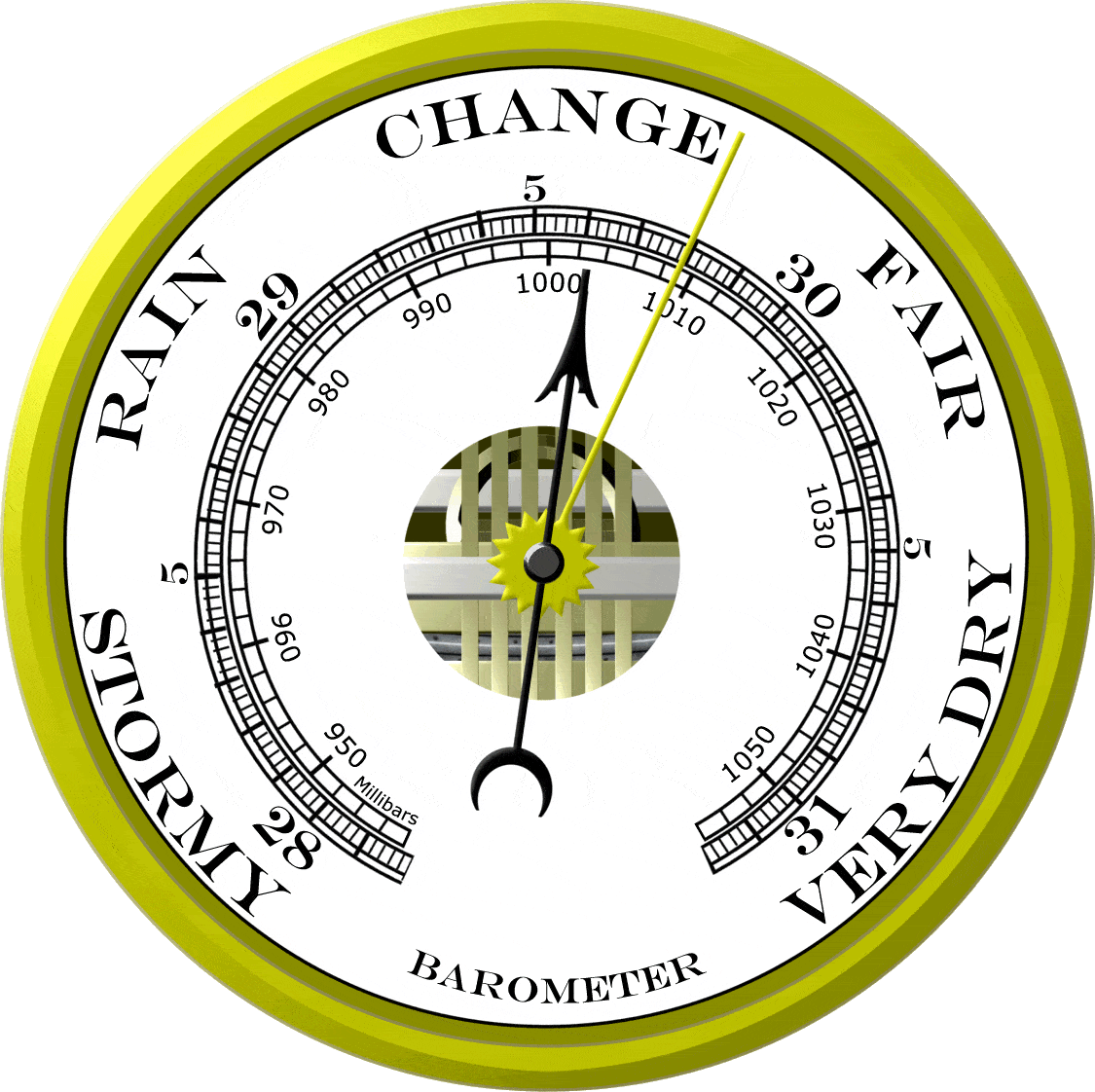
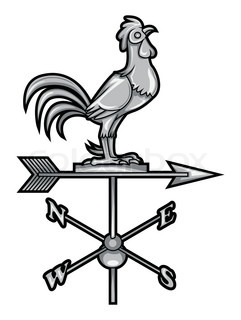
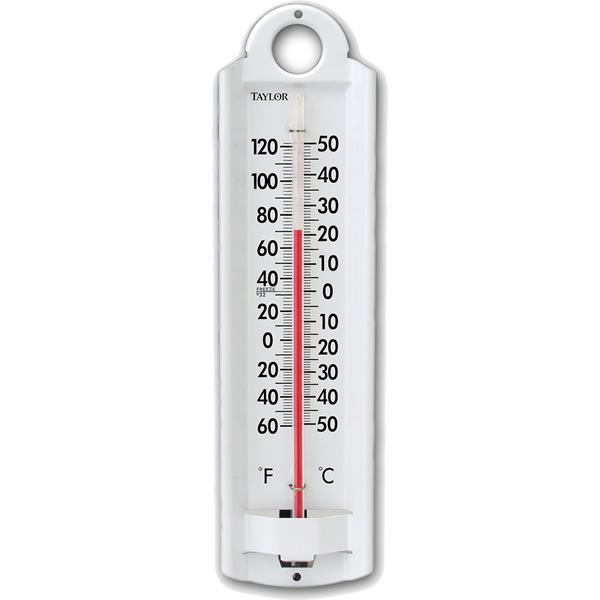

What is the name of the weather instrument pictured here?
Ananometer
Barometer
Rain Gauge


During which part of the water cycle do clouds form?
condensation
transpiration
precipitation
evaporation

Clouds that look like fluffy, rounded piles of cotton are _________________ clouds.
cirrus
cumulonimbus
cumulus
stratus

What is the dew point?
the temperature at which condensation begins
the temperature at which frost turns to dew
the temperature present in a cloud
the temperature present when a storm begins

Which type of cloud often indicates that a storm is on the way?
cirrus
cumulonimbus
cumulus
stratus

Which two conditions are required for cloud formation?
high humidity & warm temperatures
high humidity & cool temperatures
warm temperatures & the presence of particles
cool temperatures & the presence of particles
What does nimbus mean ?
Fluffy clouds
Rain producing clouds
Clouds that don't produce rain
Wispy clouds

