
NEW
Font size
 Worksheets
Doppler effect
Total questions: 74
Worksheet time: 2hrs 35mins

Changing the ____ will most affect the velocity of a wave? / ¿Cambiar el ____ afectará más la velocidad de una onda?
Frequency
Medium
Wavelength
Amplitude
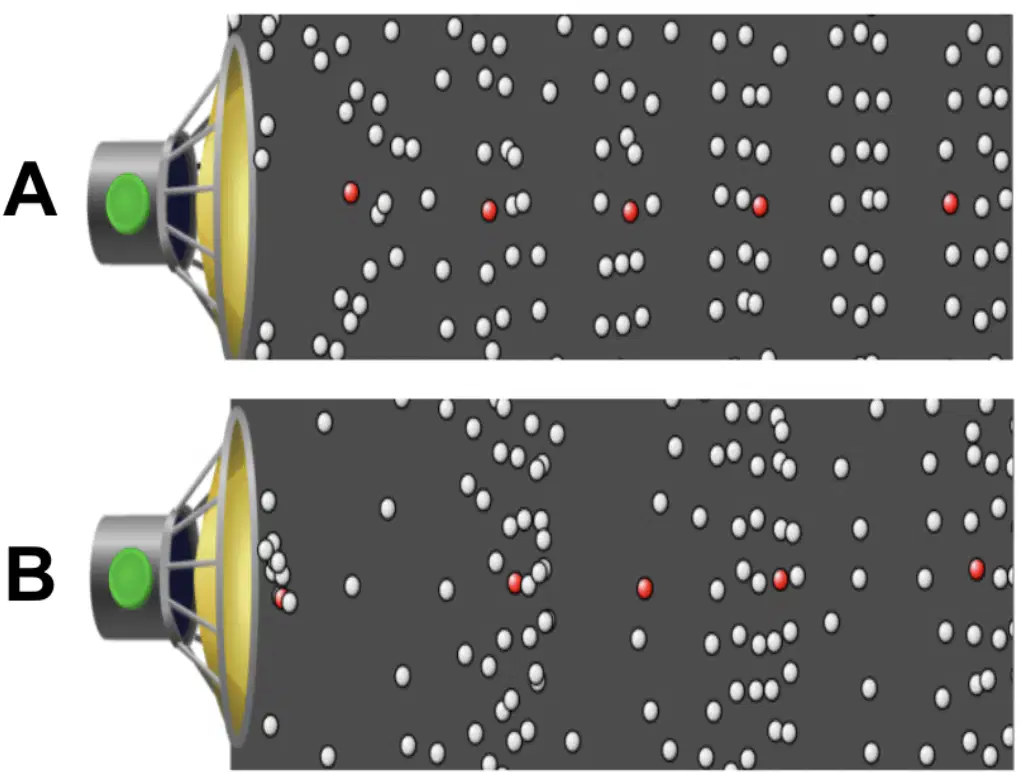
Which sound wave is moving faster? / ¿Qué onda de sonido se mueve más rápido?
A
B
Both the same / Ambos iguales

Which color has the greatest velocity? / ¿Qué color tiene la mayor velocidad?
Red / Rojo
Purple / Morado
Both are equal / ambos son iguales
Which color has the greatest frequency? / ¿Qué color tiene la mayor frecuencia?
Red / Rojo
Purple / Morado
Both are equal / ambos son iguales

Waves to the right of the source have a greater ___ / Las ondas a la derecha de la fuente tienen un ___ mayor
frequency
velocity
wavelength
All of the above
Waves to the right of the source have a smaller ___ / Las ondas a la derecha de la fuente tienen una menor
frequency
velocity
wavelength
All of the above
Waves to the left of the source have a greater ___ / Las ondas a la izquierda de la fuente tienen un ___ mayor
frequency
velocity
wavelength
All of the above
Waves to the left of the source have a smaller ___ / Las ondas a la izquierda de la fuente tienen una menor
frequency
velocity
wavelength
All of the above
Who measures a greater WAVE VELOCITY? / ¿Quién mide una mayor velocidad de onda?
Source
Observer
Both the same / ambos iguales
The pitch of a sound wave relates to the wave's _________________.
Amplitude
Frequency
Wavelength
Period
What is the Doppler Effect?
A change in frequency due to the relative motion of a wave source and an observer
When a wave overlaps with another wave
When a wave bounces off of another object
When a wave bends due to traveling through a different medium
An ambulance is driving towards you as you stand on the sidewalk. What happens to the pitch of the siren as it comes towards you?
It increases
It decreases
You are driving in a car and honk the horn at a person standing in the street. As you approach the person, what happens to the pitch of the horn according to you in the car?
It increases
It decreases
It stays the same because you are in the car moving with the sound.
You are standing on the side of the road when a police car races past you with its siren on. After the police car passes you, what happens to the pitch of the siren?
It increases
It decreases
It turns red
An astronomer looks at a star in the night sky. Based on his calculations the star's light is shifting towards the color blue. What does this mean about the star?
It's moving towards the astronomer
It's moving away from the astronomer
It's not moving at all
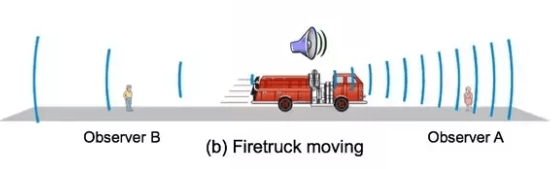
Look at the picture. Who is experiencing a lower pitched sound?
Observer A
Observer B
There is no difference


when the frequency is higher what happens to the wavelength?
the wavelength gets longer
The wavelength gets shorter
the wavelength doesn't change
I have no idea

What is the doppler effect?
a. a change in the frequency of sound, light or other waves to
b. A change in sound that alters wavelength
c. A change in sound that alters frequency
d. A change in pitch that causes frequency, sound, light and other waves to disappear
Doppler effect is used to_____________.
a. a police radars
b. hunting animals
c. be loud the radio sound
d. communicate with other countries
What can the Doppler effect be experienced with?
a. Any type of wave
b. Water
c. Sound, Pitch, and Frequency
d. Frequency
when noise is moving towards an observer, the closer it comes...
the higher the pitch
b. the lower the pitch
c. the longer the noise
d. the quieter the noise
the doppler effect causes a shift EXCEPT______________
a. pitch
b. amplitude
c. frequency
d. wavelength
when noise is moving away from an observer...
a. the pitch is higher
the pitch is lower
c. the noise is smoother
d. the energy is lower
when the frequency is higher what happens to the wavelength?
the wavelength gets longer
b. The wavelength gets shorter
c. the wavelength doesn't change
d. none of these
When a pitch is lower what is happening to the frequency?
a. the pitch crescendos
b. It is also lower
c. It is unchanged
d. None of these
What is Redshift
a. Objects move away us, give off blue light
b. Objects move away us, give off red light
c. Objects move towards us, give off blue light
d. Objects move towards us, give off red light
What is Blueshift
a. Objects move away us, give off red light
b. Objects move towards us give off blue light
c. Objects move away us, give off blue light
d. Objects move towards us, give off red light
Blueshift frequency is______________________
a. Stays the same
b. Blueshift has no frequency
c. increasing
d. decreasing
Redshift wavelength___________________
a. doesn't change
b. stays the same
c. Gets longer/increases
d. gets shorter/decreases
What is the time interval between waves passing called________________?
a. pitch
b. period
c. frequency
d. wavelength
Which colour has the smallest frequency?
a. Blue
b. Green
c. Red
d. Purple
What's the name of this phenomenon?
a. Compression of the universe
b. Blue-shift
c. . Red-shift
d. Frequency of the sun


Which discovery(ies) came from our understanding redshift/ blueshift?
The universe is expanding
Most galaxies are moving away from us
All of the above (and many more)
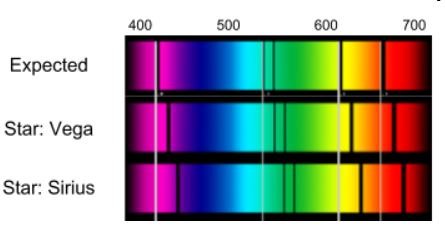


The energy left over from the big bang is still detectable. This is a major evidence of the big bang. What is this energy called?
Gravity
Cosmic Background Radiation
Inward Pulling Force
Outward Pushing Force

What energy is the shortest wavelength?
Radio
Infrared
X rays
Gamma
The pitch of a sound wave relates to the wave's _________________.
Amplitude
Frequency
Wavelength
Period
What is the Doppler Effect?
A change in frequency due to the relative motion of a wave source and an observer
When a wave overlaps with another wave
When a wave bounces off of another object
When a wave bends due to traveling through a different medium
An ambulance is driving towards you as you stand on the sidewalk. What happens to the pitch of the siren as it comes towards you?
It increases
It decreases
You are driving in a car and honk the horn at a person standing in the street. As you approach the person, what happens to the pitch of the horn according to you in the car?
It increases
It decreases
It stays the same because you are in the car moving with the sound.
Light can change color due to the Doppler Effect.
True
False
You are standing on the side of the road when a police car races past you with its siren on. After the police car passes you, what happens to the pitch of the siren?
It increases
It decreases
It turns red
An astronomer looks at a star in the night sky. Based on his calculations the star's light is shifting towards the color blue. What does this mean about the star?
It's moving towards the astronomer
It's moving away from the astronomer
It's not moving at all
A car is not moving but the horn is on. You run towards the car to investigate what's going on. As you approach the car, what happens to the frequency of the sound waves from the horn?
They increase
They decrease
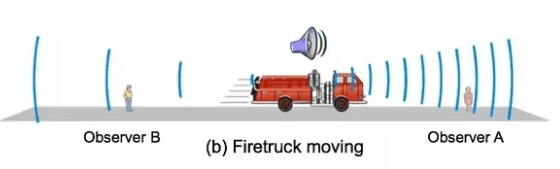
Look at the picture. Who is experiencing a higher pitched sound?
Observer A
Observer B
There's no difference
Look at the picture. Who is experiencing a lower pitched sound?
Observer A
Observer B
There is no difference



As objects move in space, their wavelengths change. This phenomenon is called the...
Coriolis Effect
Doppler Effect
Movement Effect
Black Hole Effect
The pitch of a sound wave relates to the wave's _________________.
Amplitude
Frequency
Wavelength
Period
What is the Doppler Effect?
A change in frequency due to the relative motion of a wave source and an observer
When a wave overlaps with another wave
When a wave bounces off of another object
When a wave bends due to traveling through a different medium
Light can change color due to the Doppler Effect.
True
False
Look at the picture. Who is experiencing a higher pitched sound?
Observer A
Observer B
There's no difference
Look at the picture. Who is experiencing a lower pitched sound?
Observer A
Observer B
There is no difference

