wayground logo

Free Printable Worksheets

Font size

S
M
L
XL
Worksheets

quiz2

Total questions: 111

Worksheet time: 6hrs 30mins
Name
Class
Date
1.

D = 50 miles

Time = 2 hours

What is the Speed?

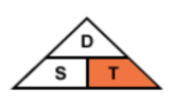
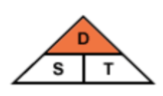
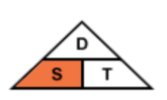
Hint: Use the Density Triangle.

a)

50 miles/hour

b)

100 miles/hour

c)

25 miles/hour

d)

2 miles/hour

2.

Distance = 500 miles

Speed = 50 miles/hour

How much TIME did it take to travel 100 miles at a speed of 50 miles/hour?

Hint: Use the Density Triangle 

a)

 0.5 hours

b)

 5,000 hours

c)

 10 hours

d)

 2 miles

3.

Speed = 60 miles/hour

Time = 4 hours

Distance = ?

Hint: D = S×TD\ =\ S\times T  

a)

64 miles

b)

 240 miles

c)

120 miles 

d)

 15 miles

4.

Speed = ?

Distance = 400 meters

Time = 40 seconds

Hint: Divide numbers that are over one another.

a)

10 m/s

b)

16,000 m/s

c)

0.1 m/s

d)

100 m/s

5.

Speed = ?

Distance = 100 meters

Time = 200 second

Hint: Divide numbers that are over one another.

a)

20,000 m/s

b)

0.2 m/s

c)

2 m/s miles

d)

0.5 m/s

6.
a)

Fast

b)

Slow

7.
a)

Fast

b)

Slow

8.
a)

Fast

b)

Slow

c)

Stopped

9.

Who's Faster?

a)

Barkus

b)

Arctica

10.
a)

Speeding Up

b)

Slowing Down

11.
a)

Speeding Up

b)

Slowing Down

12.
At 60 seconds, how far had this object traveled? 
a)
0 m
b)
10 m
c)
20 m
d)
40 m
13.

Adam is driving his car for a distance of 500 km in 3 hr. What is his speed?

a)

1500 km/hr

b)

166.7 km/hr

c)

500 km/hr

d)

100 km/hr

14.

Kendra is walking home and her house is 200 m away. It takes her 20 seconds to get home. What was her speed?

a)

400 m/s

b)

200 m/s

c)

25 m/s

d)

10 m/s

15.

Abby is driving at a speed of 30 km/hr over a distance of 600 km. How long will it take her to go 600 km?

a)

300 hr

b)

20 hr

c)

15 hr

d)

90 hr

16.

Mr. Mellon is walking to school at a pace of 5m/s and the school is 500 s away. How long will it take him to get to school?

a)

100 s

b)

2500 s

c)

10 s

d)

150 s

17.

Aaron is driving 70 km/hr for 3 hours. What distance did he cover?

a)

25 km

b)

210 km

c)

70 km

d)

1.5 km

18.

Mike is running at a pace of 8 m/s for 8 seconds. What distance did he cover in 8 seconds?

a)

64 m

b)

1 m

c)

8 m

d)

24 m

19.

Steve runs 20 m North in 4 seconds. What is his velocity

a)

5 m/s

b)

4 m/s south

c)

5 m/s south

d)

5 m/s north

20.

If a car is going 125 m/s for 13 seconds, how far does it go?

a)

9.61 meters

b)

1625 meters

c)

1562 seconds

d)

138 m/s

21.

Velocity is speed with.....

a)

Distance

b)

Weight

c)

Time

d)

Direction

22.
Soccer ball A goes 15 feet in 3 seconds, and ball B goes 12 feet in 2 seconds. Which ball moved the fastest?
a)
Soccer ball A
b)
Soccer ball B
c)
Their speeds are equal.
23.
A golf ball accelerates off a tee at 15m/s2, changing its velocity from 0m/s to 50 m/s down the fairway. How long did it take the golf ball to accelerate?
a)
750 seconds
b)
35 seconds
c)
0.3 seconds
d)
3.3 seconds
24.
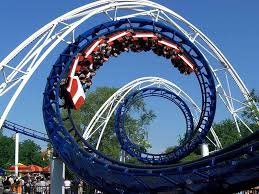
A roller coasters accelerates from an initial velocity of of 6.0 m/s to a final velocity of 70 m/s over 4 seconds.  What's the acceleration?
a)
24 m/s2
b)
18 m/s2
c)
16 m/s2
d)
16 m/s
25.
A dog runs with an initial speed of 7.5 m/s on a waxed floor.  It slides to a stop in 15 seconds.  What is the acceleration?
a)
-7.5 m/s
b)
-7.5 m/s2
c)
-0.5 m/s2
d)
7.5 mi//hr
26.

What does it mean when a change in velocity is negative?

a)

The object is speeding up.

b)

The object is slowing down.

c)

The object is changing direction.

d)

The object is falling down.

27.
A drag racer accelerated from 0 m/s to 200 m/s in 5 s.  What was the acceleration?
a)
0 m/s
b)
40 m/s2
c)
-40 m/s2
d)
40 m/s
28.
1. Which of the following statements about speed and velocity is correct?
a)
Velocity only describes an object’s rate of motion.
b)
Speed describes how an object is changing its velocity.
c)
Speed and velocity both describe how an object is speeding up.
d)
Only velocity includes the direction an object is traveling.
29.
Avery likes to walk 30 feet in 10 seconds. What is her speed?
a)
3 feet/sec
b)
6 feet/sec
c)
10 feet/sec
d)
2 feet/sec
30.
65mi/hr South is an example of...
a)
Speed
b)
Velocity
c)
Acceleration
d)
Direction
31.

Find the velocity of a plane that traveled 3000 miles west in 5 hours.

a)

65 mph

b)

600 mph

c)

600 mph west

d)

600 mph

32.
Describe the speed of the object from 4-6 seconds using the distance vs. time graph.
a)
Increasing speed
b)
Decreasing speed
c)
Not moving
d)
Constant speed
33.

A stopped car begins moving and reaches a speed of 25m/s in 5 seconds. What is its acceleration?

a)

+25m/s2

b)

-0m/s2

c)

+5m/s2

d)

5m/s

34.

A helicopter flies west 200 miles in 2 hours. What is its velocity?

a)

99 mph

b)

100 mph south

c)

400 mph south

d)

297 mph south

35.
If you travel 7.5 km and walk for 1.5 h, what is your average speed?
a)
5 km/h
b)
11.25 km/h
c)
0.2 km/h
36.
You are riding your bike at 9 km/h. Ten minutes later, your speed is 6 km/h.
a)
Acceleration occurred because speed increased.
b)
Acceleration occurred because speed decreased.
c)
Acceleration occurred because you changed directions.
37.

What two things must you know to determine speed?

a)

distance and direction

b)

direction and time

c)

speed and direction

d)

time and distance

38.

What is your acceleration if you are riding your bike at 9 km/hr, and 10 minutes later your speed is 6 km/hr.

a)

0.3 km/hr

b)

30 km/hr

c)

0.3 km/hr/hr

d)

300 km/hr

39.

Which of the following is an example of potential energy?

a)

A glass jar sitting on a shelf

b)

A flag waving in the wind

c)

A ball rolling along the sidewalk

d)

A battery powering a radio

40.

At what speed would a car have to move in order to travel 20 kilometers in 2 hours.

a)

5 km/hr

b)

10 km/hr

c)

20 km/hr

d)

40 km/hr

41.

The location on the track where the train has the greatest potential energy is....

a)

1

b)

2

c)

3

d)

4

42.

Which of the following is an example of kinetic energy?

a)

A baseball moving from the pitcher to the catcher

b)

A rock sitting on top of a large hill

c)

A pendulum at the top of it's swing

d)

A new flashlight battery

43.

Explain the motion from 0-1s

a)

Stationary

b)

Constant speed

c)

Constant acceleration

d)

Non-constant acceleration

44.

Explain the motion from 1-3s

a)

Stationary

b)

Constant speed

c)

Constant acceleration

d)

Non-constant acceleration

45.

Explain the motion from 3-5s

a)

Stationary

b)

Constant speed

c)

Constant acceleration

d)

Non-constant acceleration

46.

Explain the motion from 5-7s

a)

Stationary

b)

Constant speed

c)

Constant acceleration

d)

Constant deceleration

47.

Explain the motion from 7-8s

a)

Stationary

b)

Constant speed

c)

Constant acceleration

d)

Constant deceleration

48.

Explain the motion from 8s onwards. The blue line runs along the x-axis. Hint: What is the velocity from 8s onwards.

a)

Stationary

b)

Constant speed

c)

Constant acceleration

d)

Constant deceleration

49.

Where is the acceleration the highest?

a)

0-1s

b)

1-3s

c)

3-5s

50.

Where is the deceleration the highest?

a)

5-7s

b)

7-8s

51.

Explain the motion

a)

Stationary

b)

Constant speed

c)

Constant acceleration

d)

Non-constant acceleration

52.

The acceleration from 0-1s is (a)   m/s2.

53.

The acceleration from 3-5s is (a)   m/s2.

54.

The deceleration from 5-7s is (a)   m/s2.

55.

Calculate the total distance traveled in the first 1s.

(a)  

56.

Calculate the total distance traveled in the first 3s.

(a)  
57.
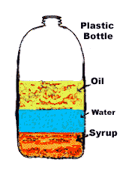
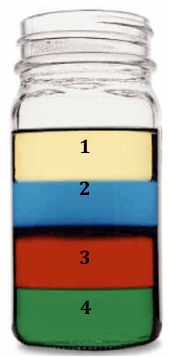
Put the liquids in order from most dense to least dense?
a)
4, 3, 2, 1
b)
1, 2, 3, 4
c)
3, 4, 2, 1, 
d)
4, 3, 1, 2
58.
Which liquid is the least dense?
a)
oil
b)
water
c)
syrup 
d)
plastic bottle
59.
What is the formula for density?
a)
density = mass x volume
b)
density = mass / volume
c)
density = mass + volume
d)
density = mass - volume
60.
Frank has an eraser. It has a mass of 4g, and a volume of 2cm3. What is its density?
a)
8 g/cm3
b)
2 g/cm3
c)
1/2 g/cm3
d)
24 g/cm3
61.
What is the volume of Object X?
a)
10.0 cm3
b)
15.0 cm3
c)
20.0 cm3
d)
25.0 cm3
62.
Why do some substances float on water?
a)
they are warmer than water
b)
they are cooler than water
c)
they are more dense than water
d)
they are less dense than water
63.
Helium balloons rise on earth because
a)
helium is less dense than air
b)
helium is more dense than air
c)
helium is cooler than air
d)
helium is warmer than air
64.
What two types of measurements make up DENSITY
a)
Mass and Volume
b)
Temperature and Mass
c)
Grams and Centimeters
d)
Volume and Weight
65.
Jack has a rock. The rock has a mass of 14 g and a volume of 2 cm3. What is the density of the rock?
a)
7 mL
b)
7 g/cm3
c)
28 g/cm3
d)
1/7 g/cm3
66.
Frank has an eraser. It has a mass of 4 g, and a volume of 2 cm3. What is its density?
a)
8 g/cm3
b)
2 g/cm3
c)
1/2 g/cm3
d)
24 g/cm3
67.
What units can be used to express density?
a)
g/mL
b)
grams
c)
millimeters
d)
milliliters
68.
What units are used to measure mass?
a)
g
b)
cm3
c)
g/cm3
d)
cm3/g
69.

What is the formula for Volume?

a)

Mass/Volume

b)

Density x Volume

c)

Mass/Density

70.

What is the formula for Mass?

a)

Mass/Volume

b)

Density x Volume

c)

Mass/Density

71.
Which box has a greater density?  
a)
Box A
b)
Box B
72.
Bill runs 400 meters to Andy's house, turns around, and runs 400 meters back home.  What is Bill's distance?
a)
0 meters
b)
400 meters
c)
800 meters
d)
1600 meters
73.
Vector quantities need both a magnitude and a _____.
a)
distance
b)
displacement
c)
direction
d)
velocity
74.
After completing one trip on a roller coaster, the roller coaster's ________ is zero.
a)
displacement
b)
reference point
c)
length
d)
distance
75.
A person walks 50 meters directly north, stops, and then travels 32 meters directly south.  What is their displacement?
a)
82 meters
b)
18 meters
c)
28 meters
76.

A vehicle travels 2345 m in 315 s toward the evening sun. What is its speed?

a)

7.44 m/s

b)

0.13 m/s

c)

738,675 m/s

d)

7.44m

77.

What distance will a car traveling 65 km/hr travel in 180 min?

a)

11,700 m

b)

195 m

c)

21.7 m

d)

2.77 m

78.

A car travels 240 km in 2 hours and a sprinter travels 100 m in 9.5 sec. Who is traveling faster?

a)

the car

b)

the sprinter

c)

they are traveling the same speed

d)

not enough information to answer this question

79.

A train travels 120 km in 2 hours and 30 minutes. What is its average speed?

a)

60 km/hr

b)

240 km/hr

c)

48 km/hr

d)

300 km/hr

80.
What two measurements are necessary for calculating speed?
a)
Mass and time
b)
Temperature and mass
c)
Mass and distance
d)
Distance and time
81.
A description of the speed and direction of an object's motion
a)
Velocity
b)
Speed
c)
Acceleration
d)
Vector
82.
What is happening in the graph from point O to A?
a)
The object is moving SLOWLY
b)
The object is moving FAST
c)
The object is NOT moving
d)
The object is accelerating
83.
What is this graph showing?
a)
Constant Speed
b)
Acceleration (speeding up)
c)
Deceleration (slowing down)
d)
No motion
84.
What is this graph showing?
a)
Constant Speed
b)
Acceleration (speeding up)
c)
Deceleration (slowing down)
d)
No motion
85.
What is the formula to calculate speed?
a)
S = t/d
b)
S = d/t
c)
S = d x t
d)
S = t x d
86.

Which of the following has INCORRECT units?

a)

speed = m/s

b)

time = s

c)

displacement = m

d)

velocity = s

87.

What is motion?

a)

the stopping of an object to a frame of reference

b)

a change in position relative to a frame of reference

c)

the middle ground between light and shadow, between science and superstition, and it lies between the pit of man's fears and the summit of his knowledge

d)

a change in the time in which it takes to get an office referral

88.

A change in ________ in a certain amount of time is motion.

a)

speed

b)

appearance

c)

position

d)

weight

89.

An old lady rolls down a hill at 3 meters/second. The hill is 36 meters long. How many seconds does it take the old lady to reach the bottom of the hill?

a)

39 seconds

b)

12 seconds

c)

15 seconds

d)

33 seconds

90.
A measurement of how fast an object is moving
a)
Velocity
b)
Speed
c)
Vector
d)
Acceleration
91.
Displacement and distance are always the same number.
a)
True
b)
False
92.
What does this graph represent?
a)
Constant Speed
b)
Acceleration
c)
Not moving
93.
What does this graph represent?
a)
Constant speed
b)
Acceleration
c)
Not moving
94.
What does this graph represent?
a)
Constant speed
b)
Acceleration
c)
Not moving
95.
Which runner had a head start?
a)
A
b)
B
c)
C
96.
What two measurements are necessary for calculating speed?
a)
Mass and time
b)
Temperature and mass
c)
Mass and distance
d)
Distance and time
97.
A measurement of how fast an object is moving
a)
Velocity
b)
Speed
c)
Vector
d)
Acceleration
98.
Can be measured in meters (m)
a)
Distance
b)
Time
c)
Speed
d)
Acceleration
99.

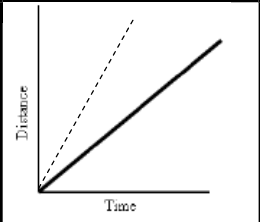
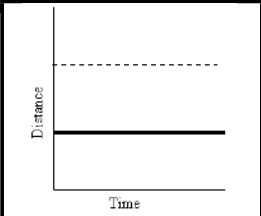
In which of the following graphs below are both runners moving at the same speed?

a)
b)
c)
d)
100.
What is the equation to calculate time?
a)
time = speed/distance
b)
time = distance/speed 
c)
time = speed x distance 
d)
time = distance x speed
101.

Why do the values on the graph form a straight line?

a)

The speed is constant

b)

The distance remains unchanged.

c)

The direction of motion stays the same.

d)

The speed gradually increases over time.

102.

Which graph BEST represents the motion of an object that was initially at rest and is accelerating uniformly?

a)
b)
c)
d)
103.

Describe the motion in the graph:

a)

Constant Speed (positive slope)

b)

Stopped (at rest)

c)

Acceleration (increasing speed)

d)

Return Home (negative slope)

104.
What kind of acceleration is shown here?
a)
positive
b)
negative
c)
none
d)
varies
105.
Which runner won the race?
a)
Albert
b)
Bob
c)
Charlie
106.
What does this graph represent?
a)
Constant Speed
b)
Acceleration
c)
Not moving
107.

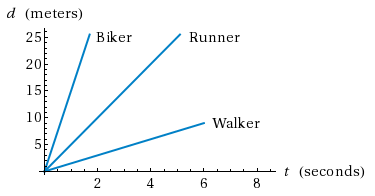
Which person moved the fastest in 3 seconds?

a)

biker

b)

runner

c)

walker

d)

they are all moving equally

108.

What is the speed after 2 seconds?

a)

40 m/s

b)

20 m/s

c)

10 m/s

d)

40 m

109.
What is this graph showing?
a)
Constant Speed
b)
Acceleration (speeding up)
c)
Deceleration (slowing down)
d)
No motion
110.
What is the formula to calculate speed?
a)
S = t/d
b)
S = d/t
c)
S = d x t
d)
S = t x d
111.
Which graph shows an object not moving?
a)
A
b)
B
c)
C
d)
D