wayground logo

Free Printable Worksheets

Font size

S
M
L
XL
Worksheets

Chemistry Unit 1 Review

Total questions: 70

Worksheet time: 1hrs 27mins

Name
Class
Date
1.
How many sig figs are there?
100.00
a)
1
b)
3
c)
4
d)
5
2.
How many sig figs are there?
100000000
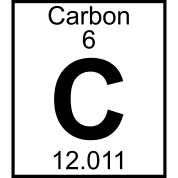
a)
1
b)
9
c)
10
3.
How many sig figs are there?
4004
a)
1
b)
2
c)
3
d)
4
4.
How many sig figs are there?
0.00400
a)
1
b)
3
c)
5
d)
6
5.
What is the measurement 1042 Liters rounded to 2 significant figures? 
a)
1040 L
b)
1.1 x 10³ L
c)
1.0 x 10L
d)
1050 L
6.
Round 1047.78 to three sig figs
a)
104
b)
105
c)
1050
d)
1050.00
7.
Round 0.010229 to four sig figs
a)
1022
b)
1023
c)
0.01023
d)
0.01022
8.
What is the measurement using the correct number of sig. figs.?
a)
39.5 mL
b)
40 mL
c)
39 mL
d)
40.0 mL
9.
What is the measurement using the correct number of sig. figs.?
a)
8.5mL
b)
8.50mL
c)
8.45mL
d)
8.4mL
10.

How close a measurement is to the true value is called..

a)

Accuracy

b)

Precision

c)

Significant

d)

Estimate

11.
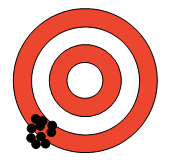
This bullseye demonstrates...
a)
High Accuracy & High Precision
b)
High Accuracy & Low Precision
c)
Low Accuracy & High Precision
d)
Low Accuracy & Low Precision
12.

Find evidence that best supports the claim:

Look twice before crossing the street

a)

Over 6000 pedestrians are killed in car accidents each year

b)

One time I crossed the street without looking

c)

Wait for the "walk" sign to come on when at a crosswalk

d)

There aren't any crosswalks in my neighborhood, because I live in the country

13.
A claim is ______________________________.
a)
a kind of shellfish often used in chowder. 
b)
a fact.
c)
a statement or conclusion that answers the original question or problem
d)
a bad thing to make about something.
14.
Evidence is ___________________
a)
A statement or conclusion that answers a question
b)
Scientific data that supports the claim
c)
A justification that connects the claim to the evidence
d)
Not vital when using an argument
15.
Reasoning is __________________.
a)
A statement of conclusion that answers the original question/problem
b)
Scientific data that supports the claim
c)
A justification that connects the evidence to the claim
d)
Empirical Evidence
16.
According to the American Health Association, peanut butter is a great source of protein.
a)
Claim
b)
Evidence
17.
"Two out of three high school students fail to get enough sleep" is an example of:
a)
Claim
b)
Evidence
18.

What is the claim?

Mass does not affect how quickly an object falls. In our experiment, the blocks had different masses, 20 g., 30 g., 44 g., 123 g and 142 g but the time for all five blocks to fall was about the same. It took between 1.5 and 1.8 seconds for them to fall. Since the blocks had different masses but took about the same time, I know that mass does not affect how quickly something falls.

a)

In our experiment, the blocks had different masses, 20 g., 30 g., 44 g., 123 g and 142 g but the time for all five blocks to fall was about the same. It took between 1.5 and 1.8 seconds for them to fall.

b)

Mass does not affect how quickly an object falls.

c)

Since the blocks had different masses but took about the same time, I know that mass does not affect how quickly something falls.

19.

What is the evidence?


Mass does not affect how quickly an object falls. In our experiment, the blocks had different masses, 20 g., 30 g., 44 g., 123 g and 142 g but the time for all five blocks to fall was about the same. It took between 1.5 and 1.8 seconds for them to fall. Since the blocks had different masses but took about the same time, I know that mass does not affect how quickly something falls.

a)

In our experiment, the blocks had different masses, 20 g., 30 g., 44 g., 123 g and 142 g but the time for all five blocks to fall was about the same. It took between 1.5 and 1.8 seconds for them to fall.

b)

No, mass does not affect how quickly an object falls.

c)

Since the blocks had different masses but took about the same time, I know that mass does not affect how quickly something falls.

20.

What is the reasoning?


Mass does not affect how quickly an object falls. In our experiment, the blocks had different masses, 20 g., 30 g., 44 g., 123 g and 142 g but the time for all five blocks to fall was about the same. It took between 1.5 and 1.8 seconds for them to fall. Since the blocks had different masses but took about the same time, I know that mass does not affect how quickly something falls.

a)

In our experiment, the blocks had different masses, 20 g., 30 g., 44 g., 123 g and 142 g but the time for all five blocks to fall was about the same. It took between 1.5 and 1.8 seconds for them to fall.

b)

No, mass does not affect how quickly an object falls.

c)

Since the blocks had different masses but took about the same time, I know that mass does not affect how quickly something falls.

21.

What is matter?

a)

Anything that has mass and takes up space

b)

How dense an object is

c)

The amount of space an object takes up

d)

The transfer of heat through the rising and falling movement in a gas or a liquid in which the warmer parts rise and colder parts sink

22.

What is a proton?

a)

A subatomic particle that is negatively charged

b)

A subatomic particle that is positively charged

c)

A subatomic particle that has no charge

d)

A subatomic particle that is located outside of the nucleus

23.

What is a neutron?

a)

A subatomic particle that is negatively charged

b)

A subatomic particle that is positively charged

c)

A subatomic particle that has no charge

d)

A subatomic particle that is located outside of the nucleus

24.

Choose all of the correct answers about electrons.

a)

Electrons are positively charged subatomic particles inside the nucleus

b)

Electrons are negatively charged subatomic particles

c)

Electrons are subatomic particles with no charge

d)

Electrons are located outside of the nucleus in the electron cloud

25.

What is atomic mass?

a)

Protons + neutrons

b)

Protons + electrons

c)

Neutrons + electrons

d)

Neutrons + quarks

26.

What is the charge?

a)

Protons + neutrons

b)

Protons + electrons

c)

Protons - neutrons

d)

Protons - electrons

27.

Which subatomic particle is the smallest?

a)

Protons

b)

Neutrons

c)

Electrons

28.
an atom with atomic number 6 would have how many protons 
a)
6
b)
12
c)
3
d)
cannot be determined 
29.
How many protons does this atom have?
a)
2.5
b)
6
c)
5
d)
10.811
30.
What does the C represent?
a)
atomic mass
b)
atomic number
c)
element name
d)
chemical symbol 
31.

What does the 6 represent?

a)

Atomic mass

b)

atomic number

c)

chemical symbol

d)

element name

32.
If an atom has 12 positively charged subatomic particles, which of the following must it also have to be considered a neutral atom?
a)
12 neutrons
b)
12 electrons
c)
12 protons
d)
24 protons and neutrons
33.

An atom has 10 protons, 15 neutrons and 10 electrons what is its mass number.

a)

20

b)

10

c)

35

d)

25

34.
An atom has an atomic number of 15 and a mass number of 31. How many protons are there in the atom?
a)
15
b)
31
c)
16
d)
47
35.

What is the atomic weight of Neon?

a)

10

b)

20.18

c)

10.18

d)

9.82

36.

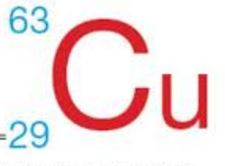
What is the mass number of Copper?

a)
63
b)
29
c)
34
d)
92
37.
How many electrons does a Copper atom have?
a)
63
b)
29
c)
92
d)
34
38.

What is the atomic weight of Gold?

a)
79
b)
196.9665
c)
117
d)
275
39.
How many neutrons does a Hydrogen atom have?
a)
1
b)
2
c)
3
d)
0
40.
What is the atomic weight of Iron?
a)
26
b)
55.845
c)
56
d)
30
41.
What number is circled?
a)
Number of Neutrons
b)
Number of Protons
c)
Atomic Mass
d)
Number of Electrons
42.
What is the number highlighted?
a)
Atomic number
b)

Atomic weight

c)
Number of protons
d)
Number of electons
43.
What does this number represent?
a)
Number of protons
b)
Number of neutrons
c)
Number of electrons
d)
Number of protons and neutrons
44.
When should you tie back long hair or baggy clothing?
a)
When working with chemicals
b)
When working with a Bunsen burner
c)
When doing dissections.
d)
Any time you are working in the lab.
45.
You accidentally cut yourself.  It is small and barely bleeds. You should
a)
wash the cut
b)
call you mom
c)
run to the nurse
d)
tell the teacher
46.
You and your lab partner are ready to conduct your lab.  You light you Bunsen burner and continue reading the procedures.  You need more materials you should
a)
have one person watch the Bunsen burner and the other get the materials.
b)
Decide who is getting what materials and both go get the materials to save time.
c)
Ask a neighboring lab group to watch your Bunsen burner.
d)
Continue with the lab and hope you really did not need the materials.
47.

True or False:

Return all unused chemicals to their original containers.

a)

True

b)

False

48.

Approved eye protection devices (such as goggles) are worn in the laboratory

a)

to avoid eye strain

b)

to improve your vision

c)

so that you look super cool

d)

any time chemicals, heat or glassware are used

49.

When is it OK to eat or drink at the lab tables?

a)

Always

b)

Only during group work, not during labs

c)

Never

d)

Whenever I'm hungry

50.

When you finish working with chemicals, biological specimens, etc., always

a)

treat your hands with skin lotion.

b)

wash your hands thoroughly with soap and water.

c)

wipe your hands on a towel.

d)

wipe your hands on your clothes.

51.

Chipped or cracked glassware is okay to use in the laboratory.

a)

True

b)

False

52.
Which of these is a property of metals?
a)
It's malleable
b)
It can't conduct electricity
c)
They are used in food
d)
It's very brittle
53.
Which elements are found on the left to middle of The Periodic Table? 
a)
Metals
b)
Nonmetals
c)
Metalloids
d)
Candles
54.
Which elements are found on the right side of The Periodic Table?
a)
Metals
b)
Nonmetals
c)
Metalloids
d)
Water
55.
Silicon is a semiconductor and has properties of both metals and nonmetals. What type of element is Silicon? 
a)
Metal
b)
Nonmetal
c)
Metalloid
d)
Pretty
56.
How would this element be classified?
a)
Metal
b)
Nonmetal
c)
Metalloid
d)
Metamorphic
57.

Isotopes of an element have a different number of...

a)

Protons

b)

Neutrons

c)

Electrons

d)

Mass

58.
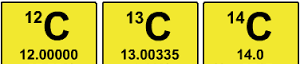
What do these isotopes of carbon all have in common?
a)
neutrons & mass number
b)
atomic number and neutrons
c)
atomic number and electrons
d)
protons, atomic number, and mass number
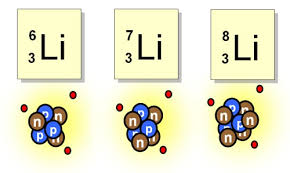
59.
which atom has  4 neutrons?
a)
Li-6
b)
Li-7
c)
Li-8
d)
they have the same # of neutrons
60.
How would you write 4.3756 x 10in standard form?
a)
437,560,000
b)
0.00043756
c)
43,756
d)
4,3756
61.
How would you write -5.6 x 10⁻³ in standard form?
a)
0.0056
b)
-5,600
c)
0.00056
d)
-0.0056
62.
Which of the following is correct scientific notation?
a)
20.35 x 10⁴
b)
.2035 x 104
c)
2035 4
d)
2.035 x10⁴
63.

Express the following in standard notation:
8.0250 x 10⁻⁸

a)

.00000008025

b)

.0000000080250

c)

.000000080250

d)
80,250,000,000
64.
What does the symbol -10e represent
a)
alpha
b)
beta
c)
gamma
d)
the zero element
65.
Balance the following equation:
146C --> 0-1e + ________
a)
145B
b)
146C
c)
147N
d)
42He
66.
What is the symbol for an alpha particle?
a)
42He
b)
0-1e
c)
0+1 e
d)
10n
67.

Complete the nuclear reaction

85209At = ___ + 24He

a)

83205Bi

b)

86209Rn

c)

81207Tl

d)

85208At

68.

What particle completes this reaction?

a)

42He

b)

0-1 e

c)

00Y

d)

178O

69.
Solve this equation for alpha decay.
20985At = ___ + 42He
a)
20583Bi
b)
20986Rn
c)
20781Tl
d)
20885At
70.
Solve this equation for beta decay.
6027Co = ___ + 0-1e
a)
5625Mn
b)
6028Ni
c)
5823V
d)
5927Co