
 Worksheets
Unit 1.2 Water Vocabulary and Concept Quiz
Total questions: 60
Worksheet time: 2hrs 59mins

A water strider can skate along the top of a pond because....
covalent bonds result in water cohesion (surface tension)
hydrogen bonds result in water cohesion (surface tension)
water striders have adapted to become lighter than water
low surface tension of water

Attractions between water molecules are called ....
Covalent bonds
Ionic bonds
Polar bonds
Hydrogen bonds


Which properties of water are helpful for aquatic organisms? (3)
Ice is less dense than liquid water so forms an insulating layer on ponds and polar seas/oceans
Having a high specific heat capacity stops the temperature of ponds, lakes, and oceans fluctuating too much over a short period of time
High latent heat of vaporization means ponds, lakes, seas, and oceans don't lose too much water on extremely hot days
Hydrogen bonds make it easier for fish to swim
Being a polar molecule allows electric eels to become charged up quicker

Water is a universal solvent because...
it can be found anywhere
it freezes when it gets cold
it floats when frozen
it dissolves most substances

Which characteristic of water will allow a paperclip to remain floating on the surface of water?
adhesion
surface tension
solvent properties
non-polar

The meniscus in a graduated cylinder or glass of water is due to.....
The water molecules being attracted to the glass and adhering to it
The water molecules being attracted to the glass and cohering to it
The water molecules being non-polar and repelling the glass
Because water is hydrophilic

Capillary action is when water moves up a thin tube such as the xylem in plants or chromatography paper pulls water upwards against gravity. This phenomena is due to.....
adhesion
cohesion
a combination of adhesion and cohesion
surface tension
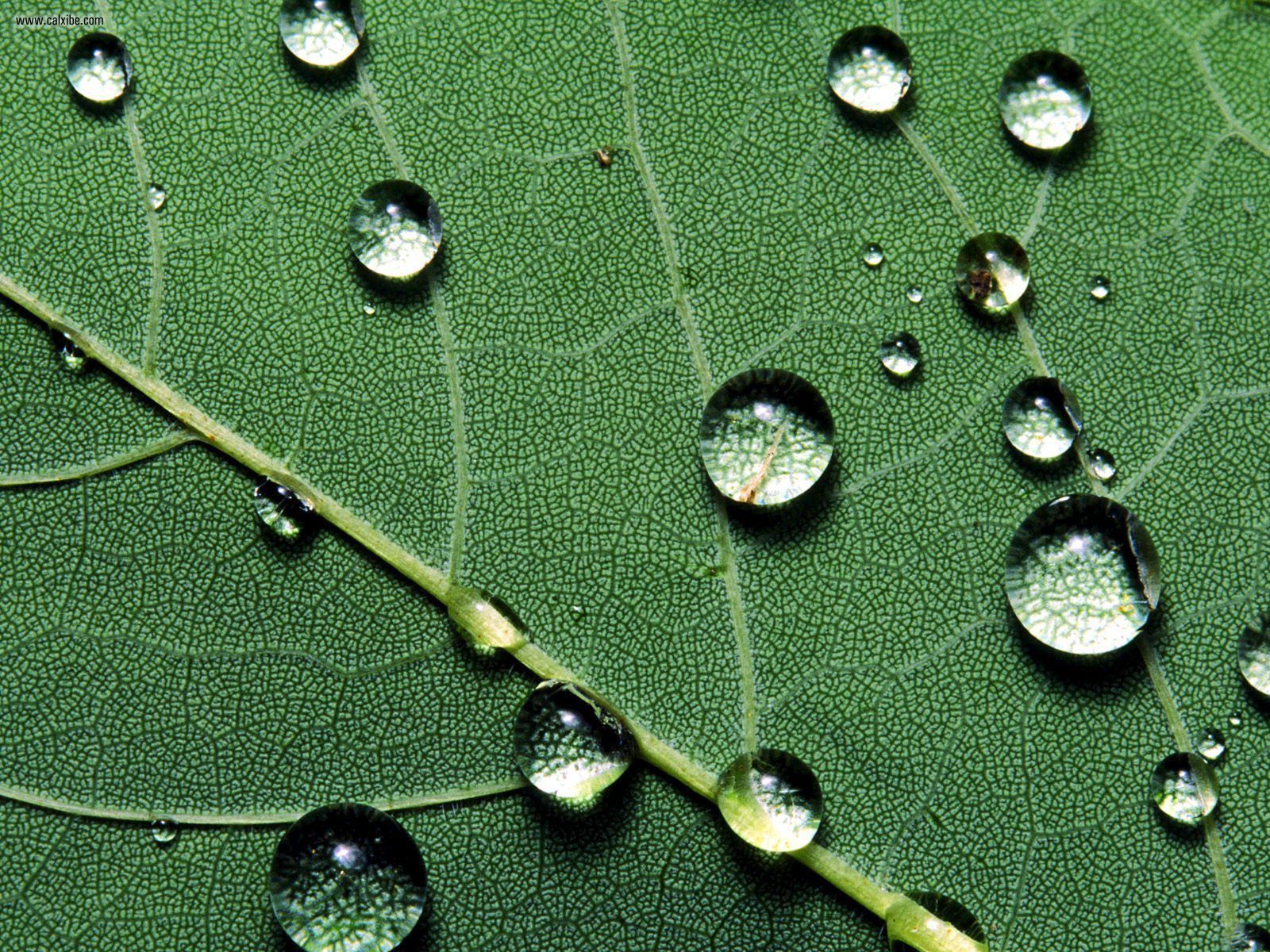
The water is sticking to the underside of the leaf because of......
Adhesion
Cohesion
Capillary action
Subversion

Sweating is an example of what property of water?
Ability to Moderate Temperature
Expansion Upon Freezing
Cohesive Behavior
Universal Solvent

What property of water causes these Alka-Seltzer tablets to dissolve?
Universal Solvent
Expansion Upon Freezing
Cohesive Behavior
High Specific Heat
Water has an unusually high specific heat. What does this mean?
At its boiling point, water changes from liquid to vapor.
A large amount of heat is required to raise the temperature of water.
Ice floats in liquid water.
Salt water freezes at a lower temperature than pure water.
Floating ice can insulate bodies of water.
It takes a lot of energy to heat and cool water, this is important because...
Water helps keeps our climate from fluctuating violently
It takes forever to boil water for pasta
Surface Tension
Polar
Which property controls temperature fluctuations in an animals body?
High Heat Capacity
Lower Density
Surface Tension
Universal Solvent
Water being the Universal Solvent is important to living organisms because
it acts as a lubricant for our joints and our eyes
it dissolves nutrients and helps to transport them thru the body
it dissolves wastes so that they can be transported out of the body
it helps to regulate body temperature
All of these!
Which of the following is a correct statement?
A polar substance can easily be dissolved in a nonpolar substance
Water is a nonpolar substance that can dissolve polar substances
A polar molecule has the ability to dissolve in another polar molecule
Oil is a polar substance that attracts other polar substances
What prevents a lake or ocean from freezing solid?
Liquid water contains an excessive amount of suspended nutrients
Hydrogen bonding is unable to freeze an entire body of water
A water molecule is cohesive but not adhesive
The solid form of water floats on the liquid form
Why does ice float in liquid water?
Ice has a higher density than liquid water
The hydrogen bonds in ice are more spread out than in liquid water, making ice less dense
Ice has a lower specific heat capacity than liquid water
The covalent bonds in ice are stronger than in liquid water

Which of the following would be a reasonable claim for this graph?
As the elevation increases, the temperature decreases.
As the elevation increases, the temperature increases.
As the elevation increases, the temperature is unaffected.
The air is thinner at higher elevations due to the decreased force of gravity so it cannot absorb as much heat and the temp is lower.

Which 2 graphs support the claim "As the temperature increases, more KNO3 will dissolve"?
A
B
C
D

What would be the best kind of graph to represent this data?
Pie chart
Line Graph
Table Graph
Bar Graph
Label the axes of the graph with their correspnding variables
What is Hydronium ?

The table shows the results of the experiment
Amy did where she placed three samples, with a
starting temperature of 75°F, outside in the direct
sun, and recorded the temperatures over six
minutes. What is the best conclusion Amy can draw from
her results?
The dark sand absorbs heat the fastest.
The water absorbs more heat than the sand
samples.
The light sand absorbs the most amount of heat.
The water absorbs heat the fastest.
It is a form of kinetic energy. It is an energy that is produced by a continuous motion of the molecules of matter. These molecules are always in motion.
Cold
Light
Sound
Heat
If the temperature is below the melting point of a substance and below the boiling point of a substance what state will it be in?
Solid
Liquid
Gas
If the temperature is above the melting point of a substance and above the boiling point of a substance what state will it be in?
Solid
Liquid
Gas
A substance has a melting point of -125 oC and a boiling point of -35 oC. What state is it at 15oC?
Solid
Liquid
Gas
As a part of the water cycle, water from Earth's surface enters the clouds and finally falls back to the ground in the form of rain. What is the correct sequence of processes water undergoes?
Evaporation, Condensation, Precipitation
Precipitation, Condensation, Evaporation
Condensation, Evaporation, Precipitation
Evaporation, Precipitation, Condensation


The positive ions tend to _____________ electrons.
lose
gain
The negative ions tend to _____________ electrons.
lose
gain
When an atom loses an electron, it becomes a
positive ion
negative ion
neutral ion
neutral atom
Why do all bonds form?
so the number of protons equals the number of electrons
so an atom can become unstable
to fill the outermost energy level

Ionic bonds typically form between
A metal and a nonmetal
Two nonmetals
Two metals
A metalloid and a metal

Why do elements form chemical bonds?
Because they're friendly
To create a new element
To become stable
Because they all need to gain more electrons

Metals (like Na) typically _____ electrons in the formation of ionic bonds.
Gain
Lose
Keep the same

Nonmetals (like Cl) typically ____ electrons when they form ionic bonds.
Gain
Lose
Keep the same



State of matter that takes the shape of it's container and has a definite volume.
Solid state
Liquid state
Gas state
Plasma state

State of matter that can fill containers with no fixed shape or volume.
Solid state
Liquid state
Gas state
Plasma state

State of matter in which materials have a definite shape and volume.
Solid state
Liquid state
Gas state
Plasma state

When a beaker of water is heated its volume increases a little. What is happening to the particles in the liquid?
They are getting bigger.
They are moving slower.
They are moving faster.
They are getting smaller.

When you place a bottle of water in the freezer its volume increases. What is happening to the particles in the liquid?
They are getting bigger.
They are moving slower.
They are moving faster.
They are getting smaller.
In what ways do the properties of water affect life on earth?
What is the role of water in forming amino acids ?
What is the role of water in Cellular Respiration ?

