
 Worksheets
SCIENCE EVAL 2- VII CBSE
Total questions: 171
Worksheet time: 2hrs 18mins

2. Identify the given cells in the leaves of the plant:
White blood cells
Red blood cells
Guard cells
Platelets
3. All green plants are ____________________.
Autotrophs
Heterotrophs
Scavengers
Decomposers
4. Water and minerals are transported to the leaves and other parts of the plant by ____________________.
Stomata
Xylem vessels
Phloem vessels
None to the above
5. Chlorophyll is present in the cell organelle called _________________.
Cell membrane
Cytoplasm
Chloroplast
Croton
8. The mutual association in which two different types of organisms live and work together for their mutual benefit is called _______________________.
Symbiosis
Parasitic nutrition
Saprophytic nutrition
Autotrophic nutrition
9. Which of the following is an insectivorous plant?


The plant from which a parasite gets its food is called
Host
Chloroplats
Doddar
Green plants
What does ‘photo ‘ in photosynthesis refer to
Sun
Water
Light
Carbon dioxide
Which of the Following is a Saprophyte
Green plants
Mushroom
Alga
Rhizobium
Stomata are
Tiny pores located underside of Leaves
Photo
Synthesis
Carbon
Rhizobium can convert atmospheric nitrogen into water-soluble compounds
False
True
Carbohydrates,Proteins and Fats are
Nutrition
Food
Nutrients
Autotrophs
Pitcher plant traps insects because it
(a) is a heterotroph.
(b) grows in soils which lack in nitrogen.
(c) does not have chlorophyll.
(d) has a digestive system like human beings.
chlorophyll captures
carbon dioxide from surroundings
energy of the sunlight
minerals from soil
water from air
Starch is also a
carbohydrate
fats
vitamins
proteins
Rhizobium is an example of
(a) Symbiosis
(b) Parasites
(c) Insectivorous
(d) none of these
Foods synthesized in the process of Photosynthesis by plants is stored as
Starch
Protein
Vitamins
Fats
In lichens ______________ and _____________ live in symbotic association.
Bacteria and fungi
Mushroom and Rhizobium
Cuscuta and mistletoe
Algae and fungi
Leguminous plants are examples of _____________________ association.
autotrophic
saprophytic
symbiotic
parasitic
Centrally located spherical structure in cell is the ___________________
cytoplasm
nucleus
cell membrane
cell wall
The enzymes present in the saliva convert
fats into fatty acids and glycerol.
starch into simple sugars.
proteins into amino acids.
complex sugars into simple sugars.
The piercing and tearing teeth is called
incisor
Canine
Pre-molar
Molar
______ takes in food by the use of pseudopodia.
Goat
Tiger
Amoeba
Human
Water from the undigested food is absorbed mainly in the_____.
Stomach
Food Pipe
Small Intestine
Large Intestine
_____transports the nutrients from the undigested food to every cell of the body.
Oxygen
Blood
Water
Nitrogen
The ___ helps in mixing saliva with food.
Heart
Stomach
Nose
Tongue
____ is the largest gland in our body.
Skin
Hand
Liver
Leg
The mode of feeding of the mosquito_____.
Chewing
Cuddling
Scraping
Sucking
Mostly grass eating animals are called____.
Carnivore
Omnivore
Ruminants
Scavenger
The inner walls of the stomach secrete _________.
Mucus & hydrochloric acid
Bile
Lime
Salt
______secretes pancreatic juice.
Liver
Brain
Pancreas
Skin
____ catches insects with it’s tongue.
Snail
Human
Lion
Frog
Digestion starts from _____.
Mouth
Stomach
Liver
Ribs
Liver secrets _____.
Acid
Bile Juice
Base
Water
The process of breaking down of food is called__.
Digestion
Ingestion
Excretion
Respiration
The process of food intake is known as ______.
Excretion
Calculation
Respiration
Ingestion.
The longest part of the digestive tract in humans is the ........................
Oesophagus
Stomach
Small Intestine
Large Intestine
Name the finger like projections present in the small intestine which helps in nutrient absorption
Buccal cavity
Duodenum
Pancreas
Villi
Identify ruminant from the following.
Cat
Cow
Ant
Tiger
Name the process by which the digested food molecules are taken up by the intestine wall and sent to circulatory system.
Assimilation
Digestion
Absorption
Egestion
Which one of the following is a reliable measure of heat?
Hotness
Coldness
Temperature
None of these
Name the device which is used to measure the hotness or coldness of an object.
Picometer
Barometer
Manometer
Thermometer
If we add a lump of ice to a tumbler containing water, ___________.
heat flows from water to ice
heat flows from ice to water
heat flows from water to ice if water is more in quantity.
heat flows from ice to water if ice is more in quantity.
The temperature at which pure ice melts is ___________.
0°C
100°C
-100°C
98.6°F
A thermometer contains __________.
water
mercury
silver
copper
What is the normal body temperature of a healthy person?
37°C
37°F
37°K
98.4 K
Heat always flows ___________.
from a colder object to a hotter object
from a hotter object to a colder object
in both directions
from a stationary object to a moving object
Paheli and Boojho measured their body temperature. Paheli found hers to be 98.6°F and Boojho recorded 37°C. Which of the following statements is true?
Paheli has a higher body temperature than Boojho.
Paheli has a lower body temperature than Boojho.
Both have normal body temperature.
Both are suffering from fever.
The unit of measurement of temperature is ___________.
metre
kilogram
degree celsius
second
The liquid metal used in a thermometer __________.
is able to expand uniformly for all temperatures
is transparent and easy to see
is opaque and difficult to read
is able to expand uniformly for certain temperatures
The upper standard point on the Fahrenheit scale is ___________.
100 °
120 °
212 °
180 °
One degree Celsius rise in temperature is equal to ___________.
1 degree rise on the Kelvin scale
1 degree rise on the Fahrenheit scale
both (a) and (b)
1 degree fall on the Kelvin scale
The increase in length of a solid when heated is called ___________.
thermal expansion
linear expansion
superficial expansion
cubical expansion
SI Scale of temperature is ___________.
Celsius scale
Kelvin scale
Fahrenheit scale
Reaumur scale
Small gaps are left between railway lines because ___________.
rails of very long dimensions will shatter
expansion of rails occurs during summer
contraction of rails occurs during winter
both (b) and (c)
The increase in area of a solid when heated is called ___________.
thermal expansion
linear expansion
superficial expansion
cubical expansion
A bimetallic strip made from brass and invar bends when heated. When it's bent, the object has ___________.
brass on the outside and invar on the inside
invar on the outside and brass on the inside
brass and invar of the same length
brass on the outside for a while and then invar will take its place
The type of energy which causes in us the sensation of hotness or coldness is called ___________.
chemical energy
magnetic energy
light energy
heat energy
Which of the following expands only in volume when heated?
Solid
Liquid
Gas
Both (b) and (c)
Which will not undergo sublimation?
Ammonium chloride
Camphor
Sodium chloride
Iodine
Acid is?
A substance that reacts to metals and carbonates, and has a Ph of below 7.
Often used in drain cleaner.
Something that can only be found in a lab
A bitter tasting substance
A base is
A substance that feels slippery, has a higher Ph than 7, and is often used in drain cleaner.
Has a Ph of below 7 and can react to metal and carbonates
Is only found in a lab
Something water can never be
Water is?
Always an acd
Always a base
Is the most common base, and acid in the world
Always is neutral that is why it is safe to drink
An indicator is?
A lab manual or guide
Something like litmus paper that can tell you if a substance is acidic or basic
A PS4 game where you pretend to direct traffic
Something only scientists in a lab can use
Do acids and bases conduct electricity?
Only acids conduct electricity
Only bases conduct electricity
Bases and acids conduct electricity
Neither conduct electricity
Acid can prevent bacteria from growing
True
False
You can neutralize acid by adding a base that is just as strong?
Ture
False
When you neutralize acid with a base you create
a Salt and water
You can not neutralize acid with a base
You create carbon dioxide
A moderate sized explosion
A substance with a ph of higher that 7.5 is a?
Home dog doggity
Base
Acid
Salt
A substance with a ph of lower than 7 is a
Acid
True OG
Base
Salt
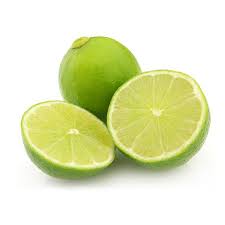
Which of these taste sour?
acids
bases
salts
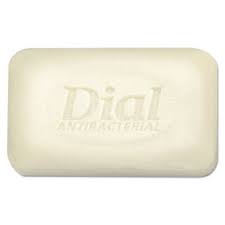
Which of these feel slippery?
bases
acids
salts
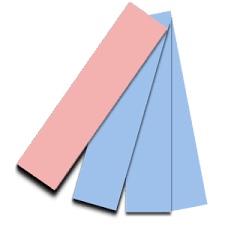
Litmus paper works because it has been treated with
natural dyes
radioactive isotopes
halogens
organic inhibitors
tick the natural indicators
turmeric
phenophthalien
iodine solution
methylene blue
When an equal strength acid and base are mixed, what kind of chemical reaction occurs?
Neutralization
Combustion
Oxdation
Decomposition
What pH range would you get for an acid?
0-6
7
7-14
2-10
What is the effect of Common salt in red litmus paper?
Blue
Red
Green
Remains same
Latic acid is found in.
Curd
Soap
Salt
Oil
Litmus’, a natural dye is an extract of which of the following?
China rose (Gudhal)
Blue berries (Jamun
Lichen
Beetroot
Our A posses B and mucous lining. These help in preventing dirt, dust and germs from entering our C.
A-Nostrils
B-Cilia
C-Respiratory system
A-Nostrils
B-Cilia
C-Ventilatory system
A-Nostrils
B-Vellus
C-Respiratory System
A-Lungs
B-Tragi
C-Digestive system
(a) respiration mainly takes place in the mitochondria.
Which is one of the processes/factors that produces ethanol in yeast during anaerobic respiration?
LACTIC ACID
FERMENTATION
The CITRIC ACID CYCLE
CARBON DIOXIDE
During diffusion in alveoli gases pass through (a) which are thin.
We yawn when we feel somnolent as (a) and yawing brings extra oxygen to the lungs.
The farmers sometimes loosen the soil because _________________
It helps the root to respire through the air present in the space between soil particles.
It helps plants to survive in high temperature.
Do plants have a respiratory system?
YES
NO
During inhalation diaphragm moves
DOWN
UP
Yeast is a
Multicellular
Carnivore
Anaerobe
Single-celled organism

Which of the following use spiracles for respiration?
mosquito & cockroach
earthworm & cockroach
fish & grasshopper
only cockroach
Gills take in oxygen from the water while lungs take in oxygen from the air.

Due to accumulation of which acid there is muscle cramp?
Hydrochloric
Lactric
Ammonium
Latic

What gas is MOST LIKELY represented by the arrow labeled X?
carbon dioxide
Oxygen
nitrogen
hydrogen

Label the part shown here .
Lungs
Heart
Gills
Rib Cage
What is the name of the organ which expand and contract while breathing?
Heart
Lungs
Diaphragm
Both b and c
When air is blown from mouth into test tube containing lime water, the lime water turns milky due to presence of?
Oxygen
Carbon dioxide
Nitrogen
Water vapour
In insects, exchange of gases takes place through?
Spiracles
Gills
Lungs
Stomata
During heavy exercise the breathing rate of a person slows down.
TRUE
FALSE
What is the size of a heart?
Closed fist
Hand
Open hand
Closed hand
Which of the following is the main circulatory fluid in our body ?
Plasma
Lymph
Blood
None of these
Why is color of blood red?
myoglobin
globulin
heamoglobin
fibrinogen
What is the function of white blood cells?
transport oxygen
fight against infection
clotting
all the above
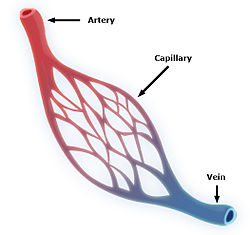
The blood vessel which carries blood to the heart
lymphatic vessel
capillaries
veins
arteries
Instrument used to measure the heart beat
Endoscope
Kaleidoscope
Microscope
Stethoscope
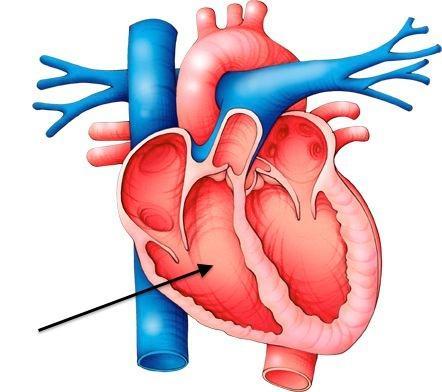
Human heart has -----------chambers
3
2
4
1
Aorta carries oxygenated blood to all parts of the body
True
False
No, pulmonary artery
No, pulmonary vein

The fluid part of blood is called-
Haemoglobin
White blood cells
Plasma
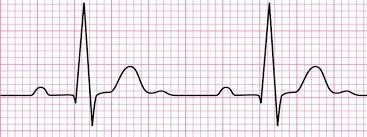
Type of device that measures the electrical currents created by the SA and AV nodes?
AED
MRI
ECG
CAT Scan
_____ is the muscular wall that devides the heart length wise-
Septum
Ventricle
Atrium
None
Platelets help in ______________.
exchange of gases
give blood it's colour
blood clotting
fight with infections and diseases
What is the largest artery in the Human Body called?
Pulmonary Artery
Pulmonary Vein
Aorta
Nerves

Blood carries _________ from the lungs to the cells of the body.
Argon
Neon
Carbon Dioxide
None of these

Heart is located in the _____________
Brain Cavity
Chest
Chest Cavity
Beside's Kidney
________ is the blood vessels which carry oxygen rich blood, from the heart, to all parts of the body.
Arteries
Veins
Systole
Xylem
The blood vessels, having thick elastic walls are called-
Arteries
Veins
Capillaries
Atria
The plants have a transport system called the _______________
Cardiovascular system
Vascular system
Angular system
Excretory system
Transport system
Xylem transports food to different parts of the plant
TRUE
FALSE
The circulatory system is also called as _________
heartery system
Cardiovascular system
Blood pumping system
Nervous system
Blood bank
The right atrium:
Receives Oxygenated blood
Receives Deoxygenated blood
Pumps Oxygenated blood
Pumps Deoxygenated blood
__________ are the structural and functional units of kidneys that filter excess waste, urea and water from the blood
Neurons
Nephrons
Neons
Plasma cells
RNA
Plants have pipe-like vessels to transport food and water from the soil. These vessels are made up of special cells, forming ______
Vascular Tissue
Xylem
Phloem
None of these
The device used to hear the heart beat is called a:
Microscope
Thermometer
Stethoscope
Anemometer
Which English Physician discovered the circulation of blood?
Albert Einstein
Isaac Newton
Nicola Tesla
William Harvey
The filtering unit in the human excretory system is called_______
Nephron
Neuron
Nephridia
Kidneyon
The process of cleaning blood of a person when their kidney damages through a machine is called___________
Ketolysis
Hydrolysis
Dialysis
Photolysis
Birds, insects and ______ excrete uric acid in _________ form.
Rats ; Solid
Lizards ; Semi Solid
Snakes ; Liquid
None of these
______ ______ is the only artery that carries carbon di-oxide rich blood.
Pulmonary artery
Capillary
Pulmonary Vein
Arota
Water is transported in plants through_________
Stomata
Xylem
Phloem
Root hair
1. The rate of heartbeat of a resting person is
68-83
60-72
55-78
72-80
The number of beats per minute is called the ______
Heart beat
Pulse rate
Tissue
All of these
Why plants become wilt?
Less water evaporate from the plants
The plant loss excessive amount of water through transpiration
The stomata of the plants are closed
The weather are cool.
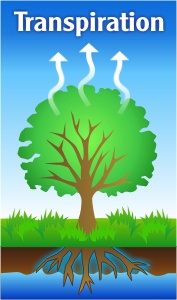
The function of transpiration is to transport _______ and ____________ from the roots to the leaves
water, mineral salts
food, nutrients
water, food
Which of the following indicates the pathway of water through a plant?
root hair cell --> xylem --> stomata
stomata --> root hair cell --> xylem
xylem --> stomata --> root hair cell
Root hairs help in absorption of water by
increasing the surface area
decreasing the surface area
holding the plant in the soil
none of the above



