wayground logo

Free Printable Worksheets

Font size

S
M
L
XL
Worksheets

Physics and Microbiology Review

Total questions: 175

Worksheet time: 3hrs 31mins
Name
Class
Date
1.
What is the speed of a car that travels 400 m in 20 minutes?
a)
20 miles/hr
b)
20 m/min
c)
800 m/min
d)
200 miles/hr
2.
A train travels 25 km in .5 hrs. How fast is the train going?
a)
25 miles/hr
b)
5 miles/hr
c)
125 km/hr
d)
50 km/hr
3.
A car travels 30 miles/hr for 3 hours, calculate the distance it will travel
a)
90 miles
b)
10 miles
c)
600 miles
d)
90 km
4.
A boat travels at 22 km/hr for 10 hrs, what distance will it travel?
a)
220 miles
b)
2.2 km
c)
220 km
d)
22 km
5.
A man runs at 10 m/min for 5 min, what distance will he run?
a)
10 miles
b)
10 m
c)
5 m
d)
50 m
6.
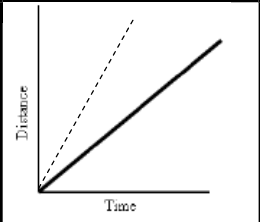
What does this graph represent?
a)
Constant Speed
b)
Acceleration
c)
Not moving
7.
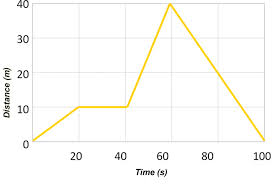
How long did it take this object to travel 10 m?
a)
0 s
b)
10 s
c)
15 s
d)
20 s
8.
How long did it take this object to travel back to its reference/starting point?
a)
20 s
b)
30 s
c)
60 s
d)
100 s
9.
At 60 seconds, how far had this object traveled? 
a)
0 m
b)
10 m
c)
20 m
d)
40 m
10.
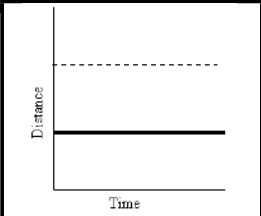
What does this graph represent?
a)
Constant speed
b)
Acceleration
c)
Not moving
11.
What is this graph showing?
a)
Constant Speed
b)
Acceleration (speeding up)
c)
Deceleration (slowing down)
d)
No motion
12.
What does this graph represent?
a)
Constant speed
b)
Acceleration
c)
Not moving
13.
What is happening at C?
a)
Stationary
b)
Accelerating
c)
Fast steady speed; moving away from the starting position
d)
Slower steady speed; moving away from the starting position
14.
What is happening at D?
a)
Stationary
b)
Accelerating
c)
Fast steady speed; moving away from the starting position
d)
Slower steady speed; moving away from the starting position
15.
What is happening at A?
a)
Stationary
b)
Accelerating
c)
Slower steady speed; moving away from the starting position
d)
Steady speed; returning to start position
16.

What is happening in this graph from point A to B?

a)

The object is accelerating.

b)

The object is not moving.

c)

The object is decelerating.

d)

The object is moving at a constant speed.

17.
What is happening in this graph from point B to C?
a)
The object is going down a hill.
b)
The object is returning to its starting location.
c)
The object is slowing down.
d)
The object is staying still.
18.
A student runs two times around a running path at a local park.  Each lap is 3 km.  The student completes the first lap in 20 minutes.  The student then sits on a bench and rest for 5 minutes before completing the second lap in 25 minutes.  Which graph bests represents the student's motion?
a)
F
b)
G
c)
H
d)
J
19.
The graph shows Ashley riding her bike to Maria's house. 
What was occurring from point B to point C?
a)
She was increasing her speed.
b)
She stopped for 4 minutes
c)
She was decreasing in speed
20.
Which runner won the race?
a)
A
b)
B
c)
C
21.

Time and distance data for a bicycle is provided in the graph. According to the data in the graph, what was the average speed of the bicycle?

a)

1 meter/second

b)

4 meters/second

c)

5 meters/second

d)

20 meters/second

22.

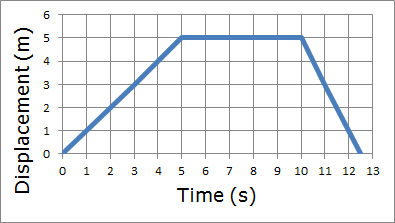
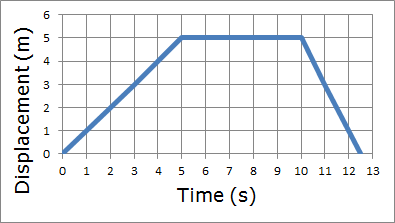
According to the graph how far does the person travel in the first 5 seconds?

a)

2 m

b)

10 m

c)

0 m

d)

5 m

23.
What is the person doing from 5 seconds to 10 seconds?
a)
Walking 
b)
Running
c)
Standing Still 
d)
Walking Fast
24.
What is the average speed of the person during the first 5 seconds?
a)
0 m/s
b)
1 m/s 
c)
3 m/s
d)
6 m/s 
25.
What is this object doing?
a)
moving at a constant speed away from start and then stops
b)
increasing speed and then stops
c)
decreasing speed and then constant speed
d)
moving at a constant speed away from start and then constant speed
26.
What is a force that opposes motion between two surfaces?
a)
friction
b)
acceleration
c)
velocity
d)
motion
27.
What is the difference between mass and weight?
a)
mass is how much matter is in an object, and weight is the gravitational pull on that object
b)
mass and weight are the same
c)
weight affects how much mass is in an object
d)
weight is determined by how many atoms make up an object
28.
What slows down the motion of an object or keeps it from starting?
a)
mass
b)
friction
c)
gravity
d)
magnetism
29.
What are two examples of forces?
a)
Art and Music
b)
A push or pull
c)
A stand or ground
d)
The dark side and the light side
30.
The picture of the position vs. time graph shows an object that is...
a)
accelerating/speeding up
b)
moving at a constant speed 
c)
not moving 
d)
accelerating/slowing down. 
31.
If these boys are pulling with the same amount of force.  What will happen?
a)
The boy in blue will win.
b)
They will not move at all.
c)
The boy in red will win.
d)
Both will fall down.
32.
The force that causes a ball to fall to the ground is ____________________________
a)
gravity
b)
lubricant
c)
friction
d)
motion
33.
The tendency of an object at rest to stay at rest unless it is acted upon by a force is ___________________
a)
inertia
b)
motion
c)
gravity
d)
lubricant
34.
Ms. Pittman was walking at a constant pace to warm up for a run, but then stopped to tie her shoe. After tying her shoe she began running.
What distance/ time graph represents Ms. Pittman.
a)
A
b)
B
c)
C
d)
D
35.
Which graph represents a students standing at their locker for a period of time.
a)
A
b)
B
c)
C
d)
D
36.
Who is traveling at the slowest speed? (click the words to view the picture)
a)
Finn
b)
Marceline
c)
Jake
d)
All are traveling the same speed
37.
Which force produces a change in motion?
a)
unbalanced force
b)
balanced force
c)
gravitational force
d)
frictional force
38.
What is Newton's First Law known as? The Law of
a)
Friction
b)
Mass
c)
Inertia
d)
Gravity
39.
Which has more Inertia? (so need more force to move) 
a)
Truck
b)
Ant
c)
A cat
d)
A skateboard
40.
What is the formula for force?
a)
F=M/A
b)
F=MA
c)
F=AX
d)
what is force?
41.
What is Newton's Third Law?
a)
Object in motion stays in motion and an object at rest stays at rest unless acted on by a outside force
b)
Force = mass x acceleration
c)
For every action there is an equal and opposite reaction
42.
According to Newton's second law, if you increase the force applied to an object :
a)
it accelerates more
b)
it doesn't move
c)
you get more inertia
d)
it decelerates
43.
What is Newtons 2nd law of motion?
a)
Pancakes 
b)
Force= Mass multiplied by acceleration
c)
For every action there is a equal and opposite  re-action.
d)
Law of gravity 
44.
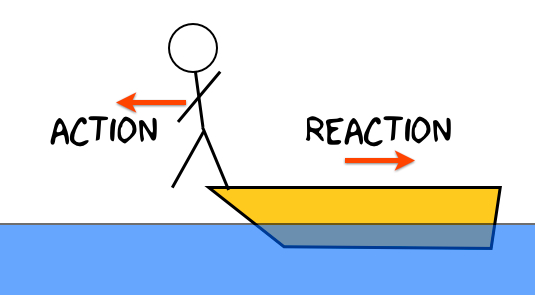
What law of motion does this picture represent?
a)
Newtons 1st law
b)
Newtons 4th law 
c)
Newtons 3rd law 
d)
Newtons 2nd law
45.
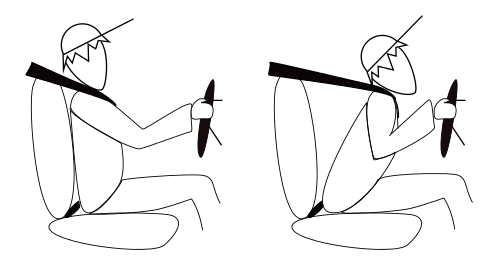
What Newtons law does this picture represent
a)
Newtons 2nd law 
b)
Law of gravity 
c)
Newtons 1st law
d)
Newtons 5th law
46.
What law of motion does this picture represent?
a)
Newtons 3rd law
b)
Newtons 4th law
c)
Newtons 1st law
d)
Newtons 2nd law 
47.
A distance vs. time graph shows an object's
a)
frame of reference
b)
speed
c)
acceleration
d)
favorite food
48.
When something has speed in a certain direction it is called ___________.
a)
motion
b)
position
c)
velocity
d)
speed
49.
Acceleration of an object happens when things ________
a)
slow down
b)
go faster
c)
change direction (turn)
d)
All of the above
50.
Forces always act in equal and opposite pairs.
a)
Newton's 1st Law
b)
Newton's 3rd Law
c)
Newton's second law
51.
An empty truck and a fully loaded truck are next to each other at a traffic light. When the light turns green, the lighter truck increases speed more quickly. Which of these best explains this situations
a)
Newton's first law
b)
Newton's second law
c)
Newton's third law
d)
Conservation of momentum
52.
Newton's first law of motion states that __________.
a)
when a force is applied on an object, there is an equal force applied by the object in the opposite direction
b)
hen a force acts on an object, its acceleration is in the same direction as the force
c)
an object will remain at rest or keep moving with a constant velocity unless a force acts on it
d)
cceleration is calculated by dividing the force exerted on an object by the mass of the object
53.
An automobile you are riding in suddenly stops, but you continue to go forward.
a)
Newton's
1st
Law of Motion
b)
Newton's
2nd
Law of Motion
c)
Newton's
3rd
Law of Motion
54.
When the force on a car is doubled, the acceleration is doubled.
a)
Newton's
1st
Law of Motion
b)
Newton's
2nd
Law of Motion
c)
Newton's
3rd
Law of Motion
55.
A stationary bumper car is set in motion by the outside force of another bumper car colliding with it.
a)
Newton's
1st
Law of Motion
b)
Newton's
2nd
Law of Motion
c)
Newton's
3rd
Law of Motion
56.
A magician pulls a table cloth from under a table of dishes.
a)
Newton's
1st
Law of Motion
b)
Newton's
2nd
Law of Motion
c)
Newton's
3rd
Law of Motion
57.
A skater pushes another skater forward, but the one pushing moves backwards.
a)
Newton's
1st
Law of Motion
b)
Newton's
2nd
Law of Motion
c)
Newton's
3rd
Law of Motion
58.
The harder you hit a baseball, the faster it accelerates.
a)
Newton's
1st
Law of Motion
b)
Newton's
2nd
Law of Motion
c)
Newton's
3rd
Law of Motion
59.
A flat sloping surface that connects lower and higher elevations. It makes raising objects easier.  
a)
wedge
b)
screw
c)
lever
d)
inclined plane 
60.
An inclined plane wrapped around a rod forms this simple machine 
a)
lever
b)
pulley
c)
screw
d)
wedge 
61.
A simple machine that consists a rigid bar that pivot about a fixed point
a)
lever
b)
pulley
c)
wheel and axle
d)
fulcrum 
62.
An axe is an example of a
a)
pulley
b)
inclined plane
c)
screw
d)
wedge 
63.
A seesaw is an example of a  
a)
wedge
b)
lever 
c)
inclined plane 
d)
pulley 
64.
A device that has two or more simple machines working together 
a)
fulcrum 
b)
pulley
c)
compound (complex) machine 
d)
motor 
65.
Stairs
a)
wedge
b)
pulley
c)
inclined plane
d)
wheel and axle
66.
What type of simple machine is found on the cap of a pickle jar?
a)
lever
b)
inclined plane
c)
pulley
d)
screw
67.
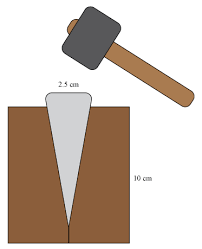
This device
a)
wedge
b)
lever
c)
incline plane
d)
wheel and axle
68.
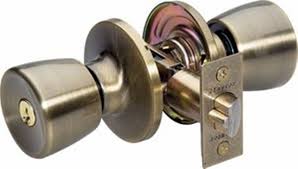
What type of simple machine is this?
a)
wheel and axle
b)
gear
c)
lever
d)
inclined plane
69.
The fixed point on the lever is called 
a)
load
b)
resistance
c)
bar
d)
fulcrum
70.
The transfer of energy that occurs when a force makes an object move is known as 
a)
effort
b)
potential 
c)
kinetic 
d)
work 
71.
It takes 20 N of force to move a box a distance of 10 m. How much work is done on the box ?
a)
200 J
b)
20.0J
c)
2 J
d)
200 N
72.
You apply a force of 18 N to a dresser and move it 3.0 m. How much work did you do on the dresser?
a)
54 N
b)
6.0 J
c)
54 J
d)
27 J
73.
If a student uses 10 Newtons of Force to push a chair 5 meters, how much is work is being done?
a)
2 Joules
b)
.5 Joules
c)
50 Joules
d)
20 Newtons
74.
Which of the following IS NOT an example of work being done?
a)
Pushing a cart in a store
b)
Shooting a basketball
c)
A stand off in tug of war
d)
Running a mile
75.
I do 132 Joules of work on a bookcase. If I apply a force of 6 Newtons, how far have I moved the bookcase?
a)
810 meters
b)
792 meters
c)
22 meters
d)
320 meters
76.
units of force are
a)
netwons
b)
grams
c)
joules
d)
meters
77.
A set of pulleys is used to lift a piano weighing 1,000 newtons.  The piano lifted 3 meters in 60 seconds  How much power is used?
a)
16.67 watts
b)
50 watts
78.
How much power is used if a force of 35 newtons is used to push a box a distance of 10 meters in 5 seconds?
a)
70 watts
b)
1750 watts
79.
1. A book weighing 1.0 newton is lifted 2 meters.  How much work was done?
a)
2 J
b)
0.5 J
80.
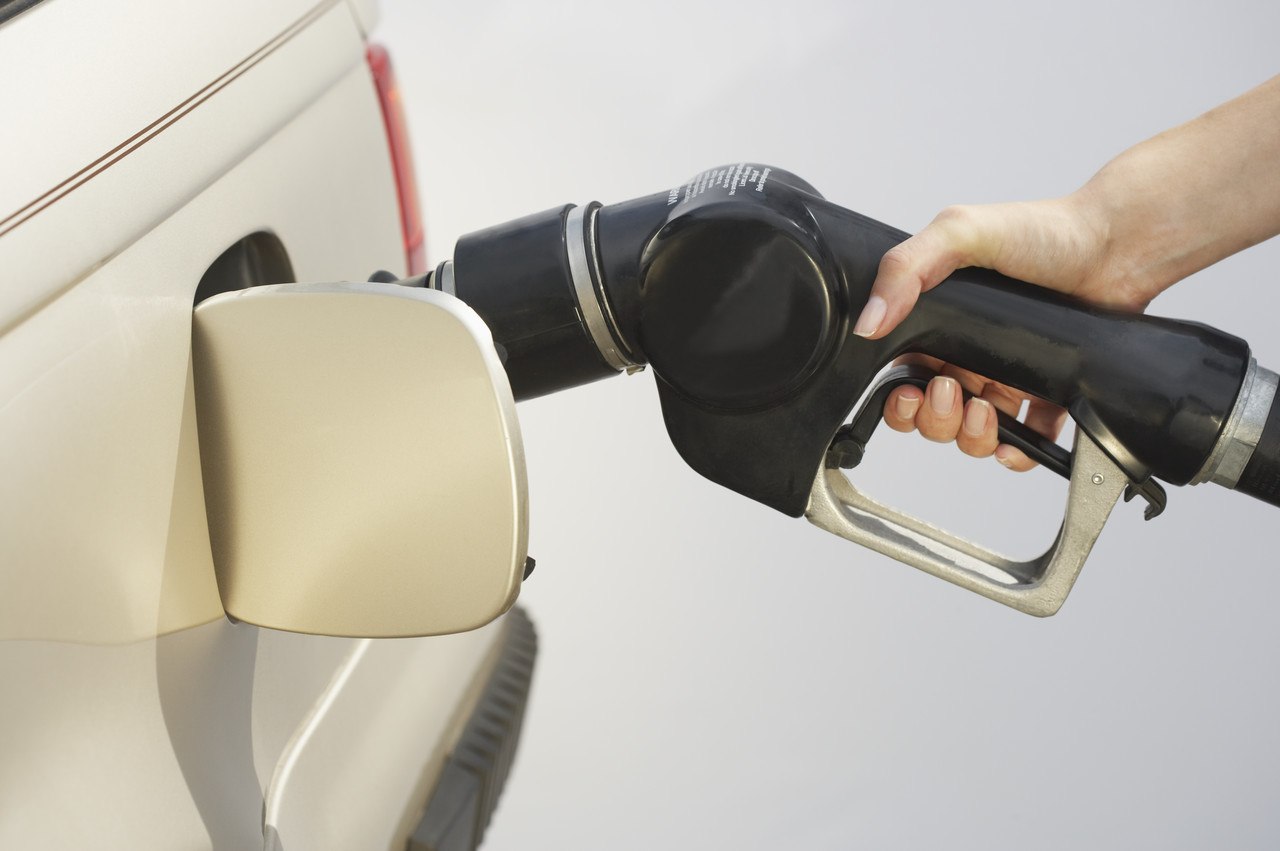
Which energy conversion is taking place when you put gasoline in a car?
a)
thermal -> electrical
b)
mechanical -> electrical
c)
chemical -> mechanical
d)
mechanical -> electromagnetic
81.
what type of energy is stored in a battery?
a)
electrical
b)
chemical
c)
thermal
d)
mechanical
82.
Electrical Energy is transferred to _____ Energy.
a)
Thermal
b)
Solar
c)
Electrical
d)
None
83.
Which energy transformation occurs in a toaster?
a)
chemical to electric
b)
electric to thermal
c)
kinetic to chemical
d)
thermal to potential
84.
A battery converts what type of energy to another?
a)
sound to kinetic
b)
light to heat
c)
mechanical to electrical
d)
chemical to electrical
85.
Energy transformations occur when...
a)
energy is created through conduction
b)
energy changes from one form to another
c)
two forces slide together that are touching
d)
a chemical reaction takes place
86.
The roller coaster cart has the most gravitational potential energy at position-
a)
W
b)
X
c)
Y
d)
Z
87.
Which items would have this energy transformation: chemical energy -> mechanical energy?
a)
person running
b)
candle burning
c)
windmill turning
d)
playing a violin
88.
A hairdryer converts -- 
a)
electrical energy into chemical
b)
electrical energy into thermal
c)
chemical energy into mechanical
d)
thermal energy into mechanical
89.
The diagram shows a complete circuit with a battery and a buzzer making noise. This circuit works by transforming -
a)
chemical energy to electrical to sound.
b)
electrical energy to thermal to light.
c)
sound energy to electrical to chemical.
d)
mechanical energy to electrical to sound.
90.
What machine changes electrical energy into light and sound energy?
a)
battery
b)
lightbulb
c)
alarm clock
d)
apple
91.
Which of the following converts chemical energy to thermal energy?
a)
Battery
b)
Person riding a bike
c)
Automobile
d)
Camp Fire
92.
A student listens to music with a digital music player, similar to the one shown below. Which best describes the energy transformations that take place in the music player?
a)
Mechanical to chemical to electrical
b)
Chemical to sound to electrical
c)
Chemical to electrical to sound
d)
Electrical to heat to sound
93.
Where is the potential energy the greatest?
a)
A
b)
B
c)
C
d)
D
94.
Which of the following chemical energy to sound and radiant energy?
a)
solar calculator
b)
windmill
c)
glow stick
d)
firecracker
95.
Name the energy transformations taking place when you plug in a lamp and turn it on. 
a)
Mechanical to electrical
b)
Electric to radiant
c)
Chemical to mechanical to thermal
96.
Which of these is an example of light energy being transformed into chemical energy?
a)
A glow stick lights up when broken.
b)
Water heated by the sun evaporates.
c)
A plant makes sugar in the sunlight.
d)
A battery causes a buzzer to vibrate.
97.
a)
A
b)
B
c)
C
98.
a)
A & B
b)
B & C
c)
A & C
99.
a)
At the top of the slide
b)
At the bottom of the slide
100.
a)
Potential
b)
Kinetic
101.
a)
Potential
b)
Kinetic
102.
a)
1
b)
2
c)
3
d)
4
103.
a)
1
b)
2
c)
3
d)
4
104.
a)
A
b)
B
c)
C
d)
D
105.
a)
1
b)
2
c)
3
d)
4
106.
a)
1
b)
2
c)
3
d)
4
107.
A series circuit has ____ path(s) that the electric current can take. 
a)
One
b)
Two 
c)
Three 
d)
Four
108.
In a parallel circuit, if one connection is broken, all of the connections stop working.
a)
True
b)
False
109.
Which of these objects is an insulator?
a)
Copper Wire
b)
Paper Clip
c)
Steel Pole
d)
Rubber Gloves
110.
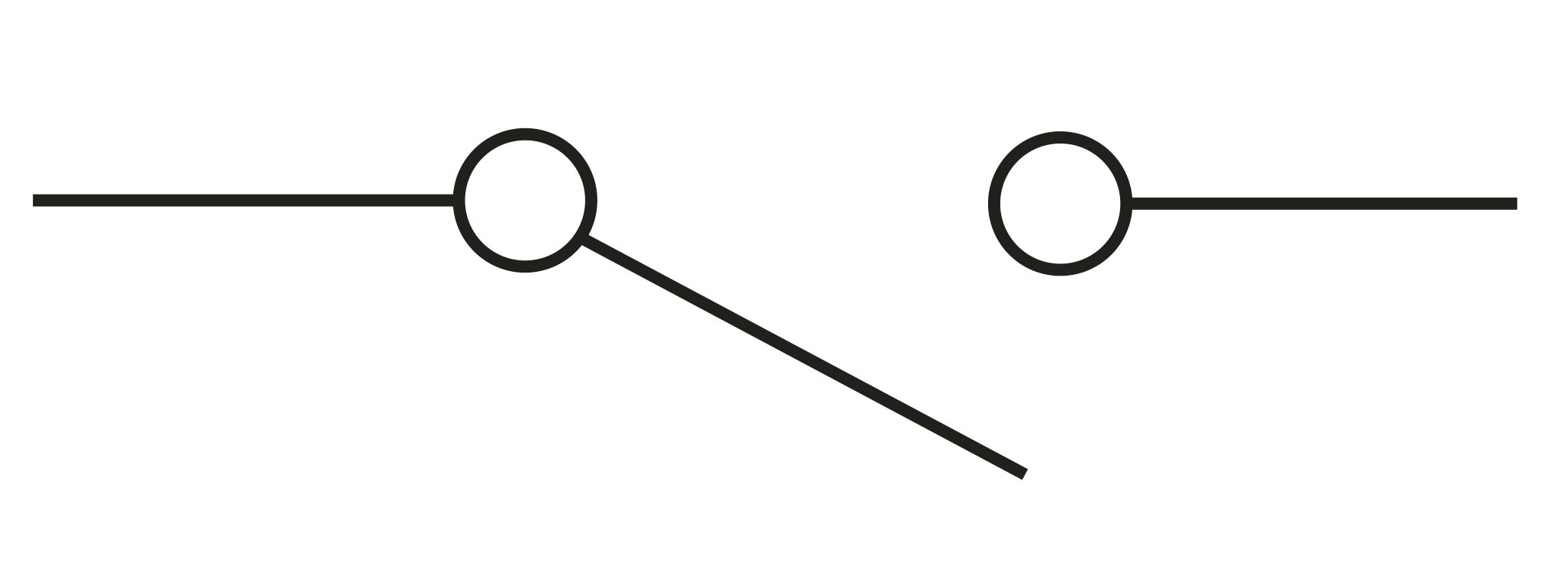
Would would best complete this circuit?
a)
A wire
b)
A switch
c)
A battery
d)
A light bulb
111.
What kind of circuit is this?
a)
series
b)
parallel
112.
this is the symbol for a _____?
a)
switch
b)
light 
c)
battery
d)
wires
113.
What kind of circuit is this?
a)
Series
b)
Consecutive
c)
Parallel
d)
Training
114.
what is the control center in a cell
a)
mitochondria
b)
DNA
c)
nucleus
d)
movement
115.
also known as the "powerhouse" 
a)
cell membrane
b)
storage
c)
cytoskeleton
d)
mitochondria
116.
Robert Hooke, Anton van Leeuwenhoek, Theodor Schwann, Rudolf Virchow, and Matthias Schliden were all responsible for what theory?
a)
The Theory of Gravity
b)
The Theory of Relativity
c)
The Cell Theory
d)
The Theory of Continental Drift
117.
All cells come from___________ cells.
a)
pregnant
b)
pre-existing
c)
paternal
d)
pin size
118.
What would happen to the plant cell without the chloroplasts?
a)
There wouldn't be an organelle that performs photosynthesis
b)
There wouldn't be an organelle that serves as the resevoir for water and waste
c)
There wouldn't be an organelle that regulates what comes in and out of the cell
d)
They wouldn't be an organelle that makes necesary proteins
119.
What do all of these organisms have in common?
a)
They all have uniform offspring
b)
They are all made of cells
c)
They possess the same features
d)
They have the same internal and external structures
120.
What tool do you use to view the cells?
a)
metric ruler
b)
centrifuge
c)
microscope
d)
pipette
121.
Which of the following is NOT a cell theory.
a)
All non-living things are made of cells
b)
All cells come from pre-existing cells
c)
Cells are the basic unit of structure and function of all living things
122.
Rocks are not living because
a)
they never move
b)
they aren't needed for humans
c)
they are not made of cells
d)
they don't break down
123.
Controls what enters and leaves the cell
a)
Mitochondria
b)
Cell Membrane
c)
Cell Wall
d)
Nucleus
124.
Stores food and water for the cell.
a)
Cytoplasm
b)
Cell Wall
c)
Vacuole
d)
Nucleus
125.
What is the fluid inside a cell called? 
a)
Endoplasimic Reticulum
b)
Orange Juice
c)
Water
d)
Cytoplasm
126.
This organelle helps plants keep their rigid structure. 
a)
Cell wall
b)
Cell membrane
c)
Chloroplast
d)
Nucleus
127.

Who looked at cork and named the cell?

a)

Robert Hooke

b)

Van Leeuwenhoek

c)

Robert Brown

d)

Francesco Redi

128.

The Cell Theory states...

a)

atoms create all matter

b)

living things evolve

c)

the cell is the backbone of all matter

d)

cells are the basic unit of structure and organization of organisms

129.

This scientist stated: "All animals are made of cells".

a)

Matthias Schleiden

b)

Theodor Schwann

c)

Robert Hooke

d)

Rudolf Virchow

130.

The scientist who stated: All plants are made of cells.

a)

Matthias Schleiden

b)

Rudolf Virchow

c)

Robert Hooke

d)

Aristotle

131.
Who was the "scientist" who observed pond water and teeth scrapings in his microscope?
a)
Hooke
b)
Leeuwenhoek
c)
Schleidian
d)
Virchow
132.
Which of the following is NOT one of the basic points of Cell Theory?
a)
All living things are made of cells.
b)
The cell is the smallest living thing that can perform all the functions of life.
c)
Cells are too small to see without a microscope.  
d)
All cells must come from pre-existing cells.
133.

What scientist proposed that all cells come from preexisting cells

a)

Theodor Schwann

b)

Robert Hooke

c)

Rudolf Virchow

d)

Matthias Schleiden

134.

What type of cell has no nucleus?

a)

prokaryotic

b)

eukaryotic

c)

plant

d)

animal

135.

what type of cell has a nucleus and complex organelles

a)

prokaryotic

b)

eukaryotic

c)

bacteria

136.
Which type of cell is bigger?
a)
Prokaryotic
b)
Eukaryotic 
137.
All eukaryotes and prokaryotes are surrounded by a _____.
a)
cell wall
b)
cell membrane
c)
cell envelope
d)
loving, supportive family
138.
Which type of cell?
a)
Prokaryote
b)
Eukaryote
139.
Which type of cell?
a)
Prokaryote
b)
Eukaryote
140.
Name this protist?
a)
Euglena 
b)
Amoeba 
c)
Paramecium 
d)
Volvox
141.
Name this protist?
a)
Volvox
b)
Euglena 
c)
Amoeba 
d)
Paramecium 
142.
Name this protist?
a)
Paramecium 
b)
Amoeba 
c)
Volvox
d)
Euglena 
143.
Name this protist?
a)
Amoeba
b)
Euglena
c)
Paramecium 
d)
Volvox
144.
Fission, budding, and regeneration are all examples of what kind of reproduction? 
a)
Asexual Reproduction 
b)
Sexual Reproduction 
145.
How does this protist move? 
a)
Pseudopods 
b)
Cilia 
c)
Flagellum
146.
How does this protist move? 
a)
Flagellum
b)
Cilia 
c)
Pseudopods
147.
How does this protist move?
a)
Cilia 
b)
Flagellum
c)
It just floats about
d)
Pseudopods
148.
How does this protist move? 
a)
Cilia
b)
Pseudopods
c)
Flagellum 
149.
A protist that can not make its own food is called what? 
a)
Autotroph
b)
Heterotroph 
150.
A protist that can make its own food is called what? 
a)
Heterotroph
b)
Autotroph
151.
Which protist has an eyespot?
a)
Amoeba
b)
Volvox
c)
Euglena 
d)
Paramecium 
152.
What are the finger like projections called? 
a)
Flagella 
b)
Cilia 
c)
Pseudopods
d)
Veela 
153.
Which protists are autotrophic? 
a)
Euglena and Volvox
b)
Amoeba and Euglena 
c)
Volvox and Amoeba 
d)
Paramecium Only 
154.
Which protists are heterotrophic?
a)
Amoeba and Volvox
b)
Euglena and Paramecium 
c)
Paramecium and Ameoba
d)
Euglena and Volvox
155.
What type of cells are protists?
a)
Prokaryotic 
b)
Eukaryoitc 
156.
Interphase is when a cell is growing, replicating its DNA, and carrying out cell processes. Which of these is correct regarding its occurence?
a)
It occurs once before mitosis and once before meiosis.
b)
It occurs once before mitosis and twice before meiosis.
c)
It occurs once before mitosis and does not occur before meiosis.
d)
It does not occur before mitosis and occurs once before meiosis.
157.
Why would it be important to replicate DNA before a cell divides in mitosis or meiosis?
a)
In order for genetic information to be transferred into daughter cells.
b)
In order for the cell to be able to increase in size.
c)
In order for the DNA to be contained in the nucleus.
d)
In order for the cell to re-order the DNA sequencing in the new cells.
158.
In mitosis, the two resulting cells are
a)
different from the starting cell and identical to each other.
b)
different from the starting cell and different from each other.
c)
identical to the starting cell and different from each other.
d)
identical to the starting cell and identical to each other.
159.
Meiosis produces different types of cells than mitosis. If there was a "meiosis club," all of these cells could be included EXCEPT
(Which cell type is not produced in meiosis?)
a)
gametes
b)
body cells
c)
sperm cells
d)
egg cells
160.
In meiosis, crossing over occurs in prophase 1. What is the significance of this event?
a)
This process ensures that chromosomes are evenly divided into daughter cells.
b)
This process can lead to genetic variation in daughter cells.
c)
This process can create gaps in the chromosome DNA for RNA to bind.
d)
This process allows for spindles to connect to the chromosomes in order to pull chromosomes apart.
161.
Mitosis is useful for the creation of new cells which is important for all of the following EXCEPT
a)
organism growth.
b)
repair of damage.
c)
replacement of worn out cells.
d)
generation of gametes.
162.
Fruit fly body cells have 8 chromosomes. After mitosis, you would expect a resulting fruit fly daughter cell to have -
a)
16 chromosomes.
b)
46 chromosomes.
c)
8 chromosomes.
d)
4 chromosomes.
163.
Meiosis makes sperm and egg cells. In humans, sperm and egg cells each have _____ chromosomes. Therefore a fertilized human egg cell (sperm and egg cell combined) would create a cell with _____ chromosomes.
a)
23, 46
b)
46, 23
c)
2, 4
d)
50, 100
164.
Have you ever heard of a skin graft? Skin cells can be harvested from one area and be grown in order to help burn victims or other skin injuries. Which process would result in the development of more skin cells in this treatment? 
a)
Mitosis
b)
Meiosis
c)
Crossing Over
d)
Interphase
165.
In meiosis, the four resulting cells are 
a)
identical to the starting cell and different from each other.
b)
different from the starting cell and different from each other. 
c)
identical to the starting cell and identical to each other.
d)
different from the starting cell and identical to each other.
166.
a)
Anaphase
b)
Cytokinesis
c)
Telophase
d)
Metaphase
167.
a)
Cytokinesis
b)
Interphase
c)
Anaphase
d)
Metaphase
168.
a)
Anaphase
b)
Cytonkinesis
c)
Interphase
d)
Prophase
169.
a)
Cytokinesis
b)
Anaphase
c)
Telophase
d)
Prophase
170.
The phase in mitosis where chromosomes move away and are pulled apart by spindles to opposite sides of the cell.
a)
prophase
b)
anaphase
c)
metaphase
d)
telephase
171.
Chromosomes condense from long stands into rod like structures. 
a)
Prophase
b)
Interphase
172.

Which is Metaphase?

a)

A

b)

E

c)

C

d)

F

173.
What is the longest stage of the cell cycle called?
a)
Cytokinesis
b)
M phase
c)
Interphase
d)
G1 Phase
174.
How many stages are in mitosis?
a)
1
b)
2
c)
3
d)
4
175.
Put the following stages of mitosis in order: anaphase, prophase, metaphase, and telophase. 
a)
prophase, metaphase, telophase, anaphase
b)
prophase, anaphase, metaphase, telophase
c)
prophase, metaphase, anaphase, telophase
d)
prophase, telophase, metaphase, anaphase