wayground logo

Free Printable Worksheets

Font size

S
M
L
XL
Worksheets

Semester 1 Review

Total questions: 175

Worksheet time: 3hrs 48mins
Name
Class
Date
1.
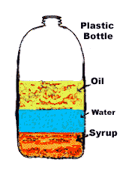
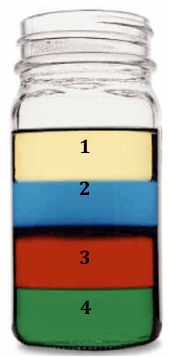
Put the liquids in order from most dense to least dense?
a)
4, 3, 2, 1
b)
1, 2, 3, 4
c)
3, 4, 2, 1, 
d)
4, 3, 1, 2
2.
Which liquid is the least dense?
a)
oil
b)
water
c)
syrup 
d)
plastic bottle
3.
If an object has a density of 3.6 g/cm^3 and you put it into water, will it sink or float?  
a)
sink
b)
float
4.
What is the formula for density?
a)
density = mass x volume
b)
density = mass / volume
c)
density = mass + volume
d)
density = mass - volume
5.
Jack has a rock. The rock has a mass of 14 g and a volume of 2 cm3. What is the density of the rock?
a)
7 mL
b)
7 g/cm3
c)
28 g/cm3
d)
1/7 g/cm3
6.
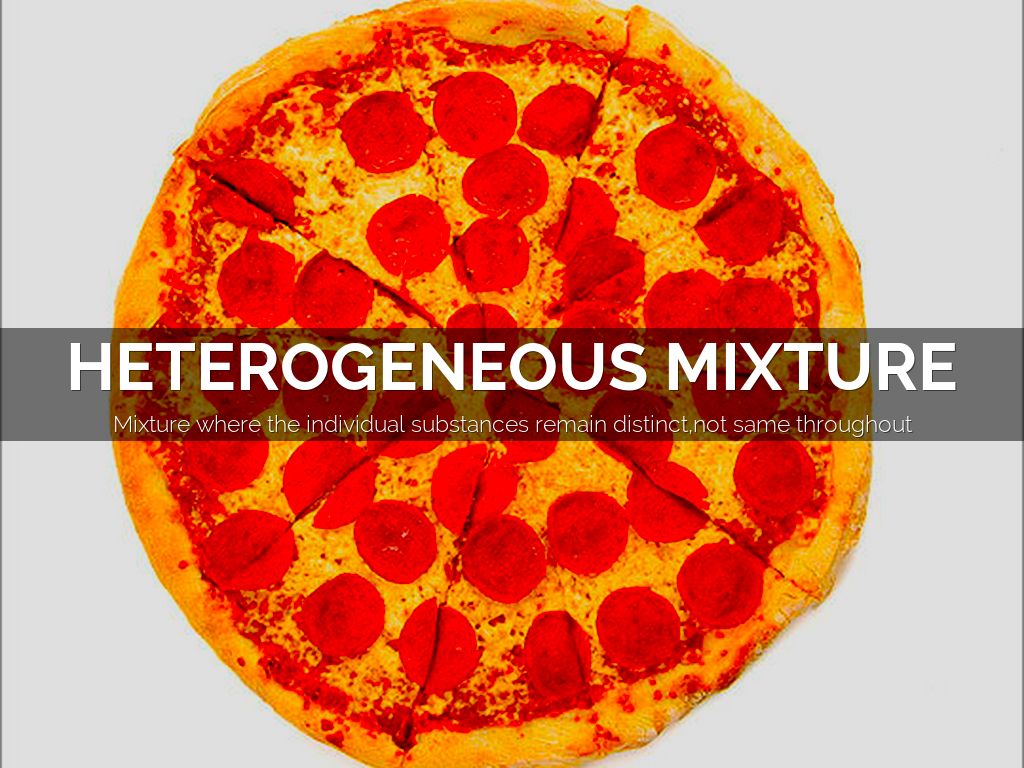
What does it mean if a mixture is heterogeneous?
a)
you can see the different parts
b)
cannot tell one part from another
c)
very well blended
d)
made of elements
7.
What does it mean if a mixture is homogeneous?
a)
you can see the different parts
b)
cannot tell one part from another
c)
chunks of particles
d)
made of elements
8.
To separate trail mix what method should you use?
a)
filtration 
b)
sorting
c)
magnet
d)
boiling
9.
To separate noodles from water what method should you use?
a)
filtration with a strainer
b)
boiling while it is cooking
c)
magnet for the noodles
10.
Which mixture separation method would use to separate sugar from water?
a)
filtration 
b)
magnet
c)
boiling/evaporation
d)
sorting physically
11.

characteristic of a substance that is observed during a reaction in which the chemical composition or identity of the substance is changed. this is the definition of....

a)

Conductivity

b)

Reactivity

c)

Physical Property

d)

Chemical Property

12.

any property that is measurable, whose value describes a state of a physical system. The changes in the physical properties of a system can be used to describe its changes between momentary states.This is the definition of........

a)

physical property

b)

Chemical Property

c)

Hazardous Material

d)

Evidence

13.

what is the definition of Conductivity.......

a)

the degree to which a specified material conducts electricity, calculated as the ratio of the current density in the material to the electric field that causes the flow of current. It is the reciprocal of the resistivity.

b)

a substance made by mixing other substances together.

c)

the decimal measuring system based on the meter, liter, and gram as units of length, capacity, and weight or mass.

d)

a metric unit of capacity, formerly defined as the volume of 1 kilogram of water under standard conditions, now equal to 1,000 cubic centimeters (about 1.75 pints).

14.
An ice cube (0.92 g/mL) is dropped into a cup of maple syrup (1.37 g/mL) and baby oil (0.83 g/mL)   Where will the ice cube be positioned in the cup?
a)
On top of the baby oil
b)
in between the baby oil and the maple syrup
c)
on the bottom of the cup
d)
who would put those three ingredients together??
15.
What method would you use to separate pebbles from saltwater?
a)
a filter
b)
boil the water
c)
add more salt
d)
use forceps
16.
Solubility is a ________ property. 
a)
neat 
b)
chemical 
c)
physical 
d)
an organic 
17.
Calculate the density of the cube.
a)
2 g/cm3
b)
4 g/cm3
c)
6 g/cm3
d)
8 g/cm3
18.
Frank has a liquid. It has a mass of 6 g and a volume of 9 mL. What is its density?
a)
3 g/mL
b)
.66 g/mL
c)
1.33 g/mL
d)
54 g/mL
19.
If this substance takes up 6 ml of space, what is its mass?
a)
 6 ml
b)
6 grams
c)
0 grams
d)
4 grams 
20.
Which substance is the MOST dense?  ** Use the key
a)
A
b)
B
c)
C
d)
Cannot be determined by the data provided.
21.
What is the volume of Object X?
a)
10.0 cm3
b)
15.0 cm3
c)
20.0 cm3
d)
25.0 cm3
22.
A gas has a mass of 5 grams and a volume of 4 L. According to the table what is the gas?
a)
Neon
b)
Nitrogen
c)
Oxygen
d)
Fluorine
23.
As part of a classifying elements lab Joe was finding the density of different samples. One sample had a mass of 26.4 and a volume of 12 grams. What element is it?
a)
Sulfur
b)
Carbon
c)
Boron
d)
Krypton
24.
A beaker contains a liquid and an object. What must be true regarding the liquid and the object seen in the beaker?
a)
The object has more mass than the liquid. 
b)
The liquid is denser than the object. 
c)
The object is denser than the liquid. 
d)
The liquid has more mass than the object. 
25.
Ricardo measured an empty graduated cylinder on a balance. He then filled the graduated cylinder with 50 mL of a liquid and measured the cylinder again. Which question is Ricardo most likely trying to answer?
a)
What is the volume of the liquid?
b)
How quickly will the liquid boil?
c)
What is the mass of the liquid?
d)
How quickly will the liquid evaporate?
26.
An irregularly shaped rock was lowered into a graduated cylinder holding a volume of water equal to 50 ml. The height of the water rose to 75 ml. If the mass of the stone was 250 g, what was its density?
a)
15 g/mL
b)
5 g/mL
c)
10 g/mL
d)
20 g/mL
27.

A mystery substance has a volume of 2.3 mL and a mass of 3.657 grams. What substance in the data table is most likely the mystery substance?

a)

Salt

b)

Sugar

c)

Baking Soda

28.

A plastic toy was dropped into a beaker of liquids with different densities (listed above). If the plastic toy has a mass of 3.657g and a volume of 2.3 cm3 which liquid in the beaker will the toy float above?

a)

above liquid A

b)

above liquid B

c)

above liquid C

d)

above liquid D

29.

Which of the following is a chemical property of a substance? The substance______________.

a)

conducts electricity

b)

reacts with hydrochloric acid

c)

scratches glass

d)

is more dense than water

30.

Which of the following is a list of physical properties?

a)

density, conductivity, reaction with acid

b)

flexibility, reaction with hydrochloric acid, color

c)

temperature change when a chemical is added, texture, density

d)

electrical conductivity, hardness, ability to transmit light

31.

Most elements are what phase at room temperature?

a)

solid

b)

liquid

c)

gas

d)

plasma

32.

Which of the following is a noble gas?

a)

hydrogen

b)

carbon dioxide

c)

argon

d)

oxygen

33.

An element contains

a)

one kind of atom

b)

two or more kinds of atoms

c)

one kind of molecule

d)

two or more kinds of molecules

34.

Which of the following is a compound?

a)

N

b)

Na

c)

CO

d)

Ca

35.

A student pours two different solutions into a glass beaker. Which of the following would indicate that a chemical reaction took place between two solutions?

a)

A change in color of a solution

b)

The formation of a precipitate

c)

A change in temperature

d)

All of the above

36.

While working on an activity to investigate chemical reactions, a student mixes two clear liquids in a beaker. When the two liquids mix, the result is a clear liquid and an orange solid precipitate. Which best describes the reactants that the student worked with?

a)

The initial two clear liquids

b)

The resulting clear liquid and the beaker

c)

The orange solid precipitate

d)

All of the above

37.

A student was given a sample of one of the plastics to identify. She discovered that it was flexible, would float on water, and was resistant to breaking at low temperatures. What was the name of her plastic?

a)

Polystyrene

b)

Polyurethane

c)

Polyamide

d)

Low Density Polyethylene

38.

Which property (ies) would be the most useful in identifying Polyamide? Explain.

a)

Resistance to softening at high temperatures

b)

Resistance to strong acids or bases

c)

Density relative to water

d)

Resistance to solvents such as acetone

39.

Which plastic would not make a good container for food in a freezer?

a)

Polystyrene

b)

Polyurethane

c)

Polyamide

d)

Low Density Polyethylene

40.

Which property is least helpful when identifying a material?

a)

texture

b)

luster

c)

shape

d)

color

41.

Which of the following are signs of a chemical reaction? (choose all correct answers)

a)

color change

b)

a precipitate (solid) forms in a liquid

c)

dissolving

d)

freezing

42.

What happens to a molecule’s atoms during a chemical reaction?

a)

The atoms are destroyed

b)

New atoms form

c)

The atoms are rearranged and join to different atoms

d)

The atoms bubble and fizz

43.

How many ELEMENTS are in one molecule of sulfuric acid?

(see chemical formula above)

a)

2

b)

3

c)

6

d)

7

44.

Which of the following describes elements ? (choose all correct answers)

a)

the atoms are all the same

b)

all elements are found in the periodic table

c)

at least two types of atoms must join together

d)

most are made in laboratories

45.

Which list below correctly identifies the elements and compounds from above?

a)

The element is: H

The compounds are: H2O, Pb and CN

b)

The elements are: H and H2O

The compounds are: Pb and CN

c)

The elements are: H and Pb

The compounds are: H2O and CN

d)

They are all compounds

46.
When a another scientist does someone's experiment to see if the results are valid?
a)
repetition
b)
replication
c)
experimental method
d)
controlled variable
47.
Caira reads in a science journal that replication and repetiton are so important, but she did not understand the  difference between them. Which of the following best explains the two terms?
a)
Repetition is when a scientist repeats an experiment; replication is when a scientist conducts an experiment on genetic material.
b)
Repetition is when a scientist does the same experiment a number of times; replication is when other scientists reproduce a scientist’s experiment.
c)
Repetition is when a scientist publishes in more than one scientific periodical; replication is when another scientist reproduces another scientist’s results.
d)
Repetition is when a scientist commits an error in an experiment the first time and must repeat it; replication is when a scientist repeats an experiment to make sure it is valid.
48.
Josue goes to Silver River each week for 4 weeks and collects 5 samples of water to test the pH.
a)
repetition
b)
replication
49.
An environmental group contacts Nina to get her procedures so that they can check her results.
a)
repetition
b)
replication
50.
In an exothermic reaction, heat is ...
a)
taken in or absorbed
b)
given out or released
51.
In an endothermic reaction, heat is ...
a)
taken in or absorbed
b)
given out or released 
52.
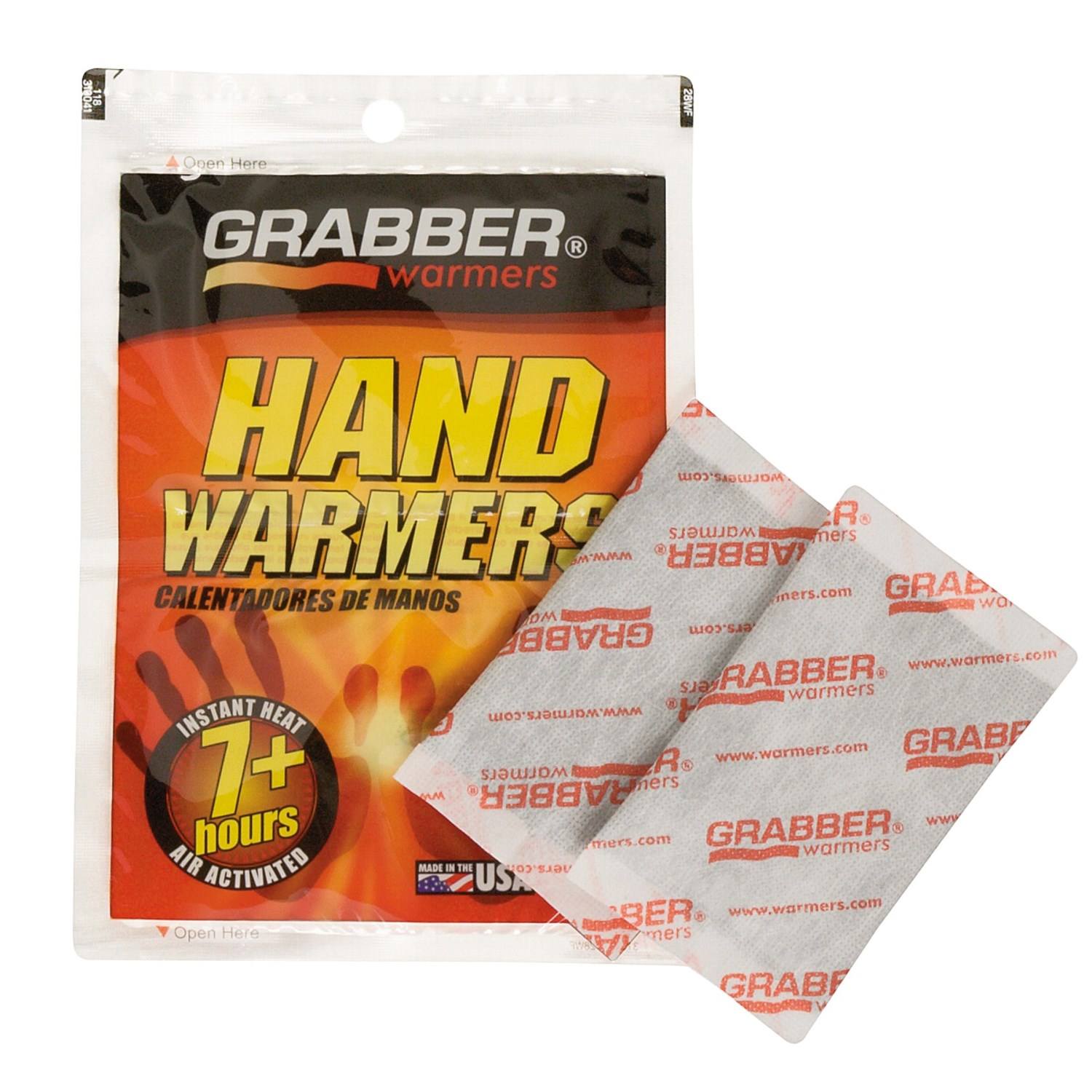
What type of reaction occurs in a hand warmer
a)
exothermic
b)
endothermic
53.
Exothermic reactions...
a)
Absorb energy
b)
Release energy
c)
Release Color
d)
Absorb Color
54.
Is photosynthesis an exothermic or endothermic reaction?
a)
Endothermic
b)
Exothermic
c)
Neither
55.
Sugar dissolves in water.  This is an example of....
a)
Physical Change
b)
Chemical Change
56.
When you freeze water, it turns to ice.  What kind of change is this?
a)
 Physical
b)
Chemical
57.
What is the left part of a chemical equation called?
H2 + O → H2O
a)
Reactants
b)
Products 
c)
Yields 
d)
Chemical Equation 
58.
What is the right part of a chemical equation called?
H2 + O H2O
a)
Reactants
b)
Products 
c)
Yields 
d)
Chemical Equation 
59.
Pure forms of these elements are stored in oil so they won't react with oxygen and water in the air.
a)
Alkali Metals
b)
Alkaline-earth metals
c)
Halogens
d)
Noble Gases
60.
Most of the elements on the periodic table are classified as _____.
a)
Metals
b)
Nonmetals
c)
Metalloids
d)
Periods
61.

Vertical columns on the periodic table are called ___?

a)

groups

b)

periods

c)

rows

d)

families

62.

Which color on the image of the periodic table corresponds with the halogens.

a)

red

b)

black

c)

blue

d)

orange

63.

Mendeleev first ordered the periodic table of elements by increasing

a)

atomic number

b)

atomic mass

c)

atomic symbol

d)

atomic weight

64.

Most metals share four common physical characteristics. Which of the options is not one of the four?

a)

Luster

b)

Conductivity

c)

Ductility

d)

Malleability

e)

Reactivity

65.

Which family of elements reacts violently with water and exposure to oxygen?

a)

alkali metals

b)

alkaline earth metals

c)

lanthanides

d)

actanides

e)

transition metals

66.
Which properties are characteristic of the Group 1 metals?
a)
high reactivity and the formation of unstable compounds
b)
low reactivity and the formation of unstable compounds
c)
high reactivity and the formation of stable compounds
d)
low reactivity and the formation of stable compounds
67.
Argon (Ar)
a)
alkali metal
b)
alkaline earth metal
c)
halogen
d)
noble gas
68.

The smallest particle of an element.

a)

Element

b)

Molecule

c)

Atom

69.
Which of these elements has an electron structure most similar to that of element X?
a)
1
b)
2
c)
3
d)
4
70.
Based on their locations in the periodic table, which element has chemical properties most similar to those of calcium, Ca?
a)
beryllium, Be
b)
potassium, K
c)
titanium, Ti
d)
yttrium, Y
71.
According to the Periodic Table of the Elements, which set of elements has similar properties?
a)
H, C, I
b)
He, H, Al
c)
He, Ne, Ar
d)
Na, Ca, Al
72.

Which pair of elements would most likely have similar properties?

a)

Calcium (Ca) and cobalt (Co)

b)

sodium (Na) and chlorine (Cl)

c)

boron (B) and phosphorus (P)

d)

oxygen (O) and sulfur (S)

73.

Which column of the Periodic Table contains the Noble gases?

a)

column 1 (on the left)

b)

column 4

c)

column 13

d)

column 18 (on the right)

74.
What element is this an atom of?
a)
nitrogen
b)
lithium
c)
beryllium
d)
carbon
75.

Which pair of elements would most likely have similar properties?

a)

Calcium (Ca) and cobalt (Co)

b)

sodium (Na) and chlorine (Cl)

c)

boron (B) and phosphorus (P)

d)

oxygen (O) and sulfur (S)

76.
Most of the mass in an atom is made up of _____________________?
a)
protons and electrons
b)
protons and neutrons
c)
neutrons and electrons
d)
electrons and quarks
77.
What is the electrical charge of a proton?
a)
1+
b)
1-
c)
neutral
d)
2-
78.
What is the electrical charge of a proton?
a)
1+
b)
1-
c)
neutral
d)
2-
79.
How many electrons does Si contain? (click to see image)
a)
14
b)
28
c)
2
d)
4
80.
Fluorine, chlorine, bromine, iodine, and astatine make up Group 17, the halogens. Why are these elements grouped together?
a)
They are all very reactive nonmetals with similar chemical properties.
b)
They are all nonreactive gases with similar physical properties.
c)
Their atoms all have eight electrons in their outer energy levels.
d)
They all have the same atomic number.
81.
Which of the following best describes the properties of metals?
a)
hard, brittle, and nonconductive
b)
liquid, dark, and conductive
c)
shiny, malleable, and conductive
d)
soft, oily, and very reactive
82.
What does the number of electrons in the outer level indicate about the element?
a)
how reactive the element is
b)
how malleable the element is
c)
how brittle the element is
d)
how ductile the element is
83.
what does the 6 represent?
a)
Atomic mass
b)
atomic number
c)
chemical symbol
d)
element name
84.
Elements on the right side of the of the zigzag line are normally?
a)
non metals
b)
metals
c)
metalloids
d)
rare earth metals
85.
Elements on the right side of the of the zigzag line are normally?
a)
non metals
b)
metals
c)
metalloids
d)
rare earth metals
86.
How many electrons do atoms need to be stable?
a)
1
b)
2
c)
6
d)
8
87.
A negatively charged particle that moves around the nucleus is a(n)
a)
proton
b)
neutron
c)
electron
d)
quark
88.
How many electrons does Oxygen need to fill its outer shell?
a)
3
b)
4
c)
1
d)
2
89.
An element's identity is determined by the number of
a)
electrons.
b)
protons.
c)
neutrons.
d)
valence.
90.
What period and group is Silver (Ag)? 
a)
Period 2, Group 1
b)
Period 3, Group 16
c)
Period 5, Group 11
d)
Period 2, 14
91.
The alkali metals have how many valence electrons?
a)
1
b)
2
c)
7
d)
8
92.
What does the 1.00794 stand for?
a)
Hydrogen
b)
atomic number
c)
atomic mass
d)
atomic explosion
93.

What element is represented in this Bohr Model?

a)

Carbon

b)

Hydrogen

c)

Aluminum

d)

Lithium

94.
A neutron has a charge of
a)
+2
b)
No charge
c)
-1
d)
+1
95.
How many valence electrons?
a)
2
b)
3
c)
5
d)
10
96.
Ba +3 and  Cl-
a)
Ba3Cl
b)
Ba3Cl3
c)
BaCl3
d)
BaCl
97.
What is the oxidation number for Be? 
a)
+1
b)
+2
c)
+3
d)
+4
98.
Which letter represents an electron?
a)
A
b)
B
c)
C
d)
D
99.
Which letter represents the nucleus?
a)
A
b)
B
c)
D
d)
E
100.
What is the Law of Conservation of Mass?
a)
It states that no matter can be created or destroyed.
b)
It states that no energy can be created or destroyed.
c)
It states that matter can be created or destroyed.
d)
It states that no sound can be created or destroyed.
101.
What is a coefficient?
a)
The small number on the right of the chemical symbol.
b)
The large number in front of a chemical formula.
c)
The number in between the chemical symbols.
d)
The number behind a chemical formula.
102.
What coefficient should be used to make the following equation balanced?
N2+O2--> _NO 
a)
1
b)
2
c)
3
d)
4
103.
Which problem is balanced?
(Check ALL answers)
a)
PbO2 + 2H2
b)
SO2 + H20 --> H2SO4
c)
2Na + 2H2O --> 2NaOH + H2
104.
How many elements are in C6H12O6?
a)
1
b)
2
c)
3
d)
4
105.
Is this balanced?
Al + O2 → 2Al2O3
a)
Yes
b)
No
106.
How many HCl molecules do you need to balance this equation? 
Mg +  __HCl --->  MgCl2 + H2
a)
1
b)
2
c)
3
d)
4
107.

Which of the following is a CHEMICAL property?

a)

flexibility

b)

ability to tarnish or rust

c)

temperature

d)

texture

108.
In a gas to liquid mixture, an increase in temperature means...
a)
increase in solubility
b)
decrease in solubility
109.
__________ are made up of solutes and solvents.
a)
Solutions
b)
Suspensions
c)
Heterogeneous Mixtures
d)
Pure Substances
110.
You can make a solution more concentrated by adding __________.
a)
solute
b)
solvent
c)
water
111.
A _____________________ is something that scientists use to represent an object or process
a)
mass
b)
matter
c)
model
d)
weight
112.

A group of students did the mass of ice and water lab. Their mass before the ice melted was 24.5g and the mass after the ice melted was 25.6g. What is the best explanation for these results?

a)

some water evaporated from the container

b)

some moisture condensed on the outside of the container

c)

mass increases when ice melts

d)

the results can't be explained

113.

What happens to the mass and volume of the gas in the container when the piston is raised?

a)

The mass and volume decrease

b)

The mass stays the same and the volume increases

c)

The mass and the volume stay the same

d)

The mass stays the same and the volume decrease

114.

In the mass of a gas lab several lab groups all measure the same amount of gas produced from the reaction. One group measures the mass of the gas to be twice as much as the others. What is the best explanation for their larger mass?

a)

they did something wrong

b)

they had a larger Alka-seltzer tablet so more gas was produced

c)

they had a smaller Alka-seltzer tablet so less gas was produced

d)

they left the lid off

115.

An ice cube that is 3cm3 on an edge is melted. The ice cube has a mass of 5g. After it melts what can be said about its mass and volume?

a)

The volume will be less (<3cm3) and the mass will stay the same (5g)

b)

The volume will be more (>3cm3) and the mass will be less (<5g)

c)

The volume and the mass will be the same

d)

It cannot be determined

116.

A group of students did the Mass of a Dissolved Salt. The mass before dissolving was 20.5g. They were interrupted and left the lid off of the container after adding the salt to the water. The mass after mixing was 18.3g. What can be concluded?

a)

Mass decreases when salt dissolves in water

b)

Some water evaporated from the container

c)

Some water condensed on the container

d)

The results can't be explained

117.
Which of the following is NOT an example of a physical change?
a)
crumpled paper
b)
pencil sharpening
c)
shrunken clothing
d)
sour milk
118.
A change in the size, shape, or state of matter.
a)
chemical change
b)
physical change
c)
chemical reaction
d)
electron change
119.
Which of the following is not evidence of a chemical reaction?
a)
gas produced
b)
precipitate formation
c)
color change
d)
mass change
120.
How is a physical change different from a chemical change?
a)
There is absolutely no difference
b)
Chemical changes produce a new substance, physical changes stay the same substance
c)
Chemical changes create and destroy matter, physical changes don't
d)
Physical changes create and destroy matter, chemical changes dont
121.
In a closed system, a chemical reaction takes place.  The mass of the reactants in the beginning of the reaction is 25g.  What does the mass have to be in the end of the reaction in order to follow the law of conservation of mass?
a)
25g
b)
You can't tell with the given information.
c)
30g
d)
15g
122.
Fill in the blank:
It is best to observe the law of conservation of mass in a _____________________ because it will ensure that the mass is the same in the beginning and end of a chemical reaction.
a)
closed
b)
open
c)
balanced
d)
rearranged
123.

A local water quality standard for a particular metal is 100 ppm. Which of the following describes what 100 ppm means?

a)

1/1,000,000,000

b)

10/1,000,000,000

c)

100/1,000,000,000

d)

1,000/1,000,000,000

124.

Which of the following statements about dilution as an approach to handling toxic waste is TRUE?

a)

Dilution removes the toxic materials in liquid wastes.

b)

Diluting a liquid until it is clear and colorless means that the liquid is safe for disposal in local sewers.

c)

Dilution lowers the concentration of toxic materials in liquid wastes.

d)

All of the above.

125.

A student pours two different solutions into a glass beaker. Which of the following would indicate that a chemical reaction took place between two solutions?

a)

A change in color of a solution

b)

The formation of a precipitate

c)

A change in temperature

d)

All of the above

126.
Between what two points is the most energy being added to the system
a)
A -B
b)
B-C
c)
C-D
d)
D-E
127.
Between what two points is the most energy being added to the system
a)
A -B
b)
B-C
c)
C-D
d)
D-E
128.
What phase change is occurring at line segment B-C if the graph is exothermic?
a)
melting
b)
freezing
c)
boiling
d)
condensation
129.
As substance goes from D to E what happens to the distance between the particles?
a)
particles get closer together
b)
particles disappear
c)
particles get far apart
130.
At what temperature is this substance melting?
a)
50C
b)
100C
c)
0C
131.
At point temperature does this substance finish melting?
a)
B
b)
C
c)
D
d)
E
132.
When a substance melts, the kinetic energy _____________.
a)
decreases
b)
stays the same
c)
increases
d)
decreases then increases
133.
When molecules flow around each other, they are in this phase
a)
solid
b)
liquid
c)
gas
d)
plasma
134.
What takes place when a liquid changes to a gas?
a)
condensation
b)
melting
c)
evaporation
d)
freezing
135.
What is the average kinetic energy of a substance called?
a)
volume
b)
temperature
c)
pressure
d)
movement
136.
What takes place when a gas changes to a liquid?
a)
melting
b)
freezing
c)
evaporation
d)
condensation
137.
If molecules in a substance move in place and energy is transferred into the substance
a)
then molecules move slower, and it will be a solid
b)
then molecules will move faster, and it will be a liquid
c)
then molecules will move faster, and it will be a solid
d)
then molecules will move slower, and it will be a liquid
138.
What happens to molecules when kinetic energy increases?
a)
they move slower
b)
they move faster
c)
they get heavier
d)
it depends on the types of molecules
139.
When molecules move slower, kinetic energy
a)
increases
b)
stays the same
c)
decreases
d)
none of these
140.
When molecules move slower, kinetic energy
a)
increases
b)
stays the same
c)
decreases
d)
none of these
141.
5. What is it called when a solid turns directly into a gas?
a)
Sublimation
b)
Condensation
c)
Liquid
142.
What happens to particles when they are heated?
a)
They speed up and spread out
b)
They slow down and compress
c)
They stop moving
d)
They move closer together and speed up
143.

Which of the following is a characteristic property?

a)

Melting Point

b)

Mass

c)

Volume

d)

Shape

144.

Between what two letters is the substance melting?

a)

Between D & E

b)

Between E & F

c)

Between A & B

d)

Between B & C

e)

Between C & D

145.

Which of the following is a characteristic property?

a)

Texture

b)

Boiling Point

c)

Volume

d)

Taste

146.

Why doesn't the temperature increase when a substance is going through a phase change?

a)

Actually, It does

b)

Because phase changes are endothermic

c)

The heat is turned off at these points

d)

All of the energy is used to break bonds when heat is being added and when heat is being removed, the bonds are reforming

147.
Which of the following is NOT a factor affecting solubility?
a)
pressure
b)
solvents
c)
temperature
d)
gas
148.
Which is an example of a solvent?
a)
Salt
b)
Egg whites
c)
Water
d)
Sugar
149.
How does a solution become supersaturated?
a)
dissolve lots of solute in it.
b)
dissolve a little solute in it. 
c)
dissolve more solute than you should be able to. 
d)
dissolve a super amount of solvent in it. 
150.

You have 67.9g of solvent dissolved into 120mL of fluid. What is the concentration of this solution?

a)

0.57g / mL

b)

57g / mL

c)

57g / 100mL

d)

176.7 g/ 100mL

151.
Describe a solute.
a)
part of solution present in largest amount
b)
the substance that gets dissolved
c)
the substance that does the dissolving
d)
surrounds and breaks apart
152.

When 50 grams of KCl is dissolved at 50 ºC, the solution can be correctly described as:

a)

supersaturated

b)

unsaturated

c)

saturated

153.
Solution where more solute can still be dissolved at the given temperature. 
a)
Saturated
b)
Unsaturated
c)
Supersaturated
d)
Homogeneous solution
154.
What does it mean to dilute a solution?
a)
lower the concentration of solute per solvent
b)
increase the concentration of solute per solvent
155.
How can you separate solutions? 
a)
Evaporation
b)
By hand
c)
Filters
d)
Screens
156.
Is water a solvent or a solute?
a)
Solute
b)
Solvent
157.
How can you dilute a concentrated solution?
a)
Add more solid material.
b)
Evaporation.
c)
Add more liquid. 
d)
Filter the solution.
158.

Which of these is NOT used to test the quality of water?

a)

humidity

b)

temperature

c)

pH

d)

turbidity

e)

dissolved oxygen

159.
The water cycle has no start or end
a)
true
b)
false
160.

Which of the following is NOT a cause of water pollution?

a)

soil erosion/sediment

b)

fertilizer/chemicals

c)

macro invertebrates

d)

animal waste/manure

161.

At what temperature can you fully dissolve 140g of NaNO3?

a)

62

b)

73

c)

81

d)

You cannot determine this

162.

At what temperature can you fully dissolve 60g of KNO3?

a)

27

b)

30

c)

37

d)

You cannot determine this

163.

At what temperature can you fully dissolve 60g of KNO3?

a)

27

b)

30

c)

37

d)

You cannot determine this

164.
The pH of water is 
a)
7, it is a base
b)
7, it is an acid
c)
7, it is neutral
d)
0, it is neutral
165.
Which has a pH below 7?
a)
Acid
b)
Base
166.
Which has a slippery texture?
a)
Acid
b)
Base
167.

What colour does a base turn red litmus paper?

a)

Red

b)

Blue

168.
Which of the following is most likely to be basic:
a)
Lemon juice
b)
Vinegar
c)
Laundry detergent
d)
Coke
169.
Tastes Sour
a)
Acids
b)
Bases
c)
Salts
d)
All
170.
Which of these pH values would indicate that a solution is a weak base?
a)
4
b)
5.6
c)
8
d)
13
171.
When dissolved in water, acids produce:
a)
bases
b)
salts
c)
hydrogen ions
d)
hydroxide ions
172.
Which type of ion does a base produce when it is dissolved in water?
a)
oxide
b)
oxygen
c)
hydrogen
d)
hydroxide
173.

Which of the following is the strongest base?

a)

oven cleaner - 13.5

b)

lemon juice - 2.5

c)

soap - 10

d)

blood - 7.4

174.

Solutions that have more OH– ions than H+ ions are

a)

acids

b)

bases

c)

enzymes

d)

neutral

175.

Solutions that have more H+ ions than OH- ions are

a)

acids

b)

bases

c)

enzymes

d)

neutral