
Font size
 Worksheets
Common Assessment #1 Final Review
Total questions: 156
Worksheet time: 21hrs 5mins
Choose the word or phrase that includes the rest.
food web
food chain
ecosystem
habitat
Choose the word or phrase that includes the rest.
ecosystem
habitat
community
environment
Choose the word or phrase that includes the rest.
biosphere
ecosystem
habitat
environment
Choose the word or phrase that includes the rest.
consumers
producers
decomposers
scavengers
Choose the word or phrase that includes the rest.
water cycle
carbon cycle
rock cycle
nitrogen cycle
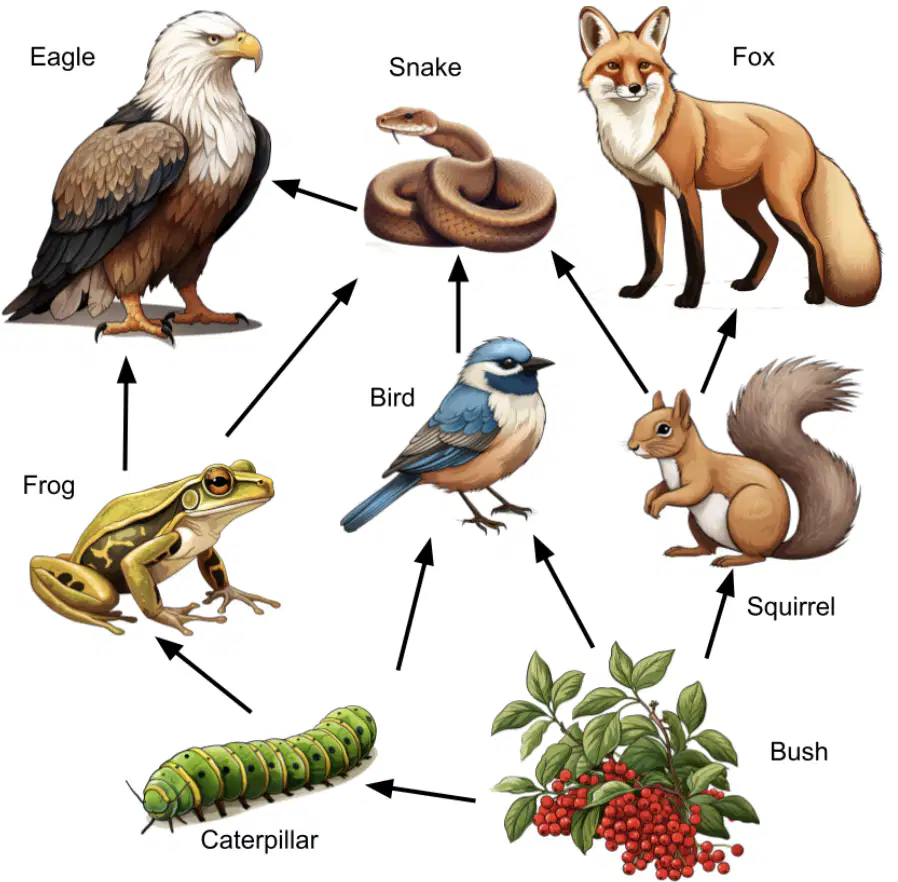
Use the diagram to answer the question. What is the producer in the food web above?
Bush
Squirrel
Fox
Eagle
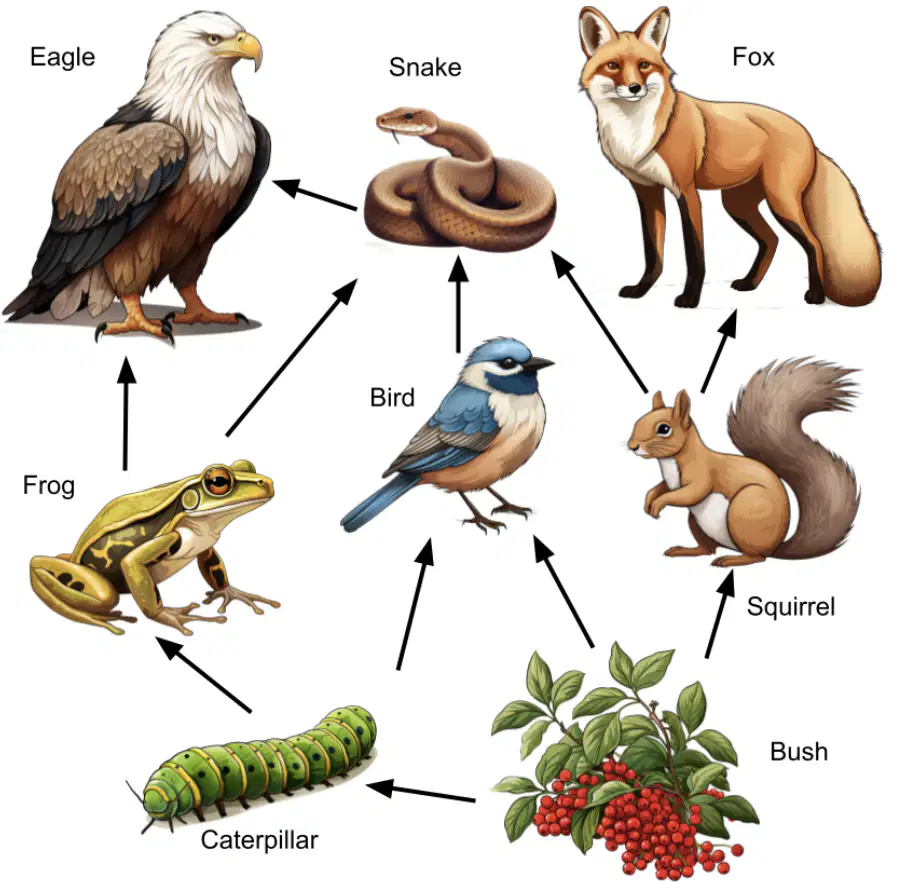
Use the diagram to answer the questions. Energy flows from the FROG to the ______________ and ______________.
Snake
Eagle
Frog
Rabbit
Deer
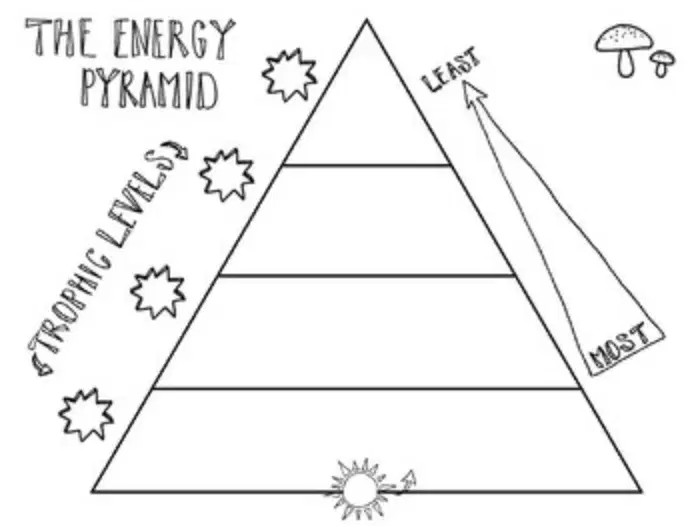
Label the four tiers of the energy pyramid with the correct trophic level (producers, primary consumers, secondary consumers, and tertiary consumers). Which of the following is the correct order from bottom to top?
Producers, Primary Consumers, Secondary Consumers, Tertiary Consumers
Tertiary Consumers, Secondary Consumers, Primary Consumers, Producers
Primary Consumers, Producers, Tertiary Consumers, Secondary Consumers
Secondary Consumers, Tertiary Consumers, Producers, Primary Consumers
Select the correct order of the 6 levels of biological organization from general to specific.
Biosphere, Ecosystem, Community, Population, Organism, Cell
Cell, Organism, Population, Community, Ecosystem, Biosphere
Organism, Cell, Population, Community, Ecosystem, Biosphere
Biosphere, Community, Ecosystem, Population, Organism, Cell
Explain the difference between a niche and a habitat.
A niche is the role of an organism in its environment, while a habitat is the physical environment where an organism lives.
A niche is the physical environment where an organism lives, while a habitat is the role of an organism in its environment.
A niche and a habitat are the same, both referring to the physical environment of an organism.
A niche is a type of habitat that is specific to a particular species.
Which of the following is an example of a symbiotic relationship?
Mutualism: Bees and flowers
Parasitism: Tapeworms in humans
Commensalism: Barnacles on whales
Predation: Lion hunting a zebra
Competition: Two species of birds fighting for the same food
Which of the following best describes the difference between a food chain and a food web?
A food chain shows a single path of energy flow, while a food web shows multiple interconnected paths.
A food chain includes all organisms in an ecosystem, while a food web includes only producers and consumers.
A food chain is a complex network of feeding relationships, while a food web is a simple linear sequence.
A food chain and a food web are identical in structure and function.
Compare and contrast primary and secondary succession. Which of the following is a characteristic of primary succession?
Occurs on newly exposed surfaces
Occurs in areas where a disturbance has happened
Involves the reestablishment of a damaged ecosystem
Happens in areas with existing soil
Which category does a cow belong to: H = Herbivore, C = Carnivore, or O = Omnivore?
H = Herbivore
C = Carnivore
O = Omnivore
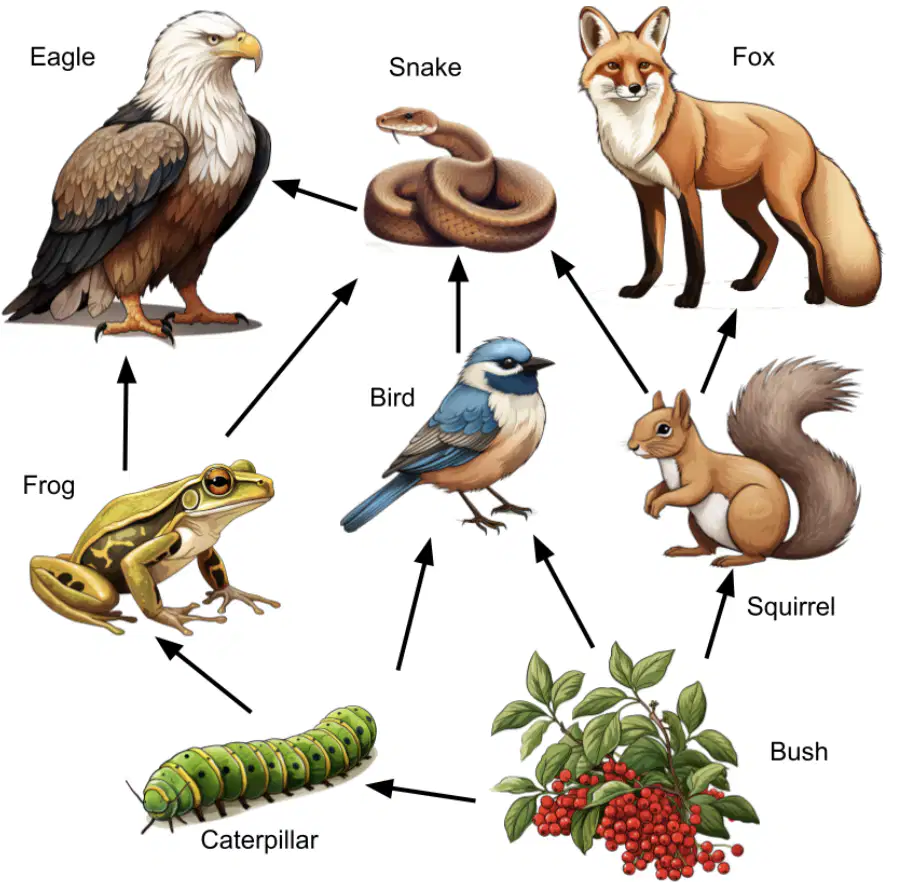
Label each trophic level with: P for Producer, 1 for Primary Consumer, 2 for Secondary Consumer, 3 for Tertiary Consumer, and 4 for Quaternary Consumer. Which of the following is a Producer?
Bush
Frog
Fox
Eagle
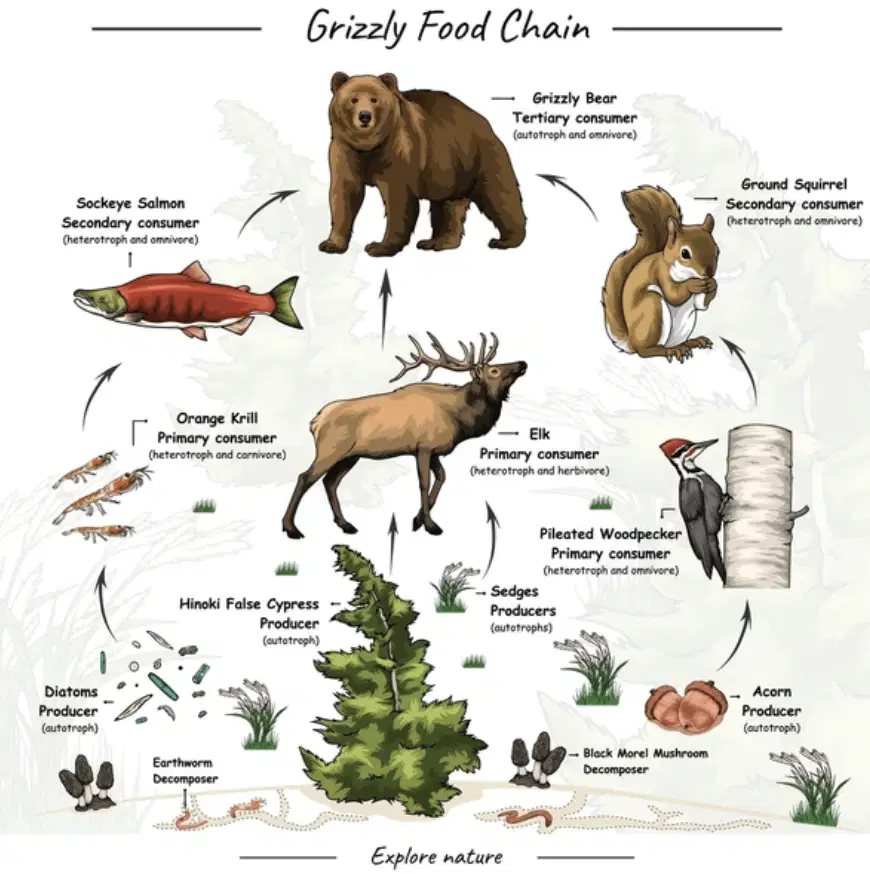
Which of the following organisms can occupy different levels of the pyramid as their diet varies?
Bear
Lion
Deer
Eagle
Select a reason not to destroy rainforests.
Rainforests are home to diverse species.
Rainforests contribute to global warming.
Rainforests are not economically beneficial.
Rainforests have no impact on climate.
Name two of the three ways a rainforest can be destroyed.
Deforestation
Climate Change
Urbanization
Conservation
Saving paper helps the rainforests because:
It reduces the demand for paper, which decreases deforestation.
It increases the demand for recycled products.
It helps in conserving water resources.
It promotes the use of digital media.
What fraction of the earth’s plant and animal species live in the rainforests?
One quarter
One third
One half
Two thirds
Match the following causes with their effects on deforestation.
Agricultural expansion and urbanization
Conversion of forests into farmland and cities
Increased rainfall and soil erosion
Environmental changes leading to land degradation
Wildlife conservation and reforestation
Efforts to protect and restore forest areas
Natural disasters and climate change
Impact of severe weather events on forest cover
Which rainforest produces 20% of the world’s oxygen?
Amazon Rainforest
Congo Rainforest
Daintree Rainforest
Sundarbans
Deforestation is a major environmental issue. Which of the following is a way to help stop it?
Plant more trees
Increase paper usage
Support logging companies
Ignore the issue
The taxon that includes the most specific characteristics is (a) .
Kingdom
Phylum
Class
Species
Which taxon includes the broadest characteristics?
Species
Genus
Family
Kingdom
Which taxon includes more species, an order or a family?
Order
Family
Which taxon includes only organisms that can successfully interbreed?
Species
Genus
Family
Order
If two organisms belong to the same family, what other taxonomic groups do the organisms have in common?
Order, Class, Phylum, Kingdom
Genus, Species
Domain, Kingdom, Phylum
Class, Order, Genus
Which two organisms in the chart are most closely related?
Organism A and Organism B
Organism C and Organism D
Organism E and Organism F
Organism G and Organism H
Match the following taxa with their descriptions.
Kingdom
The highest taxonomic rank, grouping together all forms of life having certain fundamental characteristics in common.
Phylum
A taxonomic rank below kingdom and above class, grouping together organisms that share a common structure.
Class
A taxonomic rank below phylum and above order, grouping organisms that share a set of characteristics.
Order
A taxonomic rank below class and above family, grouping organisms that are more closely related.
Which class does not include animals that have hair or fur?
Mammals
Birds
Reptiles
Amphibians
A consumer is an organism that (a)
Makes its own food
Eats dead plants and animals
Eats plants and other animals
Buys toys for kids

What organism is missing from this food chain?
Shrub -> (a) -> Insect Eating Bird -> Hawk
Put this food chain in the correct order
Grass
Grasshopper
Shrew
Snake
Mountain Lion
Put this food chain in the correct order
Grass
Rabbit
Snake
Hawk

The model above is an example of a ...
food chain
food web
habitat
ecosystem

What do lizards eat?
mice
grasshoppers
hawks
grass

What are the 2 consumers of periwinkle?
blue crab and blue herring
diamondback terrapin and cord grass
herring gull and otter
blue crab and diamondback terrapin

True/False
Food webs show you everything an animal eats. Food chains show you one thing.
True
False

Identify the correct food chain that demonstrates the energy flow of this food web.
Plant --> Caterpillar --> Bluebird --> Eagle
Plant <-- Rabbit <-- Eagle
Plant --> Lizard --> Snail --> Eagle
Eagle --> Lizard --> Caterpillar --> Plant
(a) are animals that eat BOTH plants and animals.
Animals that eat both plants and animals are called (a)
Food chains and webs typically start with which kind of organism?
Decomposer
Producer
Primary Consumer
Secondary Consumer
Human beings are animals that eat both vegetation (plants) and meat (flesh). Using this information, which category do we best fit into?
omnivore
carnivore
herbivore
producer
Where are autotrophs found in food chains/webs?
In the middle
At every level
At the first level
At the top
A third-level consumer has to be which type?
Carnivore.
Decomposer.
Producer.
Herbivore.
The arrows in a food chain or web represent (a) .
They point to the organism that is consuming.
It shows how sunlight flows within the ecosystem.
They show what direction the energy flows.
They represent how water is transferred.
The arrows in a food chain or web represent (a) .
They point to the organism that is consuming.
It shows how sunlight flows within the ecosystem.
They show what direction the energy flows.
They represent how water is transferred.
Which of the following correctly represents the flow of energy in a food chain?
Carnivores → Herbivores → Plants
Plants → Herbivores → Carnivores
Decomposers → Carnivores → Herbivores
Herbivores → Plants → Carnivores
What is a food chain?
A series of organisms, each dependent on the next as a source of food
A network of interconnected food webs
A group of animals that live together
A type of ecosystem
If a frog is the prey, what could be the predator?
Grass
Insect
Snake
Snail
Simple model that links organisms based on their feeding relationships in a single line.
food pyramid
food chain
food web
venn diagram

Which of the following describes #2?
An ecosystem is the interaction between biotic and biotic factors.
A community is a group of different populations in the same area.
An organism is one living thing.
A population is a group of the same organisms.
What comes next in Ecological organization? Species---population---community--?
ecosystem
biosphere
population
biome
"job" within the environment


A diagram that shows the energy available to each trophic level in an ecosystem; 10% is passed on to upper levels, the rest is lost as heat is called an (a) .


Match the following trophic levels with their correct representation in a food pyramid.
A
Primary producers at the base
B
Primary consumers above producers
C
Secondary consumers above primary consumers
D
Tertiary consumers at the top

Match the following statements with the correct description of energy flow in a pyramid.
it increases
As energy moves up the pyramid, the amount of available energy...
it decreases
In a typical energy pyramid, the energy available at higher trophic levels...
it remains the same
When considering energy transfer in a pyramid, the energy at each level...


An arrow should be drawn (a) to represent energy flow between these two organisms.


F
G
H
J

The part of the natural environment where an animal, plant or other organism lives…
niche
habitat
community
ecosystem
biosphere


This diagram represents a closed terrarium exposed to sunlight.
What must happen for the carbon cycle to continue in this terrarium?
All organisms must continue to exchange gases.
The snails must double their production of carbon dioxide.
The plant must produce carbon dioxide at a faster rate.
The decomposers must begin to produce oxygen.
Complete the diagram using the options below.
Fossil Fuels
Photosynthesis
Cellular Respiration
Carbon in the Atmosphere
Decomposition
Combustion

12D: Students designed an experiment to model the carbon cycle. The students combined water and carbon dioxide-producing disks in a sealed flask. The flask represented Earth’s atmosphere, and the lamp represented the sun. Their design is shown. Which component can be added to the flask to reduce the concentration of carbon dioxide in the model atmosphere created by the disks?
Bacteria to use carbon during nitrification
Plants to absorb carbon in the process of photosynthesis
Snails to use carbon through cellular respiration
Mushrooms to absorb carbon during decomposition


The burning of fossil fuels (a) the cycle shown.
Match the following organisms with their need for nitrogen.
only plants
Organisms that perform photosynthesis
only animals
Organisms that rely on protein intake
only bacteria
Organisms that fix atmospheric nitrogen
all living organisms
Organisms that require nitrogen for survival
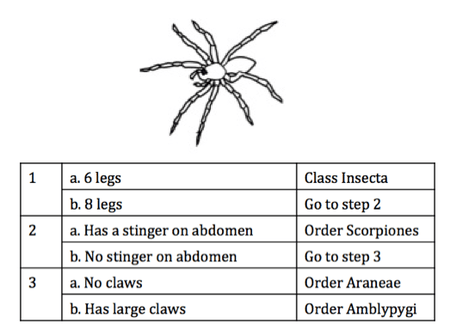

A table of arachnid and insect characteristics is shown. The presence of (a) could be used to distinguish between arachnids and insects.
following observations of the plant’s characteristics would be useful in determining its identity with a dichotomous key?

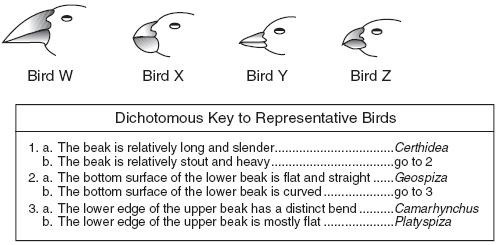
Match the following birds with their names.
Certhidea
The bird known for its small size and warbler-like appearance.
Geospiza
The bird famous for its large beak and ground-feeding habits.
Camarhynchus
The bird recognized for its tree-climbing behavior and woodpecker-like beak.
Platyspiza
The bird known for its vegetarian diet and parrot-like beak.


Leaf S (3RD LEAF)
Eastern white pine
balsam poplar
sweet gum
ginko
Match the following characteristics with their descriptions.
Characteristics that make an organism different from any other organism. (type of beaks, claws, root systems)
Unique features such as beak shape or root type
Characteristics like age of an organism
Chronological age or life stage
Where the organism lives
Habitat or geographical location
How many organisms live in the environment
Population density in a given area

Which characteristics are used to identify the American Robin?
Head color, Beak shape, and Beak Color
Head color and Beak Color
Beak Shape and Beak Color
Beak Color
A dichotomous key for trees is provided. A park ranger found a tree that has large cones and needles in groups. What species of tree has the park ranger found?
Juniper
Pine
Spruce
Fir
Leaf Q (1ST LEAF)
Eastern white pine
balsam poplar
sweet gum
ginko
Scientists classify different organisms into taxonomies by (a)

Which organism has feathers but does not swim?
Duck
Hen
Lizard
Snake
The first part of a scientific name is called (a) .
What is the genus: Castor canadensis?
Castor canadensis
Castor
canadensis
Match the following species with their scientific names.
Castor canadensis
American Beaver
Castor
Genus of beavers
canadensis
Species epithet for the North American beaver

Which organism does not have four limbs?
Shark
Salamander
Tiger
Gorilla

(a) does not have feathers but does have legs.
What are the two parts of the scientific name?
Genus and structural
Structural and physiological
Genus and species
Species and physiological

This classification scheme indicates that the house cat is most closely related to the
dolphin
songbird
lynx
wolf

Identify the organism's correct taxonomy
Class Insecta
Order Scorpiones
Order Araneae
Order Amblypygi

Which type of organism has fur?
Mammal
Bird
Reptile
Amphibian

Which type of organism has no fur but has feathers?
Mammals
Birds
Reptiles
Amphibians

(a) is a form of matter that is a pure substance.

Which type of substance is not a pure substance?
Element
Compound
Mixture

Match the following substances with their type.
Compound
Water and salt mixed evenly
Solution
Sugar dissolved in water
Colloid
Milk
Suspenseion
Muddy water
Using the scientific name, Pisum sativum, what is the genus?
Pisum sativum
Pisum
sativum
Using the scientific name, Pisum sativum, the species is (a)

Identify bird W?
Certhidea
Geospiza
Camarhynchus
Platyspiza
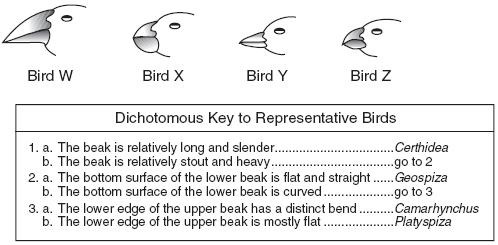
Identify bird Y?
Certhidea
Geospiza
Camarhynchus
Platyspiza

Identify the fish
Sebastes serriceps
Sebastes nebulosus
Naucrates ductor
Seriola lalandi

Which organism's DNA will differ the most from the bird?
Rodents
Raufinned fish
Sharks
Amphibians

What separates rodents and primates from crocodiles on this cladogram?
Bony Skeleton
Vertebrae
Eggs with shells and hair
Four Limbs

Which organism will have DNA most similar to the bird?
Sharks
Primates
Rodents

Which location on the phylogenic tree identifies characteristics shared by species B,C,D,E,F
Location 1
Location 2
Location 3
Location 4
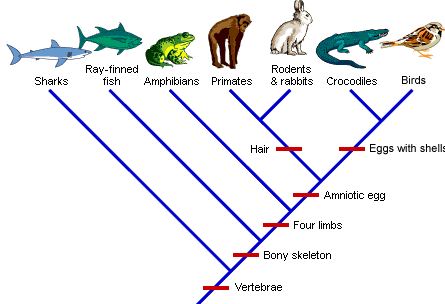
Sharks & Ray Finned Fish
Primates & Rodents
Birds & Crocodiles
Rabbits & Birds
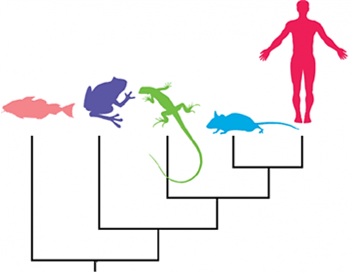
According to this phylogenetic tree, which creature is the least related out of all pictured?
Fish
Frog
Salamander
Human

The diagram shows a cladogram of six species based on amino acid similarities. Which two species are MOST CLOSELY related.
I and II
II and IV
I and V
V and VI

According to the diagram, what is the common ancestor of ALL organisms on the phylogenetic tree?
B
C
D
E

Look at the characteristics for each organism. Which organism will be at the top of a cladogram and which organism will be at the bottom?
Frog, Gibbon
Gibbon, Salmon
Lion, Salmon
Salmon, Gibbon
Which best describes derived characteristics?
They appear in all the ancestors.
They appear at the end of each branch.
They are newly evolved traits.
They stem from primary characteristics.

The letter that represents the most recent common ancestor of sponges and mushrooms is (a)

Which trait(s) do conifers have?
vascular tissue only
vascular tissue and seeds
vascular tissue, seeds and flowers
seeds only

According to the cladogram, which organism is most distantly related to the chimpanzee?
salmon
salamander
lizard
hamster

Which trait should go where A is on the cladogram?
eyes
feet
lips
hat
Which trait should go where C is on the cladogram?
eyes
feet
lips
hat

Which organism goes in the A position?


Which organism goes in the B position?
Which organism goes in the C position?
Which organism goes in the D position?
According to this phylogenetic tree, which creature is the least related out of all pictured?
Fish
Frog
Salamander
Human


The number that is the common ancestor of C and D is (a)
Which kingdoms have photosynthetic organisms?
Plants and Animals
Fungi and Plants
Protists and Plants
Fungi and Protists
Which order of classification is correct?
family, species, phylum, class, order, genus, kingdom
Kingdom, phylum, class, order, family, genus, species
kingdom, phylum, order, class, family, genus, species
species, kingdom, phylum, class, order, family, genus
A clade contains
all the organisms with similar appearances
organisms living within the same ecosystem
an ancestral species and all the organisms that came before it
an ancestral species and all its descendants
A wolf's scientific name is Canis rufus. Which genus does it belong to?
Canis
rufus
wolf
animal

The three domains are (a) .
There are (a) kingdoms.
I am single celled, and I only have one parent. My cell does not have an organized nucleus. Sometimes I cause diseases. Other times I am a decomposer. I am a (a)
multicellular, eukaryotic, heterotroph, no cell wall
protist
plant
animal
fungi
eukaryotic, multicellular, chitin cell wall, absorptive heterotroph
protist
animal
plant
fungi
are there more organisms in a class or an order taxon?
class
order
What happens to the amount of available energy in the pyramid as it moves up through the different levels?
it increases
it decreases
it remains the same
Competition
A lion and a hyena pack fight over a fresh kill.
Predator-Pray
An anteater consuming the ants in an anthill
Symbiosis
Bacteria in our gut that helps us digest food
In a food chain, the concentration of a pollutant (a) as the number of
organisms at a trophic level (b) . This is known as (c) .
Match the following.
plant eater
herbivore
meat eater
carnivore
break down dead organic matter
decomposer
consumes both plants & animals
omnivore
consumes dead organisms
scavanger
Match the following
all biotic and abiotic factors of an area
Ecosystem
all members of the same species in an area
Population
all the different species that live together
Community
one member of a species
Organism
Label the biological levels of organization.
Label the biological levels of organization.
Label the biological levels of organization.

