
 Worksheets
Unit 3: Cellular Energetics (AP Bio)
Total questions: 159
Worksheet time: 2hrs 24mins
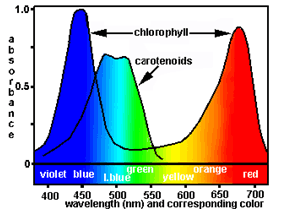


Where do the dark reactions (Calvin cycle) take place?
thylakoid membrane
lumen
stroma
after strenuous exercise, a muscle cell would contain decreased amounts of ______ and increased amounts of ______ ____
glucose; ATP
ATP; glucose
oxygen; lactic acid
lactic acid; ATP

A weightlifter is using heavy weights in short bursts for a competition. Because his muscle cells are not able to take in enough oxygen to make very much ATP the weightlifter begins to get fatigue in his muscles. Which of the following processes is most likely going on in the muscles of the weightlifter as he competes in his event?
As the cells run out of oxygen they switch to anaerobic respiration (fermentation), which allows the cell to make small amounts of ATP in the absence of oxygen.
As the cells run out of oxygen, they die off gradually and the weightlifter's muscles have fewer contracting muscle cells.
The cells will never run out of oxygen if the weightlifter is breathing.
As the cells run out of oxygen, they will continue to make the same amount of ATP, since oxygen is not required to make ATP.
Plants use the following reactants for the light reaction
Water and CO2
Water and NADPH
Water and NADP+
NADPH and ATP
Photosynthesis goal is to
convert light energy into glucose energy
use light energy to make oxygen gas
convert sugar energy into ATP
convert sugar energy into oxygen gas
Rubisco is important in which step of photosynthesis
energizing the electrons in chlorophyll
carbon fixation when CO2 is connected to RUBP during calvin cycle
regeneration phase as RUBP is made during calvin cycle
reduction of the carbon chain during the calvin cycle
If the proton (H+) pump in the thylakoid was not working which molecule could not be made during the light reaction?
NADPH
ATP
Water
Oxygen gas
The NADP+ is
oxidized during the light reaction
reduced during the light reaction
oxidized during the Calvin cycle
reduced during the Calvin cycle
Which of the following would have the least affect on photosynthetic rate?
increase the temp from 20 C to 30 C
increasing the CO2 from 400 ppm to 600ppm
increasing the light intesity from 40 Watts to 60 Watts
increasing the amount of O2 from 20% to 30% in the air
Plants obtain CO2 into the chloroplast by
active transport
diffusion
facilitated diffusion
endocytosis
Photosystems are made of
chloroplasts
chromosomes
chlorophyll
cytoplasm
ATP is made during the light reaction using all of the following EXCEPT
proton pump
hydrogen ion gradient
electron energy from photosystem II
NADPH donating electrons
What is FALSE about the calvin cycle
uses the light reactions products
produces a three carbon sugar (G3P)
produces carbon dioxide
produces NADP+
During noncyclic photophosphorylation all of the following occur EXCEPT
ATP is made using electron energy that will leave on NADPH
results in oxygen gas being produced
water is split (photolysis)
electrons from photosystem 1 return back to photosystem 1
Photorespiration involves
the production of oxygen gas during the break down of sugar
the breakdown of sugar when CO2 levels are low.
the production of massive amounts of ATP in the thylakoid
water being pulled out of the plant
Why does photorespiration occur?
stomata are closed and CO2 levels are too low.
stomata are closed and O2 levels are too low.
stomata are open and too much water is leaving the plant
stomata are open and the plant receives too much CO2
What does a C4 plant do?
stores CO2 in a separate cell from its photosynthetic cell during the day
stores CO2 in a vacuole during the night.
can't store CO2 so it sufferes photorespiration
can't store CO2 so it speeds up cellular respiration in order to make more CO2
Plants that store CO2 at night as an acid in a vacuole are called
C3 plants
C4 plants
CAM plants
Which plant LACKS CO2 storage method
C3
C4
CAM
What happens to the oxygen levels if a plant were left in the dark over night?
go up due to photosynthesis
go down due to cell respiration
stay the same since stomata are closed
Which plant would have the most oxygen produced in 1 hour?
plant given red light only
plant given blue light only
plant given white light
plant given green light only
An increase in CO2 in the air would most likely
increase photosynthesis
increase cell respiration
increase photorespiration
increase transpiration

Which of the following statements best represents the relationships between the light reactions and the Calvin cycle?
The light reactions provide ATP and NADPH to the Calvin cycle, and the Calvin cycle returns ADP, ℗i, and NADP+ to the light reactions.
The light reactions provide ATP and NADPH to the carbon fixation step of the Calvin cycle, and the Calvin cycle provides water and electrons to the light reactions.
The light reactions supply the Calvin cycle with CO2 to produce sugars, and the Calvin cycle supplies the light reactions with sugars to produce ATP.
The light reactions provide the Calvin cycle with oxygen for carbon fixation, and the Calvin cycle provides the light reactions with sugars to produce ATP.
Cellular respiration is the process by which ____________ is consumed and _______________ is produced.
Carbon, Oxygen
Oxygen, Carbon dioxide
H20, oxygen
Carbon, H2O


Which of these reactions create water as an end product?
glycolysis
Kreb's
ETC
fermentation
Oxygen is required for ___ to take place
light-dependent
light-independent
ETC
glycolysis
A. Chemiosmosis
B. Pyruvate Oxidation
C. Electron Transport Chain
D. Glycolysis
E. Citric Acid Cycle
List the stages of Cellular Respiration in order
D, B, E, C, A
D, E, B, A, C
E, B, C, D, A
A, B, D, C, E
All organisms share this metabolic process
glycolysis
electron transport chain
citric acid cycle
fermentation
anaerobic respiration and fermentation are the same thing
true
false
True or False: The mitochondria contains DNA
True
False
What does a mitochondria look like inside?
a football
The inside membrane of a plant
Double membrane
cytoplasm
Check which structures would be found in a chloroplasts.
Stroma
Thylakoids
Two membranes
Nucleus
Ribosomes
The Calvin Cycle takes place in the:
Stroma
Thylakoid
Grana
Stomata


How does the active site of an enzyme determine the substrate for that enzyme?
The active site has the right polarity to interact with the substrate.
The active site is hydrophobic and interacts with other hydrophobic amino acids on the substrate
The active site has a specific shape that fits the shape of the substrate
The active site uses energy to form covalent bonds with the substrate
Enzymes ___________________ activation energy to speed up chemical reactions.
increase
decrease
How does a competitive inhibitor affect an enzymes function?
It binds to an allosteric site that alters the shape of the enzyme
It changes the polarity of the enzyme, decreasing the rate of reaction
It denatures the enzyme which increases the activation energy for the reaction.
It binds to the active site, preventing the enzyme from catalyzing the reaction
Which of these factors can affect the initial rate of an enzyme reaction?
Enzyme concentration
Substrate concentration
Temperature
pH
All of the above

Based on this graph, which enzyme would function best in a basic environment?
A
B
Why is the hydrolysis of ATP important to a cells function?
It provides a source of phosphate for the cell.
It releases energy that can be used to power cellular processes
It absorbs excess hydrogen ions in the cell to regulate the internal pH
It acts as a catalyst for chemical reactions in the cell.
Why do plants not store 100% of the light energy absorbed by chlorophyll in glucose molecules?
Most of the energy is used to power the reaction or is lost as heat
Plants do not have a high energy requirement, so they do not need to convert 100% of the energy
The energy is used to power ATP synthase proteins on the thylakoid membrane
The remaining energy is used actively transport oxygen out of the cell.
How does a competitive inhibitor affect an enzymes function?
It binds to an allosteric site that alters the shape of the enzyme
It changes the polarity of the enzyme, decreasing the rate of reaction
It denatures the enzyme which increases the activation energy for the reaction.
It binds to the active site, preventing the enzyme from catalyzing the reaction
A substance that loses an electron has been...
reduced
oxidized
negatived
positived

The image depicts an...
endergonic reaction
exergonic reaction
enzyme-catalyzed reaction
endothermic reaction

This image depicts...
Metabolism
Catalbolism
Enzyme catalysis
Anabolism
ADP is converted into ATP by...
An enzyme removing a phosphate group.
An enzyme adding a phosphate group.
An enzyme changing the charge of ADP.
The spontaneous addition of a phosphate group.
The substance that binds to an enzyme is called a?
Polypeptide
Co-enzyme
Vitamin
Substrate
Changes in pH and temperature can ___________________ an enzyme which causes it to lose its shape and affects its function.
puncture
denature
double
delete
Which of the following best explains why enzymes are necessary for reactions in our cells?
The reactions are too slow to meet the needs of the cell if enzymes are missing.
Enzymes supply the oxygen necessary for the reactions.
Enzymes change reactants from solid to liquid during the reactions.
The reactions take up too much space in the cell if enzymes are missing.
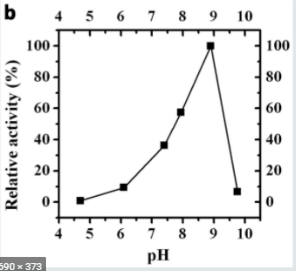
What is the optimal pH for this enzyme?
6
10
9
7
The ____________________ mechanism describes how each substrate must fit into the enzyme.
lock and key
hammer and nail
jigsaw puzzle
seesaw
The _____________________ mechanism describes how an enzyme changes shape once the substrate is bonded.
hammer and nail
induced fit
jigsaw puzzle
lock and key
Where do substrates bind to an enzyme?
calcium channels
active site
receptor molecules
voltage-gated channels
Once a new product leaves an enzyme, the enzyme is unchanged and ready for the next substrate. What is this called?
fragile
reusable
specific
catalyst
All of the following affect the functioning of an enzyme EXCEPT:
pH
temperature
metabolism
enzyme concentration, substrate concentration, inhibitor molecules
After the enzyme and substrate bind together and perform the reaction, what does the substrate become?
a substrate
an active site
an enzyme
a product

What is the optimal temperature of this enzyme?
60
40
70
30

Which letter represents the product?
A
B
C
D

Which enzyme represents the substrate?
A
B
C
D

Which letter represents the enzyme?
A
B
C
D
Exothermic reactions:
release energy
absorb energy
Endothermic reactions:
release energy
absorb energy

Is this reaction exothermic or endothermic?
Endothermic
Exothermic

