
 Worksheets
Genetics #3 Test Review
Total questions: 151
Worksheet time: 2hrs 52mins
Name
Class
Date
1.
What is recombinant DNA?
a)
DNA containing genes foreign to that organism
b)
DNA which has been impacted by epigenetics
c)
DNA that has restriction enzymes
d)
DNA that has been sequenced
2.
One function of gel electrophoresis is to
a)
separate DNA fragments
b)
cut DNA
c)
recombine DNA
d)
extract DNA
3.

Which two bear species are most closely related?
a)
Bear 1 and Bear 2
b)
Bear 1 and Bear 3
c)
Bear 2 and Bear 3
d)
There’s no way to tell
4.
Pattern of DNA fragments obtained by examining a person's unique sequence of DNA base pairs is?
a)
PCR
b)
Chromosome
c)
Electrophoresis
d)
DNA Fingerprinting
5.

According to the fingerprint, who committed the crime?
a)
Suspect 1
b)
Suspect 2
c)
Suspect 3
d)
Suspect 4
6.
DNA sequencing refers to the
a)
technique used to determine the sugar sequence in a DNA molecule
b)
technique used to determine the phosphate sequence in a DNA molecule
c)
technique used to determine the base sequence in a DNA molecule
d)
all of these
7.
Which process is used to make a DNA fingerprint?
a)
gel electrophoresis
b)
DNA sequencing
c)
PCR
d)
biological resistance
8.
What is genetic engineering?
a)
Manipulation/addition of genes
b)
Naturally breeding two animals with desired traits
c)
Cross-pollinating two crops
d)
Harvesting stem cells
9.
What charge does DNA carry?
a)
Positive
b)
Negative
c)
Neutral
10.
In gel electrophoresis, DNA moves...
a)
Toward the positive electrode
b)
Toward the negative electrode
c)
According to its varied charge
d)
From lane to lane depending on size
11.
True or false: The larger the DNA fragment, the further it will travel.
a)
True
b)
False
12.
What units are used to measure DNA fragments?
a)
millimeters (mm)
b)
microliters (uL)
c)
micrometers (um)
d)
base pairs (bp)
13.
True or false: Identical twins are genetic clones
a)
True
b)
False
14.
Which of the following would be an example of gene therapy technology?
a)
development of a nasal spray that contains copies of the normal gene that is defective in person with cystic fibrosis
b)
cutting DNA into fragments with restriction enzymes
c)
modifying E. coli to produce indigo dye for coloring denim blue jeans
d)
separation DNA fragments using gel electrophoresis
15.
The entire collection of genes within human cells is referred to as the ______.
a)
human genome
b)
karyotype
c)
pedigree
d)
gene map
16.
A person who has one recessive allele for a trait, but does not have the trait
a)
carrier
b)
cloning
c)
co-dominance
d)
cystic fibrosis
17.
a condition in which both alleles for a gene are fully expressed
a)
cloning
b)
genetic code
c)
co-dominance
d)
gene pool
18.
Inherited chronic disease that affects the lungs and digestive system
a)
hemophilia
b)
cystic fibrosis
c)
nondisjunction
d)
mutation
19.
The total of all the genes in a population at a certain time
a)
gene pool
b)
genetic code
c)
linkage
d)
multiple alleles
20.
Process of making changes in the DNA code of living organisms
a)
gene pool
b)
true breeding
c)
genetic engineering
d)
Law of Segregation
21.
Inherited bleeding disorder in which the blood doesn't clot normally due to lack of a protein called a clotting factor
a)
linkage
b)
hemophilia
c)
karyotype
d)
Law of Independent Assortment
22.
A picture of all the chromosomes in a cell arranged in pairs
a)
karyotype
b)
linkage
c)
carrier
d)
cloning
23.
The inheritance of alleles on one homologous chromosome pair has no effect on the inheritance of alleles on a different homologous chromosome pair
a)
Law of Segregation
b)
Law of Independent Assortment
c)
linkage
d)
multiple alleles
24.
1. During Meiosis, homologous chromosomes (with the alleles they carry) separate and go to different gamete cells
a)
Law of Segregation
b)
mutation
c)
nondisjunction
d)
selective breeding
25.
Genes which are inherited together because they are located on the same chromosome
a)
co-dominance
b)
linkage
c)
cloning
d)
true breeding
26.
three or more forms of a gene that code for a single trait
a)
linkage
b)
gene pool
c)
multiple alleles
d)
sex chromosomes
27.
The chemical change of a gene (DNA) that may change or prevent its function
a)
carrier
b)
mutation
c)
cystic fibrosis
d)
sickle cell anemia
28.
The failure of homologous chromosomes to separate in meiosis
a)
nondisjunction
b)
selective breeding
c)
Law of Segregation
d)
true breeding
29.
The process of selecting a few organisms with desired traits to serve as parents of the next generation
a)
cloning
b)
co-dominance
c)
selective breeding
d)
true breeding
30.
Chromosomes that determine the sex of an individual
a)
sex chromosomes
b)
sex-linked genes
c)
sickle cell anemia
d)
mutation
31.
a gene that is carried on the X or Y chromosome
a)
sex chromosomes
b)
sex-linked genes
c)
linkage
d)
true breeding
32.
A genetic disorder caused by a point mutation of DNA resulting in red blood cells that become sickled in shape because of abnormal hemoglobin
a)
hemophilia
b)
sickle cell anemia
c)
true breeding
d)
cloning
33.
If an organism has a certain characteristic that is always passed on to its offspring, we say that this organism bred true with respect to that characteristic.
a)
co-dominance
b)
true breeding
c)
gene pool
d)
selective breeding
34.
Study of heredity
a)
genetics
b)
phenotype
c)
gene locus
d)
genotype
35.
Alternative form of a gene
a)
hybrid
b)
trait
c)
allele
d)
recessive
36.
Descriptive of an allele in a heterozygous individual that does not appear to affect a trait
a)
genotype
b)
allele
c)
genetics
d)
recessive
37.
Having different alleles for a gene
a)
homozygous
b)
gene locus
c)
testcross
d)
heterozygous
38.
Diagram showing the probabilities of the possible outcomes of a genetic cross.
a)
Punnett square
b)
genetics
c)
phenotype
d)
genetic linkage
39.
Specific location of a gene on a chromosome
a)
genetics
b)
genotype
c)
testcross
d)
gene locus
40.
Process by which sperm from one flower's pollen fertilizes the eggs in a flower of a different plant
a)
cross-fertilization
b)
codominance
c)
recessive
d)
dominant
41.
Having identical alleles for a gene
a)
homozygous
b)
testcross
c)
heterozygous
d)
genotype
42.
Tendency for alleles of genes on the same chromosome to be inherited together
a)
genetic linkage
b)
genetics
c)
Punnett square
d)
gene locus
43.
Mating of two organisms that differ in only one character
a)
hybrid
b)
monohybrid cross
c)
homozygous
d)
dihybrid cross
44.
Observable traits of an organism
a)
phenotype
b)
trait
c)
genetics
d)
genotype
45.
Gene located on a sex chromosome
a)
genetic linkage
b)
sex-linked gene
c)
genetics
d)
genotype
46.
Variation of a particular inherited character
a)
hybrid
b)
dominant
c)
allele
d)
trait
47.
Descriptive of an allele in a heterozygous individual that appears to be the only one affecting a trait
a)
codominance
b)
trait
c)
dominant
d)
genetics
48.
Genetic makeup of an organism; an organism's combination of alleles
a)
gene locus
b)
genotype
c)
genetics
d)
phenotype
49.
Mating of two organisms that differ in two characters
a)
testcross
b)
hybrid
c)
monohybrid cross
d)
dihybrid cross
50.
Crossing over is
a)
Homologous chromasomes wrap around each other
b)
Random arrangement around equater
c)
Different combinations of chromasomes migrate to each end of the cell
d)
Happens in meta phase
51.
Crossing over is important because....
a)
It prevents mutations from entering the gametes.
b)
It allows for even distribution of chromosomes in the gametes.
c)
It allows for more genetic diversity of gametes.
d)
It allows for genetic uniformity of gametes.
52.
Crossing over occurs in...
a)
Prophase 1
b)
Prophase 2
c)
Metaphase 1
d)
Metaphase 2
53.

When an area of a chromatid is exchanged with the matching area on a chromatid of its homologous chromosome, _________________ occurs
a)
crossing over
b)
mutagenesis
c)
hybridization
d)
fertilization
54.
An individual with XX chromosomes would be ____________.
a)
Male
b)
Female
55.
Which of the following statements is true regarding blood types?
a)
A and O are codominant, B is recessive.
b)
B and O are codominant, A is recessive.
c)
A and B are codominant, O is recessive.
d)
A , B and O are all codominant with each other.
56.
True or False: Men can NEVER be "carriers" for recessive sex-linked traits because they only have one X chromosome.
a)
True
b)
False
57.
A red lily crossed with a yellow lily produces heterozygous orange lily flowers. This is an example of which type of inheritance?
a)
Codominance
b)
Incomplete Dominance
c)
Sex Linked
d)
Polygenic Trait
58.
A yellow fish, when crossed with a blue fish, produces heterozygous fish with blue AND yellow scales. This is an example of which type of inheritance?
a)
Sex Linked
b)
Polygenic
c)
Codominance
d)
Incomplete Dominance
59.
A heterozygous condition in which BOTH alleles are equally expressed is an example of _________________.
a)
Codominance
b)
Incomplete Dominance
c)
Polygenic Inheritance
d)
Multiple Alleles
60.
Phenotypes which result as a combination of MANY genes, such as skin color and eye color, are known as ______________ traits.
a)
Monogenic
b)
Dihybrid
c)
Multiple Allele
d)
Polygenic
61.

A red flowered plant (RR) breeds with a White flowered plant (WW). The gene for petal color in these plants expresses incomplete dominance. What percentage of the offspring will have pink (RW) flowers?
a)
0%
b)
25%
c)
50%
d)
100%
62.
If a trait is controlled by one gene, but there are 4 possible alleles, the inheritance pattern is called...
a)
dominance
b)
sex-linked
c)
multiple alleles
d)
polygenic
63.

What percentage of the female offspring will be a carrier for this recessive disease?
a)
0%
b)
50%
c)
100%
d)
25%
64.
If a gene is found only on the X chromosome and not the Y chromosome, it is said to be what?
a)
sex-linked trait
b)
polygenic trait
c)
codominant trait
d)
incomplete dominance trait
65.
If a woman is a carrier for a sex linked recessive trait of hemophilia and her husband has hemophilia, which of the following is true? Make a punnett square!
a)
All sons will have hemophilia
b)
all daughters will have hemophilia
c)
50% of daughters and 50% of sons have hemophilia
d)
100% of sons have hemophilia and 100% of daughters are carriers
66.
What are the blood types of the possible children that a woman (type O) and man (type AB) can have?
a)
O and AB
b)
O and A
c)
O and B
d)
A and B
67.
Causes genes to not segregate independently. Causes genes to be more likely to be inherited together. Represents an exception to Mendel's Law of Independent assortment.
a)
Gene linkage
b)
Epistasis
c)
Polygenic traits
d)
Codominance
68.
According to _______, genes that are closer together on a chromosome, have a higher chance of being inherited together.
a)
Gene Linkage
b)
Polygenic
c)
Pleiotropy
d)
Epistasis
69.
An allele whose trait always shows up in the organism when the allele is present.
a)
recessive allele
b)
dominant allele
c)
hidden allele
d)
present allele
70.
An allele whose trait only shows up when no dominant allele is present.
a)
hidden allele
b)
dominant allele
c)
recessive allele
d)
present allele
71.
having two of the same genes for the trait (sometimes called purebred).
a)
homozygous
b)
hetrozygous
c)
protein
d)
chromosome
72.
having two different genes for a trait (sometimes called hybrid).
a)
protein
b)
homozygous
c)
heterozygous
d)
genotype
73.
What is a phenotype?
a)
The expression of a trait; physical appearance.
b)
refers to the genetic makeup of an individual
c)
An organism that has the same genes for a trait (ex. TT or tt)
d)
the passing of traits from parent to offspring
74.
What is a factor that is covered up by another trait?
a)
Recessive
b)
Dominant
75.
Which of the following alleles is homozygous recessive?
a)
Tt
b)
tt
c)
TT
d)
T
77.
AA and Aa always show up as
a)
dominant
b)
recessive
77.
AA and Aa always show up as
a)
dominant
b)
recessive
78.
Aa is
a)
homozygous
b)
heterozygous
79.
Both alleles are lower case and the dominant trait is not expressed at all; Example:ee
a)
Dominant
b)
Law of Independent Assortment
c)
Recessive
d)
Incomplete dominance
80.
A person heterozygous for wet earwax (Ww) mates with a person homozygous recessive for dry earwax. What is the chance their baby is heterozygous?
a)
0%
b)
25%
c)
50%
d)
100%
81.
Most gene expression occurs in two steps. What are they?
a)
transcription & translation
b)
coiling & uncoiling
c)
mitosis & meiosis
d)
amino acids & proteins
82.
___ are the sections of a gene that are transcribed and translated (expressed).
a)
Exons
b)
Introns
83.
Y- linked genes are located on the ___ chromosome.
a)
X
b)
Y
84.
In a(n) ___, a chromosomal segment breaks off, flips backward, and reattaches.
a)
deletion
b)
inversion
c)
translocation
d)
nondisjunction
85.
A ___ is a diagram that shows how a trait is inherited over several generations.
a)
pedigree
b)
punnett square
c)
ratio
d)
amniocentesis
86.
What shape represents a male in a pedigree?
a)
circle
b)
rectangle
c)
oval
d)
square
87.
___ separates nucleic acids or proteins according to their size and charge.
a)
Gel electrophoresis
b)
Chorionic villi sampling
c)
PCR
d)
Amniocentesis
88.
The process of altering the genetic material of cells or organisms to allow them to make new substances is called ____.
a)
genetic counseling
b)
gene therapy
c)
genetic engineering
89.
Gene therapy works best for disorders that result from the loss a single ___.
a)
protein
b)
lipid
c)
amino acid
d)
monosaccharide
90.
The study of ethical issues related to DNA technology ___.
a)
cloning
b)
bioethics
c)
gene therapy
d)
religion
91.
Proteins are polymers made of monomers called
a)
nucleotides
b)
lipids
c)
amino acids
d)
nitrogen bases
92.
Which of the following are found in BOTH DNA and RNA?
a)
ribose
b)
deoxyribose
c)
thymine
d)
phosphate group
93.
Which of the following is created directly from DNA?
a)
tRNA only
b)
mRNA only
c)
tRNA and mRNA
d)
proteins
94.
What is created during transcription?
a)
tRNA
b)
DNA
c)
mRNA
d)
proteins
95.
What happens during translation?
a)
mRNA is made from DNA
b)
the ribosome uses information from mRNA to assemble proteins
c)
tRNA is made from mRNA
d)
copies of DNA molecules are made
96.
Transcription occurs where?
a)
ribosomes
b)
the cytoplasm
c)
the nucleus
d)
the rough ER
97.
A codon consists of how many nucleotides
a)
1
b)
2
c)
3
d)
4
98.
Codons each code for
a)
a protein
b)
an enzyme
c)
an amino acid
d)
a nucleotide
99.

Brown fur is dominant to white fur in dogs. A homozygous dominant dog is crossed with a heterozygous dog. What are the percentages of the possible genotypes?
a)
100% BB
b)
75% BB and 25%Bb
c)
50 % BB and 50% Bb
d)
50% Bb and 50% bb
100.
Two brown eyed parents (Bb) have a baby. What is the chance the baby is blue eyed?
a)
0 %
b)
25%
c)
50%
d)
75%
101.
W=white hair
w= non-white hair
If you cross a horse with WW and a horse with ww what fraction of the offspring would be expected to have white hair?
w= non-white hair
If you cross a horse with WW and a horse with ww what fraction of the offspring would be expected to have white hair?
a)
none
b)
3/4
c)
1/2
d)
all
102.
Females-XX; MalesXY. A couple has 4 girls. What is the chance the next child will be a boy?
a)
75%
b)
100%
c)
25%
d)
50%
103.
If butterflies can have straight or curly antennae, and curly is recessive; what is the possibility (using %'age) that a pure breeding straight is crossed with a hybrid straight, will have offspring with straight antennae?
a)
25%
b)
50%
c)
75%
d)
100%
104.
Snap dragon color is a incomplete dominant trait. A red flower (RR) is crossed with white flower (rr)? What color are flowers that are Rr?
a)
Red
b)
Red and White
c)
White
d)
Pink
105.

A roan cow shows co-dominance in fur color (orange and white). What is the phenotype ratio expected if a roan cow and a roan bull mate together?
a)
4: Orange and White
b)
1: Orange : 1 White
c)
2 Orange: 2 Orange and White: 0 White
d)
1: Orange: 2 Orange and White: 1 White
106.

Black fur is dominant (B) over white fur (b). Find the probability of heterozygous offspring using the following genotype of these parents.
Bb + bb
Bb + bb
a)
0%
b)
25%
c)
50%
d)
100%
107.
In guinea pigs, the alleles for black hair(B) is dominant to the allele for brown hair(b). Two black-haired guinea pigs are crossed. One of the pigs is homozygous for black hair and one is heterozygous. What percentage of their offspring are expected to have black hair?
a)
25%
b)
50%
c)
75%
d)
100%
108.
What are the possible blood types of the offspring of a cross between individuals that are type AB and type O?
a)
AB or O
b)
A,B, or O
c)
A or B
d)
A, B, AB or O
109.
A patient is rushed to the emergency room and has suffered severe blood loss. The patient is type AB. What blood types can he get transfusions from?
a)
Just AB
b)
AB and O
c)
A, B and AB
d)
A, B, AB and O
110.
How are recessive traits represented?
a)
capital letters
b)
lower case letters
c)
cursive letters
d)
numbers
111.
In order to show a recessive traits, how many lower case letters do you need in your genotype?
a)
1
b)
2
c)
4
d)
6
112.
Asexual Reproduction involves how many parents?
a)
1
b)
2
c)
3
d)
4
113.
Sexual Reproduction involves how many parents?
a)
1
b)
2
c)
3
d)
4
114.
In sexual reproduction the male produces ___ cells.
a)
Malex
b)
Quack
c)
Egg
d)
Sperm
115.
In sexual reproduction the female produces ___ cells.
a)
Femalex
b)
Quack
c)
Egg
d)
Sperm
116.
An allele whose trait always shows up in the organism when the allele is present.
a)
recessive allele
b)
dominant allele
c)
hidden allele
d)
present allele
117.
An allele whose trait only shows up when no dominant allele is present.
a)
hidden allele
b)
dominant allele
c)
recessive allele
d)
present allele
118.
having two of the same genes for the trait (sometimes called purebred).
a)
homozygous
b)
hetrozygous
c)
protein
d)
chromosome
119.

What would the genotype be for this Punnett Square? B is dominant for brown hair.
a)
2Bb, 2bb
b)
2BB, 2Bb
c)
1BB, 2Bb, 1bb
d)
4Bb
120.

What would the phenotype be for the offsprings? T is dominant for tall pea plants
a)
50% tall, 50% short
b)
25% tall, 75% short
c)
100% tall, 0% short
d)
75% tall, 25% short
121.

What genotype would a child have to have in order to be left handed? R is dominant for right handed.
a)
rr
b)
Rr
c)
RR
122.
Complex molecule that carries genetic information that defines an organism's traits. It is stored in the nucleus.
a)
DNA
b)
protein
c)
RNA
d)
glucose nucleic acid (GNA)
123.
father of genetics
a)
Gregor Mendel
b)
James Watson
c)
Dr. Robbins
d)
Francis Crick
124.
What is NOT a possible genotype for someone with type B blood?
a)
BB
b)
AB
c)
BO
125.
What is the genotype of a person with type A blood, who had a father with type O blood?
a)
AB
b)
AO
c)
AA
d)
OO
126.
If Norma has Huntington's disease and her husband, Bob, does not, what is the chance that their only son, James, will inherit Huntington's?
a)
50%
b)
0%
c)
100%
d)
75%
127.
Seth is 3 years old. His mom, Litzel, has noticed red dots on his eyes and general lethargy and a swelling of his head. She and her husband are both of Eastern European Jewish descent. What disease does their son likely have?
a)
Cystic-fibrosis
b)
Huntington's
c)
Down's syndrome
d)
Tay-sachs
128.
What is the recessive disorder in which a person cannot break down an amino acid and produces toxicity that causes learning disabilities?
a)
PKU
b)
Cystic-Fibrosis
c)
Tay-Sachs
d)
Huntington's
129.

This image shows a...
a)
Punnett Square
b)
Phenotype
c)
Genotype
d)
Dominant allele
130.

In a certain species of plant, the color purple (P) is dominant to the color white (p).
According to the Punnett Square, what is the probability of an offspring being purple?
According to the Punnett Square, what is the probability of an offspring being purple?
a)
25%
b)
0%
c)
100%
d)
50%
131.
If an organism is DdGg, what is one of the alleles that would be found in the gametes produced?
a)
Dd
b)
DG
c)
Gg
d)
DD
132.
If a characteristic is sex-linked, it
a)
occurs most commonly in males.
b)
occurs only in females.
c)
can never occur in females.
d)
is always fatal.
133.

Review the pedigree...the female in the 1st generation must have which of the following genotypes...read the pedigree...think!
a)
XRXr
b)
RR
c)
XRXR
d)
Rr
134.

This pedigree shows which of the following?
AND...why?
AND...why?
a)
Autosomal recessive-the females are carriers
b)
Autosomal recessive-there is a female with it and if it were sex-linked only males would have it
c)
Sex-Linked recessive-the females are carriers
d)
Sex-Linked recessive-males have it from their carrier mothers
135.

Transcription is a process that in eukaryotic cells takes place in the:
a)
Nucleus
b)
Cytoplasm
c)
Golgi Apparatus
d)
Rough E.R.
136.

What is the RNA synthesized from a section of DNA with the code: GATTACA ?
a)
CUAAUGU
b)
GATTACA
c)
GAUUCA
d)
CTAATGA
137.

Translation is a process in eurkaryotic cells takes place in the:
a)
Cytoplasm
b)
Nucleus
c)
Nucleolus
d)
Golgi Bodies
138.

tRNA molecules match the mRNA codons with a(n):
a)
Codon
b)
Anti-Codon
c)
Intron
d)
Methylated Cap
139.

The codon 5'-UAC-3' would have an anti-codon match:
a)
3'-AUG-5'
b)
3'-TAC-5'
c)
5'-AUG-3'
d)
5'-CAU-3'
140.

When the Ribosome reaches ________________ the process of translation stops
a)
Stop Codon
b)
Okazaki Fragment
c)
Terminator
d)
taq Polymerase
141.
The process of copying a gene's DNA sequence into a sequence of RNA is called:
a)
Transcription
b)
Translation
c)
Splicing
d)
Protein Synthesis
142.

RNA contains which bases?
a)
adenine, guanine, uracil, cytosine
b)
thymine, guanine, cytosine, uracil
c)
thymine, uracil, cytosine, guanines
d)
adenine, uracil, guanine, thymine
143.

What is the correct amino acid sequence for the mRNA code AUGCCAGUAUGA
a)
Met-Pro-Ala-Val
b)
Met-Pro-Val
c)
Tyr-Gly-His
d)
Tyr-Gly-Arg-His
144.
Which is the mRNA molecule that would be transcribed from this DNA template:
TGGCAAGTACGT
TGGCAAGTACGT
a)
ACCGTTCATGCA
b)
UGGCAAGUACGU
c)
UCCGUUCUUGCU
d)
ACCGUUCAUGCA
145.
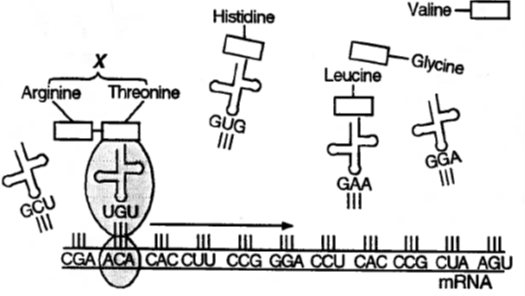
What process is going on in this photo?
a)
Transcription
b)
Translation
c)
Replication
d)
All the above
146.
Contains the bases adenine, uracil, cytosine and guanine
a)
DNA
b)
RNA
c)
Both
147.
The process to go from mRNA to a protein is called ____
a)
transcription
b)
rRNA
c)
replication
d)
translation
148.
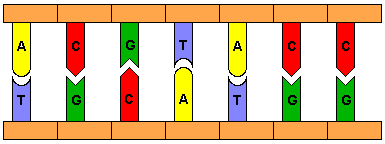
In DNA, Adenine pairs with ___________.
a)
Guanine
b)
Cytosine
c)
Thymine
d)
Uracil
149.
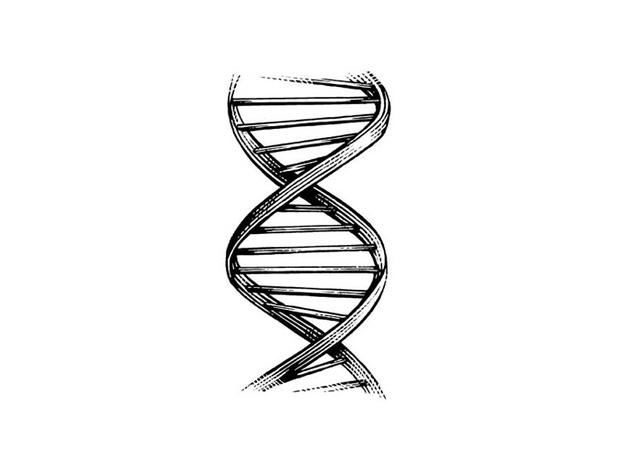
DNA has a _____________ structure.
a)
double helix
b)
single strand
c)
ring
d)
chain
150.
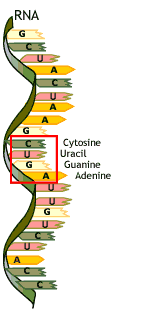
In RNA, Uracil pairs with ______.
a)
cytosine
b)
adenine
c)
guanine
d)
thymine
151.

The mRNA leaves the ________ to find the ribosome to make proteins.
a)
cell
b)
nucleotide
c)
nucleus
100 %

