
NEW
Font size
 Worksheets
States and Properties of Matter Review
Total questions: 71
Worksheet time: 56mins
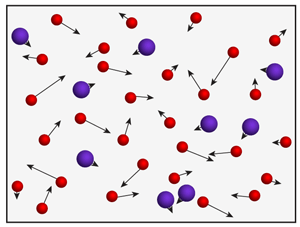
What happens to the atoms of a substance in a physical change?
Atoms get bigger
Atoms change their arrangement and motion
Atoms get smaller
Atoms bond together differently
What happens to the atoms of a substance in a chemical change?
Atoms get bigger
Atoms change their arrangement and motion
Atoms get smaller
Atoms bond together differently
Which of these observations would likely be an indication of a chemical change?
A change in odor when two substances are mixed
A change in temperature when a hot substance is left standing in air
A change in volume as a substance is heated
The disappearance of a liquid as it boils

You mixed two liquids and a precipitate formed, what kind of change occured?
Physical
Chemical
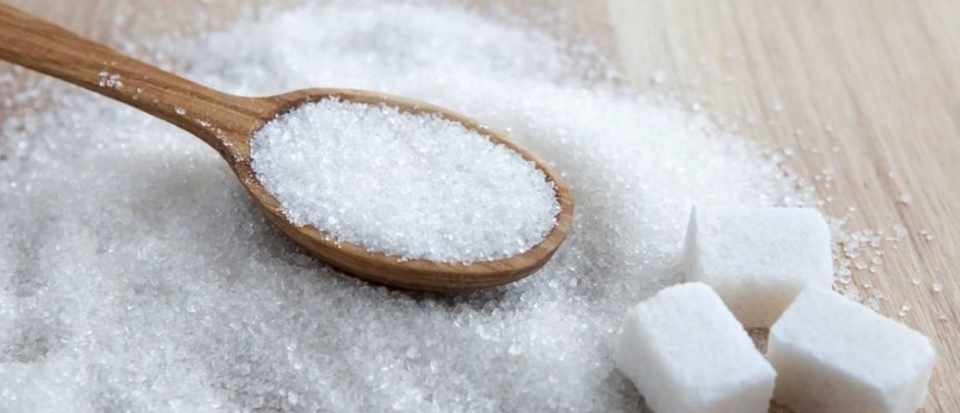
What happens when sugar dissolves in water?
Physical change because a new substance is formed
Chemical change because a new substance is formed
Physical change because the sugar is just getting smaller
Chemical change because the sugar is just getting smaller
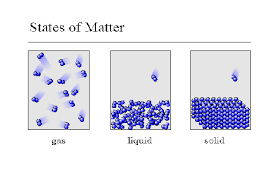
At higher temperatures...
particles in an object have less energy
particles in an object move faster
a gas contracts
Melting is a type of ...
Physical change
Chemical change

What type of matter occurs from 2 or more substances chemically combining?
element
compound
mixture
property
Why do solids have definite shapes and are incompressible?
The particles are not rigidly held in place and can move past each other
The particles are tightly packed with little empty space
The particles are far apart with lots of empty space
The particles are tightly packed with lots of empty space



What is the definition of extensive properties?
Physical properties of a system that do not depend on the amount of matter present.
Chemical properties of a system that depend on the amount of matter present.
Physical properties of a system that depend on the temperature of the system.
Physical properties of a system that depend on the amount of matter present.
Give an example of an extensive property.
density
volume
mass
temperature
What is the definition of intensive properties?
Intensive properties are chemical properties of a substance that do not depend on the amount of the substance present.
Intensive properties are physical properties of a substance that do not depend on the amount of the substance present.
Intensive properties are physical properties of a substance that depend on the amount of the substance present.
Intensive properties are physical properties of a substance that vary with temperature and pressure.
Provide an example of an intensive property.
mass
volume
temperature
pressure
Which of the following is an extensive property?
d) Specific heat
c) Temperature
a) Density
b) Mass
Which of the following is an intensive property?
b) Length
c) Pressure
a) Volume
d) Energy
True or False: The amount of matter affects extensive properties.
True
Not always
Only in certain cases
False
True or False: Intensive properties are independent of the amount of matter.
Partially true
Depends on the temperature
True
False
How are extensive properties different from intensive properties?
Extensive properties depend on the amount of substance present, while intensive properties do not.
Extensive properties can be measured directly, while intensive properties require calculations.
Extensive properties are physical properties, while intensive properties are chemical properties.
Extensive properties are only applicable to solids, while intensive properties apply to all states of matter.

The particle diagram contains ____ total molecules and ____ total atoms.
4 molecules, 8 atoms
8 molecules, 4 atoms
8 molecules, 8 atoms
4 molecules, 4 atoms

How many molecules are in this diagram?
2
4
6
12

This particle diagram illustrates a(n) _________________.
ELEMENT (all the atoms are the same)
COMPOUND (all the molecules are the same)
MIXTURE (different atoms and/or molecules mixed together)
Which chemical formula matches the diagram pictured?
2 SiO
3 SiO2
4 Si2O
6 SiO
Atoms in a molecule are stuck together with
physical bonds.
chemical bonds.
nuclear bonds.


This particle diagram illustrates a(n) _________________.
element
compound
mixture

Which of the diagrams below represent a mixture?
A
B
C
D
Which particle diagram can be classified as a compound?


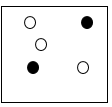
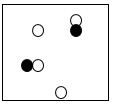
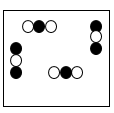


What type of matter is shown in this particle diagram?
Element
Compound
Mixture of Elements
Mixture of Compounds
Mixture of Elements and Compounds

Which diagram represents an element?
Diagram (a)
Diagram (b)
Diagram (c)
None of the diagrams represent the parts of an element.

#1 shows
An element
A compound
A mixture of elements
A mixture of compounds
#2 shows
A compound
A homogeneous mixture
A heterogeneous mixture
A mixture of compounds
#3 shows
A compound
A homogeneous mixture
An element
A mixture of compounds
#4 shows
A compound
A mixture of elements
An element
A mixture of compounds
#5 shows
A compound
A mixture of elements
An element
A mixture of compounds
#6 shows
A compound
A mixture of elements
An element
A mixture of compounds
#7 shows
A compound
A mixture of elements
An element
A mixture of compounds
#8 shows
A compound
A mixture of elements
An element
A mixture of compounds
#9 shows
A compound
A mixture of elements
An element
A mixture of compounds
#10 shows
A compound
A mixture of elements
An element
A mixture of compounds
#11 shows
A compound
A mixture of elements
An element
A mixture of compounds
#12 shows
A compound
A mixture of elements
An element
A mixture of compounds
Which of the following is an example of a physical change?
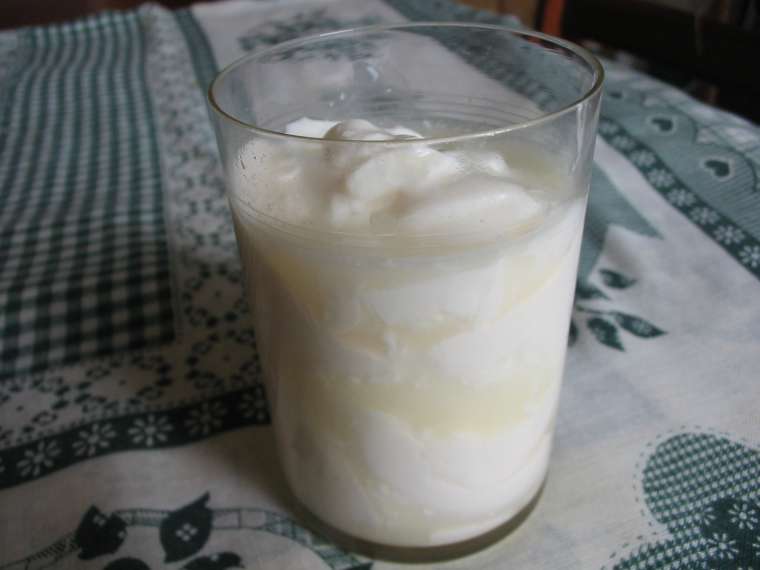
Anything that has mass and takes up space
compound
element
matter
substance
A substance that has indefinite shape and indefinite volume
solid
liquid
gas
solid and liquid
Josh decided to mix some vinegar with baking soda. He knew that a reaction occurred because he made careful observations. He noted that the mixture started to foam up and bubble, and it was white in color. How did Josh know that a chemical reaction occurred?
He was sure a reaction occurred because of
the color of the mixture
the smell of the vinegar
the volume of the mixture
the formation of a gas

Use the basic properties of solids, liquids, and gases to identify the correct state of matter in the image.
(A) gas, (B) liquid, (C) solid
(A) solid, (B) liquid, (C) gas
(A) liquid, (B) solid, (C) gas
(A) solid, (B) gas, (C) liquid
What type of substance has low compressibility and high density?
solid
liquid
gas
gas and liquid
Which of the following is NOT a physical change?
Crushing a can
boiling water
shredding paper
burning paper
Which of the following is NOT a sign of a chemical change?
formation of a precipitate
unexpected color change
unexpected temperature change
change in state of matter

