

Wayground logo

Free Printable Worksheets

Font size

S
M
L
XL
Worksheets

HAP Classwork September 25

Total questions: 95

Worksheet time: 32mins

Name
Class
Date
1.

Define tissue with regards to anatomy

a)

Multiple sheets of thin paper used to clean your nose

b)

The smallest structural and functional unit of an organism

c)

A series of different cells in the same area

d)

A group of structurally and functionally related cells that come together to perform common functions
2.
What is the function of epithelial cells?
a)
Act as barriers between the external environment, or between organs and fluidfilled cavities
b)
Provide movement by pulling on bones
c)
Provide secretions which help to digest food
d)
Act as the messaging pathway between different areas of the body
3.
What is the general structure of cuboidal cells?
a)
Square with large central nucleus
b)
Flat, 'fried egg' appearance
c)
Rectangular with nucleus towards basal end
d)
Dead apical cells filled with keratin
4.
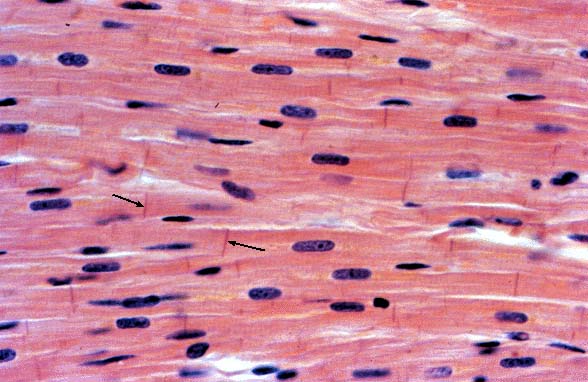
What tissue type is this? (The arrows are a clue)
a)
Cardiac muscle
b)
Skeletal muscle
c)
Smooth muscle
d)
Nervous tissue
5.
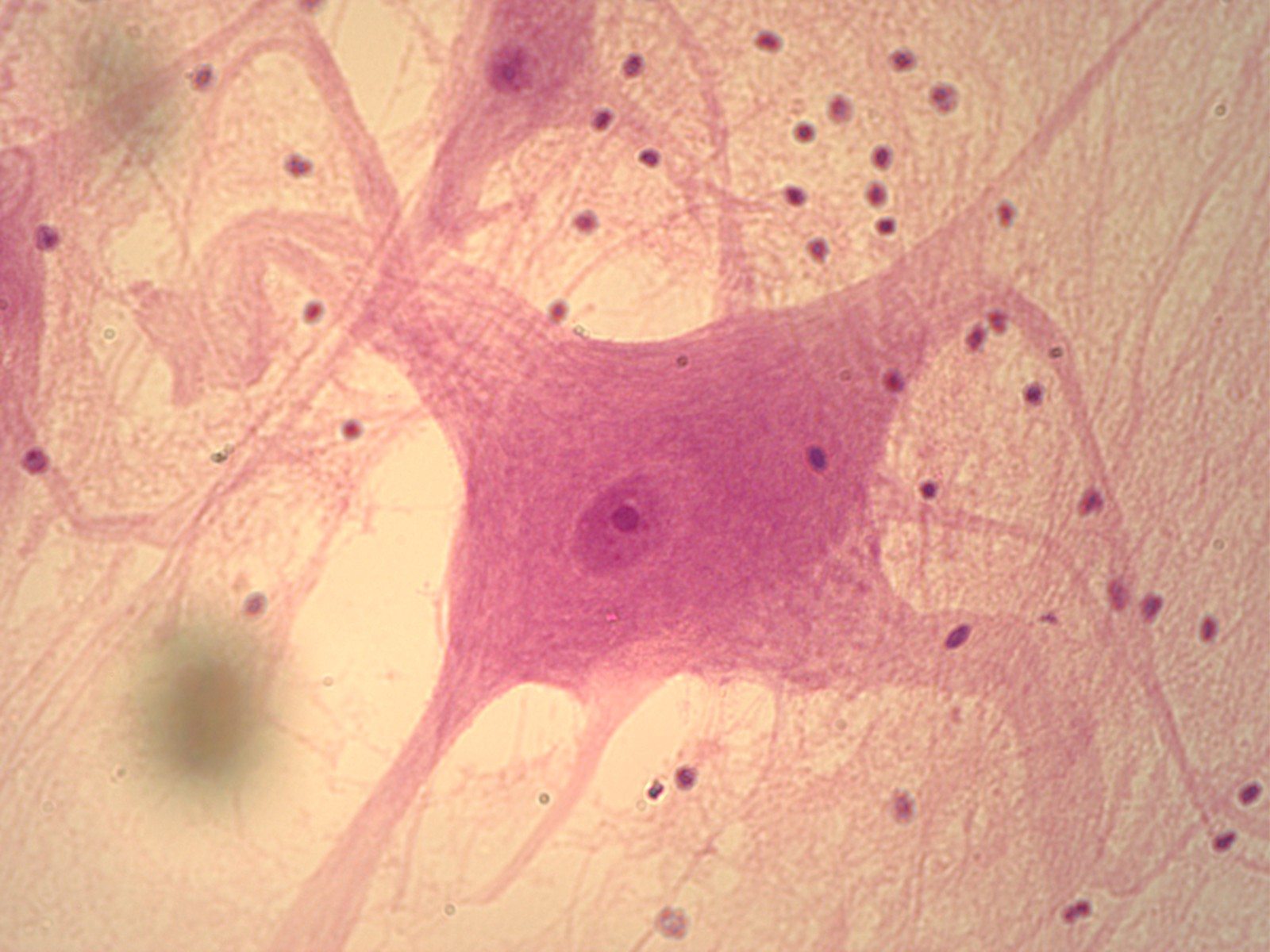
What tissue type is this?
a)
Nervous tissue
b)
Cardiac muscle
c)
Smooth muscle
d)
Connective tissue proper
6.

What type of Connective tissue is found at the ends of bones to reduce friction?

a)

Dense connective tissue

b)

Cartilage

c)

Adipose Tissue

d)

Loose connective tissue

7.
What type of muscle tissue is VOLUNTARILY controlled
a)
Skeletal Only
b)
Skeletal and Cardiac
c)
Smooth and Cardiac
d)
Cardiac Only
8.
The common term for adipose tissue is
a)
Fat
b)
Blood
c)
Bone
d)
Cartilage
9.
What are the four main tissues found in the body?
a)
Epithelial, Connective, Bone, Blood
b)
Muscle, Connective, Blood, Epithelial
c)
Nervous, Muscle, Connective, Epithelial
d)
Nervous, Muscle, Connective, Bone
10.

Osteocytes embedded within chambers that are surrounded by a matrix of mineral salts and collagen may be found in

a)

bone

b)

hyaline cartilage

c)

dense regular connective tissue

d)

loose connective tissue

11.

Tissues: Groups of cells similar in structure that perform common or related function

a)

True

b)

False

12.

Which of the following is not a type of connective tissue?

a)

Blood

b)

Bone

c)

Skin

d)

Adipose

13.

Which of the following names the part of neuron that contain the nucleus?

a)

Axon

b)

Dendrite

c)

Cell body

d)

All of them

14.

which of the following tissues is made up of cells that contract when stimulated?

a)

Muscle

b)

Connective

c)

Nervous

d)

Epithelial

15.

What is this muscle tissue called....

a)

Smooth

b)

Cardiac

c)

Skeletal

16.

The function of nervous tissue is to conduct impulses to and from body organs.

a)

True

b)

False

17.

Cardiac muscle is found around the

a)

Liver

b)

Heart

c)

Lungs

d)

Stomach

18.

The function of muscle tissue include

a)

Forms glands

b)

Binding structures together

c)

Help move substances and structures in the body

d)

Conduct impulses

19.

Stratified epithelium consist of

a)

multiple layers

b)

a single layer

c)

a single layer that appears to change shape when tissues are stretched

d)

multiple layers that appears to change shape when tissues are stretched

20.

Which of the following body tissues contains neuroglia?

a)

Connective

b)

Epithelial

c)

Muscle

d)

Nervous

21.

Which of the following is not a type of muscle tissue?

a)

Cardiac

b)

Smooth

c)

Skeletal

d)

Transitional

22.
attaches bone to bone
a)
tendon
b)
ligament 
c)
cartilage
d)
bone
23.
attaches muscle to bone 
a)
tendon
b)
ligament 
c)
cartilage
d)
bone
24.
Common sports fracture.
a)
Impacted
b)
spiral
c)
skull fracture
d)
greenstick
25.
The human skeleton can be subdivided into two parts. What part is made up of the skull, sternum, vertebral column and rib cage?
a)
appendicular
b)
axial
26.
What type of bone is the scapula?
a)
long bone
b)
short bone
c)
flat bone
d)
sesamoid bone
27.
What type of bone is the femur?
a)
Long bone
b)
Short bone
c)
Flat bone
d)
Irregular bone
28.
Which one of the following is an irregular bone?
a)
humerus
b)
tibia
c)
temporal
d)
vertebrae
29.
One function of the skeletal system is _______ especially in regards to the vital organs, such as the brain, heart, and lungs.
a)
Protection
b)
Storage
c)
Synthesis
d)
Movement
30.
What are functions of the skelton?
a)
protection
b)
Make blood cells
c)
movement
d)
all of them
31.
Calcium, fat, and other nutrients are ______ in the _______ marrow of long bones.
a)
synthesized/yellow
b)
synthesized/red
c)
stored/yellow
d)
stored/red
32.
The site of of bone growth on a long bone is called
a)
epiphyseal plate
b)
diaphysis
c)
periosteum
d)
medullary cavity
33.
Which fracture is common in older people due to osteoporosis?
a)
simple fracture
b)
compound fracture
c)
greenstick fracture
d)
compression fracture
34.
A common term for chronic inflammation of a joint is 
a)
osteoporosis
b)
fracture
c)
scoliosis
d)
arthritis
35.
Which fracture is common when a person tries to break their fall with outstretched arms?
a)
greenstick fracture
b)
impacted fracture
c)
compression fracture
d)
spiral fracture
36.
The process of bone formation from cartilage is called
a)
growth
b)
ossification
c)
fracture repair
d)
callus zone
37.
The outer covering of bone is called 
a)
spongy bone
b)
compact bone
c)
periosteum
d)
medullary cavity
38.
The shaft of a long bone is called
a)
epiphysis
b)
epiphyseal plate
c)
epiphyseal line
d)
diaphysis
39.
Spongy bone is located
a)
in the epiphysis
b)
in the diaphysis
c)
in the compact bone
d)
in haversian canals
40.
An abnormal curvature of the spine is called
a)
scoliosis
b)
greenstick fracture
c)
osteoporosis
d)
arthritis
41.

Match the following common names of bones to their scientific names

a)

Kneecap

1.

Patella

b)

Thigh Bone

2.

Femur

c)

Collar Bone

3.

Clavicle

d)

Shoulder blade

4.

Scapula

42.

Which tissue cushions the end of bones?

a)

tendons

b)

ligaments

c)

cartilage

d)

joints

43.

Which of the following describes the joints in the skull and ribs?

a)

movable

b)

hinge

c)

pivot

d)

immovable

44.

Which bone disease causes bones to become weak and brittle?

a)

artereosclerosis

b)

arthritis

c)

fracture

d)

osteoporosis

45.
During this stage of development, the bones may become less dense and break easily.
a)
Infancy
b)
Childhood
c)
Adolescence
d)
Adulthood
46.

insertion point

a)

muscles that contract to straighten a joint

b)

muscles which contract to bend a joint

c)

the point where the muscle joins onto the bone

d)

the point on the bone where the muscle arises

47.

origin

a)

muscles that contract to straighten a joint

b)

muscles which contract to bend a joint

c)

the point where the muscle joins onto the bone

d)

the point on the bone where the muscle arises

48.

smooth muscle

a)

striated muscle found attached to bones

b)

muscle found inside blood vessels and hollow organs, lacking striations

c)

striped fibers seen in muscle tissue

d)

fibers which tie muscles to bones

49.

Which of these is NOT a major task of the muscular system?

a)

Movement for your body

b)

Making red blood cells

c)

Maintaining posture

d)

Heat production for the body

50.

A nerve that stimulates skeletal muscle is called a

a)

Sensory neuron

b)

Motor neuron

c)

Sensory unit

d)

Motor unit

51.

Which membrane covers an individual muscle fiber?

a)

Endomysium

b)

epimysium

c)

perimysium

52.

When you do sit-ups, your rectus abdominis is the ______ and the latissimus dorsi is the _______.

a)

insertion; origin

b)

origin; insertion

c)

antagonist; prime mover

d)

prime mover; antagonist

53.

When you become out of breath and your muscles begin to burn during a workout, this is caused by

a)

Lack of calcium

b)

lack of water

c)

lack of oxygen

d)

lack of acetylcholine

54.

Match: Epimysium

a)

outer membrane found around the belly of the muscle

b)

prepares a myosin head for its power stroke

c)

myofilament that is essential to muscle contraction

d)

comes in from a nerve cell to remove molecules blocking active sites

55.

Muscles that oppose one another are

a)

synergist

b)

hateful

c)

prime movers

d)

antagonists

56.
Which of the following is NOT a type of muscle?
a)
Rough
b)
Smooth
c)
Cardiac
d)
Skeletal
57.

Match the following

a)

Synergist

1.

muscles working together in the same direction of motion

b)

Prime Mover or agonist

2.

a muscle that is most important in the creation of a specific action or movement

c)

Antagonist

3.

a muscle that opposes the action of another

58.

Muscles have ​ (a)   or the ability to respond to a stimulus; ​ (b)   or the ability to become short and thick to create movement; ​ ​ (c)   or the ability to be stretched; and ​ (d)   or the ability to return to its original shape.

Choose from the below words
excitability
contractability
extensibility
elasticity
59.

What are the characteristics of the cardiac muscle?

a)

Involunatary

b)

Found in the heart

c)

Banded Appearance

d)

Dense connective tissue packaging

60.
How do pairs of skeletal muscles work together?
a)
while one contracts, the other returns to original length
b)
both muscles contract at the same time
c)
both muscles relax at the same time
d)
1 muscle pulls on the bone and the other pulls on the first muscle
61.
Skin color is due to a pigment called
a)
Keratin
b)
Melanin
c)
Chromatin
d)
Epithelium
62.
The protein that makes us "waterproof" is called
a)
keratin
b)
melanin
c)
carotene
d)
mucus
63.
The top layer of the skin is called the _________________.
a)
dermis
b)
oil gland
c)
nerve
d)
epidermis
64.
A major function of skin is protection from:
a)
Abrasion
b)
UV light 
c)
Entry of microorganisms
d)
All of the above 
65.
Which is NOT a function of the skin?
a)
Insulation
b)
Movement
c)
Excretion
d)
Vitamin D Production
66.
The layer of skin that contains special structures like glands and nerves is the...
a)
Hypodermis
b)
Dermis
c)
Epidermis
67.
Sweating and shivering are your body's way of regulating _________.
a)
Water loss
b)
Temperature
c)
Hair growth
d)
Vitamin D absorption
68.
In which order do the layers of skin occur from the outside to the inside
a)
Dermis, Epidermis, Hypodermis
b)
Hypodermis, Dermis, Epidermis
c)
Epidermis, Dermis, Hypodermis
d)
Epidermis, Hypodermis, Dermis
69.
A 3rd degree burn affects which layers of the skin?
a)
Epidermis
b)
Epidermis, Dermis
c)
Epidermis, dermis, and hypodermis
d)
Epidermis dermis, and cutaneous layer
70.
What gland is responsible for keeping our hair soft and is a barrier for bacteria and fungi?
a)
Sudoriferous
b)
Sebaceous
c)
Melanin
d)
Carotene
71.
Oil glands that are found all over the skin, except on the palms and soles, are called _____.
a)
merocrine glands
b)
sebaceous glands
c)
apocrine glands
d)
sweat glands
72.
The oldest cells of the epidermis will be found here
a)
Stratum Corneum
b)
Stratum Basale
c)
Stratum Spinosum
d)
Stratum Granulosum
73.

What types of cells found in the epidermis contain nerve endings that are touch receptors?

a)

Keratinocytes

b)

Langerhans cells

c)

Melanocytes

d)

Merkel cells

74.

List the layers of the Epidermis in order from top to bottom.

a)

5,2,3,4,1

b)

1,2,3,4,5

c)

4,5,3,1,2

d)

1,4,3,2,5

75.
A sunburn might be an example of a:
a)
1st degree burn
b)
2nd degree burn
c)
3rd degree burn
d)
4th degree burn
76.
What is NOT a function of the skin?
a)
Eliminates Waste
b)
Produces Calcium
c)
Protects Body
d)
Maintains Body Temperature
77.
Which layer of the skin is made up of fatty tissue?
a)
epidermis
b)
dermis
c)
hypodermis
d)
hyperdermis
78.

Skin color is the result of

a)

The quantity of melanin in the skin

b)

The number of keratinocytes in the skin

c)

The amount of fat in the hypodermis

d)

The number of melanocytes in the skin

79.

The epidermis is made up of how many layers?

a)

3

b)

5

c)

7

d)

1

80.

The stratum basale is which layer of the epidermis?

a)

Top layer

b)

Middle layer

c)

Base layer

d)

It's not a layer of the epidermis...your teacher is just trying to trick you.

81.

The dermis contains which of the following?

a)

Sweat glands, keratinized cells & oxygen

b)

Sweat glands, sebaceous glands & sensory receptors

c)

Sebaceous Glands, sensory receptors and uric acid

d)

Keratinized cells that are flat

82.

__________glands are sweat glands that are found in kids to help with sweating at the palms/soles of the feet and on the forehead.

a)

Eccrine

b)

Apocrine

c)

Exocrine

d)

Sebaceous

83.

Sudoriferous Glands refer to

a)

Exocrine glands

b)

Oil glands

c)

Sweat glands

d)

Hair glands

84.

Ligaments make it possible for your knees and ankles to work

a)

True

b)

False

85.

Muscle is an example of an organ.

a)

True

b)

False

86.

The skeletal system consists of bones and the tissues connecting them.

a)

True

b)

False

87.

The peripheral nervous system includes the brain and spinal cord.

a)

True

b)

False

88.

The body’s control center is the nervous system.

a)

True

b)

False

89.

The spinal cord and the ____ are the main parts of the central nervous system.

a)

heart

b)

brain

c)

small intestines

d)

lungs

90.
If the environment gets cold, we will often shiver in order to:
a)
keep body temperature the same as the external temperature
b)
decrease body temperature
c)
increase body temperature
d)
regulate blood pressure
91.

Which of the following is an example of positive feedback?

a)

Thermoregulation

b)

Blood Pressure

c)

Childbirth

d)

Blood Sugar Levels

92.

Which body system controls the body to maintain homeostasis?

a)

excretory

b)

nervous

c)

circulatory

d)

skeletal

93.
Negative Feedback Loops:
a)
amplify processes
b)
prevent small changes from getting larger
c)
are initiated during childbirth
d)
are found only in plants
94.
Name the levels of organization in the human body in order from smallest to largest:
a)
Tissue, organ, organ system
b)
Organ system, tissue, organs, cells
c)
Cells, tissue, organs, organ system
d)
Cells , organs, tissue, organ system
95.
When you get cut, your skin cells release hormones that signal platelets to come and stop the bleeding. Platelets then release more hormones that signal even more platelets to help stop bleeding. The hormone signals continue until the cut is closed.
a)
Positive Feedback Response
b)
Negative Feedback Loop
