
 Worksheets
Biochemistry - Prop of Water and Biomolecules
Total questions: 57
Worksheet time: 1hrs 6mins

What is this enzymes optimal temperature?
10*C
40*C
50*C
70*C

Which claim is best supported by this graph?
This enzyme has an optimal pH of 13
The enzyme prefers more of an acidic environment
The optimum pH for this enzyme is 4
The optimum pH for this enzyme is 9

Which of the following lines shows the presence of an enzyme?
Black
Red
Which pair of answers correctly matches the monomer and the polymer?
Glucose- Protein
Amino Acid- Nucleic Acid
Nucleotide - Nucleic Acid
Fatty Acid- DNA
Water is a _________ molecule.
nonpolar
polar
This is the attraction of water molecules for each other.
cohesion
adhesion
hydrogen bonding
________ is the element found in all organic molecules.
carbon
hydrogen
nitrogen
gold
Rice, potatoes, bread and legumes are good sources of _________.
carbohydrates
lipids
proteins
nucleotides
A(n) _______ is a substance with a pH greater than 7.
Base
Acid
Buffer
Water
Which of the following is an example of ADHESION?
water sticking to water
water sticking to glass
oil sticking to plastic
hydrogen sticking to oxygen
Property of water that allows water to climb up thin narrow tubes, against gravity
Capillary action
Surface tension
Ice floats
High heat capacity
The atoms found in lipids are
Carbon, hydrogen, oxygen, sulfur
Carbon, hydrogen, oxygen, nitrogen, phosphorous
Carbon, hydrogen, oxygen, nitrogen, sulfur
Carbon, hydrogen, oxygen
The atoms found in proteins
Carbon, Hydrogen, Oxygen
Carbon, Hydrogen, Oxygen, and Phosphorous
Carbon, Hydrogen
Carbon, hydrogen, oxygen, nitrogen
What is an example of lipids
Fats, oils, waxes
Cellulose, starch
DNA, RNA,
Enzymes, hemoglobin, nails
Enzymes are an example of
Lipids
Carbohydrate
Protein
Nucleic Acid
What 3 letters do enzymes typically end in?
-ose
-ase
-ese
-tic
Which of the following elements are found in all macromolecules? (Select all that apply).


Nucleic acids make up which of the two molecules listed below?
FDA
RNA
DNA
FDR
Proteins are made of monomers called ___________
Nucleotides
Monosaccharides
Amino Acids
Glycerol and fatty acids
Monosaccharides are monomers of
Carbohydrates
Lipids
Proteins
Nucleic Acids
The prefix "poly" means...
One
Two
Many
Want a cracker
Which biomolecule is a main source of quick energy?
Nucleic Acid
Protein
Lipid
Carbohydrate
Which biomolecule is used for long-term energy storage?
Proteins
Lipids
Carbohydrates
Nucleic Acids
Hydrophobic =
Water loving
Water fearing
Made of hydrogen
Made of water
Which of the following biomolecules typically contains both nitrogen and phosphate?
Lipid
Protein
Nucleic Acid
Carbohydrate
Water is polar because...
The unequal sharing of electrons gives the water molecule a slight negative charge near its oxygen atom and a slight positive charge near its hydrogen atoms.
The molecule has two poles, at which the it is colder than other regions of the molecule.
The unequal sharing of electrons gives the water molecule a slight negative charge near its hydrogen atoms and a slight positive charge near its oxygen atom.
The water molecule is neutral.
Why does ice float?
As water freezes, it expands and its density decreases.
As water freezes, it takes up more hydrogen from the atmosphere, causing it to have a greater buoyancy.
As water freezes, air becomes trapped between the hydrogen bonds of water molecules.
As water freezes, it takes up more oxygen from the atmosphere, causing it to have a greater buoyancy.
What type of bond is found BETWEEN water molecules?
hydrogen bonds
ionic bonds
nonpolar covalent bonds
polar covalent bonds
Water makes up approximately 60% of the human body and plays a vital role in regulating body temperature. Which property of water makes it good at regulating temperature?
Water is a good solvent.
Water exhibits strong cohesion.
. Water has an unusual crystalline structure.
Water has a high capacity for heat.
Many fish and aquatic plants can survive a cold winter because the layer of ice that forms at the top of the lake insulates the water below and prevents the lake from freezing solid. What unique property of water contributes to this effect?
Water absorbs heat when it evaporates and forms a gas
Water expands and becomes less dense when it freezes.
Water molecules completely separate into ions in solutions.
Water forms hydrogen bonds with ions and other polar substances.
Which of the following is the main role of enzymes?
They are consumed in reactions
They lower the activation energy of reactions
They are made of nucleic acids
They are used for long-term energy storage
What elements are in a protein?
CHO
CHOP
CHON
CHONP
What elements are in a nucleic acid?
CHO
CHOP
CHONP
CHON
What is the monomer of a carbohydrate?
Amino Acid
Nucleotide
Monosaccharide
Fatty Acid
What is the monomer of a nucleic acid?
Nucleotide
Amino Acid
Polysaccharide
Lipid
What is the monomer of a protein?
Amino acid
Nucleotide
Monosaccharide
Fatty acid
What is the monomer of a Lipid?
Amino Acid
Nucleotide
It does not have a monomer
Monosaccharide
Which is the job of a carbohydate?
Quick energy
Build body tissues
Instructions for traits
Insulation
Which is NOT a job of a Lipid?
Make up cell membranes
Build muscle
Store energy
Insulation
Which is NOT a job of a protein?
Enzymes
Build and repair tissues
Transport substances
Instructions for traits
What is the function of nucleic acids?
They provide energy for the body
They are responsible for muscle contraction
They are involved in the immune response
They store and transmit genetic information
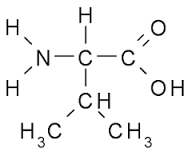
Carbon, Hydrogen, Oxygen and Nitrogen are elements in what biomolecule?
Carbohydrate
Lipid
Protein
Nucleic acid
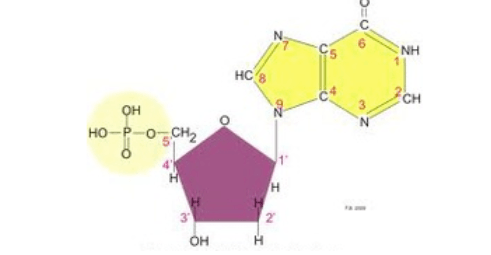
Which biomolecule is this a picture of?
Protein
Nucleic Acid
Lipid
Carbohydrate
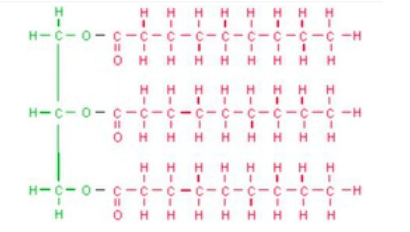
Which biomolecule is this a picture of?
Protein
Nucleic Acid
Lipid
Carbohydrate
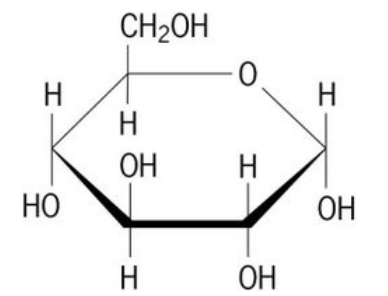
Which biomolecule is this a picture of?
Protein
Nucleic Acid
Lipid
Carbohydrate
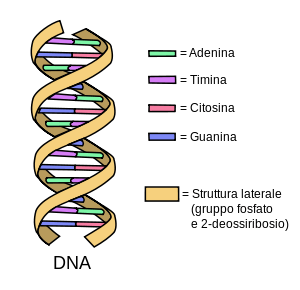
What type of molecule is this?
Nucleic acid
Protein
Carbohydrate
Lipid
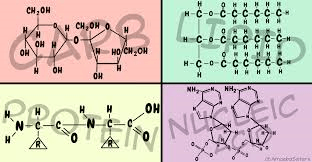
What elements are common to all 4 biomolecules?
Carbon, hydrogen, nitrogen
Carbon, Nitrogen, Phosphorus
Carbon, Hydrogen, Oxygen
Carbon, Hydrogen, Phosphorus

Attractions between water molecules are called
Covalent bonds
Ionic bonds
Polar bonds
Hydrogen bonds

Which characteristic of water molecules directly contributes to the remarkable "water walking" success of the aquatic insects pictured?
hydrogen bonds
capillary action
nonpolar covalent bonds
ionic bonds

What type of macromolecule is being represented in this image?
carbohydrate
lipid
protein
nucleic acid

The image below shows a polymer of glucose molecules. What type of macromolecule is this?
carbohydrate
protein
lipid
nucleic acid
Which of the following is a polymer of proteins?
Fatty Acids
Polypeptide
Polysaccharide
Nucleic Acid
Which is the polymer of carbohydrates?
polysaccharide
polypeptide
nucleic acid
there is no polymer of a carbohydrate
Which of the following does not have a monomer or polymer?
carbohydrates
lipids
proteins
nucleic acids

