
 Worksheets
Tissues
Total questions: 50
Worksheet time: 48mins
Where would you NOT find epithelial tissue?
skin
glands
heart
lining of hollow organs
Which tissue is responsible for transmitting signals?
muscle tissue
epithelial
Nervous
Connective
How are epithelial tissue classified?
by shape
by size
by number of layers
by shape and number of layers.
Which tissue is found in the spinal cord?
nervous tissue
skeletal muscle
smooth muscle
cardiac muscle
Basement membranes are found in:
connective tissues
Epithelial tissues
nervous tissues
Muscle Tissue
Nerve tissue is made up of:
neurons and neuroglial cells
connective and muscle tissue
neurons and epithelial cells
muscle tissue and neuroglial
Raising your arm is an example of:
smooth muscle use
skeletal muscle use
cardiac muscle use
nervous tissue use.
Which of the following is connective tissue?
Bone
cartilage
blood
all of these
which tissue is attached to bone?
skeletal muscle
smooth muscle
cardiac muscle
nervous tissue

The tissue type shown in the photomicrograph below is a ___ tissue
Blood
Bone
Areolar
Adipose
Hyaline Cartilage
Which tissue type functions and secretion, absorption, protection, and excretion
Epithelial
connective
Arelolar
muscle
Nervous
What tissue type are the biceps primarily composed of?
epithelial
connnective
muscle
nervous
What tissue type is blood primarily composed of
epithelial
connective
muscle
nervous
Which tissue type covers body surfaces , covers and lines internal organs and composes glands
epithelial
connective
muscle
nervous
Which term means, a flattened cell shape?
Stratified
Squamous
Simple
Columnar
Cuboidal
Which of the following are all types of muscle tissue
neurons, neuroglial, matrix
blood, arelolar, reticular
skeletal, smooth, cardiac
stratisfied,
transitional, simple
Which term means, cells that are longer than they are wide?
Stratified
Squamous
Simple
Columnar
Cuboidal
Which term means, more than one layer of cells?
Stratified
Squamous
Simple
Cuboidal
Columnar
Which term means, one layer of cells?
Simple
Stratified
Columnar
Cuboidal
Squamous
One of these not a type of tissues?
Muscle
Nervous
Connective
Skeletal

The function is:
Help organs to function
Send and receive messages from the nerves
Protect the organs
Connect tissues
Muscles of the walls of heart
Skeletal
cardiac
smooth
nucieus

Cuboidal
Columnar
Squamous
Connective tissues includes:
Tendon
Bone
Fat
Nerves
What is a tissue?
is a group of cells that work together to do a job in the body.
make the body strong and allow it to move.
protective barrier between the body
How many types of tissue are found in the body?
1
2
3
4
5
What is a cell?
the basic unit of life
a group of tissues working together to perform a function
the largest level of biological organization
Why are all cells different?
all cells are the same
different cells perform different functions
multicellular organisms can live with one type of cell
What level of biological organization is the largest (includes all other levels)?
organ
organ systems
organism
cells
Which of the following is the correct order of organization in living things from the most basic (simple) to the most complex?
Organism, cell, tissue,organ, organ system
Organ system, organ, cell, organism, tissue
cell, organ, tissue, organ system, organism
cell, tissue, organ, organ system, organism
What is the difference between a cell and a tissue?
cell is basic unit of life; tissue is group of cells that work as one
cell is basic unit of life; tissue is groups of different cells
cell is group of tissues; tissue is basic unit of life
cell is group of organs; tissue is group of different cells
The most basic level of organization in the human body
tissue
cell
organ
organ system
The two ways to classify epithelium cells are
number and size
shape and color
shape and number of layers
color and number
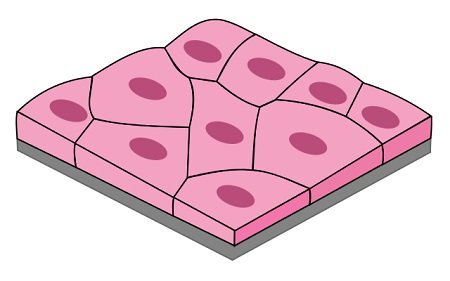
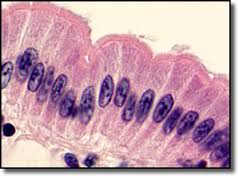
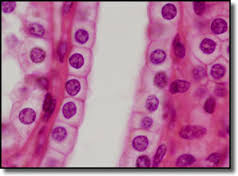
Name the type of epithelium
simple cuboidal
simple squamous
simple columnar
stratified squamous
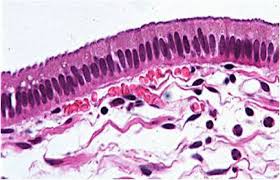
Name the type of epithelium
simple squamous
stratified squamous
simple cuboidal
simple columnar
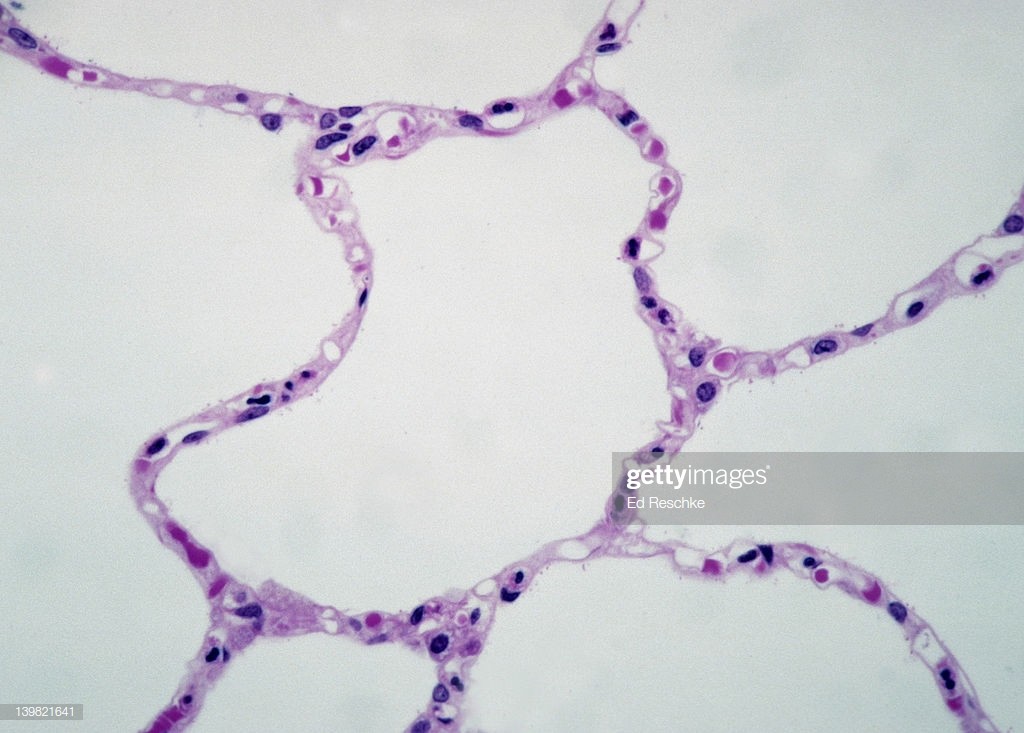
What type of epithelium lines the air sacs in this slide of lung tissue?
simple cuboidal
simple columnar
simple squamous
pseudostratified columnar
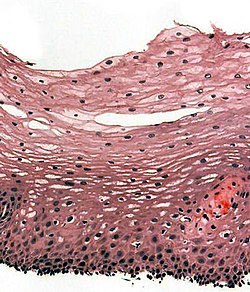
What type of epithelium is this and where might you find it?
stratified squamous ; skin
pseudostratified columnar ; trachea
simple squamous ; lung
simple cuboidal ; kidney tubules

Epithelial tissues are vascularized.
True
False

