
 Worksheets
Allergies, Principles of SOP, FITT principle
Total questions: 59
Worksheet time: 38mins
What does the "F" in FITT principle stand for?
Fitness
Frequency
Framework
Function
How hard you work out is?
Frequency
Intensity
Time
Type
Aiming for around 20 to 30 minutes per workout.
Frequency
Intensity
Time
Type
The kind of exercises you do to achieve the results you want
Frequency
Intesity
Time
Type
What does the I stand for in the FITT principle?
Intention
Intensity
Individual needs
Insanity
Using frequency to plan in days off from training allows participants to...
Rest and recover
Increase the time of a session
Change the type of training
Meet their friends
To increase the intensity of a training session you could...
Increase rest times
Decrease the session time
Decrease rest times
Decrease the frequency of sessions
Choosing an appropriate method of training for the participant to compete in refers to
Frequency
Intensity
Time
Type
Changing the type of training may stop the participant becoming ____________ with the training?
Bored
Happy
Fitter
Engaged
Working out on Monday, Wednesday, Friday is an example of
Time
Frequency
Tendency
Schedule
Working out for 30 minutes each session is an example of
Frequency
Schedule
Type
Time
Doing 3 sets of 10 reps is an example of
Frequency
Time
Type
Schedule
Working out at 70% of our Max Heart Rate is an example of
Intensity
Time
Frequency
Work Ethic

Loading to excess by placing more stress on the body than what it's used to.
overload principle
progression principle
linear principle
program principle

Carefully and gradually increasing over time.
progression principle
overload principle
fitness principle
rest & recovery principle
Carefully and gradually putting more workload and stress on the body than it's used to.
Progressive Overload/Overload and Progression Principle
progression principle
overload principle
A runner who is used to running for 15 minutes at a time--increases their load/time to 20 minutes. This is an example of:
overload
progression
A weightlifter gradually and carefully increases the repetitions they do over time.
progression
overload

Overload and Progression are two separate concepts that work together.
true
false
The chronic overloading (exhausting) of muscles through exercise leads to them adapting to better perform that exercise:
Overload Principle
Specificity Principle
Individuality Principle
Progression Principle
Reversibility Principle
Only the specific muscle groups overloaded by exercise will respond and adapt:
Overload Principle
Specificity Principle
Individuality Principle
Progression Principle
Reversibility Principle
As your body adapts to training, your body progresses to a new fitness level:
Overload Principle
Specificity Principle
Individuality Principle
Progression Principle
Reversibility Principle
What is a food Allergy?
This occurs when a person's immune system has a sensitive reaction to specific foods, which causes severe or life threatening symptoms that happen very quickly after a food has been eaten.
This is a long term condition where after several hours or days, certain foods that cause a person to feel unwell and have a range of symptoms but is not usually life threatening and does not involve the immune system.
What is a food intolerance?
This occurs when a person's immune system has a sensitive reaction to specific foods, which causes severe or life threatening symptoms that happen very quickly after a food has been eaten.
This is a long term condition where after several hours or days, certain foods that cause a person to feel unwell and have a range of symptoms but is not usually life threatening and does not involve the immune system.
True or False: A person with anaphylaxis requires the use of an EpiPen:
False
True
Which are signs of an allergic reaction?
Swollen lips, tongue, or mouth
Red rash
Hard time breathing
All of the above
Which 4 foods are people most commonly allergic to?
Peanuts, Dairy, Eggs, and Fish.
Gluten, Eggs, Meat, Nuts
Caffeine, Dairy, Fish, Gluten
What are symptoms for a food intolerance?
Diarrhoea
Constant Tiredness and Weakness
Nausea
Pain in joints + muscles and bloating
All of the above
True or False: It is hard to diagnose a food intolerance.
True
False
What is lactose?
Lactose is a disaccharide sugar found in milk products
Is found in your stomach
Is a chemical produced when we eat milk products.
True or False: People with lactose intolerance can digest lactose in their large intestines.
True
False
People who are lactose should avoid the following foods - tick all that apply
Milk
Cream
Cheese
Butter
Biscuits
Some people may have a condition known as 'Coeliac Disease'. These children cannot tolerate...
Lactose
Gluten
Fructose
Eggs
Coeliac is a intolerance to the protein gluten, gluten is found in:
Milk products: milk, cream, cheese, butter
Wheat products: Wheat, rye, barley, oats
Plant foods: Nuts, seeds, lentils
Our large intestines are lined with thousands of tiny projections called 'Villi', which absorb the nutrients our body needs into the bloodstream. What happens to someone with Coeliac Disease?
Nothing it works as normal
The villi are damaged which results in less nutrients being absorbed.
The villi are made to absorb more nutrients then they should.
Commonly people with Coeliac disease can become malnourished, what symptoms do they show?
Anemia
lack of energy
loss of weight
diarrhoea
All of the above
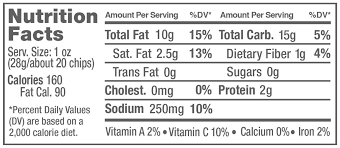
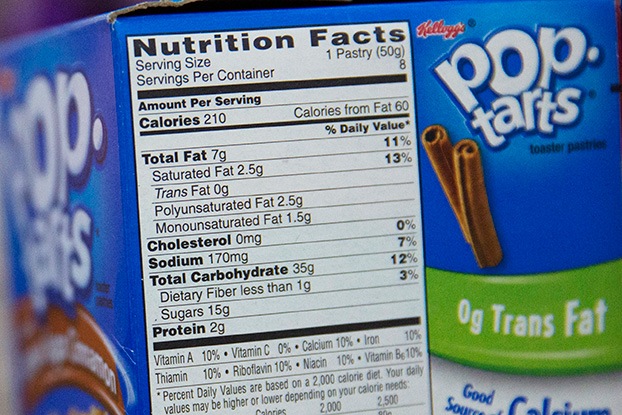
Who should be reading a food label?
Everyone
People with allergies, diseases and those on a diet
What is a calorie?
A way to measure how much vitamins a food provides to your body.
A way to measure how much energy a food provides to your body.
A way to measure how much protein a food provides to your body.
A way to measure how much fiber a food provides to your body.
Eating too many calories per day is linked to overweight and obesity.
true
fasle
Serving size could be represented in cups and pieces.
true
false

Nutrients you should get more of are Saturated Fat, Sodium, and Added Sugars.
true
fasle
Nutrients you should get less of is Dietary Fiber, Vitamin D, Calcium, Iron, and Potassium.
true
false
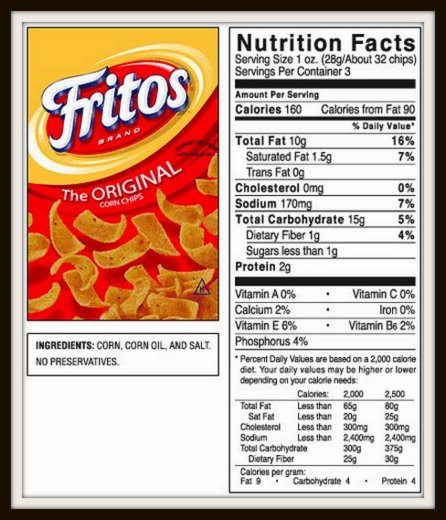
For a Cheetos Packet, If the serving size is 21 chips, and the servings per container is 4, this means the whole packet has
21 chips
21x4 chips
4 chips
21x2 chips
Other than Vitamins and Minerals, what nutrient do we want more of in a food label and in our food?
Fiber
Sugar
Saturated Fat
Protein
What should be the first ingredient in a healthy and energizing cereal/cereal bar
Whole grain flakes
Chocolate
Fiber
Milk

