
 Worksheets
Skeletal System Disorders
Total questions: 50
Worksheet time: 26mins
What is osteoporosis?
A condition where bones become weak and thin over time
A type of arthritis affecting the joints
An autoimmune disease affecting the lungs
A skin disorder causing rashes
Which of the following is a common form of arthritis?
Osteoporosis
Osteoarthritis
Lupus
Juvenile arthritis
What is rheumatoid arthritis (RA) described as?
A bone disease
A skin condition
An autoimmune and inflammatory disease
A digestive disorder
What is juvenile rheumatoid arthritis?
A type of arthritis that affects only adults
A form of RA that affects children
A skin condition in children
A digestive disorder in children
What causes gout?
Buildup of uric acid crystals in a joint
Bacterial infection
Viral infection
Lack of calcium
Which condition is described as a chronic autoimmune neuromuscular disease?
Fibromyalgia
Osteomyelitis
Myasthenia gravis
Gout
What is a common symptom of fibromyalgia?
High fever
Widespread pain
Skin rash
Joint swelling
What bacteria commonly causes osteomyelitis?
Streptococcus
Staphylococcus
Escherichia coli
Salmonella
What can alter the normal vertebral column curves, leading to spine disorders?
Regular exercise
Proper diet
Developmental anomalies
Adequate sleep
What is kyphosis commonly referred to as?
Swayback
Humpback
Twisted spine
Flatback
What is lordosis commonly referred to as?
Swayback
Humpback
Twisted spine
Flatback
Which spinal disorder is characterized by an excessive anterior curvature of the lumbar region?
Kyphosis
Lordosis
Scoliosis
Osteoporosis
What is the most common vertebral abnormality among girls?
Kyphosis
Lordosis
Scoliosis
Osteoporosis
What is scoliosis?
An abnormal lateral bending of the vertebral column
An excessive curvature of the upper thoracic vertebral column
An excessive curvature in the lumbar region of the vertebral column
A normal curvature of the spine
What is kyphosis?
An abnormal lateral bending of the vertebral column
An excessive curvature of the upper thoracic vertebral column
An excessive curvature in the lumbar region of the vertebral column
A normal curvature of the spine
What is lordosis?
An abnormal lateral bending of the vertebral column
An excessive curvature of the upper thoracic vertebral column
An excessive curvature in the lumbar region of the vertebral column
A normal curvature of the spine
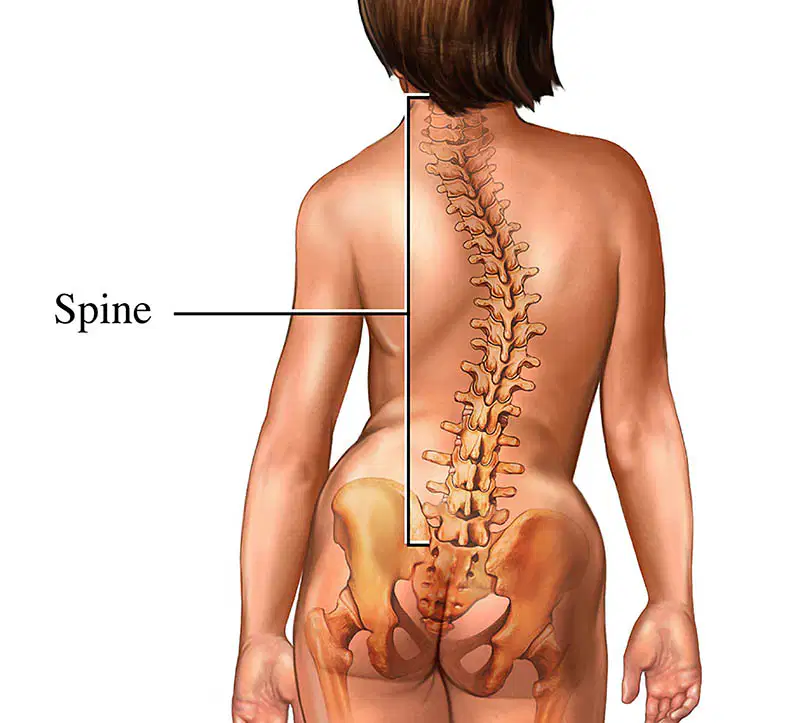
Which term best corresponds with this image?
Scoliosis
Kyphosis
Lordosis
Synarthrosis

Which term best corresponds with this image?
Scoliosis
Kyphosis
Lordosis
Synarthrosis
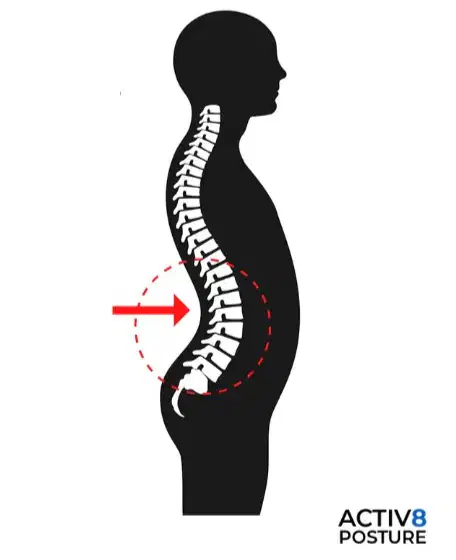
Which term best corresponds with this image?
Scoliosis
Kyphosis
Lordosis
Synarthrosis
What is osteoporosis?
A condition that causes excessive bone growth
An age-related disorder causing gradual loss of bone density
A disease that strengthens bones over time
A genetic disorder affecting muscle tissue
What happens if a fractured bone is not reset correctly?
It will heal in its anatomical position
It will heal in a deformed position
It will not heal at all
It will heal faster than normal
What type of fracture involves bones being broken but not protruding through the skin?
Open or compound
Closed or simple
Comminuted
Greenstick
Which type of fracture is characterized by bones being broken and piercing through the skin?
Transverse
Spiral
Open or compound
Stress
In which type of fracture is the bone broken straight across?
Oblique
Transverse
Coles
Spiral
What is a characteristic of a spiral fracture?
Bone is broken at an angle
Bone has twisted apart
Bone is partially broken
Bone is crushed into pieces
Which type of fracture occurs mainly in children and involves partially broken bones?
Greenstick
Stress
Coles
Comminuted
What type of fracture is characterized by a bone breaking into several pieces?
Closed
Open
Comminuted
Greenstick
Which type of fracture occurs when the bone is broken at an angle?
Transverse
Spiral
Oblique
Impacted
What is the term for a fracture where the bone ends are driven into each other?
Impacted
Closed
Transverse
Spiral
Which of the of the following statements best describes a complete fracture?
A complete fracture is a minor crack in the bone that does not go all the way across bone.
A complete fracture is a break that goes through the entire bone and separates it into two pieces.
Which of the of the following statements best describes an incomplete fracture?
An incomplete fracture is a minor crack in the bone that does not go all the way across bone.
An incomplete fracture is a break that goes through the entire bone and separates it into two pieces.
An incomplete fracture only affects the outer layer of the bone.
An incomplete fracture is a type of joint injury.
What is the term for a fracture that runs in the same direction as the length of the bone?
Impacted
Linear
Transverse
Spiral
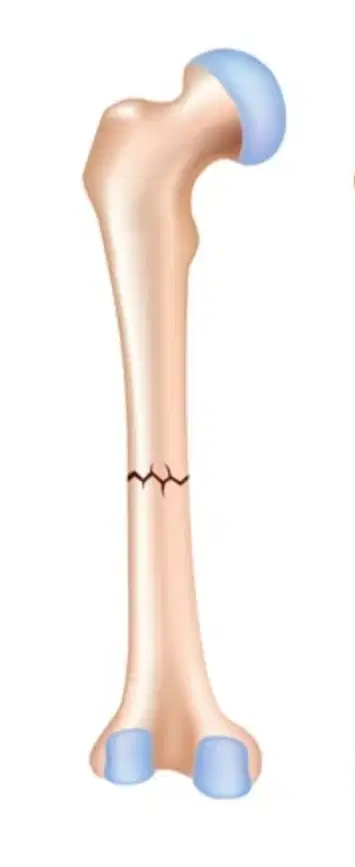
Which term best corresponds with this image?
Linear Fracture
Transverse Fracture
Oblique Fracture
Spiral Fracture
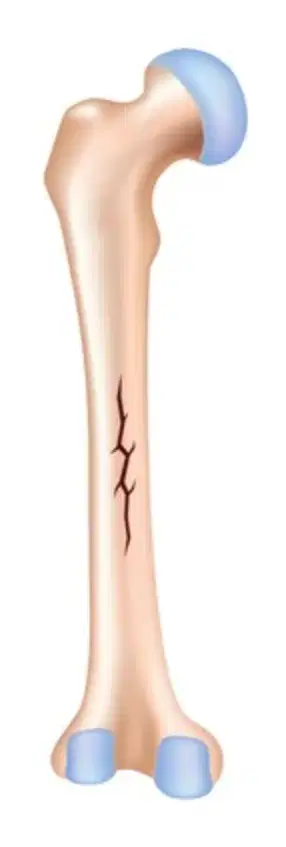
Which term best corresponds with this image?
Linear Fracture
Transverse Fracture
Oblique Fracture
Spiral Fracture
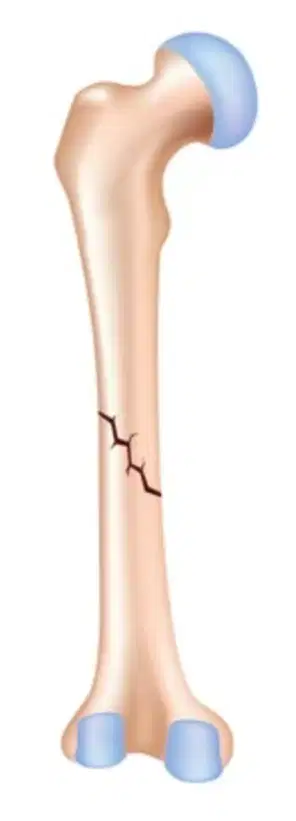
Which term best corresponds with this image?
Linear Fracture
Transverse Fracture
Oblique Fracture
Spiral Fracture
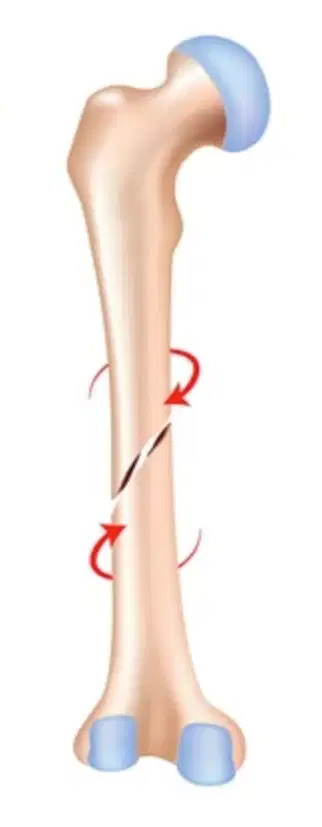
Which term best corresponds with this image?
Linear Fracture
Transverse Fracture
Oblique Fracture
Spiral Fracture
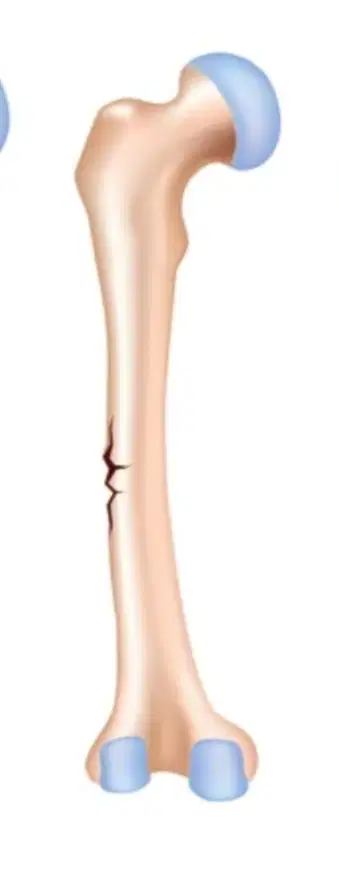
Which term best corresponds with this image?
Comminuted Fracture
Greenstick Fracture
Oblique Fracture
Spiral Fracture
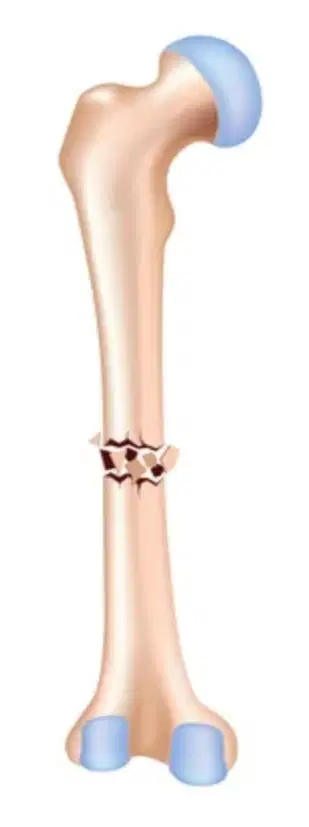
Which term best corresponds with this image?
Comminuted Fracture
Greenstick Fracture
Oblique Fracture
Spiral Fracture
Which type of bone cancer primarily affects older adults?
Osteosarcoma
Ewing Sarcomas
Chondrosarcoma
Leukemia
Osteosarcoma and Ewing Sarcomas primarily affect which age groups?
Infants and toddlers
Children, teenagers, and young adults
Middle-aged adults
Elderly adults
Which type of bone marrow produces blood cells?
Red Bone marrow
Yellow Bone Marrow
Blue Bone Marrow
Green Bone Marrow
Which type of bone marrow stores energy as fat?
Red Bone marrow
Yellow Bone Marrow
Blue Bone Marrow
Green Bone Marrow
When does bone remodeling occur? (Check All That Apply)
Bone remodeling occurs when a bone is fractured
Bone remodeling occurs when a bone is put under stress and incurs microfractures
Bone remodeling occurs when the bone is completely healthy
Bone remodeling occurs more so in the elderly than in the young.
What is the function of osteoblasts during the process of bone remodeling?
Osteoblasts break down old bone tissue.
Osteoblasts regulate calcium levels in the blood.
Osteoblasts are responsible for the formation of cartilage.
Osteoblasts form new bone tissue.
What is the function of osteoclasts during the process of bone remodeling?
Osteoclasts break down old bone tissue.
Osteoclasts regulate calcium levels in the blood.
Osteoclasts are responsible for the formation of cartilage.
Osteoclasts form new bone tissue.
What happens to osteoblasts that become buried in the newly formed bone tissue?
They remain inactive and do not change.
They transform into adipocytes.
They die off immediately.
They become osteocytes.
What is Wolff's Law?
Wolff's Law is the principle that bone adapts to the loads it experiences.
Wolff's Law describes how ligaments strengthen with age.
Wolff's Law is the theory that muscles weaken under pressure.
Wolff's Law states that bones remain unchanged regardless of stress.
What is apoptosis?
A method of DNA replication.
A type of immune response.
A form of programmed cell death.
A process by which cells divide in order to form new cells.
The process of osteoclasts breaking down bone during the process of bone remodeling is known as
(a)
True of False: Osteoblasts help form and activate osteoclasts to begin the process of bone remodeling.
True
False

